



Brian Dickson on Building Stronger, More Resilient Transportation Organizations
Bus Business Consultants Founder Brian Dickson discusses the leadership principles, operational discipline, and strategic planning that separate transportation companies positioned for long-term success from those stuck in survival mode.


Drawing on nearly 30 years of leadership experience, Brian Dixon explained why transportation operators must look beyond equipment and technology to create environments where employees can succeed.
METRO
- Brian Dickson emphasizes the importance of leadership principles for the success of transportation organizations.
- Operational discipline is highlighted as a critical factor that distinguishes successful companies from those merely surviving.
- Strategic planning is presented as essential for transportation companies aiming for long-term growth and resilience.
*Summarized by AI
As costs rise, the workforce tightens, and the economy grows uncertain, transportation operators must look beyond day-to-day demands and take a more intentional approach to building stronger organizations.
That was a central message from Brian Dickson, founder of Bus Business Consultants and publisher of Ground Transportation Insights (GTI), during a recent episode of METROspectives with METRO Executive Editor Alex Roman.
Drawing on nearly 30 years of leadership experience, including roles at Disney, Coach America, and Alliance Bus Group, Dickson discussed the importance of developing people, setting clear expectations, identifying operational weaknesses, and building businesses that can adapt to unexpected challenges.
"The organizations that thrive, they tend to be very intentional about what they are trying to achieve and how they are going to get there," Dickson said. "They are not just reacting to whatever shows up that day."
Leadership Starts with People, Clarity, and Accountability
Dickson began his career at Disney in 1991, spending his first 14 years learning the fundamentals of leadership, service excellence, and customer experience before transitioning into transportation in 2005.
Those experiences shaped three leadership principles that continue to guide his consulting work: organizations perform through their people, clarity drives performance, and effective leadership balances discipline with humanity.
"We spend a lot of time talking about equipment and technology, facilities, processes, and all of those things matter," Dickson said. "But none of them create value on their own. An organization's people are what bring those resources and those assets to life."
He explained that many operational challenges attributed to employee performance actually result from unclear expectations, poorly defined priorities, or a lack of understanding of how individual responsibilities contribute to organizational goals.
"In my experience, many of the problems that leaders deal with are not capability problems. They are actually clarity problems," Dickson said.
Successful leaders also recognize that accountability and employee well-being are not competing priorities.
"Discipline without humanity becomes fear, while humanity without discipline becomes chaos," he said.
According to Dickson, the strongest organizations set clear expectations, hold employees accountable, and create an environment where people feel supported and equipped to succeed.
Moving Beyond Survival Mode
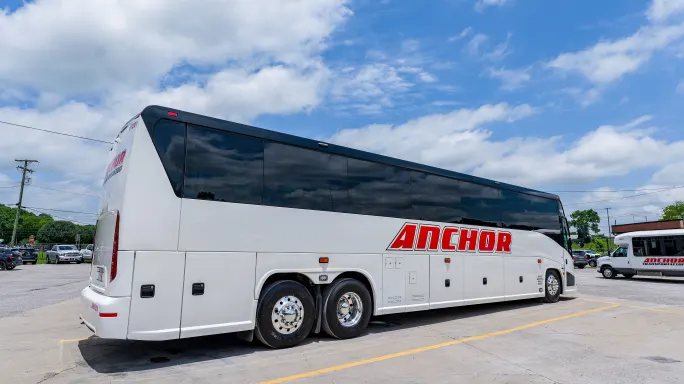
Bus Business Consultants Founder Brian Dixon said identifying the root causes of operational challenges — rather than simply addressing symptoms — can help operators improve performance and make better business decisions.
Anchor Transportation
One of the biggest differences Dickson sees between thriving transportation organizations and those struggling to maintain operations is their ability to look beyond immediate challenges.
While nearly every operator faces pressures around labor, maintenance, customer service, and operating costs, successful companies keep investing in their people and processes instead of letting those challenges dictate their future.
By contrast, organizations operating in constant crisis mode often exhaust their resources addressing immediate problems, leaving little capacity to plan for growth or improvement.
"Every day becomes about solving the next problem, putting out the next fire or responding to the next crisis," Dickson said.
He emphasized that healthy organizations create options by developing leadership depth, strengthening operational processes, and reducing vulnerabilities that could threaten the business.
"I've seen companies that are one customer, one key employee, one major breakdown, or one unexpected expense away from a crisis," Dickson said.
Companies that have invested in resilience, however, are better positioned to absorb customer loss, adapt to changing market conditions, or respond when a key employee leaves. That flexibility becomes particularly important during periods of uncertainty, including unexpected increases in fuel costs and other operating expenses.
Identifying the Real Problems Behind Operational Challenges
Dickson also noted that his consulting work often reveals a disconnect between the problems transportation executives believe they face and the underlying issues affecting performance.
Rather than immediately recommending solutions, he begins by listening to leadership, observing operations, and speaking with employees to identify gaps between organizational goals and everyday execution.
"Often the biggest opportunities aren't found in the things that everyone already knows are broken. They're actually found in those gaps," he said.
For example, an operator struggling to hire drivers may assume the problem is a lack of applicants. However, Dickson said a closer look may reveal that the company attracts qualified candidates but loses them because no one consistently manages the hiring process.
Similarly, what appears to be an employee retention problem may stem from weaknesses in training, scheduling, communication, or inconsistent leadership.
"One of the things I've learned over the years is that the first problem a leader identifies is rarely the actual problem," Dickson said. "Oftentimes it's a symptom of a deeper issue."
Understanding those root causes, he explained, lets organizations address problems more effectively instead of repeatedly treating symptoms.
Three Priorities for the Next 12 Months
For transportation owners and executives looking to strengthen their organizations, Dickson outlined three areas of focus over the next year.
First, leaders must clearly understand where their organization stands today and where they want it to be in 12 months.
Second, they must identify the few priorities that will have the greatest impact on achieving those goals.
"Most organizations don't have a shortage of opportunities. They have way too many," Dickson said. "Because if everything is a priority, nothing is a priority."
Finally, organizations must consistently execute their plans, aligning employees, resources, and leadership attention around those priorities.
"The difference a year from now isn't going to be that you developed a plan and put it on the shelf," Dickson said. "It's going to be that you develop that plan and you execute it against it consistently."
He added that transportation companies can benefit from engaging with industry associations, learning from peers, and seeking outside perspectives to identify new approaches to common challenges.
Dickson also discussed the Operator Exchange, a monthly roundtable he co-hosts with Louis Bookoff of Busie.
Why Dickson Is Optimistic About Transportation's Future
Despite the industry's ongoing challenges, Dickson said he remains optimistic because transportation professionals consistently demonstrate a willingness to learn and improve.
Through his industry leadership roles, consulting work, and Ground Transportation Insights publication, he has found that operators are receptive to new ideas when they can see how those ideas will improve service, strengthen performance, or solve operational problems. That willingness to adapt could ultimately become a greater competitive advantage than fleet size or equipment investments.
"The organizations that I think are going to be the most successful as we move forward aren't necessarily going to be the ones with the biggest fleets or the newest buses," Dickson said.
Instead, he believes the most successful operators will be those who can identify effective ideas, adapt them to their businesses, and follow through on implementation.
"At the end of the day, strong leadership is what's going to take those good ideas and actually turn them into results," Dickson said.
This article, generated using OpenAI, was edited for accuracy and style and based on an episode of METROspectives
Quick Answers
Brian Dickson emphasizes the importance of visionary leadership, effective communication, and empowering team members to foster a culture of innovation and resilience in transportation organizations.
*Summarized by AI
More Management

LA Metro Breaks Ground on Vermont BRT Project
The 12.4-mile corridor is projected to serve 66,200 daily riders, reduce travel times by up to 24%, and create the nation's busiest bus rapid transit corridor.
Read More →
Building Stronger Leaders, More Resilient Transit Teams
Dr. Carol Parker Walsh discusses leadership development, employee retention, workplace culture, and preparing transit’s workforce for AI and automation.
Read More →
Roman Cornell on ABC Companies’ Evolution and the Future of Passenger Transportation
The company’s CEO discusses carrying forward a third-generation family legacy, ABC’s continued evolution in passenger transportation, support for increasingly complex fleets, and how technology and continued investment could help operators improve uptime.
Read More →
CATS Launches West Charlotte Microtransit Zone, Expands Transit Services
The new microtransit zone connects residents to key destinations as Charlotte Area Transit System rolls out the first phase of its 2055 Transit System Plan.
Read More →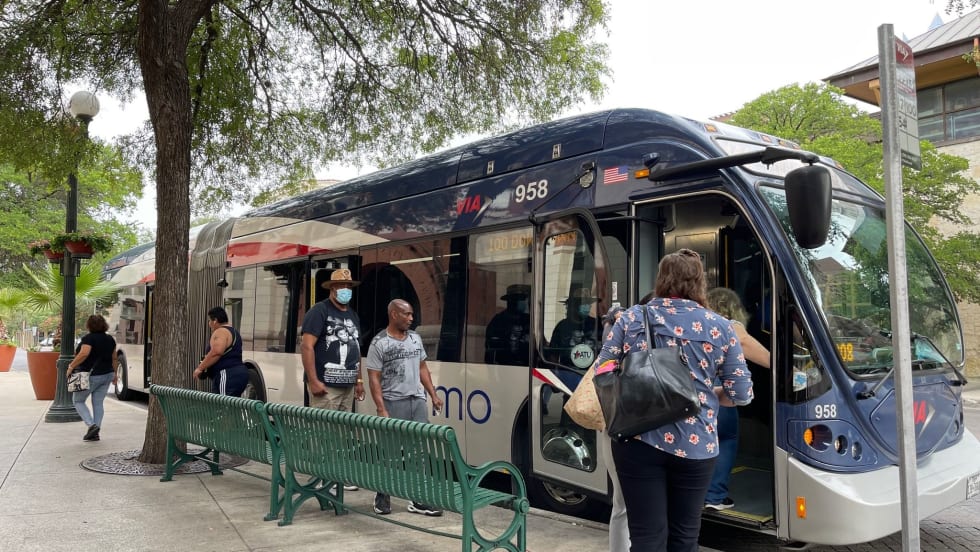
VIA Bus Ridership Grows 10.1% Through August 2026
San Antonio's VIA Metropolitan Transit reported the highest bus ridership growth among major Texas transit systems. Federal Transit Administration data ranked it second among the nation's 50 largest transit systems.
Read More →
CSA Group Releases Climate Resilience Standard for Transit, Passenger Rail
Developed with support from the Standards Council of Canada, CSA D700 guides assessing climate-related risks and planning adaptation measures for transit and passenger rail systems.
Read More →
ETA CEO John Maglio on Transit Technology, Innovation, and Building Agency Trust
ETA founder and CEO John Maglio explores the evolution of transit technology, the importance of reliable systems, and how stronger partnerships can help agencies improve operations and the passenger experience.
Read More →
COTA Launches First Customer Experience Action Plan to Improve Transit Service
The new plan outlines improvements to service reliability, accessibility, communication, and the overall rider experience across Central Ohio's transit system.
Read More →
LA Metro September Ridership Climbs 3.9%, Led by Rail Growth
The agency recorded more than 27.2 million boardings, with rail ridership increasing 12.4% year over year and the D Line posting the largest gains.
Read More →
Utilimarc Launches SmartReplace to Optimize Fleet Replacement Decisions
AI-powered SmartReplace helps fleets prioritize vehicle replacements, model budget scenarios, and build more defensible long-term strategies.
Read More →