



Transit Expands Agency Partnerships, Reaching 200 Official App Partners
COO Jake Sion discusses Transit’s growth, the success of its Transit Royale program, and how technology is helping agencies improve the rider experience.

Transit COO Jake Sion discusses how the company's partnerships with 200 transit agencies are helping improve real-time information, trip planning, and the overall rider experience.
METRO
- Transit has expanded its collaborations to include 200 official app partners, reflecting its significant growth in the sector.
- The Transit Royale program is highlighted as a successful initiative in enhancing service offerings and user engagement.
- Technology is being leveraged by agencies to enhance the overall rider experience, according to COO Jake Sion.
*Summarized by AI
Transit has continued to expand its role in public transportation, with 200 transit agencies across four countries now choosing the app as their official rider platform, the company recently announced.
Since launching Transit Royale in 2021, the company has partnered with agencies to give riders free access to premium features, real-time trip planning, and other tools that make public transit easier to navigate. Today, Transit’s agency partners in the U.S. and Canada represent more than 20% of ridership across the two countries, serving approximately two billion trips annually.
METRO spoke with Jake Sion, COO of Transit, about the company’s growth, its partnerships with transit agencies, and how continued investment in technology is helping agencies improve the rider experience.
The Benefits of Partnering with Transit
Why are more transit agencies choosing to partner with an established rider app like Transit rather than build and maintain their own?
Every agency has to decide where its time and money will help riders most. Many agencies want to focus on running great service, not building a tech stack, so they partner with us to give riders timely updates, gain a direct line of communication with customers, and access a platform with real-time data and continuous feedback that helps teams improve service. That’s also why 200 transit agencies have chosen to sponsor Transit Royale for their riders — because software isn't a one-and-done checkbox; we offer a platform that keeps getting better over time.
The app is an important element of the rider experience, something we truly care about, and it’s also a big part of the value we add to our partner agencies. But the partnership goes far beyond the app and beyond our web-based tools. We also work closely with agencies behind the scenes: cleaning up schedule data, flagging outages, running surveys to get feedback straight from riders about their trips, and helping get the word out about detours.
Agencies can also reach new riders. Riders don’t stay inside one network. They commute across regions and use transit when they travel, and some of them may not be familiar with a different city’s transportation network. We help connect the dots. Transit works in more than 1,500 cities, so many riders already have it on their phone, and agencies can meet them where they already are.
We have deep partnerships with hundreds of agencies of every size, so we’ve seen a lot of what works for riders and what doesn’t. Every new partner benefits from that. We still start each partnership with the same questions: what does this agency need, how do we help its staff deliver better service, and how do we make life better for its riders without a car?
When agencies make that shift, what are they typically looking to improve most for riders — trip planning, real-time information, ease of use, or something else?
Most days, riders have one question: “When is my bus coming?” Agencies want to give riders an answer they can trust.
So real-time information usually comes first. Arrival predictions are one of the top reasons our nine million-plus monthly users open the app, so we built our own machine learning model to improve them. Transit combines agency data with live updates from riders using GO, our step-by-step navigator. It tells riders when to leave, which bus to catch, and when and where to get off, while also providing other riders with real-time, crowdsourced information. One in four users launch GO every month. It shows other riders where the bus actually is, even when official data is late or missing. Our in-house machine learning model also automatically detects detours when a bus diverts from its usual route and spots new temporary stops.
Ease of use is a close second. Open Transit and your nearby departures are right there. No taps needed.
Agencies also want useful feedback from their riders. Customer support phone lines and complaint forms matter, but it takes a lot of motivation and extra time to call or write to your transit agency to complain. With Rate-My-Ride, people can easily share what’s happening on their trip, like crowding, delays, or a problem at a stop, directly in the app. Each piece of feedback is tied to a route, direction, time, boarding stop, and alighting stop, making it actionable for the agency. Every day, we get about 500,000 pieces of rider feedback. That helps the next person waiting at the stop, and it gives the agency a clearer picture of what’s happening across the system.
Building a Seamless Solution

Through its Transit Royale program, Transit provides riders with free access to premium app features while helping agencies improve communication, collect rider feedback, and deliver more reliable service information.
Transit
Transit works with agencies across state lines and different transportation networks. What does it take to bring all that trip-planning and service information together into one seamless experience for riders?
It looks simple on the surface, but a lot is going on underneath. We don’t just work across state or provincial boundaries; we also work across national boundaries — the app works in 40 countries, and we have partners in Canada, the U.S., France, and New Zealand.
Every agency shares its schedules and real-time data a little differently. A big part of our job is bringing it all together in one consistent format, keeping it up to date as service changes, and catching issues before riders run into them. It’s why we’re huge advocates for — and major contributors to — open data standards like GTFS, because they help harmonize the information that agencies provide to riders. This standardization brings down costs not just for us, but also for agencies and other vendors. Open data standards make the industry more competitive and innovative.
Then, you have to plan trips the way people actually travel. Someone might start on a suburban bus and finish on a city subway run by a different agency. They shouldn’t have to know where one system ends and the next begins.
Real-time information is the last piece. Riders use shared live trip updates, which add to the agency’s data and give everyone a fuller picture of what’s happening across the network. Our machine learning model reads the phone’s motion sensors to tell whether someone’s on a bus or train, so we can follow the ride — even underground, where GPS usually fails. Riders become live sensors, helping each other and the system as a whole.
When it all comes together, the rider gets one simple answer: here’s your trip, and here’s when your ride is coming.
With partnerships across 35 U.S. states and four countries, what common challenges are you seeing across transit agencies, and where do local needs require a more tailored approach?
Most agencies face the same challenges. They want to share real-time updates riders can trust, like information about detours and service changes. They also want a clearer view of what riders are experiencing day to day.
But the exact shape that these needs take can vary greatly from city to city. That’s where our team supports each agency.
For example, Rate-My-Ride is a great tool for understanding how riders feel as they use the system. To make the most of it, each agency uses the tool slightly differently. For example, Metro Transit in the Twin Cities and ETS in Edmonton wanted to understand better how customers felt about safety across the system by capturing in-the-moment metrics instead of relying solely on after-the-fact surveys or high-pressure media coverage. Our team developed custom Rate-My-Ride questions with each agency, fine-tuning them to cover specific areas of interest the tool’s default questions didn't address.
Another great example is Vancouver and Toronto, where we launched our automatic detour detection tool with agency staff. This meant validating that what we detected matched what their teams saw on the ground. Often, our detour detection tool spots route diversions that dispatch teams don’t always know about. By working with agencies, we can use our tools not only to provide riders with better information, but also to help their teams manage internal processes more effectively.
Only by doing both — developing tools for common challenges and adapting locally to meet agency needs — can we make a positive impact and help everyone feel confident they can get around without a car.
Looking to the Future
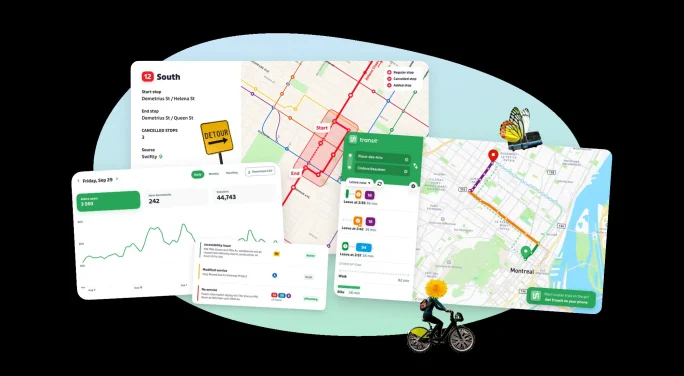
Transit combines agency data, crowdsourced rider updates, and machine learning to improve arrival predictions, identify detours, and make navigating public transportation easier across different transit systems.
Transit
Looking ahead, how do you see rider-facing apps evolving, and what role can they play in helping agencies create a more connected, convenient transit experience?
Public transit is a shared experience. Millions of people ride together every day, but most apps don’t reflect that. That’s where we think rider apps can play the biggest role.
With Transit, riders already share live updates that help people waiting at downstream stops. They can share their trip with family so someone knows when to expect them. Uncertainty keeps many people off transit, especially when they’re riding alone or trying a new route; that extra assurance, that the bus is definitely on its way or that a trusted friend is keeping an eye on your trip, can make a real difference.
There are smaller social touches too, like leaderboards and being able to thank other Transit users on your ride. They make transit feel less like a chore and more like something you’re part of, and something that’s getting better because we all have a stake in it.
Riders aren’t sending in 500,000 pieces of Rate-My-Ride feedback every day for no reason. They care about their local transit agency and its service, and they want to help improve it.
Rider-facing apps help people trust the system and choose it more often. When we get it right, public transit becomes the obvious choice, not the compromise. That mission requires working together.
Quick Answers
Transit is a technology platform that facilitates partnerships with transportation agencies to enhance public transit experiences. It has recently expanded its partnerships, reaching 200 official app partners.
*Summarized by AI
More Technology
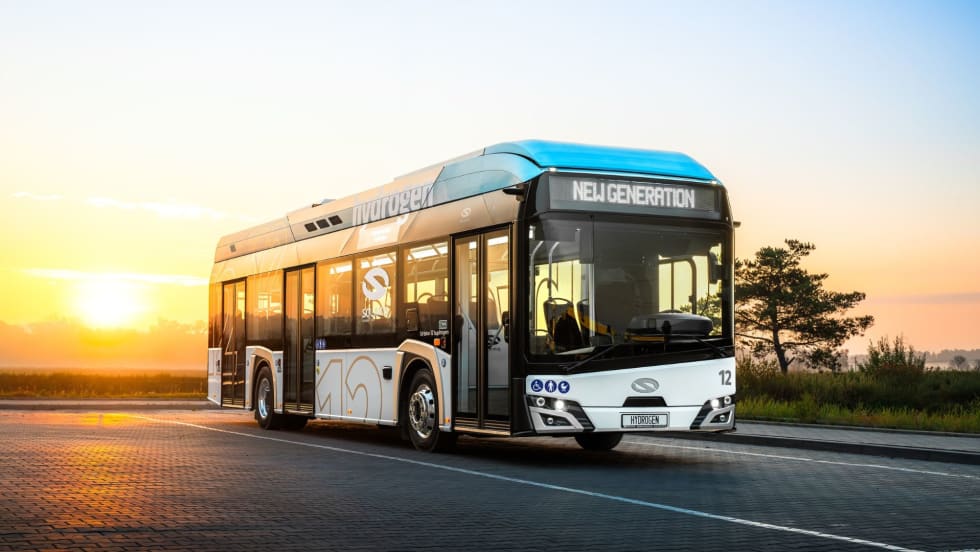
Biz Briefs: Ballard, Solaris Partner, New Flyer Receives Florida Order, and More
In METRO's latest installment, we also take a look at recent news from New Flyer, STV, Spare, and more partnerships making headlines across the transportation sector.
Read More →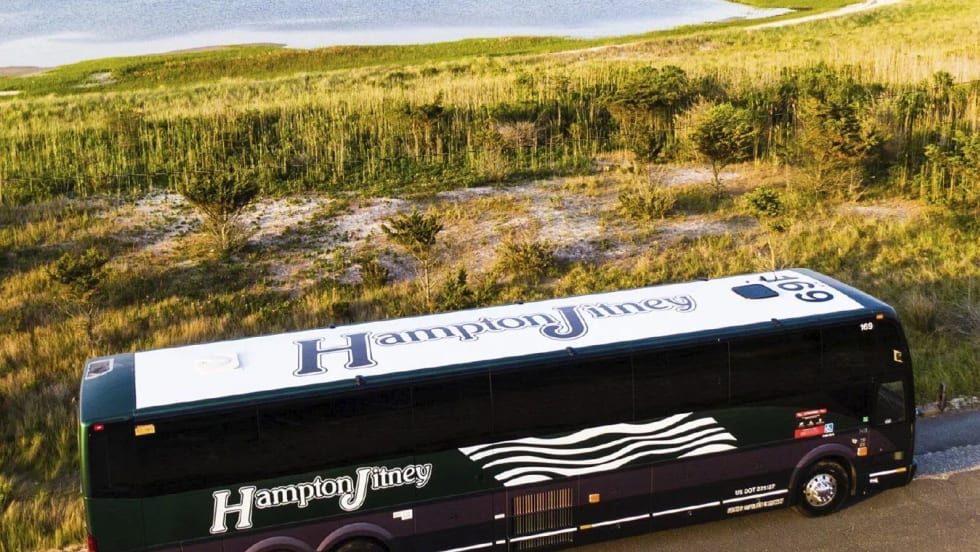
Hampton Jitney Microgrid Offers a Roadmap for Fleet Electrification
Sprocket Power’s on-site energy system is designed to manage charging costs, reduce pressure on the electric grid, and prepare the Long Island transportation provider for expanded electric fleet operations.
Read More →
ETA CEO John Maglio on Transit Technology, Innovation, and Building Agency Trust
ETA founder and CEO John Maglio explores the evolution of transit technology, the importance of reliable systems, and how stronger partnerships can help agencies improve operations and the passenger experience.
Read More →
Lextran, Via Team for On Demand, HDR to Work on Twin Cities BRT, and More
In METRO's latest installment, we also take a look at recent news from Keolis, Complete Coach Works, Anchor Transportation, and more partnerships making headlines across the transportation sector.
Read More →
Caltrain’s Electrification Drives a New Era of Ridership Growth
The railroad’s shift to electric service has brought more frequent trains, stronger customer satisfaction, and increased ridership, earning it APTA’s Outstanding Public Transportation System award.
Read More →
Video Surveillance in Public Transit: What Riders Really Think
As video surveillance gains public acceptance, new research from Axis Communications reveals what transit riders expect from agencies when it comes to safety, privacy, and AI.
Read More →
New York MTA Launches Historic $1.9B Signal, Track Modernization Project
Funded in part by congestion pricing revenue, the project will replace nearly century-old signals along the A and C lines in Brooklyn and Queens.
Read More →
Biz Briefs: New Electric Offering from Alexander Dennis/Volvo, Transdev in Boston, and More
In METRO's latest installment, we also take a look at recent news from STV, WSP, Prevost, and more partnerships making headlines across the transportation sector.
Read More →
Roman Cornell on ABC Companies’ Evolution and the Future of Passenger Transportation
The company’s CEO discusses carrying forward a third-generation family legacy, ABC’s continued evolution in passenger transportation, support for increasingly complex fleets, and how technology and continued investment could help operators improve uptime.
Read More →
ETA CEO John Maglio on Transit Technology, Innovation, and Building Agency Trust
ETA founder and CEO John Maglio explores the evolution of transit technology, the importance of reliable systems, and how stronger partnerships can help agencies improve operations and the passenger experience.
Read More →