



Denver RTD Transit Police launch Bus and Rail Impact Team
BRIT patrols are over and above those already occurring within the district. For example, the agency experienced three copper wire thefts along the G Line in April, followed by others later in the month and in early May.

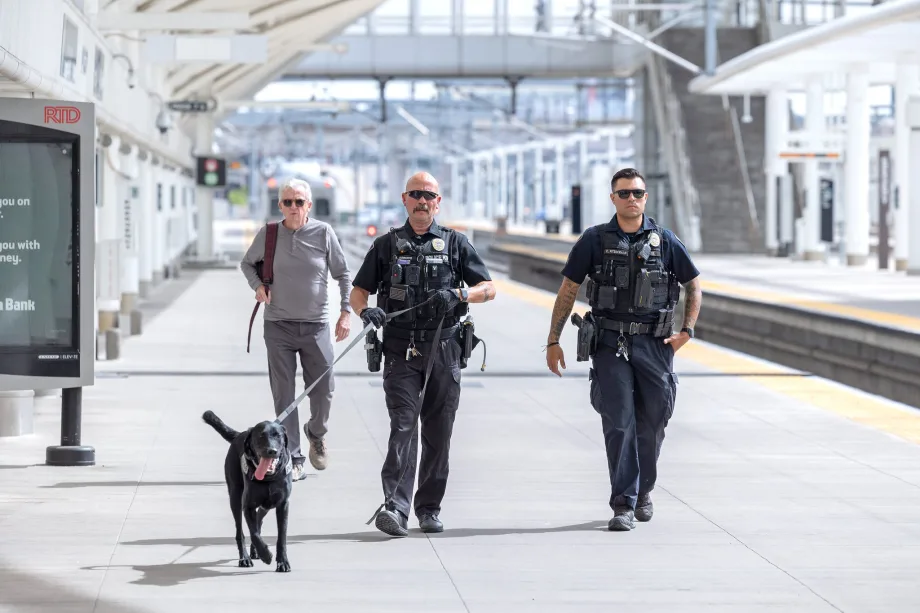
BRIT consists of five members of the RTD-PD — a sergeant, corporal, and three officers selected based on their ability to balance engagement, enforcement, and rapid response, said agency officials.
Denver RTD
- The Denver RTD Transit Police have initiated a new force called the Bus and Rail Impact Team (BRIT) for enhanced patrolling.
- BRIT activities are supplementary to the existing patrols already in place within the transit district.
- The initiative was partly driven by multiple copper wire thefts along the G Line, which occurred in April and continued into early May.
*Summarized by AI
Denver’s Regional Transportation District (RTD) Transit Police (RTD-PD) launched a new safety initiative to increase officer presence and provide more customer support across the transit system.
Launched in March, the Bus and Rail Impact Team (BRIT) deploys RTD-PD officers to locations identified through security-related data to conduct focused patrols and support high-volume event security.
RTD’s BRIT Team
BRIT patrols are over and above those already occurring within the district. For example, the agency experienced three copper wire thefts along the G Line in April, followed by others later in the month and in early May.
Chief of Police and Emergency Management Steve Martingano noted that BRIT patrols will be conducted on varying days and times in locations where thefts are occurring to improve officer visibility, help deter criminal activity, and support customer and employee safety.
Patrolling by BRIT officers “helps combat the issue and is a direct team effort to focus on different hot spots each week,” said Martingano.
Commander Jonathan Holloway, who oversees the team, said BRIT’s deployment areas are regularly reviewed and adjusted.
“BRIT targets high-incident areas identified by data, operator feedback, and ridership trends to address locations with recurring trespassing or disorderly conduct issues as well as peak ridership times,” said Holloway. “While the additional focused patrols are early into the program, Holloway anticipates BRIT will positively impact the community.”
The Bus and Rail Impact Team will also support police operations with local partner law enforcement agencies. “If Lakewood (Police Department) was going to do an operation, the intention is they could engage our team, and we would assist them with personnel from BRIT,” said Martingano.
BRIT consists of five members of the RTD-PD — a sergeant, corporal, and three officers selected based on their ability to balance engagement, enforcement, and rapid response, said agency officials.
The officers are also committed to data-driven policing and collaborative problem-solving. Later this spring, customers may see BRIT officers patrolling on bicycles that were donated to the department.
Fare Task Forces and Other Measures
RTD-PD will also introduce two task forces dedicated to fare enforcement on May 10. Officers will conduct fare checks and educate customers about fare options and RTD’s customer code of conduct.
While the agency will continue to employ contracted security officers assigned to fare enforcement, RTD is reducing the number of contracted personnel supporting fare checks, as the Transit Police Department has grown to more than 100 officers. RTD-PD currently has 102 officers and is budgeted to have 118 officers on board in 2026.
Over the last year, the agency has seen a reduction in reports of criminal activity and behavior.
In 2025, RTD recorded an average monthly decrease of 18% in security-related calls, including graffiti, unattended bags, welfare checks, and other safety concerns. Customer reports of illicit drug activity decreased 48% in 2025 compared to 2024.
RTD also conducted more than five million fare checks on light rail and commuter rail vehicles last year to support fare equity and directly engage customers. On average, most customers use transit services seamlessly without incident. RTD receives about one security-related report for every 2,000 boardings.
RTD’s Civilian Impact Team Continues Support
RTD launched a separate Impact Team in June 2024, composed of trained RTD employee volunteers outside the Transit Police Department, who will continue to provide face-to-face customer support.
Civilian Impact Team volunteers help customers navigate the transit system by providing real-time service updates, guidance on the MyRide app, and offering support during peak travel periods such as spring break, concerts, and sporting events.
The team operates independently of BRIT and focuses exclusively on customer service and community engagement, officials said.
Quick Answers
The Bus and Rail Impact Team (BRIT) is formed to enhance patrols beyond the usual security operations within the district, aiming to improve safety and address specific issues such as theft of materials.
*Summarized by AI
More Security and Safety

Public Transit Conference Returning to GFX in 2027, Call for Papers Now Open
The Call for Papers is now open, allowing transit agency professionals and industry experts to help shape the PTC educational program by submitting session ideas for consideration.
Read More →
Safe Transit Act Proposes New Security Requirements for Federal Transit Funding
Proposed legislation would link federal transit dollars to safety measures while requiring security investments, onboard cameras, and new fare collection standards.
Read More →
FTA Ends Direct Oversight of MBTA Safety Actions
The federal agency closed its remaining special directive to the Massachusetts Department of Public Utilities following a safety review that began in 2022.
Read More →
Transit Agencies Highlight Safety Gains at National Summit
Leaders from 15 major transit systems shared crime-reduction results and safety initiatives while discussing the role of continued federal support.
Read More →
DART Launches Major Security, Fare Enforcement Initiative
The 90-day demonstration will deploy coordinated security teams at five light rail stations while testing controlled access and gathering data to guide future investments.
Read More →
RTD Launches NextRide App to Consolidate Trip Planning, Fares, Security Reporting
The app expands on RTD’s existing NextRide web application and allows customers to view real-time vehicle locations and service alerts, purchase and store digital fares, and access customer support.
Read More →
TAPTCO Updates OSHA Compliance Training for Transit Maintenance Operations
The revamped program addresses 26 OSHA standards for maintenance facilities, with TAPTCO pointing to training, documentation, and everyday shop hazards as continuing challenges for transit operations.
Read More →
FRA Announces $5.3B in Rail Investments, Including $2B for Amtrak
Funding will support grade-crossing improvements, infrastructure upgrades, and new Amtrak equipment in 23 states.
Read More →
Chicago, Maryland Expand Non-Law-Enforcement Safety, Rider Support
The CTA and MTA are launching new programs aimed at de-escalation, crisis response, rider assistance, and greater transparency.
Read More →
LA Metro, City of West Hollywood, and Partners Advance Smarter Bus Lane Enforcement
The award-winning partnership combines AI-powered detection with human oversight to improve bus reliability, accessibility, and enforcement efficiency.
Read More →