



LA Metro Leverages Parking Tech to Simplify, Fuel Public Transit Usage
In a move to streamline the commuter experience and modernize its infrastructure, LA Metro partnered with ParkHelp to launch a cutting-edge parking guidance system — starting with its Arcadia parking lot.

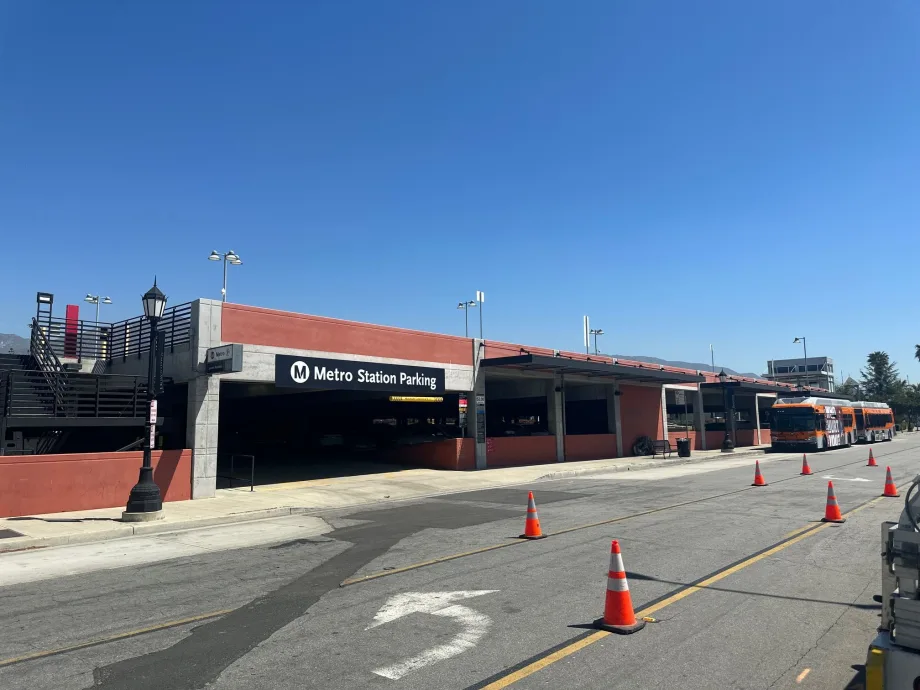
As LA Metro continues to roll out this technology across its network, the partnership with ParkHelp stands as an example of how transit agencies can harness innovation to improve access, reduce friction, and enhance the daily journey for riders across the region.
Photo: ParkHelp
In a move to streamline the commuter experience and modernize its infrastructure, LA Metro partnered with ParkHelp to launch a cutting-edge parking guidance system — starting with its Arcadia parking lot.
Installed in February, the site marks the first deployment of the company’s G5 in-ground sensor technology in the U.S.
The Arcadia installation is just the beginning. It kicks off an ambitious initiative to bring ParkHelp’s real-time parking guidance technology to several of LA Metro’s facilities.
The project aims to make parking more efficient, reduce congestion, and support Metro’s broader mission of smart, sustainable mobility.
ParkHelp’s Technology
At the heart of ParkHelp’s system is G5, a cloud-connected sensor embedded directly into the ground. The sensor monitors individual space occupancy and feeds live data to digital signage, guiding drivers to open spots — cutting the often frustrating search for parking by up to 20 minutes.
Ideally, it could also help drivers make an informed decision to choose transit over driving.
Beyond benefiting commuters, the data also enables parking operators to manage capacity more effectively and make smarter, data-informed operational decisions.
As LA Metro continues to roll out this technology across its network, the partnership with ParkHelp stands as an example of how transit agencies can harness innovation to improve access, reduce friction, and enhance the daily journey for riders across the region.
Colin Knell, president of the USA at ParkHelp, spoke to METRO Executive Editor Alex Roman about the LA Metro project, the company’s technology, and much more.
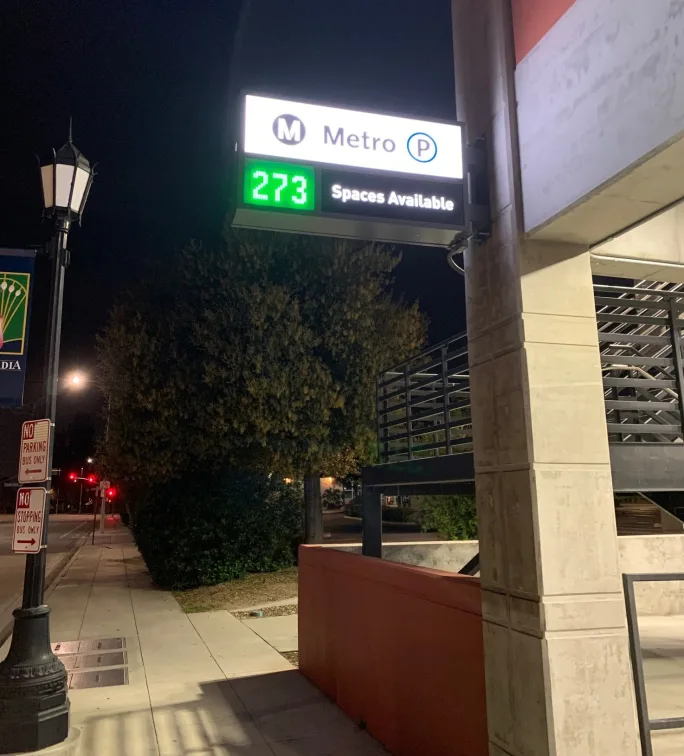
ParkHelp's G5 sensors monitor individual space occupancy and feed live data to digital signage, guiding drivers to open spots — cutting the often-frustrating search for parking by up to 20 minutes.
Photo: ParkHelp
The LA Metro Partnership
METRO: Let’s talk about your work with LA Metro, how did that relationship begin?
Knell:LA Metro needed a way to provide real-time parking availability to commuters — ideally before they even leave home. Initially, they started deploying our G5 ground sensors at around 15 to 16 surface lots. These are highly visible, high-traffic lots, where it’s crucial to quickly and clearly show availability.
We’ve also installed parking guidance in some of their garages, including rooftop areas where we use either ground sensors or camera counting. The whole initiative is about helping people make smarter transit decisions — especially in a city like LA, where traffic congestion is a serious problem.
METRO: Are these systems mostly installed at light rail and commuter rail stations?
Knell: Yes, primarily. But the scope includes a range of locations, such as those along the Gold Line expansion — San Dimas, Glendora, Pomona — and larger facilities like the one at LAX with over 300 spaces. We're also active along the A Line (formerly the Blue Line) and the Green Line, with sites like Avalon North, Crenshaw, and Long Beach East and West.
METRO: Is this project still ongoing, or have you wrapped up installations?
Knell: It’s ongoing. We’re aiming to complete everything by the end of this year. Some systems are live, but full integration — including signage and freeway alerts — will come once all installations are complete.
METRO: How has the feedback been so far?
Knell: Very positive, but since the project isn’t finished, its full impact hasn’t been realized yet. Once it’s fully operational — with all signage in place and data flowing in real time — it will be much more beneficial to commuters.
METRO: Any idea if people are actually leaving the freeway and using transit because of this system?
Knell: Not yet. The freeway signage component isn’t fully deployed. But once it is, the hope is to redirect drivers during traffic jams by letting them know there’s parking available at the next transit station.
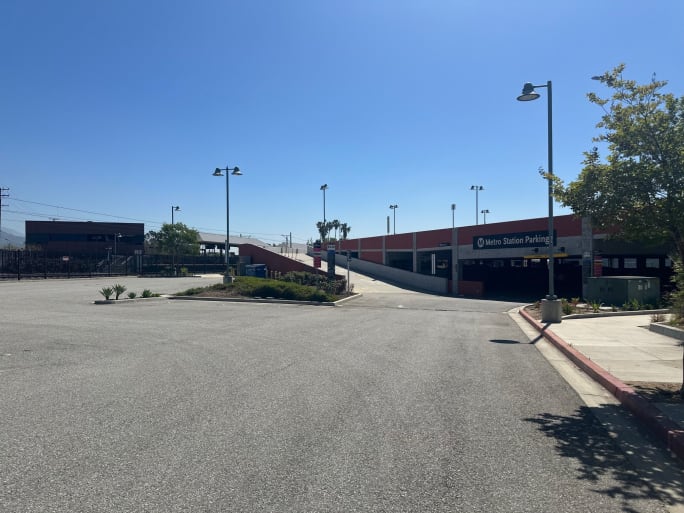
The Arcadia installation is just the beginning. It kicks off an ambitious initiative to bring ParkHelp’s real-time parking guidance technology to several of LA Metro’s facilities.
Photo: ParkHelp
LA Metro’s Next Phase
METRO: What’s next after this phase of the project?
Knell: Once the system is complete, LA Metro may offer a mobile app or integrate the data into their transit app so commuters can check parking availability before leaving home. Having used a similar system in Melbourne, I know how valuable that is. When you're deciding between two transit stations, real-time info helps avoid wasted trips and missed trains.
METRO: Do the cameras have any security functions?
Knell: They’re not designed for security, but they are capable of tracking incidents if necessary. With LA Metro planning to launch its own police force in a couple of years, there’s potential for this data to be used for added security as well.
METRO: Is there anything else you'd like to add?
Knell: There’s a study out of Seattle showing that when park-and-ride lots hit 90% capacity, ridership plateaus. At 100%, ridership declines. The whole point of this initiative is to better distribute demand by guiding people to available spaces and ultimately encourage more transit use.
More Technology

Public Transit Conference Returning to GFX in 2027, Call for Papers Now Open
The Call for Papers is now open, allowing transit agency professionals and industry experts to help shape the PTC educational program by submitting session ideas for consideration.
Read More →
ENC Lands MATA Contract and More in Biz Briefs
In this edition of Biz Briefs, we spotlight the latest developments shaping the future of mobility.
Read More →
Strada360’s Steve Lassey on Turning Transit Data Into Better Decisions
From breaking down data silos to preparing for AI, Strada360 CEO Steve Lassey discusses how transit agencies can use technology to improve operations, customer information, and long-term decision-making.
Read More →

Almaviva Looks to Open Architecture to Advance Transit Technology
Eric Reese discusses how interoperability, open architecture, and modular design can help transit agencies control costs, reduce vendor lock-in, and upgrade technology without starting over.
Read More →
Driving Smarter Paratransit
John Hanlon shares how AlphaRoute is leveraging AI-powered technology to help paratransit providers optimize operations, support frontline staff, and enhance the rider experience.
Read More →
From Hardware to Digital Partner: Luminator Charts Its Next Chapter
CEO Magnus Friberg discusses Luminator’s shift toward becoming a digital partner, the growing importance of software and interoperability, and how AI can help agencies improve operations and passenger experience.
Read More →
Beyond the Checklist: A Structured Approach to Transit Maintenance
Reliability-Centered Maintenance helps transit agencies move beyond routine checklists to focus limited resources on the assets and failures that have the greatest impact on safety, reliability, and service.
Read More →
NJ TRANSIT Advances Bus Technology Upgrades Across Statewide Fleet
More than 1,500 buses now feature upgraded technology designed to improve arrival predictions and provide free Wi-Fi, with deployment expected to reach nearly 2,000 buses by the end of 2026.
Read More →
Building a Flexible Path to Transit Electrification
John Hroncich discusses BAE Systems’ modular and scalable approach, lessons learned from decades of real-world operations, and how agencies can identify electrification strategies that fit their fleets.
Read More →
Biz Briefs: Alstom Lands Canadian Contract, LYT to Supply California TSP, and More
In METRO's latest installment, we take a look at recent news from Complete Coach Works, Beep, FlixBus, and more partnerships making headlines across the transportation sector.
Read More →