



Study Finds U.S., Europe Support Dramatic Growth in Train Travel
The Hitachi Rail study by SavantaComres polled over 11,000 people across the U.S., U.K., France, Italy, Germany, Spain, and major cities like Washington D.C., Toronto, London, Paris, Berlin, Copenhagen, and Dubai.

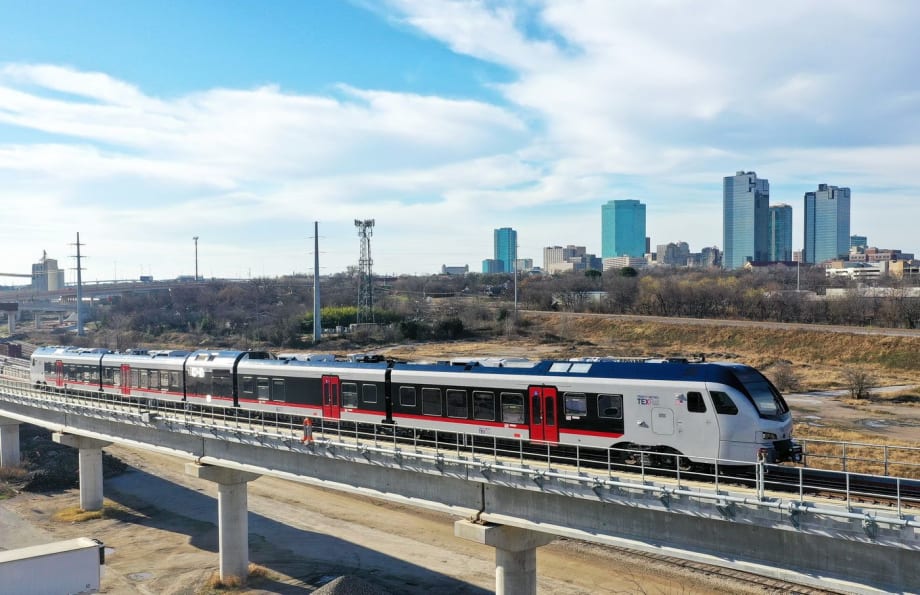
One-third of respondents anticipate increased rail use over the next year, which rises to 40% to 49% over the next five years, depending on location.
Photo: TexRail
A new international survey commissioned by Hitachi Rail signals a significant shift in public sentiment: train travel is poised to outpace flying in the coming years, especially on short-haul routes where high-speed rail alternatives exist.
The study by SavantaComres polled over 11,000 people across the U.S., U.K., France, Italy, Germany, Spain, and major cities like Washington D.C., Toronto, London, Paris, Berlin, Copenhagen, and Dubai.
Now in its third year, the research shows rising support for sustainable mobility policies, particularly in regions with increasing access to modern rail infrastructure.
A Turning Point in Travel Habits
While rail currently accounts for 29% of long-distance journeys — defined as 2.5 hours or more — a growing number of people say they plan to travel more by train in the near future.
One-third of respondents anticipate increased rail use over the next year, which rises to 40% to 49% over the next five years, depending on location.
Meanwhile, air travel is expected to stagnate, with only 2% of people saying they expect to fly more. Car usage is also likely to rise at half the rail rate.
Backing for Bold Policy Shifts
Public support for structural change is also gaining momentum.
A clear majority — 62% of all respondents — support legislation to ban short-haul flights where high-speed rail alternatives are available. That figure climbs to 67% in Europe, where rail networks are increasingly robust.
In countries like France and Spain, which have already introduced or planned such bans, enthusiasm is even stronger. Over twice as many respondents support the policies as oppose them, with 63% of Spaniards and 56% of French citizens in favor of going further.
In every country surveyed, more people supported taxing air and road travel to fund new rail infrastructure than those who opposed it.
What’s Holding Public Transport Back?
The study also investigated the barriers keeping people from choosing public transport more often. Among the top concerns were crowding, affordability, and convenience.
However, the appetite for improved transit is unmistakable. More than 70% of respondents said they’d use public transport more if it were better connected, and a majority indicated they’d still consider doing so even if it came at a higher cost.
“The research findings are strikingly clear,” said Edoardo La Ficara, group chief markets officer at Hitachi Rail. “Those surveyed expect to increase their rail usage more than any other form of transport in the next five years and they support Government action to enable this. We, as an industry, have a crucial opportunity to meet this public demand by delivering a great sustainable mobility transition.”
To view the full report, click here.
More Rail

New York MTA Advances Final Contract for Second Avenue Subway Expansion
Contract Four is the largest in the Second Avenue Subway Phase 2 project and includes construction of station infrastructure, tracks, and signals for the subway expansion, MTA officials said. Work on Contract Four will begin in 2027.
Read More →
San Diego MTS Breaks Monthly Trolley Ridership Record
Agency officials said July’s ridership indicates MTS’s continued recovery from the pandemic.
Read More →
Report Examines NJ TRANSIT Reliability, Funding Challenges
The Garden State Initiative analysis examines the roles of Amtrak infrastructure, fleet management, and agency operations while recommending a more performance-based approach to improving reliability.
Read More →
Stadler, CapMetro Sign Long-Term Rail Fleet Support Agreement
Beginning in 2027, Stadler will provide on-site technical expertise, spare parts support, training, and obsolescence management to help extend the reliability and longevity of CapMetro’s GTW fleet.
Read More →
Biz Briefs: Alstom Lands Canadian Contract, LYT to Supply California TSP, and More
In METRO's latest installment, we take a look at recent news from Complete Coach Works, Beep, FlixBus, and more partnerships making headlines across the transportation sector.
Read More →
CATS Gold Line Marks 5 Years of Service, 2.8M Passenger Trips
With a six-mile expansion planned, the Charlotte streetcar is positioned to connect more neighborhoods and major transit hubs across the region.
Read More →
Why Simulating Pedestrian Movement Has Become Essential for Modern Rail Stations
Pedestrian microsimulation is helping rail planners identify bottlenecks, test station designs, and prepare complex transit hubs for growing passenger volumes.
Read More →
Amtrak Begins Major Construction at New York’s Sunnyside Yard
The new maintenance facility will support Amtrak’s Airo trainsets while improving maintenance efficiency and turnaround times in New York.
Read More →
Chicago Leaders Unveil Plans for O’Hare Airport Express Train
The privately developed project would offer a 15-minute trip between downtown and O’Hare’s Terminal 2, with trains operating every 15 minutes on a dedicated track. The service would use battery-electric trains and three existing freight rail rights-of-way.
Read More →
OCTA Maps Out 30-Year Strategy to Protect Coastal Rail Corridor
The draft feasibility report identifies strategies to protect the coastal rail line for decades as the agency continues near-term stabilization and sand placement efforts.
Read More →