



Boston's MBTA Marks Progress in Regional Rail Modernization
The procurement advances the agency's broader efforts to modernize its rail fleet and position Regional Rail for long-term improvement.

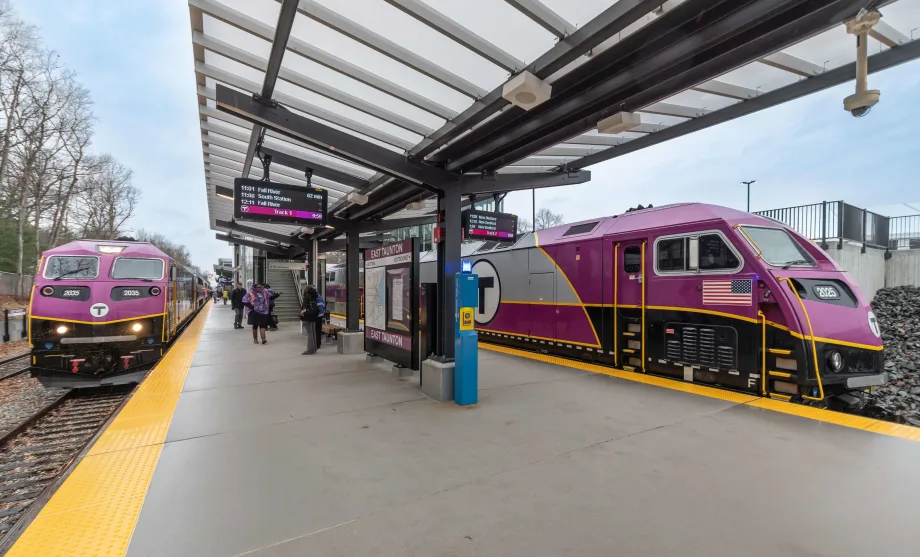
The MBTA is leading a joint procurement of battery-electric locomotives and Tier-4, low-emissions diesel locomotives to ensure reliable service for current and future passengers.
MBTA
- Boston's MBTA is making strides in modernizing its rail fleet through new procurement efforts.
- The modernization efforts aim to enhance the long-term performance of the agency's Regional Rail service.
- These advances are part of MBTA's broad strategy to improve its regional rail infrastructure.
*Summarized by AI
Boston’s MBTA reached a major milestone in transforming Regional Rail service with the release of a Request for Proposals (RFP) for new battery electric and low-emissions locomotives. The procurement advances the agency's broader efforts to modernize its rail fleet and position Regional Rail for long-term improvement.
The RFP, issued in partnership with the Maryland Transit Administration, was released on February 25, with an awarded contract planned for summer 2026.
“A modernized and reliable regional rail system has been talked about for a long time, and now we are taking action with this significant first step of procuring battery-electric locomotives,” said Interim MassDOT Secretary and MBTA GM Phillip Eng. “Critical to not only continuing to deliver the levels of service needed today, but this procurement also helps us build a system that can meet the needs of future generations.”
“This joint procurement represents regional partnership in action,” said Maryland Transit Administrator Holly Arnold. “By working together, we are strengthening our individual transit systems while reinforcing the larger, interconnected transportation network along the Mid Atlantic and Northeast."
Adding New Locomotives
For riders and communities, the new locomotives will bring clear, measurable improvements to Regional Rail service. Battery-electric locomotives produce zero tailpipe emissions and are significantly quieter than traditional diesel trains, improving air quality and reducing noise along rail corridors.
By replacing aging equipment prone to mechanical failures, the new trains will also help reduce delays and improve day-to-day reliability. Battery-electric locomotives accelerate faster than diesel trains, supporting smoother trips, more consistent schedules, and the potential for more frequent service on key lines.
The MBTA is leading a joint procurement of battery-electric locomotives and Tier-4, low-emissions diesel locomotives to ensure reliable service for current and future passengers.
The T will procure 10 battery-electric locomotives for initial deployment on the Providence Line, which has existing electric power infrastructure, and 10 Tier-4, low-emissions diesel locomotives for lines without electric infrastructure.
Both locomotive types will significantly reduce emissions, noise, and vibrations for passengers and abutters. This procurement includes options for up to 50 additional locomotives to support future expansion of Regional Rail modernization, as funding and infrastructure allow.
Building on Recent Investments
The procurement builds on recent and ongoing investments to modernize Regional Rail service, including:
- Fairmount Line Battery-Electric Service: Battery-electric trains and related facilities and power infrastructure will support bidirectional service every 20 minutes on the Fairmount Line.
- Bi-level Coach Procurement: The MBTA is procuring 80 new bi-level coaches to replace the single-level cars currently in service. This $395 million investment will increase capacity, improve rider comfort, and support a more reliable fleet.
Quick Answers
The focus of the MBTA's recent procurement is to modernize its rail fleet as part of its broader efforts to enhance Regional Rail.
*Summarized by AI
More Rail

New York MTA Advances Final Contract for Second Avenue Subway Expansion
Contract Four is the largest in the Second Avenue Subway Phase 2 project and includes construction of station infrastructure, tracks, and signals for the subway expansion, MTA officials said. Work on Contract Four will begin in 2027.
Read More →
San Diego MTS Breaks Monthly Trolley Ridership Record
Agency officials said July’s ridership indicates MTS’s continued recovery from the pandemic.
Read More →
Report Examines NJ TRANSIT Reliability, Funding Challenges
The Garden State Initiative analysis examines the roles of Amtrak infrastructure, fleet management, and agency operations while recommending a more performance-based approach to improving reliability.
Read More →
Stadler, CapMetro Sign Long-Term Rail Fleet Support Agreement
Beginning in 2027, Stadler will provide on-site technical expertise, spare parts support, training, and obsolescence management to help extend the reliability and longevity of CapMetro’s GTW fleet.
Read More →
Biz Briefs: Alstom Lands Canadian Contract, LYT to Supply California TSP, and More
In METRO's latest installment, we take a look at recent news from Complete Coach Works, Beep, FlixBus, and more partnerships making headlines across the transportation sector.
Read More →
CATS Gold Line Marks 5 Years of Service, 2.8M Passenger Trips
With a six-mile expansion planned, the Charlotte streetcar is positioned to connect more neighborhoods and major transit hubs across the region.
Read More →
Why Simulating Pedestrian Movement Has Become Essential for Modern Rail Stations
Pedestrian microsimulation is helping rail planners identify bottlenecks, test station designs, and prepare complex transit hubs for growing passenger volumes.
Read More →
Amtrak Begins Major Construction at New York’s Sunnyside Yard
The new maintenance facility will support Amtrak’s Airo trainsets while improving maintenance efficiency and turnaround times in New York.
Read More →
Chicago Leaders Unveil Plans for O’Hare Airport Express Train
The privately developed project would offer a 15-minute trip between downtown and O’Hare’s Terminal 2, with trains operating every 15 minutes on a dedicated track. The service would use battery-electric trains and three existing freight rail rights-of-way.
Read More →
OCTA Maps Out 30-Year Strategy to Protect Coastal Rail Corridor
The draft feasibility report identifies strategies to protect the coastal rail line for decades as the agency continues near-term stabilization and sand placement efforts.
Read More →