



Report: Motorcoaches Set Standard for Clean, Connected Travel
Commissioned by the ABAF and developed in partnership with Oxford Economics, the report presents a comprehensive, data-driven look at the sustainability performance of motorcoach operators and manufacturers and their role in advancing clean, efficient transportation.

The findings of the report are intended to inform ABA members and provide valuable insight for policymakers, transit agencies, and the public on the environmental and economic benefits of motorcoach travel.
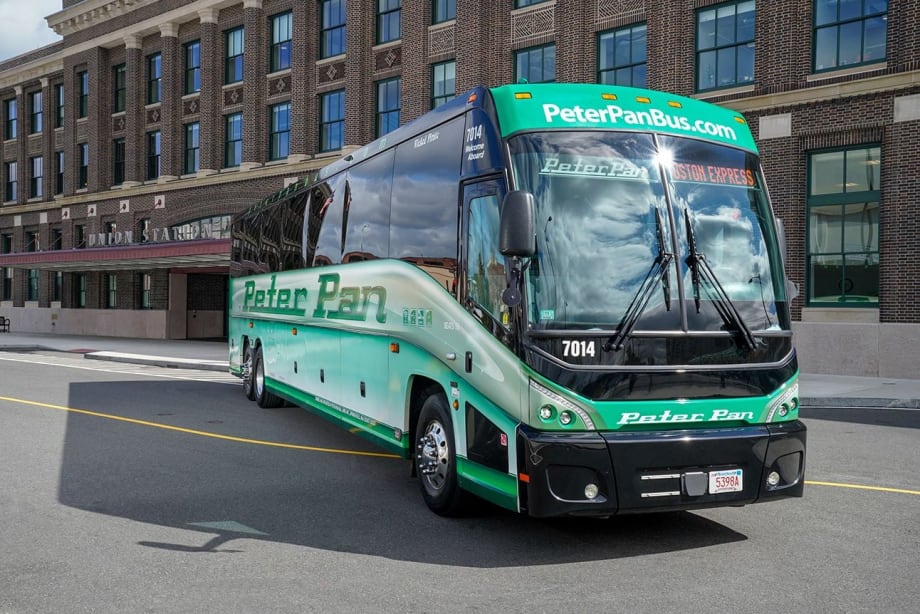
Photo: Peter Pan Bus Lines
With peak travel season approaching, the American Bus Association (ABA) released its “Motorcoach 2025 Sustainability and Innovation Report,” affirming what industry leaders have long championed: “motorcoach travel is the most energy-efficient and environmentally responsible mode of passenger transportation in North America.”
Commissioned by the American Bus Association Foundation (ABAF) and developed in partnership with Oxford Economics, the report presents a comprehensive, data-driven look at the sustainability performance of motorcoach operators and manufacturers and their role in advancing clean, efficient transportation.
“This report recognizes what our industry has long known: motorcoaches are the most energy-efficient, lowest-emission mode of passenger transportation available today,” said Fred Ferguson, president and CEO of the ABA. “In 2023 alone, motorcoach travel helped the U.S. avoid an estimated $2.7 billion in social costs tied to emissions. These outcomes result from decades of innovation — from clean idle engine technology to sustainable manufacturing practices.”
Why Motorcoaches Lead in Sustainability
The Motorcoach 2025 Sustainability and Innovation Report reinforces the motorcoach industry’s leadership in environmental performance, offering clear evidence for stakeholders and policymakers evaluating the role of ground transportation in reducing emissions and improving efficiency.
The most energy-efficient mode of Transportation is motorcoaches, which outperform personal vehicles, trains, planes, ferries, and transit buses in energy consumption per passenger mile.
Lowest Carbon Emissions per Passenger-Mile: Motorcoach travel produces less CO₂ per passenger-mile than any other transportation mode.
Transit Buses Emit 10-times More CO₂: While essential to urban transit networks, transit buses emit over 10-times more CO₂ per passenger-mile compared to motorcoaches.
$2.7 Billion in Avoided Social Costs: Motorcoach travel prevented $2.7 billion in environmental, health, and economic damages in 2023 alone, using EPA metrics for social cost of carbon.
Superior Across All Pollutants: Motorcoaches maintain best-in-class performance not only for CO₂ but across multiple regulated emissions.
Clean Idle Technology Leadership: Modern coaches featuring Clean Idle-certified engines reduce NOx emissions nearly 50% below regulatory limits.
Sustainable Innovation in Manufacturing
Motorcoach manufacturers continue to lead with responsible design, incorporating sustainable materials, production processes, and energy-saving technologies.
Key Manufacturer Sustainability Highlights:
62% include recycling initiatives in their strategic plans.
54% have carbon emissions targets and energy/waste management initiatives.
54% track ESG metrics and practice responsible sourcing.
39% pursue vehicle weight reduction and lifecycle assessments.
31% use renewable energy sources in production.
The report finds that these efforts reflect a broader industry commitment to meeting and exceeding environmental expectations through engineering innovation.
Operators Advancing Greener Travel
Motorcoach operators are equally engaged in the push toward more sustainable travel. By promoting group travel, reducing congestion, and adopting eco-conscious practices, operators are shaping a greener future for intercity mobility.
Key Operator Sustainability Practices:
65% have formal sustainability plans.
71% prioritize fleet renewal and maintenance for emissions reductions.
64% collaborate with partners to enhance sustainability goals.
54% train drivers are trained in fuel-efficient driving techniques.
60% have implemented anti-idling policies.
64% incorporate recycling into daily operations.
Operators are also extending vehicle lifecycles and investing in hybrid or electric vehicle options, further reducing their environmental footprint while maintaining reliability and passenger comfort.
About the Report and Methodology
The Motorcoach 2025 Sustainability and Innovation Report results from a collaboration between the ABA Foundation and Oxford Economics.
The research includes a comprehensive survey of North American motorcoach operators and manufacturers, offering one of the most in-depth looks to date at sustainability practices within the industry.
The findings are intended to inform ABA members and provide valuable insight for policymakers, transit agencies, and the public on the environmental and economic benefits of motorcoach travel.
More Motorcoach

Biz Briefs: RIPTA Unveils New Frontrunners, Clevland RTA Adds New Siemens, and More
In METRO's latest installment, we take a look at recent news from Siemens, Prevost, Dodge, and more partnerships making headlines across the transportation sector.
Read More →
People Movement: Holly Arnold Joins Transdev and More
In this edition, we also cover recent appointments and announcements at Pace, CamTran, MCI, and more, showcasing the individuals helping to shape the future of transportation.
Read More →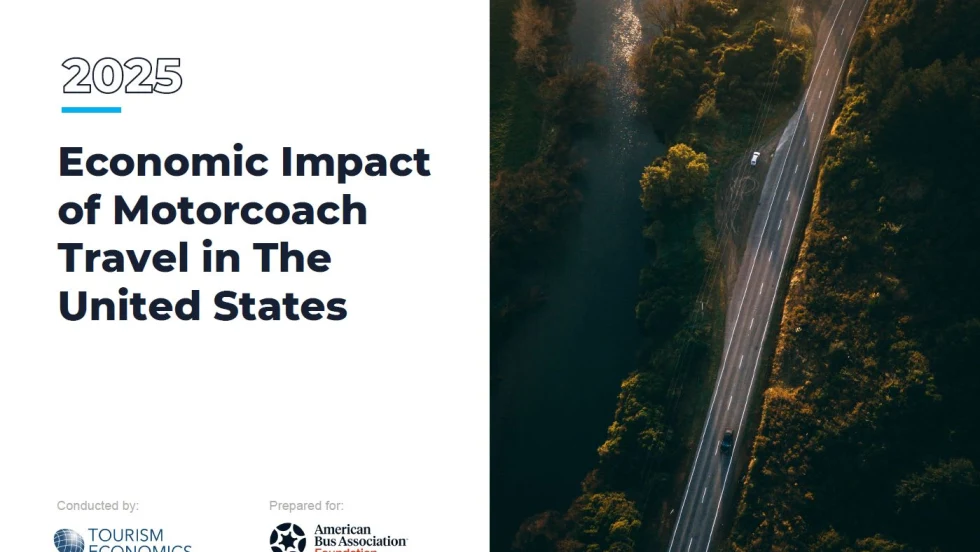
ABA Report: Motorcoach Travel Generates $161.6B Economic Impact
The 2025 analysis finds motorcoach travel supported nearly 900,000 jobs and generated $28 billion in federal, state, and local taxes.
Read More →
CharterUP’s Armir Harris on Technology, AI, and the Future of Group Mobility
In a recent episode of METROspectives, CharterUP Founder/CEO Armir Harris discussed the company’s evolution from an online charter bus marketplace into a technology platform supporting public- and private-sector mobility and much more.
Read More →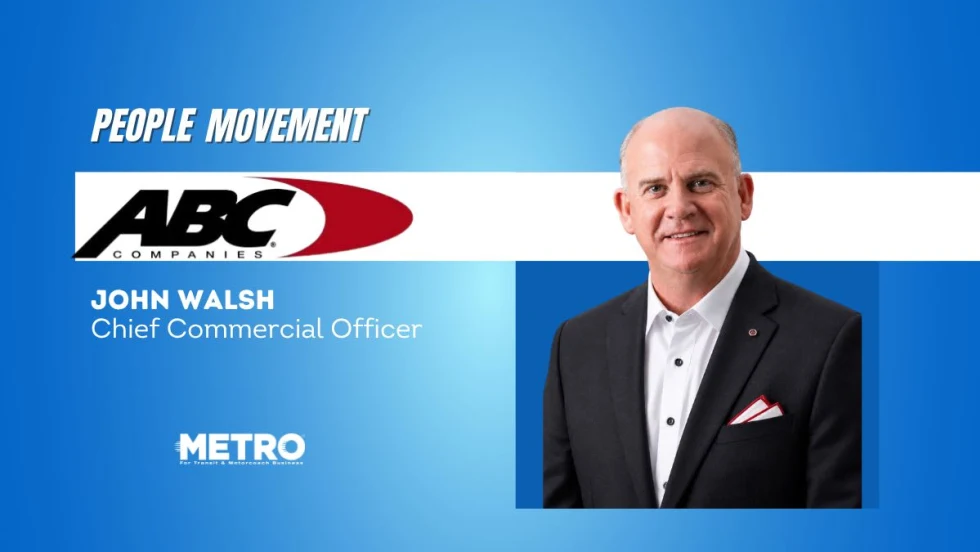
People Movement: ABC Names John Walsh as Chief Commercial Officer
In this edition, METRO also covers recent appointments and announcements at the DART, STV, and more, showcasing the individuals helping to shape the future of transportation.
Read More →
From Surviving to Thriving: Building Stronger Transportation Organizations
Bus Business Consultants founder Brian Dickson shares lessons on leadership, organizational health, and creating options for long-term success in a changing transportation industry.
Read More →
Biz Briefs: Luminator Marks Milestone and More
From manufacturers and suppliers to transit agencies and motorcoach operators, these updates offer a snapshot of the projects, partnerships and business moves driving the industry forward.
Read More →
ABAF Study Reveals Growing Insurance Crisis for Motorcoach Operators
Preliminary findings show 98% of operators faced premium increases over the past five years, while shrinking insurer participation is putting added pressure on businesses and customers.
Read More →
Motorcoach Market Remains Flat Amid Shift in Buying Patterns
Q2 sales totaled 514 units, up slightly from 2025, as operators favored pre-owned equipment and public-sector purchases increased.
Read More →
Biz Briefs: OCTA Taps Clean Energy for Hydrogen Station, Stadler to Supply Via Rail Vehicles, and More
From manufacturers and suppliers to transit agencies and motorcoach operators, these updates offer a snapshot of the projects, partnerships and business moves driving the industry forward.
Read More →