



CharterUP’s Armir Harris on Technology, AI, and the Future of Group Mobility
In a recent episode of METROspectives, CharterUP Founder/CEO Armir Harris discussed the company’s evolution from an online charter bus marketplace into a technology platform supporting public- and private-sector mobility and much more.

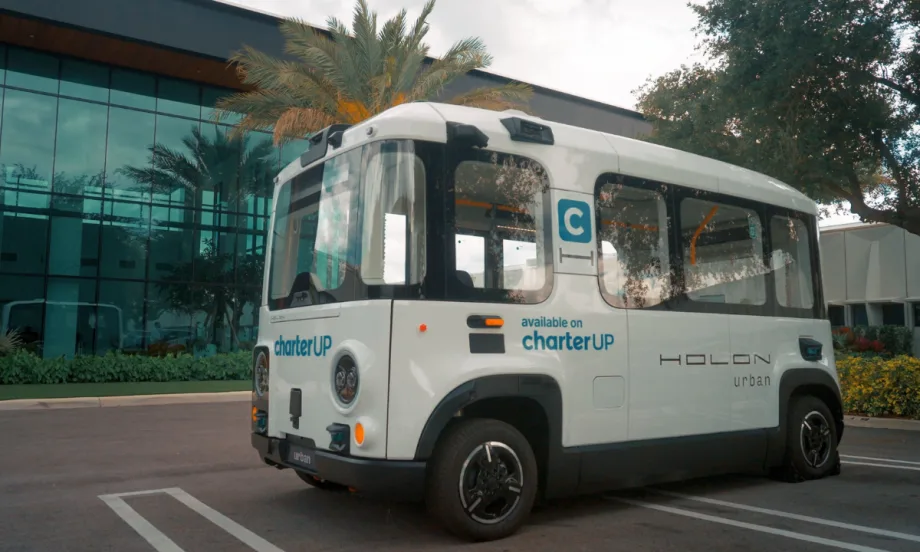
CharterUP is working with autonomous vehicle manufacturer HOLON as higher-capacity autonomous shuttles begin moving closer to real-world deployment.
CharterUP
- Armir Harris, CEO of CharterUP, shared insights on the company's transformation from a bus marketplace to a broad mobility technology platform.
- The discussion highlighted how CharterUP integrates technology and AI to enhance services in both public and private transportation sectors.
- The episode explored the future prospects and technological advancements in group mobility led by companies like CharterUP.
*Summarized by AI
When Armir Harris entered the motorcoach industry more than two decades ago, much of the business still operated offline, with fragmented processes and limited technology connecting operators with customers.
Today, Harris is founder and CEO of CharterUP, a technology company that has built a network encompassing more than 10,000 buses and more than 700 operators across the U.S.
During a recent episode of METROspectives, Harris joined METRO Executive Editor Alex Roman to discuss CharterUP’s growth, the changing expectations surrounding group transportation, and why technology, AI, and autonomous vehicles could play an increasingly important role in the future of mobility.
Bringing Technology to an Offline Industry
Harris described CharterUP as the largest marketplace and platform for contracting and chartering buses, while also providing software to bus operators. For Harris, the opportunity behind the company grew from his experience working in an industry that had historically lacked the technology increasingly common in other parts of transportation.
“We initially won by bringing the speed, the transparency, and reliability to…a very fragmented and outdated market,” Harris said.
CharterUP’s model was built around creating benefits on both sides of the marketplace — improving the customer experience while helping operators increase vehicle utilization.
As the company grew, however, Harris said the company saw an opportunity beyond simply connecting customers and operators.
“As we scale over time, it became clear to us that the larger opportunity was not just in being a transactional marketplace, but in really modernizing the underlying infrastructure for the entire mobility space,” he said.
That evolution has taken CharterUP from primarily facilitating individual transactions to managing large recurring mobility programs for public- and private-sector customers.
At the center of that expansion is the use of technology. Harris said the company is using AI to automate and improve areas such as route optimization, dispatch, and real-time fleet utilization. On the demand side, customers increasingly expect more than basic GPS tracking and arrival information.
“That's table stakes,” Harris said of those capabilities.
Instead, customers and operators are looking for real-time dashboards, fleet utilization information, maintenance insights, and tools that enable them to operate more proactively.
“One of the biggest trends that we've seen is a demand for transparency and visibility with modern tools,” Harris said.
CharterUP has also introduced Transit Intelligence, an AI product designed to address workflows that have historically required manual intervention.
Harris acknowledged there can initially be skepticism around AI, but said customers become more receptive after experiencing the technology and understanding how it can improve operations.
“AI is going to fundamentally change the way that…workforce and public and private mobility functions,” Harris said.
Serving Public and Private Mobility
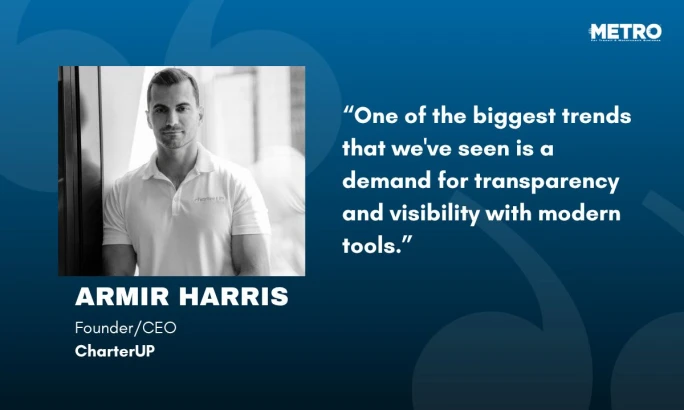
Armir Harris is founder and CEO of CharterUP, a technology company that has built a network encompassing more than 10,000 buses and more than 700 operators across the U.S.
CharterUP/METRO
CharterUP’s expansion has increasingly positioned the company between traditional private group transportation and public mobility. While the needs of those markets can differ, Harris said both ultimately want reliable transportation and a strong rider experience.
Public-sector clients tend to place greater emphasis on compliance and cost efficiency, with more structured and longer-term contracts. Private-sector demand, meanwhile, can be more dynamic and fluctuate based on usage. Harris sees opportunity in both, particularly in large-scale recurring shuttle programs.
For transit agencies, CharterUP can provide a flexible layer that complements both fixed-route and on-demand services. Harris said that flexibility can help agencies scale capacity, address first- and last-mile needs, provide temporary route coverage, or respond to sudden increases in demand.
Because the company has access to a network of more than 10,000 vehicles, Harris said agencies can deploy service without some of the lengthy lead times associated with traditional procurement processes.
For operators, those programs can also provide access to business opportunities they might not otherwise pursue.
One of CharterUP’s most significant areas of expansion is autonomous transportation.
The company is working with autonomous vehicle manufacturer HOLON as higher-capacity autonomous shuttles begin moving closer to real-world deployment.
Harris said the partnership plays to the strengths of both companies: CharterUP brings transportation demand and the customer-facing technology platform, while HOLON supplies the autonomous vehicle and AV hardware.
“We're very excited about this, and we see that in the long run, this is where significant segments of shuttles are headed,” Harris said.
Rather than expecting autonomous shuttles to replace conventional vehicles completely, Harris envisions a hybrid model.
Some transportation environments will continue to require onboard staff or the use of traditionally operated vehicles. Other settings could combine autonomous and manually operated vehicles under the same technology platform.
Harris pointed to enterprise and university campuses, as well as airports, as environments where autonomous shuttles are particularly well-suited today.
“We do see significant areas where there could be hybrid programs of autonomous vehicles as well as manual vehicles that could run in parallel under one unified operating system,” he said.
Electric Vehicles and the Next Phase of Growth
Autonomy isn't CharterUP’s only focus.
Harris said the company has already integrated numerous electric vehicles into its network and is encouraging adoption by directing more business toward operators that purchase or operate EVs.
The larger goal is to position the company as the technology connecting transportation demand with an increasingly diverse range of operators and vehicle types.
“We sit at a very unique position as the operational technology layer between the operators and the supply side,” Harris said.
That positioning reflects how Harris sees CharterUP’s role continuing to evolve. Rather than competing with bus operators, he said the goal is to give them technology and access to demand that can help expand the overall group transportation market.
“Our goal here is to expand market share and expand TAM as we provide better tools across the demand and supply side,” Harris said.
And Harris indicated that more growth may be on the horizon.
“We've got some great announcements just around the corner,” he said. “We've got significantly more demand on our platform than supply.”
This article, generated using OpenAI, was edited for accuracy and style and based on an episode of METROspectives
Quick Answers
CharterUP is a company that started as an online charter bus marketplace and has evolved into a comprehensive technology platform supporting both public and private sector mobility solutions.
*Summarized by AI
More Technology

Building a Flexible Path to Transit Electrification with BAE's John Hroncich
John Hroncich discusses BAE Systems’ modular and scalable approach, lessons learned from decades of real-world operations, and how agencies can identify electrification strategies that fit their fleets.
Read More →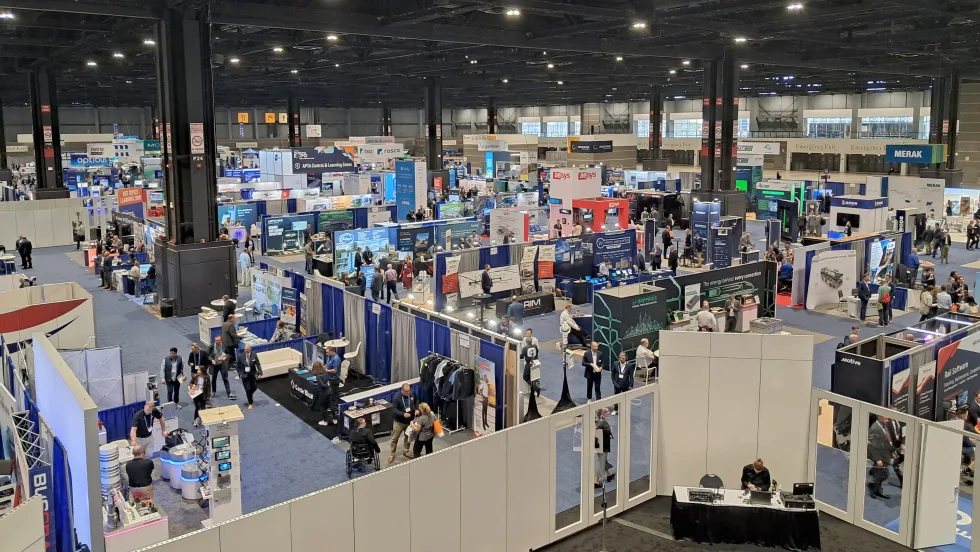
Scenes from APTA TRANSform & EXPO 2026
Transit leaders, manufacturers, and industry professionals gathered in Chicago to explore new technologies, share ideas, and discuss the future of public transportation.
Read More →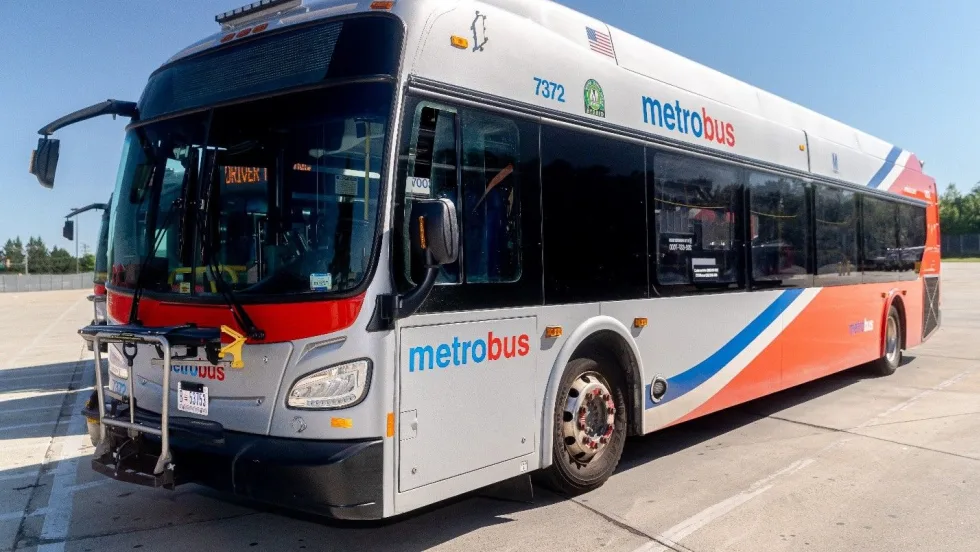
Biz Briefs: New Flyer Secures Additional 100-Bus Order from WMATA and More
In METRO's latest installment, we also take a look at recent news from Masabi, MCI, Samsara, and more partnerships making headlines across the transportation sector.
Read More →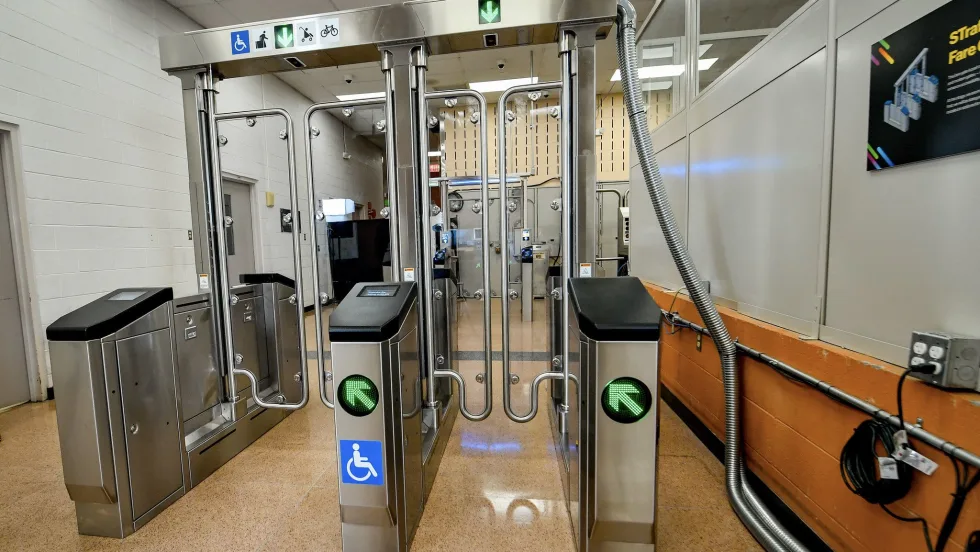
MTA Fare Gate Pilot Reduces Fare Evasion by 35%
Following a 20-station pilot, the agency plans to install new fare gates at 20 additional subway stations as part of a $1.1 billion modernization initiative.
Read More →
California Law Extends AC Transit’s Bus Lane Camera Enforcement
The new law allows AC Transit to continue using forward-facing bus cameras to enforce parking violations in bus-only lanes and at bus stops.
Read More →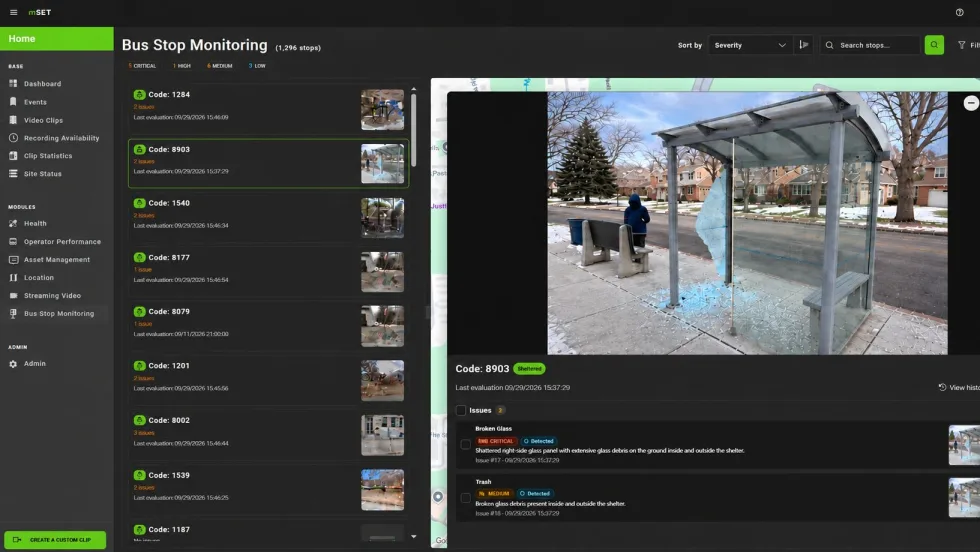
Biz Briefs: Luminator Launches AI Technology to Monitor Bus Stop Conditions and More
In METRO's latest installment, we also take a look at recent news from Masabi, Troman Industries, ioki, CCW, and more partnerships making headlines across the transportation sector.
Read More →
Public Transit Conference Returning to GFX in 2027, Call for Papers Now Open
The Call for Papers is now open, allowing transit agency professionals and industry experts to help shape the PTC educational program by submitting session ideas for consideration.
Read More →
ENC Lands MATA Contract and More in Biz Briefs
In this edition of Biz Briefs, we spotlight the latest developments shaping the future of mobility.
Read More →
Strada360’s Steve Lassey on Turning Transit Data Into Better Decisions
From breaking down data silos to preparing for AI, Strada360 CEO Steve Lassey discusses how transit agencies can use technology to improve operations, customer information, and long-term decision-making.
Read More →
Almaviva Looks to Open Architecture to Advance Transit Technology
Eric Reese discusses how interoperability, open architecture, and modular design can help transit agencies control costs, reduce vendor lock-in, and upgrade technology without starting over.
Read More →