



WMATA launches Automatic Train Operation on the Blue, Orange, and Silver Lines
The agency completes systemwide rollout of ATO, improving speed, safety, and reliability while reducing travel times and paving the way for a more modern, efficient transit experience.

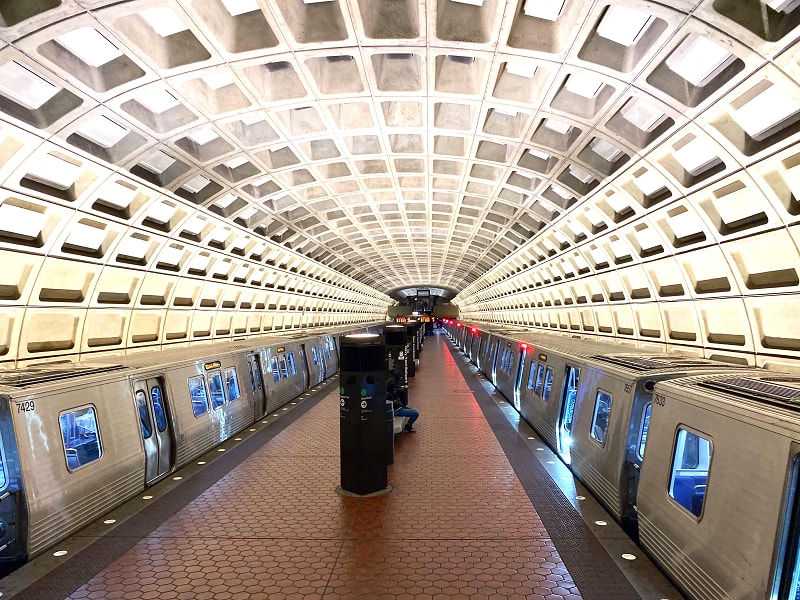
With the complete restoration of ATO, WMATA is reaffirming its commitment to delivering safer, faster, and more reliable service, aligning with its long-term modernization and operational excellence goals, the agency said in a press release.
Photo: WMATA/Larry Levine
The Washington Metropolitan Area Transit Authority (WMATA) officially restored Automatic Train Operation (ATO) across its entire Metrorail system, marking the first full return to the automated mode since 2009.
The rollout expands ATO from the Red Line — where it has operated successfully since December 2024 — to the Blue, Orange, and Silver Lines, following a successful phase-in on the Yellow and Green Lines in May.
WMATA decided to expand ATO after completing rigorous internal training and testing and receiving concurrence from the Washington Metrorail Safety Commission. Since the initial implementation on the Red Line, Metro reports no safety issues or red signal violations, reinforcing the system's reliability.
“This is a major milestone for Metro, and it has been a long time coming,” said WMATA GM/CEO Randy Clarke. “This is a win for customers and staff who will experience safer, more reliable rides. Meanwhile, Metro is saving money as ATO is more cost-efficient.”
Speed Increases and Time Savings
The full return to ATO also allows WMATA to restore original system speeds of up to 75 mph.
Beginning on June 15, several outer portions of the Blue, Orange, and Silver lines will now see speed increases from 55 mph to 65 mph or 75 mph.
Beginning June 22, WMATA will reduce end-to-end travel times by approximately three minutes on each line. The Yellow and Green Lines will also benefit from one to two minutes of time savings.
The Red Line, which has been running under ATO since December, has already seen travel times reduced by eight minutes. WMATA is continuing to monitor the system and indicated that further efficiency improvements may be incorporated on all lines later this year.
“Metro’s full restoration of Automatic Train Operations after 16 years is a transformative achievement,” said WMATA Board Chair Valerie Santos. “This advancement drives critical improvements in operations, efficiency, system safety, and the customer experience. It positions Metro firmly on the path to delivering the world-class transit system our region demands.”
How ATO Works
ATO automates the train’s acceleration, deceleration, and speed by receiving commands from trackside equipment, resulting in a smoother ride and improved on-time performance.
Although the system automates some of the train’s functionality, operators remain in the cab, responsible for customer safety, door operations, and monitoring track conditions.
ATO is not used in specific situations such as inclement weather, single tracking, or when track workers are present.
With the complete restoration of ATO, WMATA is reaffirming its commitment to delivering safer, faster, and more reliable service, aligning with its long-term modernization and operational excellence goals, the agency said in a press release.
More Rail

New York MTA Advances Final Contract for Second Avenue Subway Expansion
Contract Four is the largest in the Second Avenue Subway Phase 2 project and includes construction of station infrastructure, tracks, and signals for the subway expansion, MTA officials said. Work on Contract Four will begin in 2027.
Read More →
San Diego MTS Breaks Monthly Trolley Ridership Record
Agency officials said July’s ridership indicates MTS’s continued recovery from the pandemic.
Read More →
Report Examines NJ TRANSIT Reliability, Funding Challenges
The Garden State Initiative analysis examines the roles of Amtrak infrastructure, fleet management, and agency operations while recommending a more performance-based approach to improving reliability.
Read More →
Stadler, CapMetro Sign Long-Term Rail Fleet Support Agreement
Beginning in 2027, Stadler will provide on-site technical expertise, spare parts support, training, and obsolescence management to help extend the reliability and longevity of CapMetro’s GTW fleet.
Read More →
Biz Briefs: Alstom Lands Canadian Contract, LYT to Supply California TSP, and More
In METRO's latest installment, we take a look at recent news from Complete Coach Works, Beep, FlixBus, and more partnerships making headlines across the transportation sector.
Read More →
CATS Gold Line Marks 5 Years of Service, 2.8M Passenger Trips
With a six-mile expansion planned, the Charlotte streetcar is positioned to connect more neighborhoods and major transit hubs across the region.
Read More →
Why Simulating Pedestrian Movement Has Become Essential for Modern Rail Stations
Pedestrian microsimulation is helping rail planners identify bottlenecks, test station designs, and prepare complex transit hubs for growing passenger volumes.
Read More →
Amtrak Begins Major Construction at New York’s Sunnyside Yard
The new maintenance facility will support Amtrak’s Airo trainsets while improving maintenance efficiency and turnaround times in New York.
Read More →
Chicago Leaders Unveil Plans for O’Hare Airport Express Train
The privately developed project would offer a 15-minute trip between downtown and O’Hare’s Terminal 2, with trains operating every 15 minutes on a dedicated track. The service would use battery-electric trains and three existing freight rail rights-of-way.
Read More →
OCTA Maps Out 30-Year Strategy to Protect Coastal Rail Corridor
The draft feasibility report identifies strategies to protect the coastal rail line for decades as the agency continues near-term stabilization and sand placement efforts.
Read More →