San Antonio's VIA Approves 'Transformational' FY26 Budget
The budget builds on VIA’s accelerated vision for enhancing transit service and organizational performance, focusing on what riders value most: more frequent service, safer journeys, and improved access to opportunities.
VIA will begin receiving revenue on January 1 from a 1/8th-cent sales tax approved by San Antonio voters in November 2020.
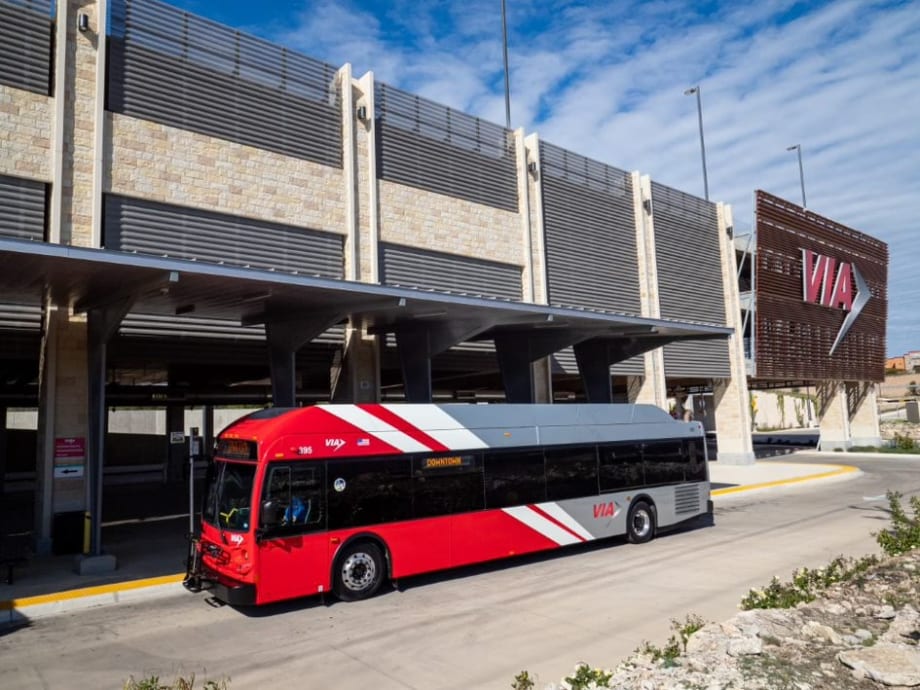
Photo: VIA
3 min to read
San Antonio’s VIA Metropolitan Transit unanimously adopted a $339.1 million operating budget and a $235.2 million capital plan for Fiscal Year 2026, totaling $574.3 million.
The budget builds on VIA’s accelerated vision for enhancing transit service and organizational performance, focusing on what riders value most: more frequent service, safer journeys, and improved access to opportunities.
Ad Loading...
Highlights of the FY 2026 Budgets
Key FY 2026 Investments include:
More Service & Frequency: Expanding service hours, reducing wait times, and improving travel times through VIA Link and fixed-route service enhancements.
Customer Experience: Adding more shelters, improving signage and real-time information, and modernizing rider facilities.
Safety & Security: Expanding the VIA Transit Police force, upgrading surveillance systems, and improving lighting and infrastructure.
Workforce Development: Strengthening operator retention and recruitment, expanding training and career pathways, and fostering a culture of organizational excellence.
Growing that portion of the workforce is critical for VIA’s plan to offer better service in the region.
The spending plan includes accelerating those improvements — adding VIA Link Zone in November and enhancing more than 55 routes over the year — increasing wages for all employees, investing in safety across the system, and growing the agency’s capital reserve to ensure the delivery of key infrastructure projects.
Sales Tax to Pay Dividends
VIA will begin receiving revenue on January 1 from a 1/8th-cent sales tax approved by San Antonio voters in November 2020. That portion of the sales tax was dedicated to workforce development for five years before becoming a permanent sales tax for VIA’s Advanced Transportation District beginning in 2026.
Ad Loading...
“This budget makes strategic investments that will help VIA deliver the improved, reliable transit system that meets the needs of our growing region,” Board Chair Laura Cabanilla said. “We’re making historic investments in our service, our infrastructure, and our workforce to benefit the community today and into the future.”
VIA is accelerating the delivery of the Better Bus Plan and will complete 64% of the planned improvements within its first two years. In addition to service improvements scheduled for January, May, and August, VIA will also launch its sixth VIA Link zone — the Southeast Zone — on November 3.
“This budget is about turning resources into results. Every additional trip, every safer stop, every new operator we train is an investment that translates into real improvements for our riders and our community,” VIA President/CEO Jon Gary Herrera said. “The ultimate impact is greater mobility, stronger connections to jobs and schools, and a system that earns the trust of the people we serve.”
In FY26, VIA plans to continue growing its frontline staff while maintaining a flat administrative staff.
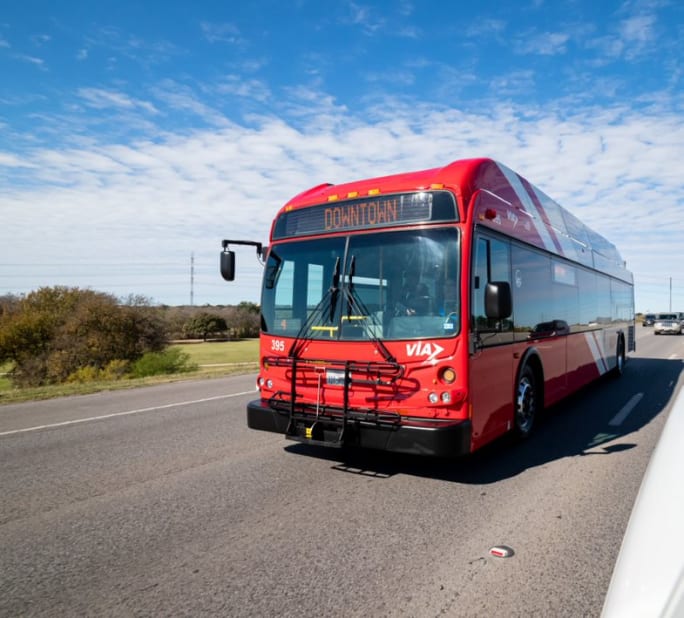
Photo: VIA
Growing the Workforce, Investing in Infrastructure
VIA’s focus on hiring and retaining operators is a key element critical to continued service improvement delivery across the system. VIA can only deliver on key service improvements outlined in the Better Bus Plan by expanding its operator ranks, the agency said.
As VIA seeks to provide faster, more frequent, and more reliable service, the workforce is the backbone of reaching that goal. In FY26, VIA plans to continue growing its frontline staff while maintaining a flat administrative staff.
Ad Loading...
Safety is a top priority at VIA, ensuring that customers ride in properly maintained vehicles, driven by safe operators, wait in safe transit centers and stops, and feel secure when they’re in VIA facilities and vehicles.
This year’s budget invests in several safety measures, including:
Retention and expansion of VIA Transit police personnel.
Technology improvements for safety personnel.
Safety programs.
Shelter-improvement program.
In the new fiscal year, VIA is implementing programs with innovative cost-saving solutions, including a vehicle wellness program designed to add three to five years to the lifespan of buses and save the agency $133 million over the next five years.
The board also approved VIA’s five-year capital improvement plan, valued at $1.1 billion, which includes historic investments in transit infrastructure, such as the VIA Rapid Green and Silver lines, new vehicles, the renovation of existing buildings, and the construction of new facilities.
Contract Four is the largest in the Second Avenue Subway Phase 2 project and includes construction of station infrastructure, tracks, and signals for the subway expansion, MTA officials said. Work on Contract Four will begin in 2027.
The new regional transit authority appointed its first board chair and interim executive director while extending reduced fares across CTA, Metra, and Pace for eligible riders.
Reliability-Centered Maintenance helps transit agencies move beyond routine checklists to focus limited resources on the assets and failures that have the greatest impact on safety, reliability, and service.
The 90-day demonstration will deploy coordinated security teams at five light rail stations while testing controlled access and gathering data to guide future investments.
Learn about delivering 1300 gates at 91 stations while managing fare evasion. Explore the large scale deployment, solution customization and real-world results that affect the region. Prepare for deployment in your region now.
Between packed transit stations and team motorcoaches, see how agencies and operators across North America tackled the transportation demands of the 2026 FIFA World Cup.
The stopgap keeps federal transportation programs moving, but missing advance funding could complicate the transit and rail projects agencies are planning next.