



San Antonio's VIA Lands $268M Fed Grant for Green Line
The transformative project will be the region’s first Advanced Rapid Transit corridor, delivering convenient, high-frequency service by late 2027.

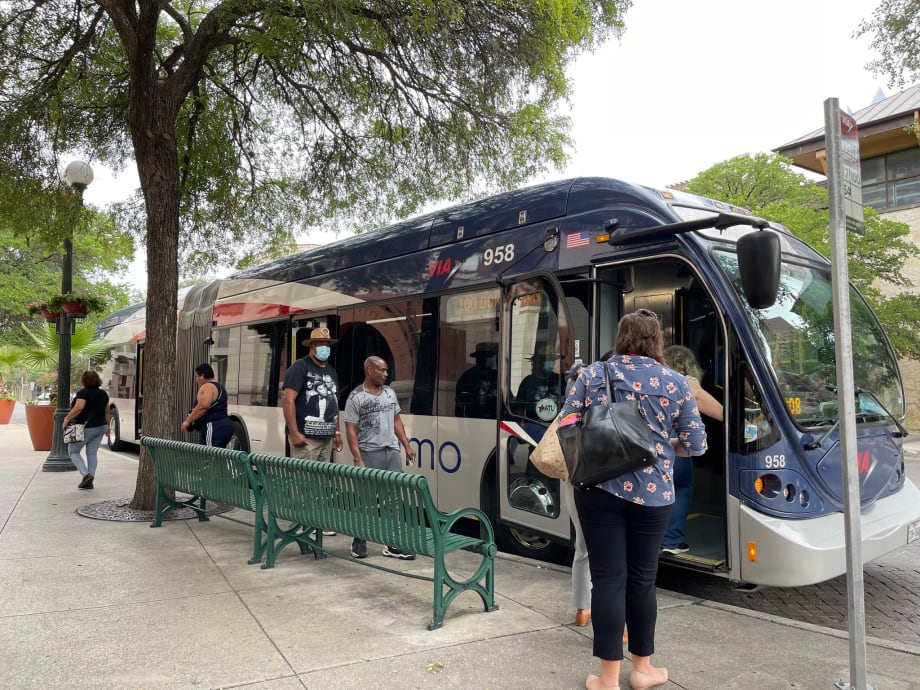
The Green Line service is designed to improve transportation options for the nearly 54,000 residents and 108,000 jobs located in the 10.35-mile corridor.
Photo: VIA
San Antonio’s VIA Metropolitan Transit signed a $268 million grant agreement with the Federal Transit Administration to support the VIA Rapid Green Line.
The transformative project will be the region’s first Advanced Rapid Transit corridor, delivering convenient, high-frequency service by late 2027.
VIA’s Green Line
The service is designed to improve transportation options for the nearly 54,000 residents and 108,000 jobs located in the 10.35-mile corridor.
The grant represents the largest federal investment in VIA’s history and marks the first time the agency sought this highly competitive federal funding opportunity. To qualify, VIA demonstrated its ability to provide high-quality transit services along dedicated bus-only lanes and secure local matching funds for construction and operation of the project.
“The Green Line will make life easier and better for everyone in this vibrant, fast-growing city,” FTA Deputy Administrator Veronica Vanterpool said. “Right now, many San Antonio households are spending nearly a quarter of their income just on transportation. This new transit line will help lessen that financial burden and create a thriving environment where everyone can enjoy greater mobility and economic opportunities.”
Building Toward the Green Line
In 2020, San Antonio voters approved a measure to redirect an existing 1/8-cent sales tax to the transit agency, starting in 2026.
The initiative, approved by more than 68% of voters, will provide the necessary local match and operating funds for the Green Line.
“Today’s signing is momentous for VIA and our community. Together with the FTA, we’re now fully funded to construct the backbone of a system designed to meet the mobility needs of San Antonio, well into our evolving future,” VIA President/CEO Jeffrey C. Arndt said. “The VIA Rapid Green Line will help countless residents and visitors more easily navigate our city, removing obstacles and barriers to health care, workforce development, jobs and opportunity that may have previously been out of reach. We see a future in which our customers spend less time traveling and more time doing the things that matter most in their lives.”
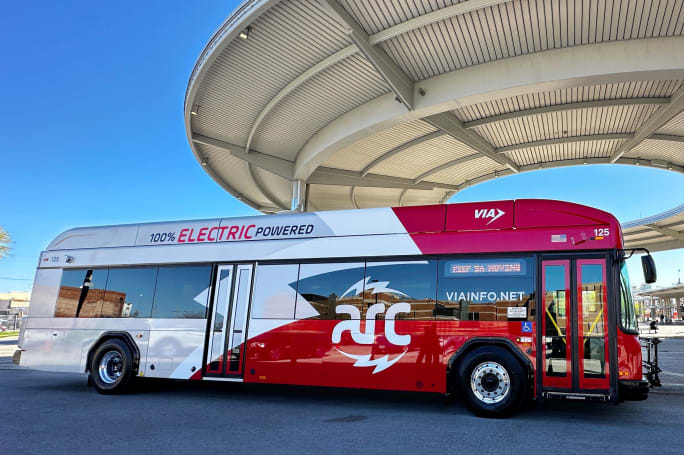
In 2020, San Antonio voters approved a measure to redirect an existing 1/8-cent sales tax to the transit agency, starting in 2026.
Photo: VIA
Benefits of the Green Line
The Green Line will connect riders from the San Antonio International Airport, through Downtown and south to the historic Missions area. The innovative service will feature:
Reduced travel times: Dedicated lanes and synchronized traffic signals to ensure faster and more reliable trips.
Enhanced rider experience: Off-board fare collection, level platform boarding, and modern stations to create a seamless and comfortable commute.
Improved mobility for all: The project includes upgrades to intersections, sidewalks, and drainage, benefiting pedestrians, cyclists, and motorists.
Part of Enhanced Service Plan
Advanced Rapid Transit corridors are a key component of VIA's Keep SA Moving plan, approved by voters in 2020.
The comprehensive plan aims to transform the region's transportation network and provide residents with more equitable and sustainable transit options.
More Bus

New York MTA Plans Largest Bus Fleet Upgrade in More Than a Decade
The agency is seeking manufacturers for 650 new CNG buses to replace aging vehicles, improve reliability, and advance its broader fleet modernization strategy.
Read More →
Building a Flexible Path to Transit Electrification
John Hroncich discusses BAE Systems’ modular and scalable approach, lessons learned from decades of real-world operations, and how agencies can identify electrification strategies that fit their fleets.
Read More →
Bus Tech Talk: Keeping Transit Technicians Ahead of the Technology Curve
LA Metro’s Obed Mejia discusses technician training, evolving maintenance technology, fleet replacement, and strategies for getting the most out of today’s transit fleets.
Read More →
Biz Briefs: RIPTA Unveils New Frontrunners, Clevland RTA Adds New Siemens, and More
In METRO's latest installment, we take a look at recent news from Siemens, Prevost, Dodge, and more partnerships making headlines across the transportation sector.
Read More →
People Movement: Holly Arnold Joins Transdev and More
In this edition, we also cover recent appointments and announcements at Pace, CamTran, MCI, and more, showcasing the individuals helping to shape the future of transportation.
Read More →
The High Cost of Transit Buses: Industry Leaders Look to Procurement Reform
Transit leaders and policymakers examine how standardized bus designs, streamlined procurement, and predictable funding could help agencies stretch budgets and deliver better service.
Read More →
The Business Voice Behind Public Transportation
As chair of APTA’s Business Members Board of Governors, Ray Melleady explains how more than 850 business members are partnering with transit agencies to advance funding, innovation, and industry-wide collaboration.
Read More →
From Surviving to Thriving: Building Stronger Transportation Organizations
Bus Business Consultants founder Brian Dickson shares lessons on leadership, organizational health, and creating options for long-term success in a changing transportation industry.
Read More →
Finding the ‘Happy Medium’: Optimizing Maintenance Without Sacrificing Reliability
The key to maintenance optimization isn’t doing less work—it’s doing the right work at the right time on the right assets.
Read More →
LA Metro, City of West Hollywood, and Partners Advance Smarter Bus Lane Enforcement
The award-winning partnership combines AI-powered detection with human oversight to improve bus reliability, accessibility, and enforcement efficiency.
Read More →