



San Antonio’s VIA Declares ‘Something Big Is on the Move’
President/CEO Jon Gary Herrera highlighted significant forward momentum on VIA’s signature initiatives, including the VIA Rapid Green and Silver Lines and the Better Bus Plan, both designed to increase service speed, frequency, and reliability.

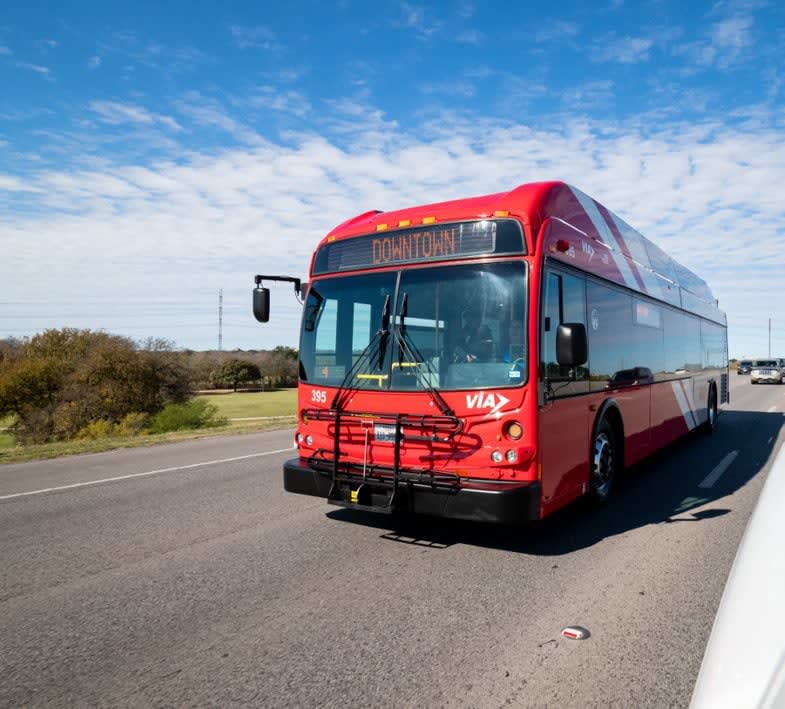
The State of Transit event is a cornerstone of SAMCo’s Transportation Leadership Series, offering a regional platform for aligning public and private efforts to improve mobility across all modes. VIA’s leadership in this space remains central.
Photo: VIA Metropolitan Transit
The future of public transportation in San Antonio is bright, bold, and already underway. That message was delivered by VIA Metropolitan Transit President/CEO Jon Gary Herrera during the 2025 State of Transit address, hosted in partnership with the San Antonio Mobility Coalition (SAMCo).
The annual luncheon convened regional elected officials, civic leaders, and transportation stakeholders last week to examine progress and unveil plans that will shape mobility in the greater San Antonio area. This year’s event carried the theme “Something BIG Is on the Move” — a reflection of the sweeping transformation underway at VIA.
“It is clear that VIA is growing — growing opportunities, growing connections, and growing our region’s economic potential,” said Herrera. “Our expanded transit network breaks through barriers of distance and time, linking talent to opportunity.”
Delivering on Ambitious Projects
Herrera highlighted significant forward momentum on VIA’s signature initiatives, including the VIA Rapid Green and Silver Lines and the Better Bus Plan, both designed to increase service speed, frequency, and reliability. These enhancements are part of a broader strategy to meet the evolving mobility needs of a rapidly growing metropolitan region.
“We have an opportunity to make game-changing events. These Green and Silver Lines are those game-changing events,” said Bexar County Judge Peter Sakai. “We’re helping shape a more connected, inclusive future for our community.”
In a defining moment of the program, VIA Board Chair Laura Cabanilla introduced the agency’s new vision and mission statements, reshaping the narrative around public transportation in San Antonio.
“The reality is that our region’s economy depends on the people who depend on VIA,” Cabanilla said. “We’re making mobility easier, and that benefits everyone.”
She continued by unveiling the updated guiding principles:
Vision: To be the driving force for our community’s growth and success.
Mission: To take you to what matters most.
Promise: Count on VIA for every ride.
Platform for Regional Mobility Collaboration
The State of Transit event is a cornerstone of SAMCo’s Transportation Leadership Series, offering a regional platform for aligning public and private efforts to improve mobility across all modes. VIA’s leadership in this space remains central.
With a service area that spans over 1,200 square miles in Bexar County, VIA operates a comprehensive transit network that includes 75 bus routes, on-demand VIA Link zones, and Park & Ride facilities. This network connects thousands of riders daily to jobs, education, healthcare, and opportunities.
As Herrera concluded, the message was clear: VIA isn’t just moving people, it’s powering San Antonio’s growth, equity, and economic vitality.
More Management

METRO Opens Submissions for 2026 Motorcoach Awards
Nominations are now being accepted for METRO Magazine’s Operator of the Year and Innovative Operator of the Year awards.
Read More →
New York MTA Advances Final Contract for Second Avenue Subway Expansion
Contract Four is the largest in the Second Avenue Subway Phase 2 project and includes construction of station infrastructure, tracks, and signals for the subway expansion, MTA officials said. Work on Contract Four will begin in 2027.
Read More →
Transit Agencies Highlight Safety Gains at National Summit
Leaders from 15 major transit systems shared crime-reduction results and safety initiatives while discussing the role of continued federal support.
Read More →

NITA Names New Leadership, Expands Reduced-Fare Program at First Board Meeting
The new regional transit authority appointed its first board chair and interim executive director while extending reduced fares across CTA, Metra, and Pace for eligible riders.
Read More →
Beyond the Checklist: A Structured Approach to Transit Maintenance
Reliability-Centered Maintenance helps transit agencies move beyond routine checklists to focus limited resources on the assets and failures that have the greatest impact on safety, reliability, and service.
Read More →
APTA 2026 Nominating Committee Selects Leadership Slate, Names Chair and Vice Chair Nominees
Leadership changes will help shape the association’s priorities and its representation of the transportation industry during the 2026–2027 term.
Read More →
DART Launches Major Security, Fare Enforcement Initiative
The 90-day demonstration will deploy coordinated security teams at five light rail stations while testing controlled access and gathering data to guide future investments.
Read More →
Advancing Fare Collection Through Technology and Innovation
Learn about delivering 1300 gates at 91 stations while managing fare evasion. Explore the large scale deployment, solution customization and real-world results that affect the region. Prepare for deployment in your region now.
Read More →
Game Day in Motion: Moving Millions During the 2026 World Cup
Between packed transit stations and team motorcoaches, see how agencies and operators across North America tackled the transportation demands of the 2026 FIFA World Cup.
Read More →
Surface Transportation Extension Averts Shutdown, Leaves Transit Funding Gap
The stopgap keeps federal transportation programs moving, but missing advance funding could complicate the transit and rail projects agencies are planning next.
Read More →