



NJ TRANSIT OKs Design and Engineering for Secaucus–Jersey City Project Phase
The project will provide environmentally friendly transit access between the Meadowlands Sports and Entertainment Complex, Secaucus Junction, and Jersey City.

Phase 2 includes designing a dedicated right-of-way between Secaucus and Jersey City, with multiple stops along the route.
Photo: METRO
The NJ TRANSIT board has approved $22.2 million, plus a 10% contingency, to complete engineering and design for the Secaucus–Jersey City segment of the Secaucus–Meadowlands Transitway extension.
The project will provide environmentally friendly transit access between the Meadowlands Sports and Entertainment Complex, Secaucus Junction, and Jersey City.
“I am pleased to see the progress on such an important, environmentally friendly public transportation solution. This critical initiative supports New Jersey’s economic growth while providing new transportation options for residents and visitors as they enjoy the state’s premier sports and entertainment destinations,” said NJ TRANSIT President/CEO Kris Kolluri.
Next Steps
The agency’s board approved extending its existing contract with engineering firm HNTB to complete the next design stage of Phase 2 — Transitway Jersey City — for no more than $22,283,241.90, plus 10% contingency.
Phase I of Transitway began in 2021, when the board authorized entering into a contract with HNTB for $3,542,944.75 to complete conceptual development and preliminary design.
Phase 2 includes designing a dedicated right-of-way between Secaucus and Jersey City, with multiple stops along the route. This right-of-way will accommodate multiple vehicle forms, excluding rail. The route will use the former Boonton rail line and the Bergen Arches.
Benefits of the Projects
The goal of the overall Transitway project is two-fold.
The project increases service capacity, enabling more customers to travel between the Meadowlands Sports and Entertainment Complex and Secaucus Junction Station more efficiently.
Beyond the benefits of Phase 1 of the project, which will increase capacity to some of the world’s most significant events at MetLife Stadium, Phase 2 creates a brand-new service corridor in one of the most densely populated areas of North Jersey through the adaptive reuse of existing right-of-way owned by NJ TRANSIT.
As part of the overall project, the transit modes considered in this work shall be configured. Hence, they can be implemented with zero-emission vehicles or readily transitioned to them in the future, and can scale to fully autonomous vehicle operation as industry advances allow.
More Rail
FRA Announces $5.3B in Rail Investments, Including $2B for Amtrak
Funding will support grade-crossing improvements, infrastructure upgrades, and new Amtrak equipment in 23 states.
Read More →
Finding the ‘Happy Medium’: Optimizing Maintenance Without Sacrificing Reliability
The key to maintenance optimization isn’t doing less work—it’s doing the right work at the right time on the right assets.
Read More →
OKC Streetcar Makes Zero-Fare Service Permanent
Ridership increased an average of 71% compared with the same period a year earlier during the fare-free pilot.
Read More →
DART Customer Satisfaction Reaches Six-Year High
Overall satisfaction rose to 74.9%, while the agency’s Net Promoter Score reached a record 33.7.
Read More →
How DART's GoPass Is Redefining Regional Mobility
Serving 14 transit agencies, GoPass simplifies multimodal travel by allowing riders to plan, pay for, and manage an entire trip through one app.
Read More →
Amtrak Board Advances Plan to Restructure Organization, Seeks Public Input
The proposal, developed by Amtrak management and approved by the board for further consideration, is intended to modernize the organization's structure while improving accountability, operational efficiency, and customer service.
Read More →
Biz Briefs: STV teams with Amtrak, Motorcoach Operators Boost Fleet and Land Contracts, and More
From manufacturers and suppliers to transit agencies and motorcoach operators, these updates offer a snapshot of the projects, partnerships and business moves driving the industry forward.
Read More →
Metra Celebrates 100 Years of Electric Rail, Looks to the Future
The event was also a celebration of recent reforms to public transportation in the Chicago area, changes that could be as transformative in the future as the major civic achievement a century ago, said officials.
Read More →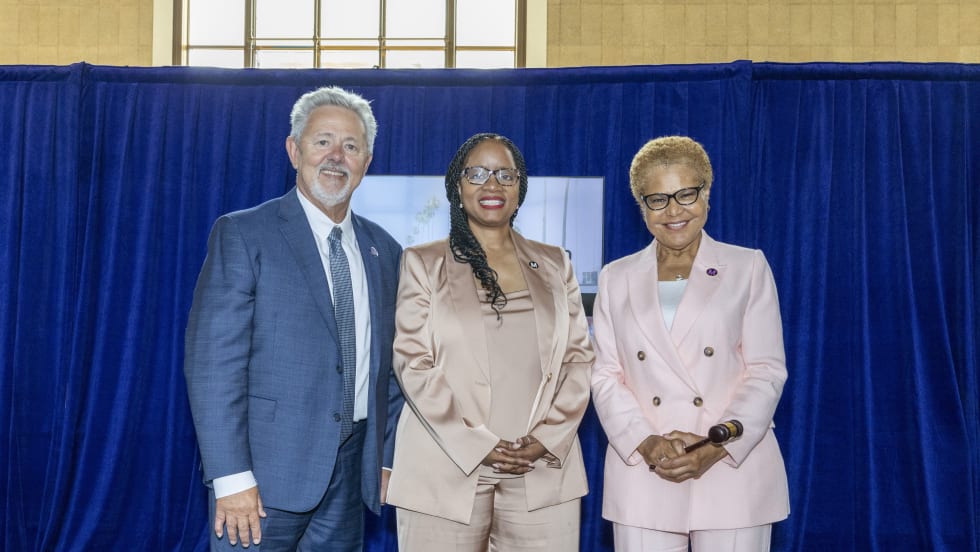
LA Metro Marks Banner Year, Sets Ambitious Goals for New Fiscal Year
Incoming LA Metro Board Chair and Los Angeles Mayor Karen Bass joined outgoing Board Chair Fernando Dutra and LA Metro CEO Stephanie Wiggins to review accomplishments from fiscal year 2026, which included the opening of new rail extensions, advancement of major transit projects, expanded safety programs, and new rider amenities.
Read More →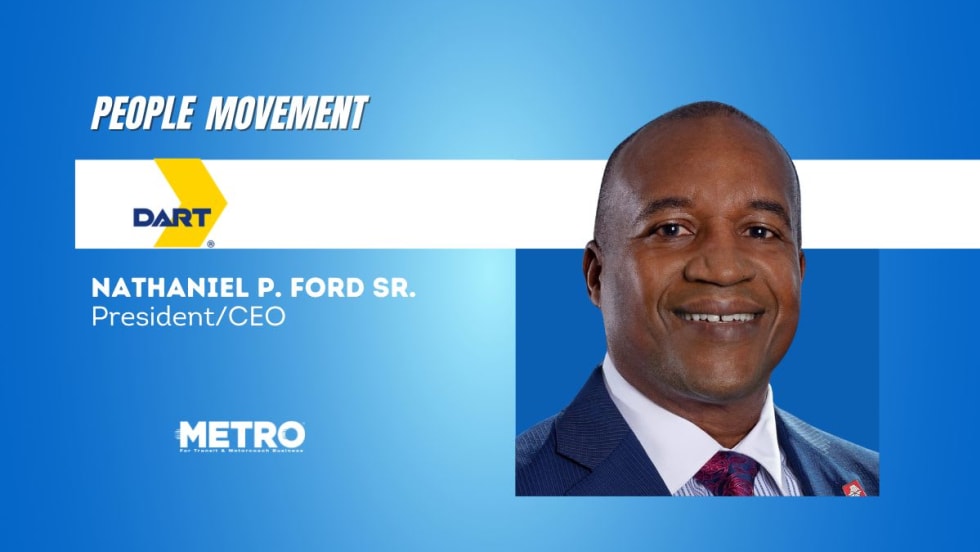
DART Taps Nathaniel P. Ford Sr. as Next President/CEO
Since 2012, Ford has served as the CEO of the Jacksonville Transportation Authority
Read More →