Seattle Sound Transit Sets Launch Date for Crosslake Connection
This final component of the 2 Line will cross Lake Washington and connect with the 1 Line at International District/Chinatown Station, creating a fully integrated regional light rail system.
The 2 Line will operate between Lynnwood and Redmond, in addition to the 1 Line between Federal Way and Lynnwood. Trains will run approximately every eight minutes during peak times at the new stations and between 10 and 15 minutes the rest of the day.
Credit: Sound Transit
2 min to read
Seattle’s Sound Transit announced the Crosslake Connection will open for passenger service on March 28.
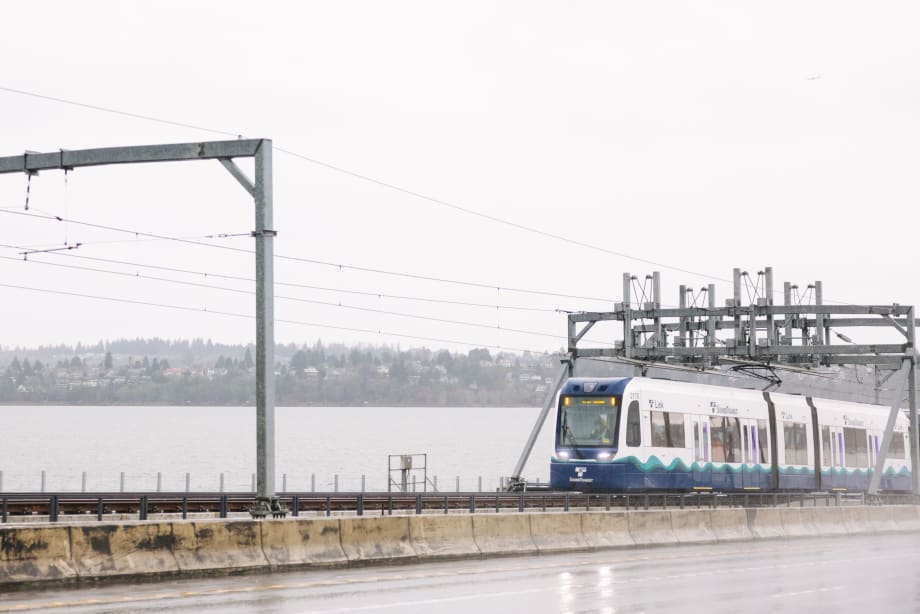
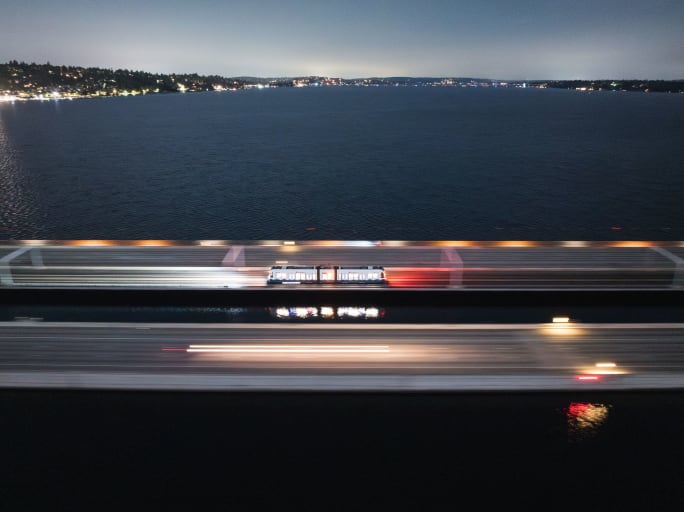
This final component of the 2 Line will cross Lake Washington and connect with the 1 Line at International District/Chinatown Station, creating a fully integrated regional light rail system.
Ad Loading...
The final segment of East Link includes new stations at Mercer Island and Judkins Park. It completes the regional transit system expansion approved by voters in 2008 under ST2, increasing the light rail system from 55 to 63 miles.
The 2 Line
The 2 Line will operate between Lynnwood and Redmond, in addition to the 1 Line between Federal Way and Lynnwood. Trains will run approximately every eight minutes during peak times at the new stations and between 10 and 15 minutes the rest of the day.
Combined 1 and 2 Line headways between Lynnwood and the International District/Chinatown will be every four minutes, providing additional capacity through the system's busy core.
“This extension connects east and west, connects the 1 and 2 Lines, vastly improving mobility and quality of life in our region,” said Sound Transit CEO Dow Constantine. “It’s a transformational achievement that took grit, persistence, and ingenuity, and it fulfills a generational promise of uniting both sides of Lake Washington with high-capacity transit.”
To complete the 2 Line and connect to the Eastside, Sound Transit engineers had to do something that had never been done before — design light rail on a floating bridge.
Credit: Sound Transit
Path to Completion
To complete the 2 Line and connect to the Eastside, Sound Transit engineers had to do something that had never been done before — design light rail on a floating bridge.
Ad Loading...
The world-first achievement was made possible by innovative engineering that addressed the unique challenges of operating electric trains across a moving body of water.
With the opening of the full 2 Line, Sound Transit has begun operating six new light rail expansions in five years. Pinehurst Station is expected to open later this year.
Caltrain and its partners have implemented safety improvements at specific locations in response to known risk conditions, operational needs, and available funding since the agency’s founding.
On a recent episode of METROspectives, METRO Magazine’s Executive Editor Alex Roman sat down with Ana-Maria Tomlinson, Director of Strategic & Cross-Sector Programs at the CSA Group, to explore a bold initiative aimed at addressing those challenges: the development of a National Code for Transit and Passenger Rail Systems in Canada.
Competitive FTA grants will support accessibility upgrades, family-friendly improvements, and cost-efficient capital projects at some of the nation’s oldest and busiest transit hubs.
The 3.92-mile addition will soon take riders west beyond its current Wilshire and Western station in Koreatown, continuing under Wilshire Boulevard through neighborhoods and communities including Hancock Park, Windsor Square, the Fairfax District, and Carthay Circle into Beverly Hills.
Under the plan, all long-distance routes will transition to a universal single-level fleet, replacing today’s mix of bi-level and single-level equipment.
The milestone is a significant step toward modernizing the MAX Blue Line’s power infrastructure, one of the oldest components of the region’s light rail system.
The firm will lead the Tier 2 environmental review program for the Coachella Valley Rail Corridor, including the conceptual and preliminary engineering needed to develop project-level environmental clearance.
The ATP board’s approval of ARC enables ATP to begin pre-construction activities and advance final design for Austin Light Rail under the first phase of what will be a multibillion-dollar contract.