



10 milestones in public-private partnerships
Each issue in 2004, Cliff Henke, contributing editor and former associate publisher of METRO, will deliver a Top 10 list on a particular area of public transportation.
The history of public transportation is the story of government intervention, directly and indirectly. In fact, public-private tension in public transportation is among the more fascinating episodes of the relationship between government and industry in our country’s history. Below are 10 of the most interesting points in that journey. 1. Electrification. After electricity was invented, governments began to grant easements and charters to electric railways and, later, trolleybuses. Government was both enabler and regulator, granting exclusive franchises and, at worst, stipulating in some cities only where companies string their wires. 2. New York City’s subways. In the 1890s, New York’s Rapid Transit Commission recommended that the city award a franchise for its first subway lines, responding to the public’s demand for something more reliable and quieter than elevated systems. The result, known as the Interborough Rapid Transit, was a new kind of public-private partnership, an American answer to earlier European experiments in suburban and underground rail. 3. Federal Electric Railway Commission. In response to an industry crisis caused by intense competition both within the streetcar industry as well as from motor buses and jitneys, President Woodrow Wilson created a commission to recommend solutions. Its 1920 report urged a more active public role, but the solutions were considered too radical. 4. The interurban railways. During the first three decades of the 20th century, communities would often cut deals with developers and electric railway companies. These policies were often responsible for the early sprawl in such places as Los Angeles and Indianapolis. 5. Motorbus era. The internal combustion engine contributed its own answer to problems associated with horse-drawn vehicles, and their inherent flexibility over electric and rail-based modes lowered the competitive barriers in public transit. Congestion and threats to safety prompted most cities to begin regulating these operators — and prompted the first charges of “unfair favoritism to rail” leveled at governments by bus companies. 6. Federal Aid to Highways Act. In the 1920s, the auto industry received the first of its decades-long string of massive federal subsidies, helping to put interurban rail networks out of business. 7. Utility divestitures. In the 1930s, President Franklin Roosevelt forced electric utilities to divest their tram companies. The utilities’ ability to cross-subsidize their streetcar subsidiaries with cheap or free traction power, coupled with public subsidies of auto travel, effectively wrote the death warrant for privately owned and operated rail transit. 8. Urban Mass Transportation Act. In 1964, Congress acted to help cities bail out failing transit companies, providing the framework for the industry as we know it today. Section 13(c) of the act also created the labor protections that have helped the industry to be one of the nation’s most heavily unionized. Other provisions of the law, which were supposed to help preserve private competition, have been less effective. 9. Americans With Disabilities Act. The 1991 landmark civil rights law extended the guarantees of a bus ride with a wheelchair lift contained in earlier regulations much further. ADA’s estimated billion-dollar price tag has prompted many transit agencies to outsource their mandated paratransit service. The result is that more than 12% of all U.S. transit operating costs are for purchased service, roughly three times the early 1980s’ share. 10. Transportation Equity Act for the 21st Century. Enacted in 1998, TEA 21 was an unprecedented federal commitment to public-private partnerships. Its far-reaching provisions range from federal assistance to motorcoach companies, ostensibly to pay for their costs of ADA compliance, to incentives for greater private investment in public transportation. TEA 21Õs legacy is only beginning to be felt.
More Management

LA Metro Board Awards 220 Battery-Electric Bus Contract to ENC
The contract, which is the largest base award of battery-electric buses by a U.S. transit agency, will be built in Southern California, sustaining good jobs as LA prepares to welcome the world in 2028
Read More →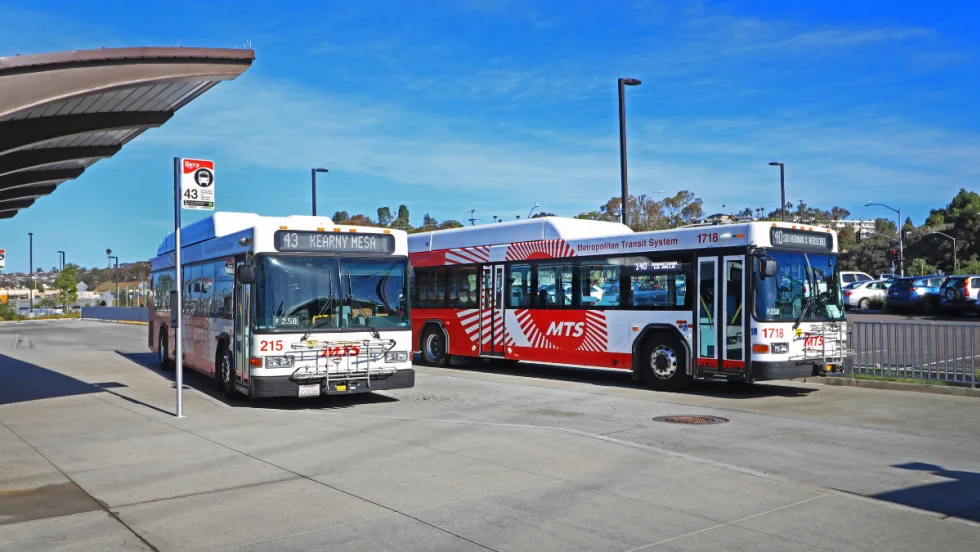
What’s Behind San Diego MTS’s Award-Winning Transit Strategy
Named one of APTA’s 2026 Outstanding Public Transportation Systems with 50 million or more annual passenger trips, California’s San Diego Metropolitan Transit System points to gains in ridership, safety, technology, and reliability as foundations of its success.
Read More →
Public Transit Conference Returning to GFX in 2027, Call for Papers Now Open
The Call for Papers is now open, allowing transit agency professionals and industry experts to help shape the PTC educational program by submitting session ideas for consideration.
Read More →
Indian River Transit’s Community-Focused Approach Earns National Recognition
Named APTA’s 2026 Outstanding Public Transportation System in its size category, Florida’s Indian River County transit system continues to grow ridership through fare-free service and a focus on evolving community needs.
Read More →
ENC Lands MATA Contract and More in Biz Briefs
In this edition of Biz Briefs, we spotlight the latest developments shaping the future of mobility.
Read More →
From Surviving to Thriving: Building Stronger Transportation Organizations
Bus Business Consultants founder Brian Dickson shares lessons on leadership, organizational health, and creating options for long-term success in a changing transportation industry.
Read More →
Everett Transit, Community Transit Outline Consolidation Agreement
The proposed agreement calls for a 50% increase in bus service in Everett, a new microtransit zone, continued paratransit service, and the transfer of Everett Transit operations to Community Transit.
Read More →
Strada360’s Steve Lassey on Turning Transit Data Into Better Decisions
From breaking down data silos to preparing for AI, Strada360 CEO Steve Lassey discusses how transit agencies can use technology to improve operations, customer information, and long-term decision-making.
Read More →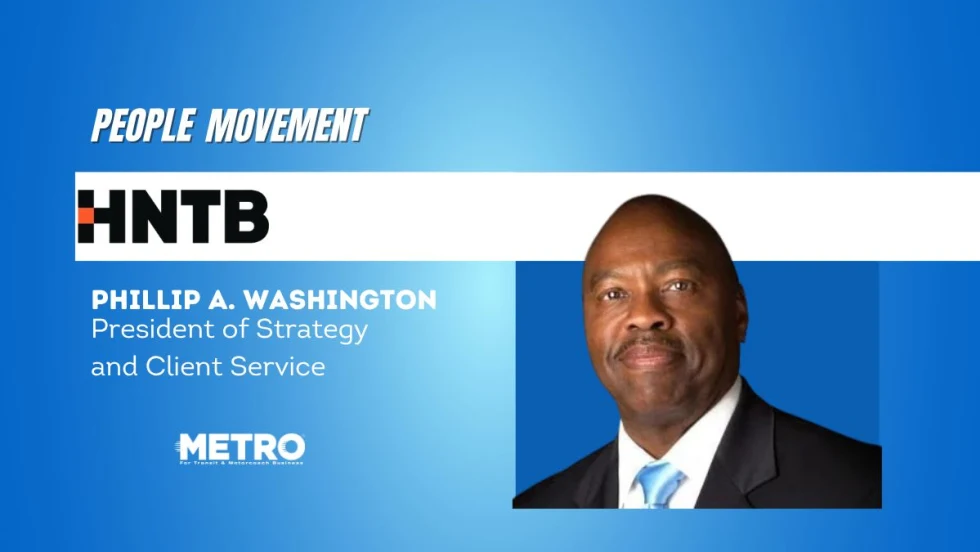
People Movement: Phil Washington Joins HNTB, Denver RTD Launches CEO Search, and More
In this edition, we also spotlight recent personnel moves at STV, the Eno Center for Transportation, and more, highlighting the people taking on new roles across the transportation industry.
Read More →
SEPTA Details Accelerate Vision for Transit System
The plan outlines investments in trolley modernization, new Metro and Regional Rail vehicles, accessible stations, and more frequent bus and rail service.
Read More →