



5 Ways to Improve Your Paratransit Service
Refining and improving demand-response service is a never-ending challenge. Advances in vehicle tracking have helped, but other areas to scrutinize include staffing, eligibility screening, driver recruitment and customer amenities.
Improving paratransit service is not a simple undertaking. The complexity of demand-response service and compliance with the Americans With Disabilities Act (ADA) require that each step taken to improve one part of the process be carefully weighed with regard to its effect downstream. The last thing you want to do is plug one hole and open three more. However, pressures to improve the productivity and quality of paratransit service are constant and will probably only increase as U.S. demographics shift in favor of an older, longer-living population. With the mantra of “faster, better, cheaper,” few transit agencies and contractors are in the position of embracing the status quo — at least not for very long. So what can you do to improve your operation? There are hundreds of ways to increase the efficiency and reliability of your program, but we’ve isolated five operational topics for discussion in this article: technological innovation, staffing, eligibility screening, driver recruitment and customer service. 1. Use new technology wisely Keeping up with technology is a critical but complicated task. The use of automated vehicle location (AVL), mobile data terminals (MDTs), interactive voice response (IVR) and onboard navigational technology is becoming increasingly common among paratransit operators, both transit agencies and contractors. Alan Rodenstein, senior associate at LKC Consulting Services in Houston, says the use of AVL and MDT is increasing fairly rapidly, both for paratransit and fixed-route service. “The key to the AVL system is that it be integrated with the scheduling system,” he says. “That way you can match scheduled information to real-time information. At a micro and macro level, it allows you to fine-tune your operation.” The next step, Rodenstein says, is to tie the integrated system into a phone-ahead network that alerts customers that the bus is due to arrive in, say, five minutes. In addition, GPS-based navigational devices can be a great benefit to paratransit drivers who are unfamiliar with their territory. “This can literally direct you to the address,” says Rodenstein. “New drivers really take to it, but experienced drivers also use it as well.” The key to a smooth transition to AVL, MDT and GPS technology is coordinated planning, bringing operational staff together with the system vendors as well as any internal computer staff. (For more on technological challenges, see the sidebar below). “There are so many horror stories about transitions that didn’t work well,” Rodenstein says. “You have to realize that you’re not going to be an expert immediately. It will take time to build and develop expertise.” In the meantime, Rodenstein says it’s a good idea to keep your customers in the loop, especially if there are glitches in the system. “Let them know that you’re trying to provide a better level of service,” he says. “It’s generally good to be upfront about it.” 2. Position your staff properly At Tri Delta Transit in Antioch, Calif., customers experienced lengthy waits on the phone to make ride requests. “This resulted in an unacceptable lost-call ratio,” says Jeanne Krieg, CEO and general manager of the authority. The average call length was more than three minutes and, worse, customers were complaining that they weren’t able to get through to make a ride reservation. Krieg decided to reassign the employees with the best computer skills to work exclusively entering ride requests on the computer. The employees who were less skilled with the database software became order-takers with the sole responsibility of taking ride requests over the telephone. The modified scheduling system was implemented nearly a year ago and has shown impressive results. According to Krieg, lost calls (hang-ups by people waiting on hold) decreased from 13% to 5.5% and average call length decreased from nearly 3.5 minutes to 45 seconds. In addition, average time on hold dropped from 2.7 minutes to 48 seconds, and calls per hour (per phone clerk) increased from 7.3 to 20.2. “Overall, department productivity improved and customer complaints about the inability to make a ride reservation dropped to zero,” Krieg says. The agency operates 16 dial-a-ride vehicles to cover a service area of 225 square miles and logs approximately 98,000 trips per year. 3. Fine-tune eligibility At Santa Cruz Metropolitan Transit District (Metro) in California, rising operational costs, a liberal certification system and a community desire for higher-quality service was the impetus for revamping its ADA paratransit service, called Metro Paracruz, which provides about 100,000 rides per year using vans and subcontracted taxis. One element of rebuilding this paratransit system was to enact a 100% recertification program, requiring current users to participate in a paperless review process. “This in-person interview system is unique in that most agencies have a paper application process,” says Kim Chin, Metro’s marketing and planning manager. “In our case, applicants and existing customers come for an interview in which their eligibility will be determined by a trained individual using a sophisticated piece of certification software.” Chin says the software, which was created by the Orthopaedic Hospital of Los Angeles, provides a comprehensive question-and-answer format that allows an evaluator to determine an applicant’s abilities based on ADA eligibility standards. Another strategy used to improve the paratransit service in Santa Cruz County was to have staff managers and board members attempt to use the system with assigned disabilities. 4. Keep those drivers coming Recruitment of qualified paratransit vehicle operators is an issue facing transit agencies across the country. The quality of any paratransit service is strongly tied to the quality of its operators. Thus, it’s critical to maintain an effective recruitment and retention program. At New Jersey Transit, which operates a statewide demand-response service called Access Link, a driver recruitment marketing strategy using decals is widely successful. The idea is simple: Place decals on the back of all paratransit vehicles advertising positions available along with a toll-free phone number. Interested callers leave their name and contact information on a voice-mail system, which is retrieved by administrative assistants at NJ Transit headquarters. The messages are transcribed and forwarded to the appropriate Access Link provider. Since the inception of this cost-effective marketing tool, 76 drivers have been hired for the Access Link program. “It’s also helped to foster stronger partnerships between the transit agency and the private companies that operate the Access Link service,” says NJ Transit spokesman Ken Miller. 5. Add customer amenities Providing efficient, timely service is the ultimate goal of paratransit operations. If this goal is met, most customers will be satisfied. But why stop at efficient and timely? The Maryland Transit Administration has implemented some changes that help to improve the safety and convenience of paratransit service. Ruth Silverstone, the MTA’s manager of mobility services, says the agency has taken several actions to improve the experience, including placing paratransit stop signs at large complexes, such as Social Security offices, shopping malls and colleges, to help customers and operators find exact pick-up and drop-off points. To improve the safety and speed of the boarding and exiting process, the MTA implemented a fleet retrofit program to replace cumbersome wheelchair and scooter restraints with the QRT system by Q’Straint. “Both customers and operators like them because it speeds up the process,” explains Silverstone. The administration is also working with a company called Clever Devices to develop an annunciator system placed in lobbies or other vehicle waiting areas. “This system would tell customers that their vehicle has arrived and to go outside and board,” says Silverstone. ************************************** How to tame technology Alan Rodenstein, a senior associate with LKC Consulting Services in Houston, says technology in the form of automated vehicle location (AVL), mobile data terminals (MDT) and interactive voice response (IVR) can provide much improvement if properly integrated. But, he adds, transit agencies and contractors need to be realistic about implementing new technology, especially the smaller operations that might not have in-house support from information-technology specialists. Here are some of the lessons that Rodenstein learned while helping to implement an interactive trip itinerary system for paratransit drivers and schedulers. He learned these lessons while working as director of paratransit operations at VIA Metropolitan Transit in San Antonio, Texas.
Consider your paratransit needs now and for the next five to 10 years.
People make the technological changes work or fail. If you do not have staff properly trained and do not clearly communicate and sell the changes being made, you will have a difficult time when you try to implement the system.
Operations, administration and the information management systems need to be certain that teamwork prevails in every sense over territorialism.
Getting the project right is more important than implementing it quickly. But vendors still need to be prodded to deliver the products on time and to promptly address any unexpected problems.
Encourage and reward new ideas as the new technology is installed. Vendors will not necessarily know all the ways their products can be used to make the system better. Front-line people, on the other hand, know exactly what they want and need from their equipment.
More Management

Transit Expands Agency Partnerships, Reaching 200 Official App Partners
COO Jake Sion discusses Transit’s growth, the success of its Transit Royale program, and how technology is helping agencies improve the rider experience.
Read More →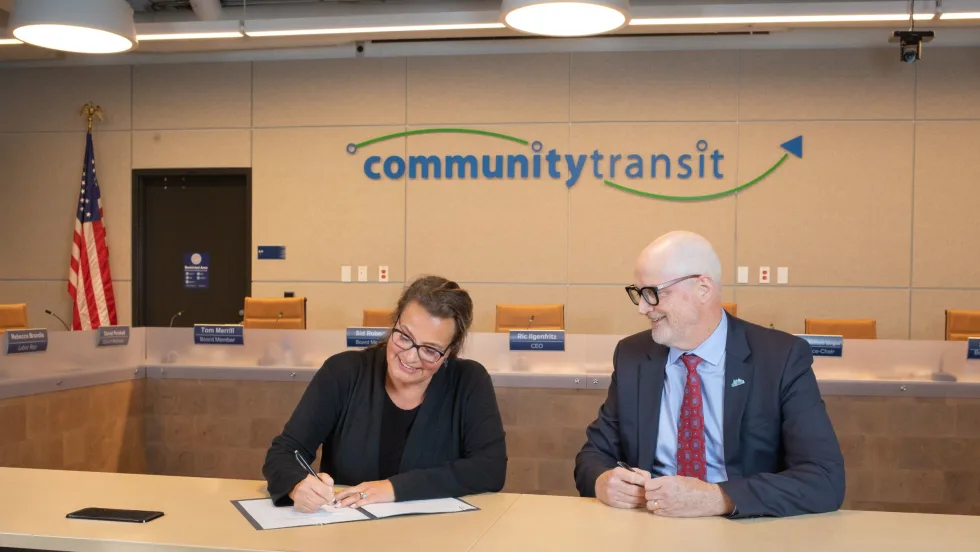
Everett Transit, Community Transit Approve Consolidation of Services
The agreement will bring Everett Transit into Community Transit’s network in April 2027, with plans to increase bus service by 50% by 2031 and expand regional connections.
Read More →
NITA Proposes $5B Operating Budget, $9.7B Capital Program for 2027
The proposed budget includes funding for expanded transit service, safety initiatives, fleet upgrades, and infrastructure improvements across CTA, Metra, and Pace.
Read More →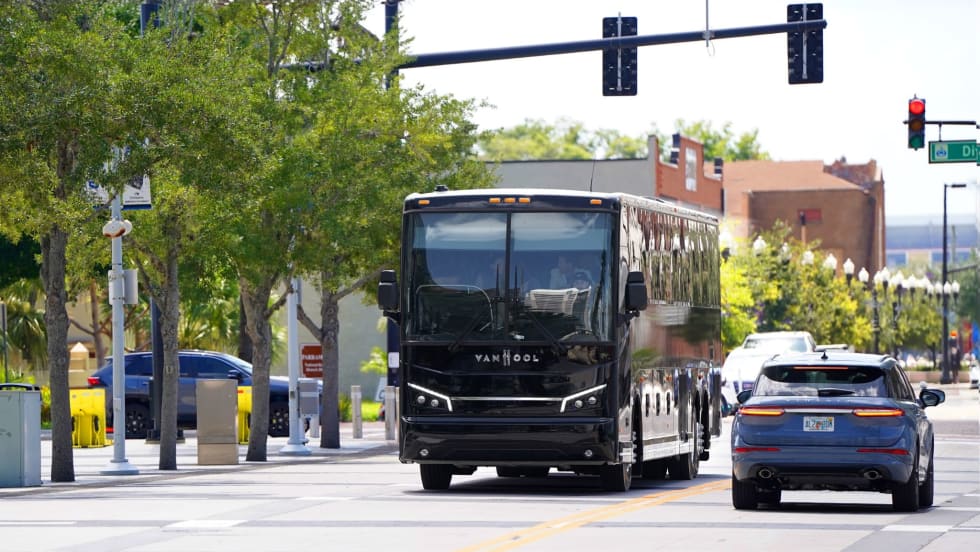
Financing, Fleet Replacement Requires a More Strategic Approach
Executives from ABC Companies and MCI discuss how rising costs, changing market conditions, and post-pandemic challenges are prompting motorcoach operators to rethink financing strategies, fleet replacement cycles, and long-term planning.
Read More →
Bringing Austin’s First Light Rail System to Life
Austin Transit Partnership CEO Greg Canally discusses the city's nearly 10-mile light rail project, its collaborative approach to project delivery, the importance of community engagement, and the milestones ahead as construction approaches in 2027.
Read More →
ETA CEO John Maglio on Transit Technology, Innovation, and Building Agency Trust
ETA founder and CEO John Maglio explores the evolution of transit technology, the importance of reliable systems, and how stronger partnerships can help agencies improve operations and the passenger experience.
Read More →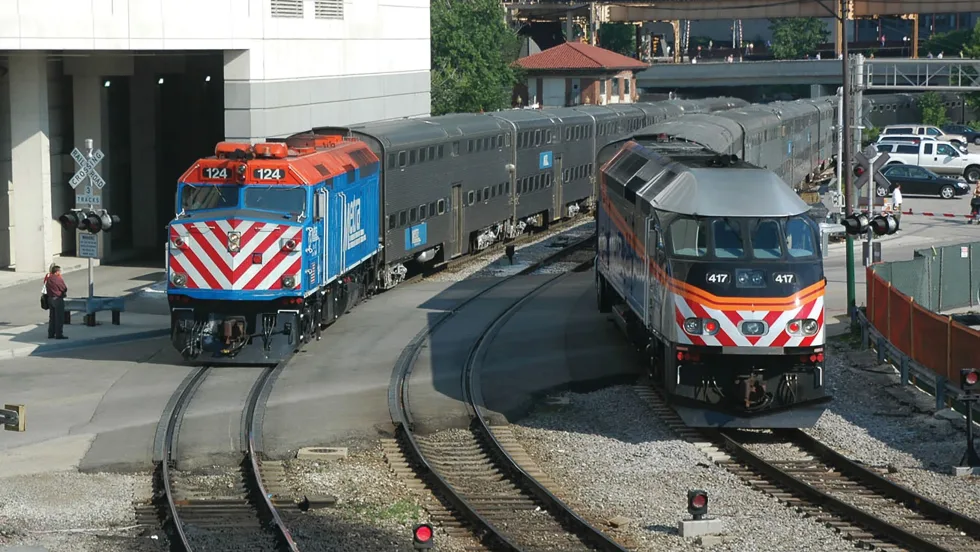
Metra Draft Plan Outlines Costs, Service Improvements for Regional Rail
The Systemwide Network Plan identifies infrastructure needs and potential investments to expand all-day, bidirectional rail service across the Chicago region.
Read More →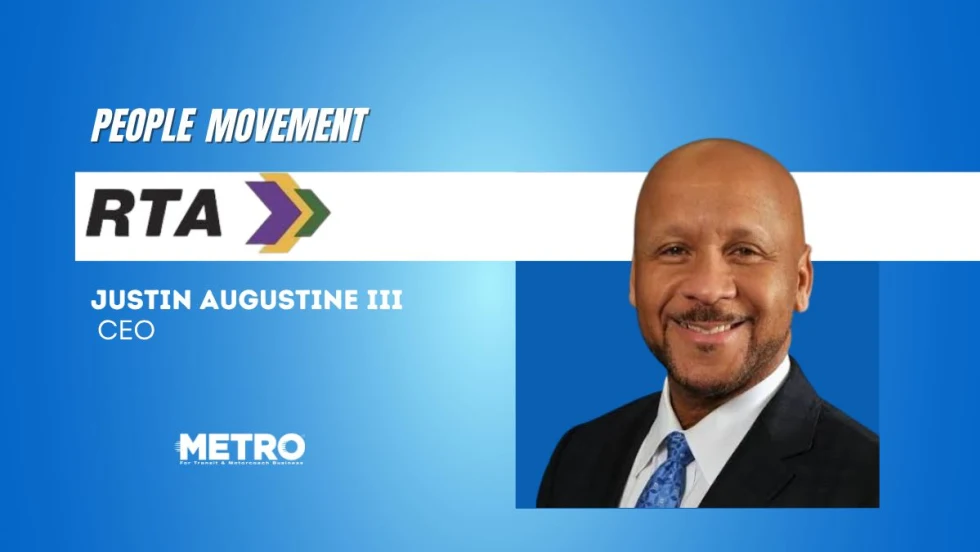
New Orleans RTA Names Augustine III as New CEO
In this edition, we also spotlight recent personnel moves at HDR, PATH, STV, and more, highlighting the people taking on new roles across the transportation industry.
Read More →
How Transit Agencies Are Using Free Rides to Improve Voting Access
Transit agencies are using fare-free service, trip-planning tools, and targeted rides to improve voting access. See what other agencies can learn from these efforts.
Read More →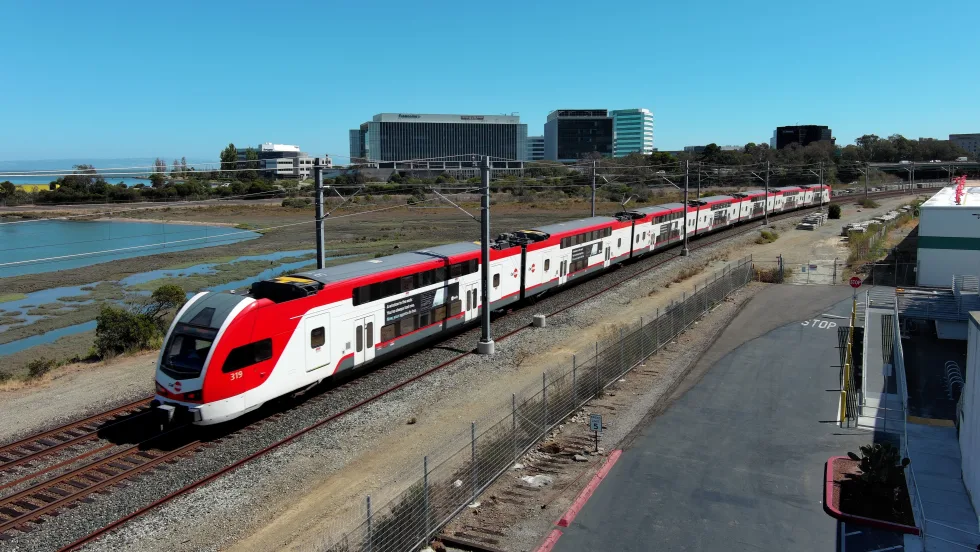
Caltrain’s Electrification Drives a New Era of Ridership Growth
The railroad’s shift to electric service has brought more frequent trains, stronger customer satisfaction, and increased ridership, earning it APTA’s Outstanding Public Transportation System award.
Read More →