



68 Bus Operators Complete MTA's Training at Zerega Bus Depot
60 Years in the Making, New York’s East Side Access is Close to Becoming a Reality
East Side Access is a $12 billion project, which marks the first expansion of the Long Island Rail Road in more than 100 years.
by Thomas Renner
May 25, 2022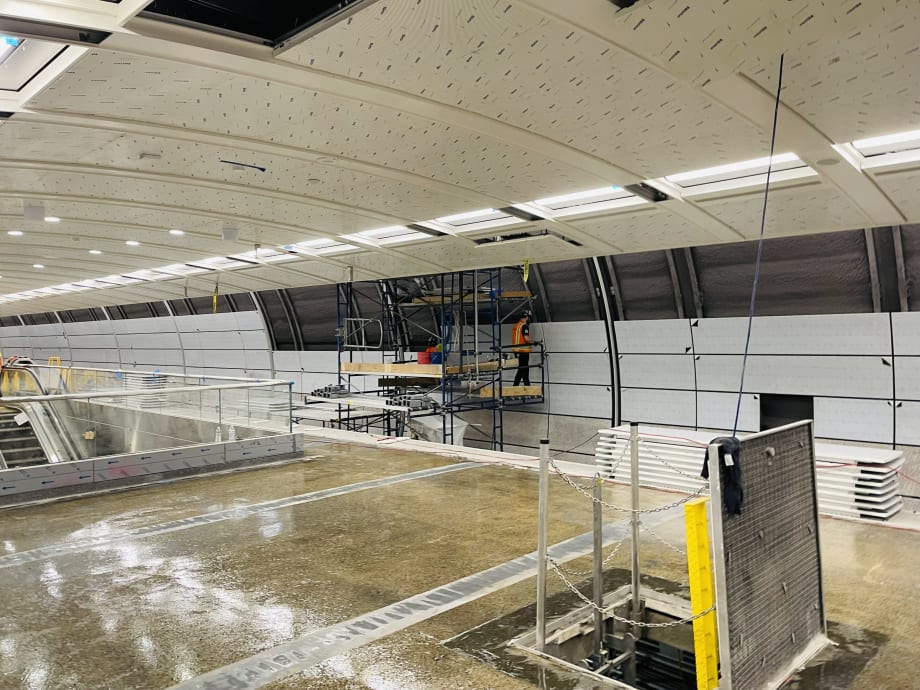
The new passenger terminal for the Long Island Rail Road at Grand Central Station in New York includes 53 fire-rated floor access doors manufactured by BILCO.
Photo: BILCO
7 min to read
Frank Sinatra, Taylor Swift, Billy Joel, Jay-Z, and others sing songs that celebrate New York. It is quite likely, however, that none of them had to experience the daily migraine associated with commuting to Manhattan from Long Island.
More than 1.4 million Long Island residents commute to New York City every day. While some commutes are relatively short — Great Neck residents can reach midtown in about 45 minutes — other residents farther out on Long Island travel as much as three hours one way daily.
A new project scheduled to open this year will provide faster commutes, fewer delays, greater reliability, and more options. East Side Access is a $12 billion project, which marks the first expansion of the Long Island Rail Road in more than 100 years. Riders on the LIRR will have direct access to the east side of Manhattan, easing overcrowding in and around Penn Station.
“As the first modern train terminal to be built in more than a half century, the East Side Access will expand rail service, cut down on travel times into East Manhattan from Queens, and reduce crowding,’’ New York Gov. Kathy Hochul said. “This is yet another example of New York leading the way as we recover from the pandemic, and I look forward to the East Side Access concourse and route fully opening in December 2022.”
Staggering Scope
The scope of the project is nothing less than staggering. Workers laid more than 40.5 miles of new track, including 12.84 miles of track in tunnels throughout Manhattan and Queens.
Teams carved out eight miles of new tunnels, excavating more than two million cubic yards of rock, soil, and muck — more than 1,200 acres. Workers poured more than one million cubic yards of concrete, installed 90,000 tons of steel, and built two caverns, each extending 1,143 feet, which is almost the length of four football fields.
For commuting-challenged Long Island residents, the centerpiece to the project is a new LIRR terminal under Grand Central Station. LIRR currently rolls into Penn Station a mile away, so the new 350,000 square feet concourse will double the rail line’s capacity to Manhattan. The new station will reduce travel time for Queens riders by 40 minutes, with as many as 24 trains per hour serving the station. Queens is a Long Island borough of New York across the East River. Expanded rail service is expected to accommodate 162,000 passenger trips per day.
The concourse is one of the hallmarks of the project. It includes 25 retail storefronts, Wi-Fi and cell service, and digital signage with real-time train information. Seventeen high-rise escalators, the longest in the MTA and covering 182 feet, will connect commuters between the concourse and mezzanine of the train terminal. The mezzanine leads to upper and lower train levels, each of which has two platforms and four tracks.
The other major component to the project is updates at Harold Interlocking, the busiest passenger railroad in North America. Located in Queens, crews installed 97 new track switches, five new steel railroad bridges, 8,445 feet of retaining walls, and 295 poles that carry overhead wires used by Amtrak.
“The East Side Access project will deliver faster, direct service for Long Island and Queens commuters to the East Side of Manhattan, the densest job hub in North America,’’ MTA Acting Chair and CEO Janno Lieber said. “This smart, transit-oriented development will help spur economic growth, provide better connections to Metro-North Railroad, and lead to reduced automobile traffic and improved air quality in the region."
Long track record
Outside of New York, Nelson Rockefeller’s name recognition barely registers on the scale anymore. The former Vice President to Gerald Ford, Rockefeller served four terms from 1959-1973 as the Governor of New York. Many of the ideas in the current project were introduced early on in Rockefeller’s administration.
The first proposals to bring LIRR service to Manhattan emerged in 1963. The MTA unveiled the Program for Action in 1968, and called for 50 miles of new track, 80% of which were built in Queens. The $2.9 billion project also included improvements for other transportation agencies, including the Long Island Rail Road and Metro-North systems.
Early renderings included a two-level tunnel at 63rd street, with a mezzanine with four island platforms and eight tracks. Construction began in 1969 when four prefabricated sections of the 63rd Street Tunnel were constructed under the East River.
The project flew off the rails shortly afterwards. First, residents complained the construction of the terminal would harm the character of the neighborhood and the resulting traffic congestion. A fiscal crisis in 1975 forced cancellation of the project. The project sat dormant until 1995, when plans resurfaced to bring the LIRR to East Manhattan.
While the project lingered, job growth and population did not. Population in Suffolk County, one of the four counties that comprise Long Island, doubled between 1960 and 2010. More than eight million residents live on “The Island” according to 2020 U.S. Census and makes up 40% of the state’s entire population. In 1977, the region’s population stood at 2.7 million.
As the population rose, so did opportunities for employment in New York City. After a period of economic uncertainty in the 1970s, jobs began coming back to New York City in the 1980s and has remained steady. Buoyed in large part by employment in the financial services sector, the city has seen an increase of approximately 1.5 million jobs since 1978. Most of those workers are commuting from outside the city, especially Long Island. Approximately 4.5 million people work in New York City.
After the plan for the East Side Access stalled, the project resurfaced at the turn of the century. Approval and final design for the East Side Access was granted in 2002, and construction began in 2006.
Project Pulse
Few people will ever see the guts of the project, which are in Grand Central Station Caverns. The project included structural precast fit-out of two 1,000-foot caverns. Track work consisted of laying 130,000 feet of track, 32 turnouts, 52 switches, and 35,000 cubic yards of track bed concrete.
The heartbeat of the system are electrical connections at the concourse, which includes 800,000 feet of underground raceways, 7,000 light fixtures, seven power stations and two off-track facilities.
Amid all the tunnels and junctions for electrical and plumbing fixtures are 53 fire-rated floor doors manufactured by BILCO. The doors range in size from 30 inches-by-30 inches to 42 inches-by-60 inches, one of the largest manufactured by the specialty access company.
Fire-rated floor doors are often found in public buildings, dormitories, office buildings, and exit stairwells. BILCO’s fire-rated doors maintain the fire rating of a two-hour floor ceiling assembly between building floors.
Each fire-rated floor door is constructed with door hardware and sealants to maintain the fire-rating. BILCO’s doors ARE UL-listed and include a pan cover designed to accept flooring materials for concealed access.
The MTA has a long history of installing BILCO doors in their projects. “It’s a product that the MTA knows and it’s easiest to purchase the known product,’’ said Jason Benfield of the civil engineering team working on the project for Tutor Perini. “BILCO is one of the major manufacturers of those doors. It’s easier to get something approved when it’s a product that is known to work in these applications.”
Bringing It Home
The East Side Access project has been hard to bring to completion. After work started in 2006, the original completion date was set for 2009. The project’s price tag grew considerably over time, and so did the employment landscape.
Since the coronavirus pandemic, many people have switched to home offices. “Many Manhattan based corporations continue downsizing existing office space. Others are relocating employees to suburban offices closer to home. This will clearly adversely impact the pre-COVID-19 LIRR prediction of 60,000 new riders,’’ Larry Penner, a transportation advocate, wrote in Long Island Weekly.
Gov. Hochul is not going to let criticism rain on her East Side Access parade. She and other dignitaries took a test ride on the train in November 2021, celebrating an important milestone just one year before the project ends. While there are certainly critics of the cost, delays and the project’s impact, East Side Access will be a welcome relief for weary Long Island commuters.
“The whole focus of my administration is to identify infrastructure projects that need to be accomplished to make the customer experience extraordinary,’’ Gov. Hochul said. “Everyone who lives in Long Island and New York deserves this. This is the greatest region on Earth.”
Thomas Renner writes on building, construction, engineering, and other trade industry topics for publications throughout the U.S.
Topics:Rail
Subscribe to Our Newsletter
More Rail
LA Metro Breaks Ground on East San Fernando Valley Light Rail Project
The 6.7-mile line will add 11 stations along Van Nuys Boulevard, expand access to jobs and regional transit connections, and support Metro’s broader efforts to improve mobility as rail ridership grows.
Read More →
CSA Group Releases Climate Resilience Standard for Transit, Passenger Rail
Developed with support from the Standards Council of Canada, CSA D700 guides assessing climate-related risks and planning adaptation measures for transit and passenger rail systems.
Read More →
LA Metro September Ridership Climbs 3.9%, Led by Rail Growth
The agency recorded more than 27.2 million boardings, with rail ridership increasing 12.4% year over year and the D Line posting the largest gains.
Read More →
First Full MetroLink Rail Expansion Completed in 20 Years with $192M Airport Project
The project links two St. Louis-area airports by light rail while adding roadway and bike trail connections to improve regional access and mobility.
Read More →
Utilimarc Launches SmartReplace to Optimize Fleet Replacement Decisions
AI-powered SmartReplace helps fleets prioritize vehicle replacements, model budget scenarios, and build more defensible long-term strategies.
Read More →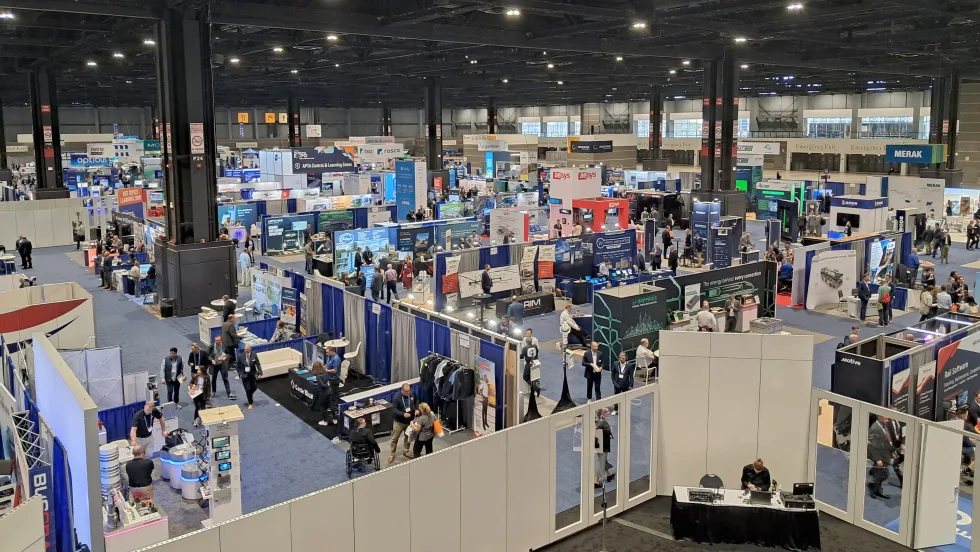
Scenes from APTA TRANSform & EXPO 2026
Transit leaders, manufacturers, and industry professionals gathered in Chicago to explore new technologies, share ideas, and discuss the future of public transportation.
Read More →
USDOT Awards $416 Million for Florida Rail Crossing Safety Upgrades, New Brightline Station
The projects aim to reduce risks for motorists and pedestrians at rail crossings while expanding passenger rail access along Florida’s Space Coast.
Read More →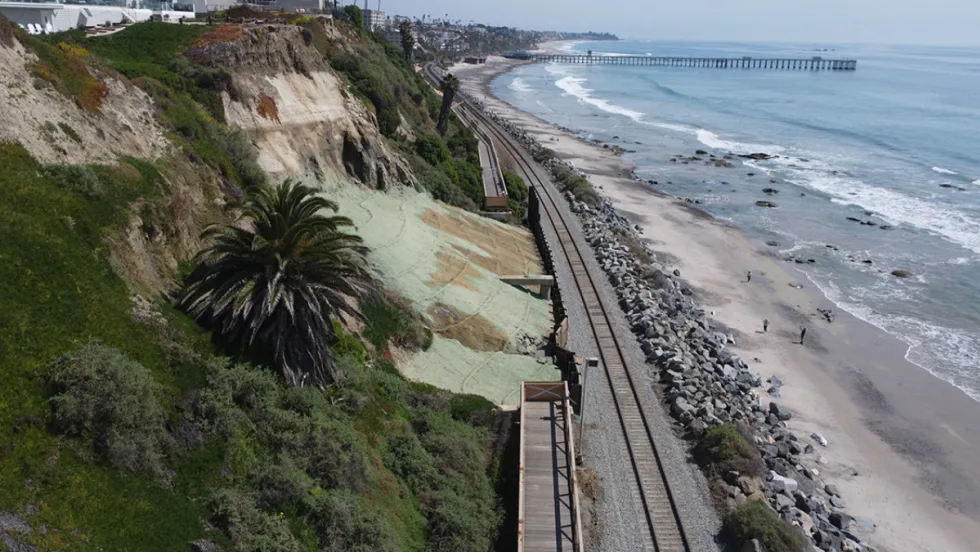
OCTA Declares Emergency to Protect Rail Corridor From Coastal Erosion
The California agency is accelerating shoreline protection and plans to place approximately 690,000 cubic yards of sand along the San Clemente coast to protect a key passenger and freight rail link.
Read More →
More Than a Summer Job: Building the Next Generation of Transit Talent
The Delaware River Port Authority and PATCO have transformed their internship program into a hands-on professional development experience that introduces students to the breadth of transportation careers — and creates a pipeline for future employees.
Read More →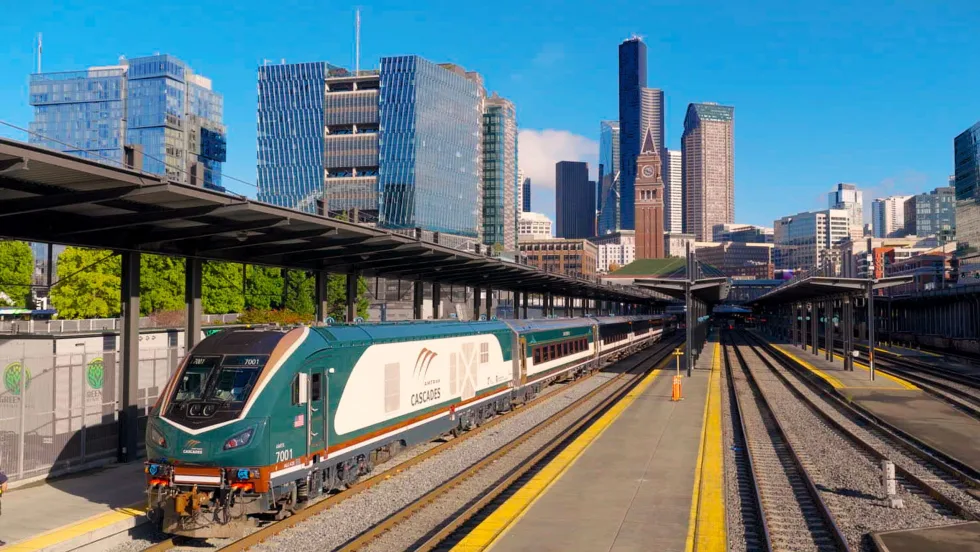
Airo Trains Make Their Amtrak Cascades Debut in the Pacific Northwest
Effective immediately, two cutting-edge Airo trainsets will join the Amtrak Cascades route, operating four daily trips between Vancouver, B.C., Seattle, Portland, and Eugene, Oregon, marking the first introduction of Airo trains into passenger service anywhere in the country.
Read More →