



Benchmarking projects need a jump start
Several organizations throughout the world are engaged in benchmarking public transport services.
Several organizations throughout the world are engaged in benchmarking public transport services. Unfortunately, they have not fulfilled their promise largely because the leadership needed to sustain the projects has fizzled. Let me first define benchmarking. Put simply, it is observing what similar organizations do and coming up with statistical ways to compare them. The data-oriented measures are typically, but not always, financial. Public transport officials came up with a variety of benchmarks. For buses they include: mean distance between roadcalls as a reliability measure, number of service hours per bus or passengers per service as examples of productivity measures. For rail properties, mean distance between failures, passengers per employee and passengers per hour per direction are a few benchmarks used. For both modes, cost per passenger and farebox recovery ratios (the percentage of service cost paid for by fare income) are also used frequently. Some even look at modal splits on particular corridors of certain population densities. No dearth of benchmarks As you can see, there are all kinds of measures public transport organizations can use to develop comparisons. Similarly, there are a variety of benchmarking projects already underway or completed on a small scale. For example, several Transit Cooperative Research Project studies discuss benchmarking in various quality improvement projects. There was also a benchmarking project done by the Texas Transportation Institute and the U.S. Department of Transportation’s Volpe Center in Cambridge, Mass., on staff training. Two others are worthy of mention. The International Public Transport Union (UITP) is involved with the European Commission’s transport department (DG VII) on customer-oriented benchmarks to develop quality systems measures to help governments with policies on competitive contracting and subsidy levels. You can monitor the progress of this initiative by going to the UITP’s Website www.uitp.com. Meanwhile, the Kowloon-Canton Railway Corp., a multimodal system in Hong Kong, has been soliciting agencies around the world for years for a global urban passenger rail benchmarking initiative it is trying to develop. The problem with those wonderful initiatives is they have faced tough sledding when it comes to wide-scale adoption and participation. I suspect that it boils down to two reasons. First, many people correctly point out that trying to come up with such benchmarks, especially performance-oriented outcomes, too often results in comparing apples to oranges. Operating conditions vary widely, depending on national laws and customs, city vs. rural locations, size of the city, population densities and on and on. Is benchmarking too scary? There is also a second, perhaps bigger problem: Benchmarking is scary. By developing comparisons, particularly averages, some people will inherently have to explain why their organizations fall below the norms. Better to let the enthusiasm for benchmarking wane, and it will go away. Ultimately, such an attitude is a recipe for stagnation and losing relevance as a solution to urban congestion, pollution, socioeconomic opportunity and all the other worthy higher goals of public transport. Benchmarking must be taken seriously and championed. Meaningful standards must be developed. Better to do so rather than have outsiders do it for us, inaccurately and poorly. Which, sooner or later, will lead to more than a lost opportunity for real, quality improvements. It could lead to our industry’s downfall. And that’s the ultimate scary scenario.
More Management
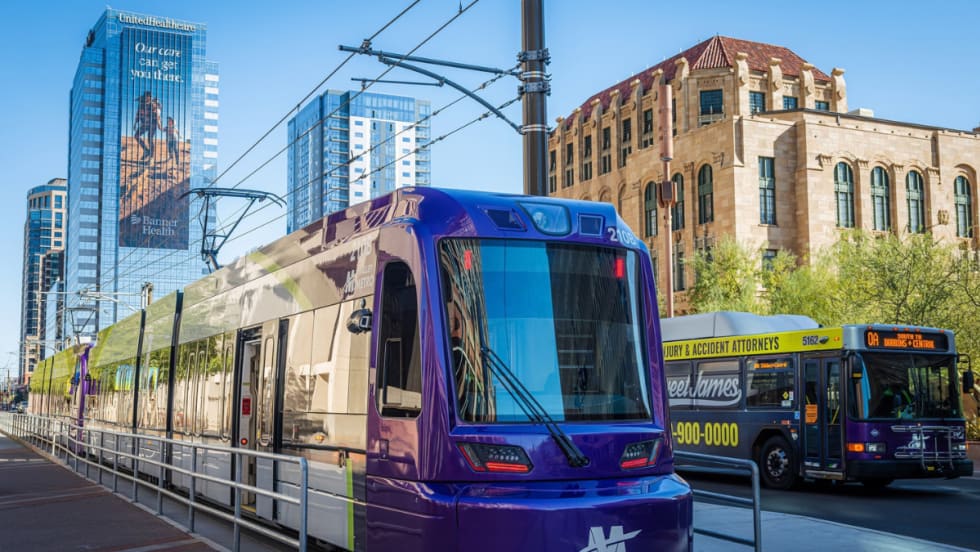
How Valley Metro Is Balancing Transit Growth With the Rider Experience
The APTA award-winning agency is pairing rapid system expansion with investments in workforce, safety, technology, and the fundamentals of transit service.
Read More →
Bus Tech Talk: Keeping Transit Technicians Ahead of the Technology Curve
In this episode of Bus Tech Talk, Complete Coach Works’ Business Development Manager Mark Hollenbeck and METRO’s Executive Editor Alex Roman sit down with Obed Mejia, Senior Technical Trainer for Bus Maintenance, at LA Metro to discuss how rapidly evolving bus technology is changing the maintenance shop — and the skills technicians need to keep pace.
Read More →
Michael Schneider Joins Paslay Group to Expand Transportation Practice
The longtime transportation executive will help Paslay Group grow its advisory and program management work across transit, highway, and other infrastructure sectors.
Read More →
People Movement: Connectpoint Expands Leadership Team, Stadler Names New Group CEO, and More
In this edition, we also spotlight recent personnel moves at Burns, UZURV, and more, highlighting the people taking on new roles across the transportation industry.
Read More →
More Than a Summer Job: Building the Next Generation of Transit Talent
The Delaware River Port Authority and PATCO have transformed their internship program into a hands-on professional development experience that introduces students to the breadth of transportation careers — and creates a pipeline for future employees.
Read More →
LA Metro Board Awards 220 Battery-Electric Bus Contract to ENC
The contract, which is the largest base award of battery-electric buses by a U.S. transit agency, will be built in Southern California, sustaining good jobs as LA prepares to welcome the world in 2028
Read More →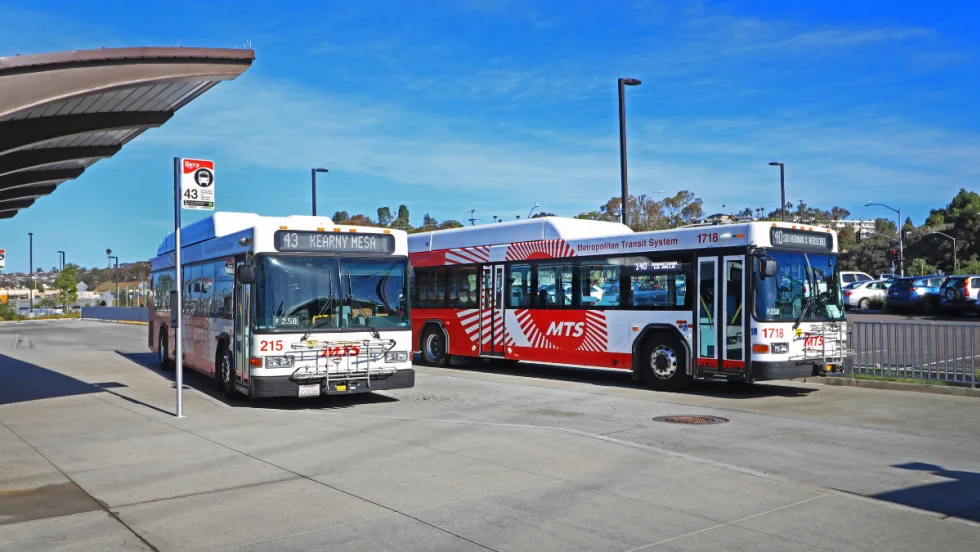
What’s Behind San Diego MTS’s Award-Winning Transit Strategy
Named one of APTA’s 2026 Outstanding Public Transportation Systems with 50 million or more annual passenger trips, California’s San Diego Metropolitan Transit System points to gains in ridership, safety, technology, and reliability as foundations of its success.
Read More →
Public Transit Conference Returning to GFX in 2027, Call for Papers Now Open
The Call for Papers is now open, allowing transit agency professionals and industry experts to help shape the PTC educational program by submitting session ideas for consideration.
Read More →
Indian River Transit’s Community-Focused Approach Earns National Recognition
Named APTA’s 2026 Outstanding Public Transportation System in its size category, Florida’s Indian River County transit system continues to grow ridership through fare-free service and a focus on evolving community needs.
Read More →
ENC Lands MATA Contract and More in Biz Briefs
In this edition of Biz Briefs, we spotlight the latest developments shaping the future of mobility.
Read More →