



Building a Better Coach for Commuter Service
Developing a commuter coach that satisfied heightened requirements for safety, reliability, air quality, ADA accessibility and passenger and driver comfort was a huge challenge for New Jersey Transit — but not an insurmountable one.
It had been more than a dozen years since New Jersey Transit (NJT) purchased any new diesel commuter coaches to replace rapidly aging workhorses in its fleet. Times had changed since the last purchase, with higher standards for safety, accessibility, emissions and reliability. Designing an affordable machine that met these rigorous challenges would take time, thought and collaboration. “We knew the world was changing, and we decided to be very meticulous about how we specified this bus,” says Maureen A. Milan, vice president and general manager of bus and light operations for NJT. “At the time we initiated the specifications, there was no bus on the planet that met our demands.” Milan says the design process began in 1999, more than a year before the RFP was issued. To enrich the process, NJT invited some of its private carrier partners in New Jersey to sit on a technical advisory committee. (By state charter, NJT provides support and equipment to private contract bus carriers.) The goal was to create a commuter coach that met NJT’s unique needs, such as fast-track loading and unloading of hundreds of passengers at the 50-year-old Port Authority Bus Terminal, and general requirements such as handling disabled passengers and complying with clean-air mandates. At the same time, the bus needed to be designed for consistency during the four-year manufacturing cycle. “We wanted to make sure that the first bus was the same as the last,” says Paul Kaufmann, NJT’s director of fleet support and equipment. What was needed was vision, patience, trust — and willing partners. NJT found the latter in coach manufacturer MCI and many subcomponent suppliers. Out of necessity, it was a strongly collaborative effort, with NJT providing its knowledge of operational issues and the suppliers offering their manufacturing expertise. Ergonomic enhancements Also providing input were coach operators and maintenance staff. Meeting their respective needs was a top priority, Milan says, because they work most closely with the end product. Ergonomic improvements in the operator’s area included a redesigned seat that added several inches of travel to improve leg room and improved access to the side console and fare collection system. “MCI went so far as to chop off part of the dashboard so that the fare collection unit was moved closer to the operator,” Kaufmann says. “Most of these inputs came directly from the rank and file,” Milan adds. “No one had holistically evaluated the operator workstation before.” Other improvements included remote-control mirrors, curb lights (so the operators could more clearly see the wheels at night) and a padded steering wheel. For the maintenance staff, there’s easy access to the engine compartment and a state-of-the-art IO Controls multiplex system that curtails nuisance road calls and electrical failures. The multiplex system also eases diagnosis of electrical problems and reduces the overall weight of the bus by 700 to 800 pounds. “It also insures that the bus manufacturer will build a very reliable electrical system,” Kaufmann says. Passenger comfort NJT’s fleet of commuter buses logs tens of thousands of miles per day traveling between locations in New Jersey, New York and Pennsylvania. Passenger comfort is a key consideration on the longer trips, and Milan wanted to ensure that the coach met its customers’ needs. That was accomplished, she says, by specifying overhead luggage racks, reclining S-shaped seats that provide increased leg room, retractable arm rests, LED reading lights and air conditioning with individual flow controls. To make the air conditioning more responsive to all passengers, NJT had the thermostat placed in the center of the coach rather than fore or aft. The needs of disabled passengers were a strong consideration in the specification. “That’s the thing I’m most proud of,” says Milan, adding that the coaches far exceed ADA requirements. The wheelchair lift system, especially, was the subject of extensive collaboration among NJT, MCI and the lift manufacturer, Ricon Corp. “That was the hardest integration,” Milan says. “We examined every possible scenario for failure and worked on the physics and geometry until we got it right. It was a truly difficult but rewarding process.” After considerable engineering and testing, the wheelchair lift was designed to fold and fit into a self-contained cassette in the baggage bay of the bus. Wheelchair passengers enter or exit the bus through a sliding door that sits flush to the side of the coach rather than through a standard barn-type door. That minimizes the amount of time the door needs to be open, helping to reduce temperature swings on hot or cold days. The final product Delivery of the coaches began in 2000, with units going to NJT as well as its private partners. By year’s end, NJT expects that more than 80% of a 1,360-bus order will be delivered. An option for 156 more commuter coaches is still on the table. In partnering with NJT, MCI has benefited from the design enhancements of the commuter coach, which has grown in popularity around the country. Milan says 20 transit properties have exercised assignments options or piggybacked on NJT’s initial procurement. Milan says the agency’s reputation for specifying innovative, cost-efficient and reliable equipment encourages other transit agencies to piggyback. Rephrasing a line from “New York, New York,” Milan says, “They know if the equipment can make it with New Jersey Transit, it can make it anywhere.” ********************************************* New ZF transmission installed in commuter coach ZF’s AS Tronic automatic transmission made its debut in the United States in a 2001 MCI commuter coach operated by New Jersey Transit. The transmission is fully integrated and allows drivers to select between automatic and manual modes using a touch-pad shifter, eliminating the need for a manual clutch. The transmission, paired with a Detroit Diesel Series 60 engine, is hundreds of pounds lighter than current models from other manufacturers, which helps to increase fuel economy and puts less strain on the cooling system. ZF officials say the transmission also allows for a wider variety of engine choices. Maureen A. Milan, vice president and general manager of bus and light rail operations at New Jersey Transit, says the ZF transmission is undergoing testing. The new crop of commuter coaches is equipped with Allison transmissions, but Milan described the AS Tronic as an “intriguing” alternative.
More Management

Bus Tech Talk: Keeping Transit Technicians Ahead of the Technology Curve
In this episode of Bus Tech Talk, Complete Coach Works’ Business Development Manager Mark Hollenbeck and METRO’s Executive Editor Alex Roman sit down with Obed Mejia, Senior Technical Trainer for Bus Maintenance, at LA Metro to discuss how rapidly evolving bus technology is changing the maintenance shop — and the skills technicians need to keep pace.
Read More →
Michael Schneider Joins Paslay Group to Expand Transportation Practice
The longtime transportation executive will help Paslay Group grow its advisory and program management work across transit, highway, and other infrastructure sectors.
Read More →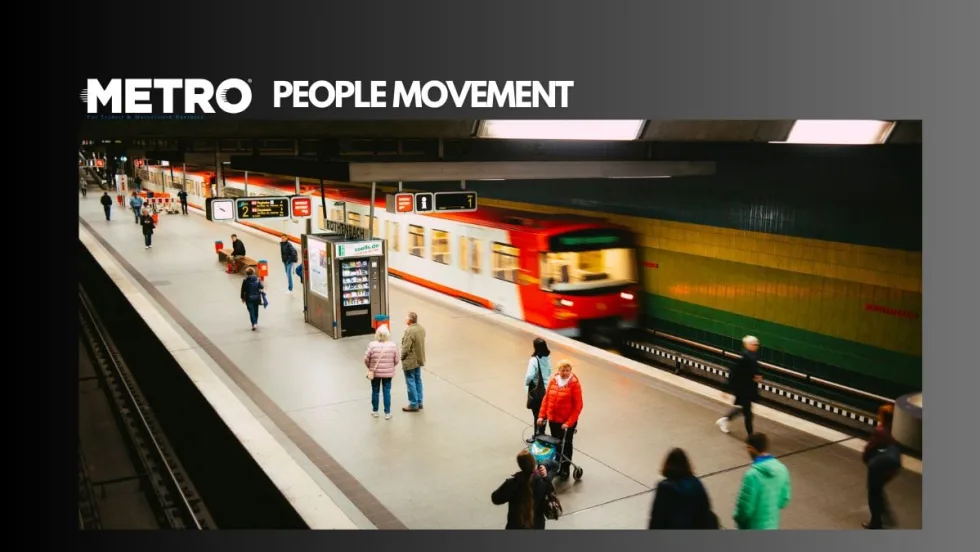
People Movement: Connectpoint Expands Leadership Team, Stadler Names New Group CEO, and More
In this edition, we also spotlight recent personnel moves at Burns, UZURV, and more, highlighting the people taking on new roles across the transportation industry.
Read More →
More Than a Summer Job: Building the Next Generation of Transit Talent
The Delaware River Port Authority and PATCO have transformed their internship program into a hands-on professional development experience that introduces students to the breadth of transportation careers — and creates a pipeline for future employees.
Read More →
LA Metro Board Awards 220 Battery-Electric Bus Contract to ENC
The contract, which is the largest base award of battery-electric buses by a U.S. transit agency, will be built in Southern California, sustaining good jobs as LA prepares to welcome the world in 2028
Read More →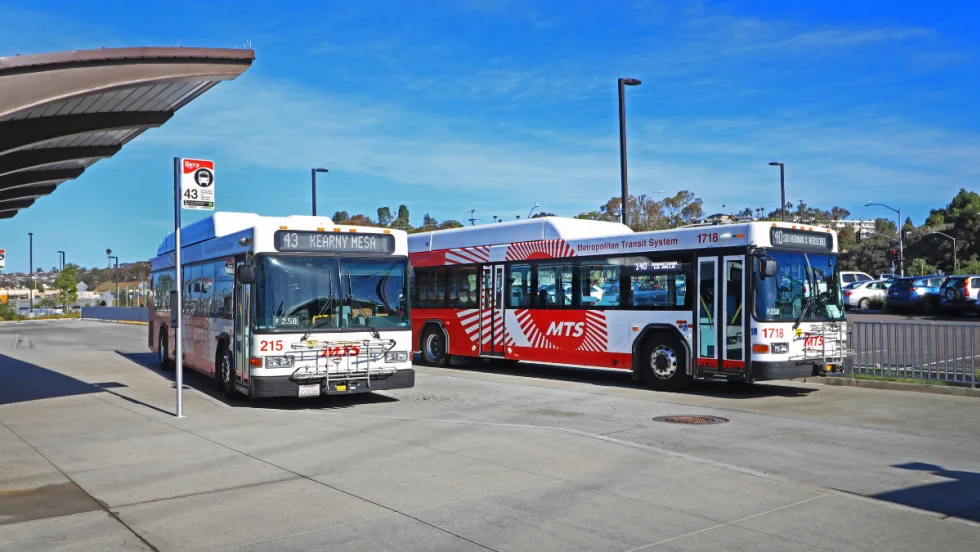
What’s Behind San Diego MTS’s Award-Winning Transit Strategy
Named one of APTA’s 2026 Outstanding Public Transportation Systems with 50 million or more annual passenger trips, California’s San Diego Metropolitan Transit System points to gains in ridership, safety, technology, and reliability as foundations of its success.
Read More →
Public Transit Conference Returning to GFX in 2027, Call for Papers Now Open
The Call for Papers is now open, allowing transit agency professionals and industry experts to help shape the PTC educational program by submitting session ideas for consideration.
Read More →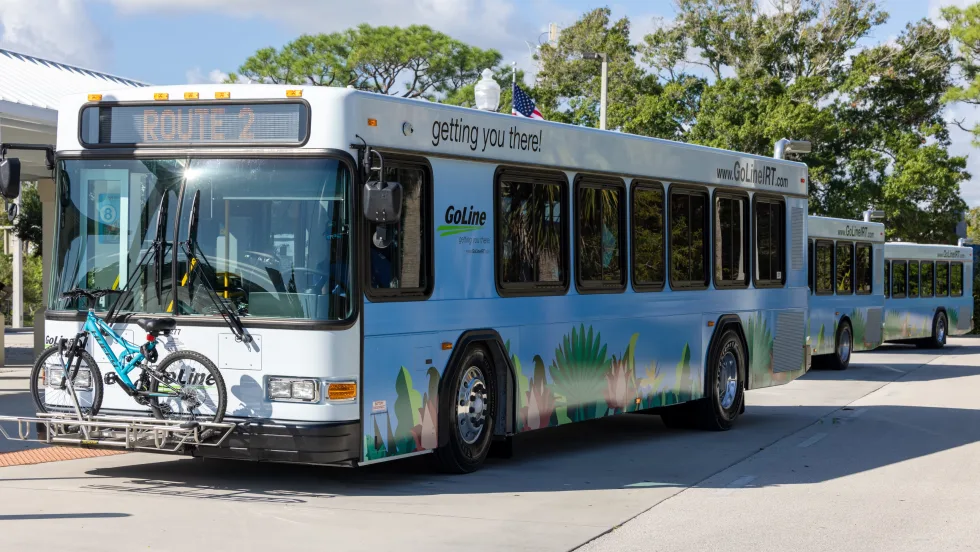
Indian River Transit’s Community-Focused Approach Earns National Recognition
Named APTA’s 2026 Outstanding Public Transportation System in its size category, Florida’s Indian River County transit system continues to grow ridership through fare-free service and a focus on evolving community needs.
Read More →
ENC Lands MATA Contract and More in Biz Briefs
In this edition of Biz Briefs, we spotlight the latest developments shaping the future of mobility.
Read More →From Surviving to Thriving: Building Stronger Transportation Organizations
Bus Business Consultants founder Brian Dickson shares lessons on leadership, organizational health, and creating options for long-term success in a changing transportation industry.
Read More →