



San Antonio's VIA Launches Next Round of Bus Improvements
The changes are designed to reduce overall travel time, shorten wait times, and get customers to their destinations more quickly.

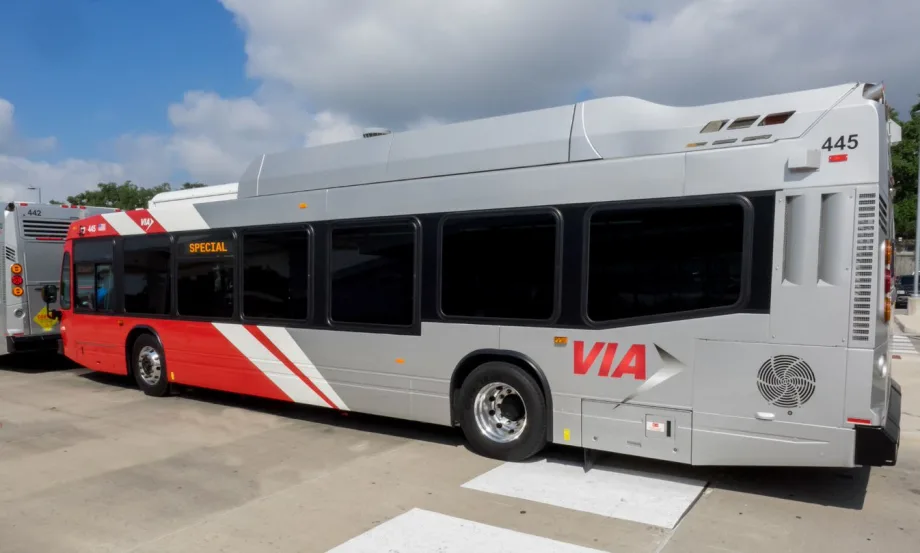
Ridership continues to rise alongside these improvements, reflecting growing demand for more frequent and reliable transit service across the region, VIA officials said.
VIA Metropolitan Transit
- San Antonio's VIA is implementing a new set of bus improvements.
- Changes aim to reduce overall travel and wait times for passengers.
- The goal is to enhance the speed and efficiency of customer commutes.
*Summarized by AI
San Antonio’s VIA Metropolitan Transit will launch its latest round of service improvements across 19 routes throughout the service area.
The changes are designed to reduce overall travel time, shorten wait times, and get customers to their destinations more quickly.
Impacting Frequencies and More
With these changes, 79% of weekday service will operate at 30 minutes or better — shifting the system from January 2025, when a majority of routes ran at 31 minutes or longer.
The result is a system that requires less waiting for customers’ daily schedules, said VIA President/CEO Jon Gary Herrera.
“In just a year, we’ve fundamentally improved how the system works for the people who rely on it every day, thanks to the dedication of our VIA team, the support of our board, and a clear focus on steady progress,” he said. “We’re delivering the kind of service our community has told us they want — more frequent, more reliable, and easier to use — and we’re seeing more people choose transit as a result.”
Ridership and the Better Bus Plan
Ridership continues to rise alongside these improvements, reflecting growing demand for more frequent and reliable transit service across the region, VIA officials said.
The agency said the gains are made possible through VIA’s continued progress on the Better Bus Plan, supported by 160 net-new full-time bus operators and voter-approved sales tax funding that began flowing to VIA this year. Together, these investments are helping VIA accelerate improvements ahead of the original delivery schedule.
The work builds on service changes implemented in April and August 2025, as well as VIA’s largest service expansion in January 2026. Collectively, the agency said these phases reflect a system that is increasingly aligned with customers’ everyday needs and travel patterns.
Quick Answers
The main goal is to reduce overall travel time, shorten wait times, and get customers to their destinations more quickly.
*Summarized by AI
More Bus

More Than a Summer Job: Building the Next Generation of Transit Talent
The Delaware River Port Authority and PATCO have transformed their internship program into a hands-on professional development experience that introduces students to the breadth of transportation careers — and creates a pipeline for future employees.
Read More →
LA Metro Board Awards 220 Battery-Electric Bus Contract to ENC
The contract, which is the largest base award of battery-electric buses by a U.S. transit agency, will be built in Southern California, sustaining good jobs as LA prepares to welcome the world in 2028
Read More →
Public Transit Conference Returning to GFX in 2027, Call for Papers Now Open
The Call for Papers is now open, allowing transit agency professionals and industry experts to help shape the PTC educational program by submitting session ideas for consideration.
Read More →
Indian River Transit’s Community-Focused Approach Earns National Recognition
Named APTA’s 2026 Outstanding Public Transportation System in its size category, Florida’s Indian River County transit system continues to grow ridership through fare-free service and a focus on evolving community needs.
Read More →
ENC Lands MATA Contract and More in Biz Briefs
In this edition of Biz Briefs, we spotlight the latest developments shaping the future of mobility.
Read More →
From Surviving to Thriving: Building Stronger Transportation Organizations
Bus Business Consultants founder Brian Dickson shares lessons on leadership, organizational health, and creating options for long-term success in a changing transportation industry.
Read More →
Everett Transit, Community Transit Outline Consolidation Agreement
The proposed agreement calls for a 50% increase in bus service in Everett, a new microtransit zone, continued paratransit service, and the transfer of Everett Transit operations to Community Transit.
Read More →
SEPTA Details Accelerate Vision for Transit System
The plan outlines investments in trolley modernization, new Metro and Regional Rail vehicles, accessible stations, and more frequent bus and rail service.
Read More →
Report: Transit Bus Manufacturing Supports 34,100 Jobs, $5.1B in GDP
The “Buses Mean Business” report examines the transit bus manufacturing industry’s economic footprint, supply chain, and rising demand for vehicle replacements.
Read More →
Biz Briefs: New Flyer Delivers in Columbus, Houston, Beep and Freebee Merge, and More
In this edition of Biz Briefs, we spotlight the latest developments shaping the future of mobility.
Read More →