




Keep Reading: MBTA Confirms Funding for Upgraded Arborway Bus Facility
MBTA Unveils First Systemwide Climate Resilience Roadmap
The plan outlines strategies to protect transit infrastructure from extreme weather, prioritize critical investments, and improve system reliability as climate risks intensify.
May 1, 2026
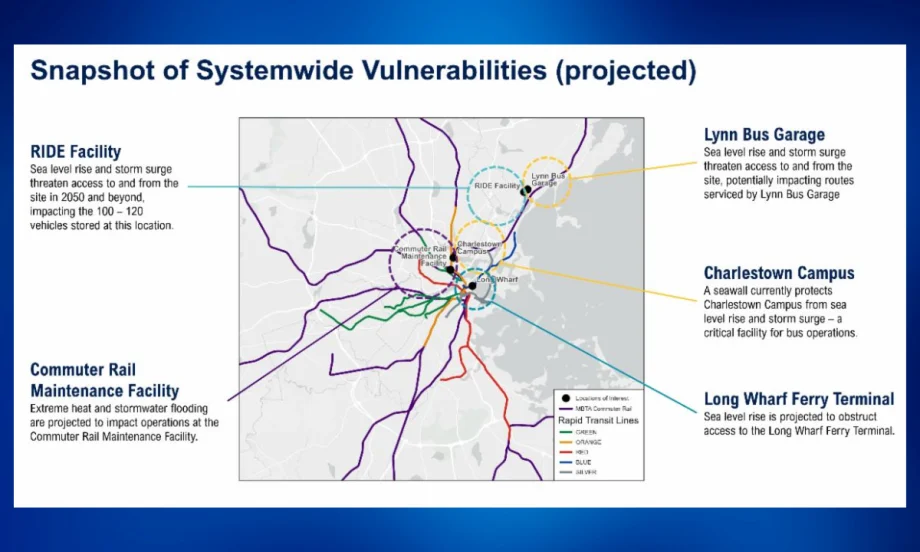
The Massachusetts Bay Transportation Authority’s Resilience Roadmap directly supports the goals laid out in the Healey-Driscoll Administration’s ResilientMass program.
Credit:
Massachusetts Bay Transportation Authority/METRO
3 min to read
The Massachusetts Bay Transportation Authority (MBTA) recently released its first-ever systemwide Resilience Roadmap, a comprehensive plan to strengthen transit infrastructure and prepare operations against the impacts of climate change and severe weather, including flooding, extreme heat, and cold.
Developed as a next step following the MBTA’s release of the 2024 Climate Assessment, the roadmap outlines both near- and long-term strategies to proactively reduce climate risks and improve reliability across the transit system. The plan spans all modes of transit and prioritizes investments that protect critical assets, support safe operations, and minimize service disruptions.
The MBTA’s Resilience Roadmap directly supports goals laid out in the Healey-Driscoll Administration’s program, ResilientMass, which is “strategically designed to help communities across the state mitigate the negative impacts of severe weather,” like heatwaves and flooding.
“The MBTA is always looking for ways to proactively address climate resilience,” said Interim Secretary and General Manager Phillip Eng. “Our riders deserve safe, reliable, and robust service now and in the future, which is why this Resilience Roadmap is impactful.”
"Building climate resilience is essential to keeping our transportation system safe and reliable. Much of our infrastructure wasn’t built for heavier rainfall, more frequent storms, and heat waves — conditions that can cause flooding, damage, and service disruptions,” said Energy and Environmental Secretary Rebecca Tepper.
Inside the MBTA’s Climate Resilience Strategy
According to an agency release, the plan was developed from expertise across MBTA, more than two dozen climate vulnerability studies, site assessments across the system, and best practices from peer transit agencies nationwide.
The roadmap focuses on nine priority areas, including but not limited to:
- Investing in the resilience and reliability of the power system.
- Protecting tunnels and stations from flooding.
- Reducing heat exposure for riders and employees.
- Improving the resilience of signal and communications systems.
- Addressing flooding at stations and support facilities.
- Upgrading tracks and facilities to withstand extreme temperatures.
The plan focuses on improving transit system resilience to extreme weather by adding flood protections, expanding shade, upgrading equipment for heat, and enhancing worker safety measures. It also highlights the need for ongoing investment, knowledge sharing, and regional collaboration to support these efforts.
The agency wrote in the release that it will continue working closely with municipal, regional, and state partners to implement the strategies identified in the roadmap and adapt to evolving climate conditions over time.
Recent investments towards a decarbonized and more resilient system include:
- $10 million towards upgrading pump rooms along the Blue Line to increase resiliency to flooding.
- $15 million for the construction of new bus amenities and shelters across the system to provide relief to riders during extreme heat or heavy rain events.
- $1 million ResilientMass grant for the design of flood protection for the Blue Line Airport tunnel portal.
More Management

METRO Opens Submissions for 2026 Motorcoach Awards
Nominations are now being accepted for METRO Magazine’s Operator of the Year and Innovative Operator of the Year awards.
Read More →
New York MTA Advances Final Contract for Second Avenue Subway Expansion
Contract Four is the largest in the Second Avenue Subway Phase 2 project and includes construction of station infrastructure, tracks, and signals for the subway expansion, MTA officials said. Work on Contract Four will begin in 2027.
Read More →
Transit Agencies Highlight Safety Gains at National Summit
Leaders from 15 major transit systems shared crime-reduction results and safety initiatives while discussing the role of continued federal support.
Read More →

NITA Names New Leadership, Expands Reduced-Fare Program at First Board Meeting
The new regional transit authority appointed its first board chair and interim executive director while extending reduced fares across CTA, Metra, and Pace for eligible riders.
Read More →
Beyond the Checklist: A Structured Approach to Transit Maintenance
Reliability-Centered Maintenance helps transit agencies move beyond routine checklists to focus limited resources on the assets and failures that have the greatest impact on safety, reliability, and service.
Read More →
APTA 2026 Nominating Committee Selects Leadership Slate, Names Chair and Vice Chair Nominees
Leadership changes will help shape the association’s priorities and its representation of the transportation industry during the 2026–2027 term.
Read More →
DART Launches Major Security, Fare Enforcement Initiative
The 90-day demonstration will deploy coordinated security teams at five light rail stations while testing controlled access and gathering data to guide future investments.
Read More →
Sponsored•September 9, 2026
Advancing Fare Collection Through Technology and Innovation
Learn about delivering 1300 gates at 91 stations while managing fare evasion. Explore the large scale deployment, solution customization and real-world results that affect the region. Prepare for deployment in your region now.
Read More →
Game Day in Motion: Moving Millions During the 2026 World Cup
Between packed transit stations and team motorcoaches, see how agencies and operators across North America tackled the transportation demands of the 2026 FIFA World Cup.
Read More →
Surface Transportation Extension Averts Shutdown, Leaves Transit Funding Gap
The stopgap keeps federal transportation programs moving, but missing advance funding could complicate the transit and rail projects agencies are planning next.
Read More →