



BusCon Celebrates 10th Anniversary Vegas Style
The mid-size bus and technology show, which headed back to the site of its inaugural meeting, featured more than 120 exhibitors on a 140,000-square-foot show floor. Educational sessions were highlighted by a keynote speech on customer service and laser-focused workshops.
BusCon, the mid-size bus equipment and technology show, celebrated its 10th anniversary in Las Vegas from Nov. 8 to 10. The conference presented a wide range of educational and networking opportunities and an exhibition that featured nearly 60 buses.
The event, sponsored annually by Bobit Business Media since 1995, was held at the Las Vegas Convention Center, the site of the inaugural show. A two-day exposition allowed attendees to visit more than 120 exhibitors on a 140,000-square-foot show floor.
“Mid-size bus buyers span so many different industry segments, and they all come together here at BusCon,” says Ty Bobit, the founder of BusCon. “Attendees love to see the equipment and hear about new technology.”
This year’s BusCon attracted many first-time attendees, who represented shuttle bus services, parking operations, university transit, airport transportation services, tour and charter operators, transit agencies and paratransit systems. Overall, more than 1,300 people attended.
Products on the show floor ranged from smaller cutaway buses used for shuttle service, to exotic limo-buses, to transit buses, to over-the-road coaches.
The growing popularity of medium-duty low-floor chassis was apparent on the show floor with the LF72 and the Integrated Mobility 3200 on display by Workhorse Custom Chassis and International Truck and Engine Corp., respectively. Prevost showcased its H-Series model equipped with its new advanced multiplex system, and Radio Engineering Industries Inc. debuted its new Digital Bus Watch Multi-Channel camera surveillance system.
Also, Intermotive Vehicle Controls’ showcased its Merlin Multiplex System for the first time. Other notable exhibitors included bus manufacturers ABC Companies, Blue Bird Coachworks, Champion, DaimlerChrysler Commercial Buses, ElDorado National, Ford Motor Company, General Motors and Krystal Enterprises. For more information about new products unveiled at BusCon, see the Product Showcase beginning on pg. 45.
Customer service magic
Highlighting the educational program was a keynote presentation by former Disney executive Doug Lipp, who energized the crowd with a humorous and insightful address on the “Magic of Exceptional Customer Service.” Lipp discussed several key practices companies should follow to remain viable in the future. The “magic” is really just hard work, he says.
Companies should be willing to accept change to stay in business, said Lipp. “Businesses that reinvent themselves will remain dominant in their markets.”
Also essential is having contrarian thinkers on your team to help you think outside the box. “You don’t need clones of yourself,” he said. Having a visionary on the team to create a succession plan and ideas for the future is crucial. “Step out of your comfort zone,” said Lipp.
Despite being faced by challenges such as rising fuel costs and price-cutting competitors, businesses should not cut out things that mean something to the customer. “Ask yourself what value that you bring to your customers,” Lipp said. “Ask customers what they want. Is it good employees, friendliness, cleanliness?”
Overall, the conference’s educational slate included 20 sessions on technology, equipment, management, maintenance and safety, as well as roundtable discussions on how to add buses to a limousine business, university transportation and parking operations.
Recruitment and retention
Driver recruitment and retention, a challenge for many transit operations, was a session topic offered by safety and management consultant Jack Burkert. Employers have to develop a new strategy when it comes to driver recruitment, he said. Recruitment ideas that can work include: offering referral bonuses to employees and paying them promptly; never putting an employment call on hold; and having the driver recruiting line “manned” by a live, knowledgeable person at all times.
Using the military recruiting program to hire qualified recruits from those planning military separation and getting involved with local, publicly-funded driving schools are other good recruitment techniques.
Employers need to think in terms of marketing the position and see the applicant as a prospective customer, Burkert said. The company should promote itself and what it has to offer the applicant, as well as explain the downsides of the position, so they know what to expect. “Be sure that driver applicant expectations and impressions during the interview match the job reality. You don’t want them to find out down the road that the job isn’t what they expected.”
Establishing conditions for employees so that they want to stay is key. “It’s important for drivers to feel a mutual respect from supervisors, because this relationship is critical,” Burkert said. Other personal relationships are essential for long-term commitments from employees. “Offer ways to build relationships with other coworkers and build teamwork concepts.”
Evaluate your equipment
“Safety is the most important factor in evaluating a vehicle,” said safety and forensic accident expert Ned Einstein during his session titled, “Avoiding Common Equipment Accidents.” He gave attendees an overview of equipment features to avoid when spec’ing a bus. “You cannot evaluate safety in a vehicle apart from a general framework. You should also consider other factors such as comfort, durability, reliability, versatility, performance and fuel efficiency.”
Some safety-related options include placing air conditioning and wheelchair lifts on a separate alternator or purchasing oversized alternators. In worst-case situations, excessive power drains can cut off engines, Einstein said. Transit systems should ensure that bicycle racks do not block the driver’s windshield. “Be extra careful with low-floor buses, and consider rear-mounted racks,” he said.
He also recommended dash-mounted cameras depicting area behind bus and in front of bus. “Crossing accidents are 20% of all my lawsuits,” Einstein said.
Real-time technology
The technology and equipment track of sessions included a panel discussion on the use of GPS (global positioning systems) and wireless communications to track buses in real time. Industry experts Bres Longstreth of Everyday Wireless, Brad Bishop of Synovia Corp. and Zonar Systems’ Darrin Huston were on hand to explain how these systems are used and their benefits.
According to Synovia’s Bishop, “the interest in the technology is very high in the public transportation arena, but the adoption of it isn’t, simply because it’s still fairly new.” The company, which has primarily worked with the school bus industry, has started to get interest from transit, paratransit, limos and shuttle groups regarding GPS. “I think once a few fleets get fully implemented and get a return on their investment and they are able to prove that over the course of a year, others will follow.”
It costs an average of $1,000 to equip a bus, said Bishop. “Obviously, the larger fleet you have, the better price you’ll get. If you want a lot more functionality to it, like two-way messaging or people tracking, then that will add to the initial cost.”
While it has a variety of applications, GPS technology is primarily used for real-time dispatching to track vehicle location. Using the data to resolve customer complaints is another common use. An additional benefit of equipping fleets with GPS capability is a reduction in operating costs. “[Fleets] are able to cut down on idling, shorten route times a little bit and be more efficient at getting a better handle on expenses,” Bishop said. “The overarching benefit is safety. You can use the information for emergency response situations.”
The low-floor age
Although still in the early growth stage, medium-duty low-floor buses are poised to make significant inroads into the commercial bus market. That was the word from participants of a panel discussion called “Dawn of the Low-Floor Age.”
The participants were Randall Ray, bus platform manager of the Bus Vehicle Center at International Truck and Engine Corp.; Roland Gray, sales and marketing director for Workhorse Custom Chassis; Bill Ramsay, transit sales manager for Glaval Bus; and Dan Scantlin, customer service manager, and Stu Showalter, training and technical publications manager, for Optima Bus Corp.
Ray said emerging demographic trends, such as the rapid growth of the over-60 age group, will increase the need for low-floor vehicles that fill a niche between cutaway buses and heavy-duty transit buses. These medium-duty buses could be used for retirement communities, assisted living facilities, hospital and airport shuttles, feeder routes, suburban routes and demand-response operations.
The key advantage to low-floor buses is the ease of access. The absence of steps makes it much easier for people with mobility problems to board and exit the bus, said Showalter. “There’s also a more open feel, with more headroom and window area.”
Low-floor buses are especially helpful for elderly riders who have mobility limitations and can’t manage the steps of a standard-floor bus. “It helps them maintain their dignity,” Ramsay said. “And that’s an important consideration.”
Gray added, however, that the cost difference between a cutaway bus and a medium-duty low-floor bus is significant. The estimated differential is $35,000 to $40,000. “That’s a major stumbling block,” he said. “I don’t think we’ll ever see the cutaway bus go away.”
In addition, the low-floor buses have operational concerns that their cutaway counterparts don’t have to address, such as ground clearance on bumpy roads or over speed bumps. “Operators need to learn how to drive a low-floor bus,” Showalter said. “They tend to drive too fast over bumps. Education is an important consideration.”
The campus run-around
This year’s campus transportation roundtable focused on operational and funding issues, including the use of alternative fuels, user fees, automatic vehicle location and driver recruitment and retention.
The roundtable was moderated by Sherry Lewis, associate director of transportation services at the UCLA in Los Angeles (UCLA), and Martin Gombert, partner, Mobility Advancement Group.
Lewis introduced the topic of alternative fuels by discussing the existing CNG program at UCLA. She said the university is leaning toward buying more CNG buses, but must weigh the range limitations of natural gas buses as well as the offsite location of the fueling stations.
One participant who operates buses for an Arizona university said the desert climate is too harsh to run CNG buses. “It takes too much to maintain a CNG fleet for a small operator,” he said, adding that clean diesel and propane are better options.
Like their public transit counterparts, university and college transportation programs are concerned about funding levels. Participants complained that many college administrators don’t understand the funding mechanics of transportation.
“They don’t have an understanding of what transit is,” Lewis said. “They just see it as a line item.”
A Kentucky college is considering putting advertising on the sides of its buses to generate badly needed revenue. At UCLA, advertising on the interior of buses is allowed, but not on the outside.
Several of the roundtable participants said they have added GPS tracking technology to their bus fleets. Some contend that the systems are not particularly useful because the updates are too far apart. “And you have to hire IT [information technology] people to maintain it,” one participant said.
Recruiting and retaining bus drivers is a tough job, according to the participants.
Terry French, fleet manager at Idaho State University in Pocatello, said he trains students to drive commuter and activity trips using the college’s 15 motorcoaches. “We start them out at $6.25 per hour and give them a bus pass, too,” he said. The bus pass is a valuable incentive, selling for $485 to $720 per semester.
Limo-bus interest grows
This year’s conference addressed the needs of limousine operators who are interested in adding limo-buses to their service programs, or vice-versa.
Brent Bell, president of Whittlesea-Bell Transportation in Las Vegas, facilitated a roundtable discussion on key considerations such as market research, pricing and risk management.
Bell, whose company operates taxis, limousines, shuttle buses, limo-buses and trolley-motif vehicles, told roundtable participants that their first step before entering the limo-bus market should be to determine the public’s level of interest.
“You’ve got to do some market research,” Bell said. “Are your customers asking for a particular type of vehicle? When people call your company for information, you should be asking them what type of vehicle they’re interested in.”
If limo operators don’t offer bus service, they could be losing business. It’s not unusual, Bell said, for customers to prefer buses to limos because they offer greater capacity and, often, comfort.
“Baby boomers want to stand up and move around,” said Joe Jordan, president of Jordan Limousines in Kemah, Texas. Jordan said he’s interested in buying a 24-passenger limo-bus to complement his fleet of exotic limousines.
Another consideration is the amount of limo-bus service already available in your service area. “You need to know who in your market currently offers this service,” Bell said. “Even more to the point, are they successful and can you compete against them?”
Determining pricing is also a critical step in expanding service to include limo-buses. These vehicles are more expensive to procure and maintain than limousines. In addition, drivers are required to have a CDL with a passenger endorsement and possibly an air-brake endorsement.
Also, insurance costs will be higher with a limo-bus than a limousine. “These costs can eat up your profits very quickly,” Bell said, estimating that he spends about 40% of his time on risk-management issues.
Bell said his company is still weighing its commitment to the limo-bus business. On the one hand, he doesn’t want to lose good clients; on the other hand, the higher costs of procurement, maintenance and insurance need to be considered.
Deena Papagni, president of Touch of Class Limousine Services in Madera, Calif., said one of her concerns is that she doesn’t want to “cannibalize” her stretch limo service by offering 20-passenger limo-bus service.
That concern needs to be weighed against the possibility of losing business to other operators, Bell said. “People are starting to look for party buses,” he said. “It’s not a trend. It’s here to stay.”
More Management
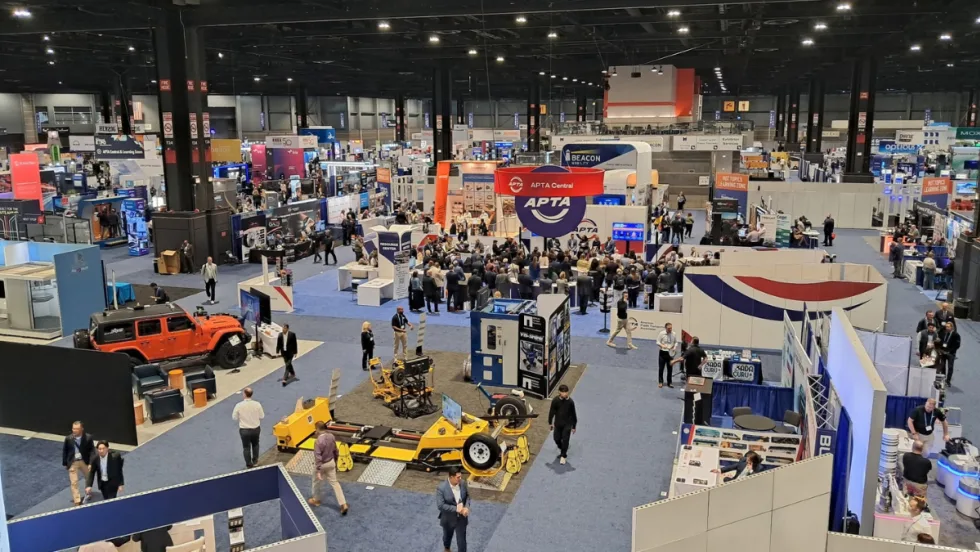
APTA 2026 TRANSform & EXPO Kicks Off in Chicago
After 45 years, APTA returns to Chicago with a focus on next-generation fleets, AI, connected transit networks, and the funding strategies shaping public transportation’s future.
Read More →
New York MTA Warns Federal Tariffs Could Add $1 Billion to Rolling Stock Costs
The agency said tariffs on specialized imported components could reduce the purchasing power of its $23 billion investment in new subway cars, railcars, and buses.
Read More →
From the Show Floor: What’s Happening at APTA TRANSform & EXPO 2026
Follow the latest product launches, partnerships, technology updates, and transit industry announcements coming out of APTA TRANSform & EXPO in Chicago.
Read More →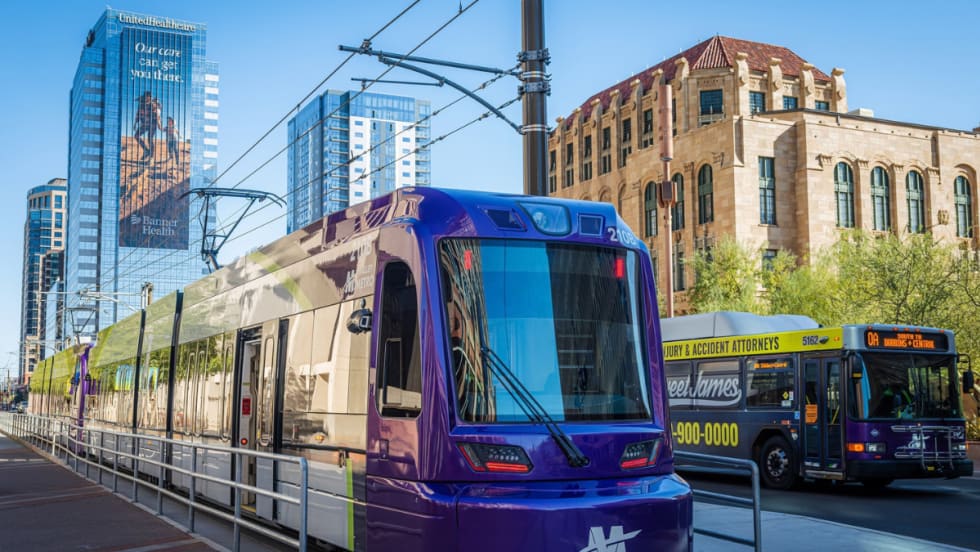
How Valley Metro Is Balancing Transit Growth With the Rider Experience
The APTA award-winning agency is pairing rapid system expansion with investments in workforce, safety, technology, and the fundamentals of transit service.
Read More →
Bus Tech Talk: Keeping Transit Technicians Ahead of the Technology Curve
In this episode of Bus Tech Talk, Complete Coach Works’ Business Development Manager Mark Hollenbeck and METRO’s Executive Editor Alex Roman sit down with Obed Mejia, Senior Technical Trainer for Bus Maintenance, at LA Metro to discuss how rapidly evolving bus technology is changing the maintenance shop — and the skills technicians need to keep pace.
Read More →
Michael Schneider Joins Paslay Group to Expand Transportation Practice
The longtime transportation executive will help Paslay Group grow its advisory and program management work across transit, highway, and other infrastructure sectors.
Read More →
People Movement: Connectpoint Expands Leadership Team, Stadler Names New Group CEO, and More
In this edition, we also spotlight recent personnel moves at Burns, UZURV, and more, highlighting the people taking on new roles across the transportation industry.
Read More →
More Than a Summer Job: Building the Next Generation of Transit Talent
The Delaware River Port Authority and PATCO have transformed their internship program into a hands-on professional development experience that introduces students to the breadth of transportation careers — and creates a pipeline for future employees.
Read More →
LA Metro Board Awards 220 Battery-Electric Bus Contract to ENC
The contract, which is the largest base award of battery-electric buses by a U.S. transit agency, will be built in Southern California, sustaining good jobs as LA prepares to welcome the world in 2028
Read More →
What’s Behind San Diego MTS’s Award-Winning Transit Strategy
Named one of APTA’s 2026 Outstanding Public Transportation Systems with 50 million or more annual passenger trips, California’s San Diego Metropolitan Transit System points to gains in ridership, safety, technology, and reliability as foundations of its success.
Read More →