



Clean-Fuel Technology Gains Ground at Urban Bus Fleets
Some of the country’s largest transit fleets are accelerating their alternative-fuel programs, with CNG, clean diesel and hybrid buses leading the pack. Meanwhile, fuel-cell propulsion remains in development.
With California’s history of environmentalism, especially in the arena of air quality, it was fitting that a specialty conference with the lofty title World Bus and Clean Fuel Summit was held last year in Los Angeles. More than 50 representatives of manufacturers and suppliers of clean-fuel buses, components and infrastructure; fuel suppliers; regulatory agencies; and transit operators gathered to exchange information about the status and future of clean-fuel technologies. In 1992, the Environmental Protection Agency (EPA) promulgated new emission regulations that encouraged the use of alternative fuels, especially in EPA non-attainment areas. California established two agencies to deal with air quality on a statewide basis. One of those agencies is the California Air Resources Board (CARB). In something of a landmark action, CARB approved new transit bus regulations in February 2000. As a result of CARB’s actions, a graduated set of emission standards has been put in place for new buses, such that by 2008, NOx and particulate emissions will be zero. California’s fuel options CARB has legislated two compliance paths to achieve the new standards, either clean diesel or alternative fuels. The alternative-fuel path includes natural gas, propane and non-diesel hybrid-electric propulsion. However, the overwhelming choice so far has been compressed natural gas (CNG). The alternative fuel path offers immediate NOx and particulate matter reductions. Continued use of diesel technology is permitted, largely in recognition of the tremendous investment in the existing fleet and supporting infrastructure. However, improvements are required. The most promising emission reducers seem to be the refining and distribution of low-sulfur fuel, and the aftertreatment of diesel exhaust systems to reduce NOx and particulates. Longer-term solutions may lie in alternate fuel or clean-diesel hybrid technology or in fuel cell–powered electric drive vehicles. Reaching beyond the CARB regulations are even more aggressive requirements imposed by the South Coast Air Quality Management District (AQMD). This agency develops air-quality strategies specifically for a large chunk of the Los Angeles metropolitan area. The district has made great strides in reducing the infamous “ozone alert days” of years past, from about 120 in 1978-80, to nearly zero in 1999, despite growing populations of people and motor vehicles. Legally, AQMD can and is developing more stringent air-quality rules than those promulgated by CARB. For transit buses, tough AQMD regulations effectively rule out the purchase of standard diesel buses. Eight different rule proposals are on the table to govern emissions from light- and medium-duty public fleet vehicles, transit buses, refuse collection trucks, airport ground-access vehicles, school buses, heavy-duty public fleet vehicles and sweepers. The sulfur content of liquid fuels also will be regulated. Natural gas technology Within the context of the obviously high-priority issue of air quality, the Los Angeles County Metropolitan Transportation Authority (MTA) began experimenting with alternative-fuel vehicles as early as 1989, when 30 methanol and 10 CNG buses were purchased. An alternate-fuel policy was enacted in 1993. The early alcohol-fuel buses were converted to CNG, which has become the adopted standard for the MTA fleet. More than 1,000 CNG buses will be in service by July 1, 2001, with nearly 1,000 more on order. What is especially significant about this commitment, aside from the obvious NOx and particulate emission reductions, is that the CNG fleet requires a 20% greater capital investment than for a comparable fleet of diesel buses and infrastructure. Moreover, CNG buses cost about 15% to 20% more to operate than their diesel counterparts. Los Angeles’ experience was mirrored by the New York City Transit Authority (NYCT), which is also making a massive investment in CNG buses and facilities. New York plans to have 649 CNG buses operating by 2006. Depot conversion costs have been estimated at as much as $27 million for one multi-story facility. Only one agency, SunLine Transit in Thousand Palms, Calif., reported that while capital costs exceeded those for diesel buses, operating costs appeared to be lower for CNG vehicles. Clean diesel technology A number of reports were offered to bolster the case for clean diesel. This technology produces lower emissions through a combination of low-sulfur fuel and exhaust aftertreatment. New York described its clean diesel demonstration program. In addition to low-sulfur fuel, a key element of the NYCT program is the use of “continuous regeneration technology” (CRT) in the aftertreatment of the exhaust. NYCT has equipped 50 buses to operate in a one-year test program. In addition, 140 CRT-equipped and “regular” buses will operate on the low-sulfur fuel. The program is in its early stages. Results appear promising, but it is too early for reporting purposes. Hybrid bus technology A third category of advanced propulsion technology is the hybrid bus, which features small diesel or CNG engine generators with electric drives. Both the Orange County (Calif.) Transportation Authority (OCTA) and NYCT are especially active in this emerging technology for a number of reasons. The hybrid offers prospects for reduced fuel consumption and storage needs. The electric drive promises smooth and quiet performance with the added benefit of using energy regeneration during braking. Of course, the emission reduction benefits also result. If clean diesel rather than CNG is used for the internal combustion portion of the drive system, infrastructure modification costs can be kept to a minimum. NYCT opted to use a diesel/electric configuration and expects to have more than 125 buses delivered by late 2001. Testing on a prototype fleet of 10 buses has produced positive results, with emissions comparable to CNG vehicles. Reliability is improving but, as expected, is not yet comparable to the diesel fleet. Most gratifying is that the purchase price for the production order is comparable to CNG coaches. Orange County opted for CNG-electric hybrids with two prototypes. Results so far indicate a 20% reduction in fuel consumption compared to diesel buses, together with equivalent range. Emissions levels match CNG technology. Lacking are necessary reliability levels and top speed capabilities. Further development goals for hybrid technology include achieving better reliability, lower weight and improved performance. Fuel cell technology The newest emerging technology for bus propulsion is based on the fuel cell. A fuel-cell battery is a static device that generates electricity directly from chemical conversion of the fuel. Hydrogen and oxygen react to produce electrical energy, with water as a by-product. Efficiency is expected to be high, as is reliability, since there are no moving parts in the cell itself. Fuel-cell batteries are of higher capacity than other battery technologies and tend to pack a lot of energy into a small space. Energy storage and regeneration add to the attractions of the technology for vehicle applications. The Chicago Transit Authority (CTA) and California’s SunLine and AC Transit systems are actively involved in the proof-of-concept phase of demonstrating fuel-cell buses. Efforts are also underway in a number of European cities to advance fuel-cell technology for buses. Yet to be resolved are issues of capital and operating costs as well as the perception that the use of hydrogen as a fuel is inherently risky. Conclusions A number of observations seem appropriate: 1. Unlike the railroad and rail transit industries where major technological innovations like moving from steam to diesel locomotives, or from DC to AC traction, were based on a desire to improve efficiency and reduce costs, the exploration of new propulsion technologies for buses appears rooted in a communal desire to clean up the air. 2. CNG (and to a lesser extent LNG) have made the greatest inroads as alternative bus propulsion technologies. This is true, in part, because there is relatively little that has to be done to make the vehicles operate on NG. However, there is a great deal that must be done to install new fueling infrastructure, often at significant cost. The vehicles themselves appear to cost more to purchase and to operate than do diesel units. Despite these drawbacks, the financially hard-pressed transit industry is moving to NG in significant numbers. This is especially true in California, where state and local legislative mandates require rapid improvements in air quality. 3. Clean diesel technology appears to be able to match the low-emission characteristics of CNG, but seems to be a non-starter in the competition to clean up the air. While there are some demonstration programs, and suppliers seem more than willing to advance the research and development activities necessary to bring clean diesel online, emphasis from the transit operators and at least some of the regulators seems to encourage NG solutions. However, clean diesel research will not be wasted, for it will be used to retrofit existing vehicles as well as to power hybrid vehicles with small engines. 4. Hybrid electric technology appears to be the next promising propulsion innovation that will be ready for deployment. Matching CNG in low-emission characteristics, hybrids offer the prospect of better performance, quieter running and regenerative energy as attractive characteristics. 5. In the longer-term future, the fuel cell has captured the imagination of the industry for its potential to offer a true zero-emission propulsion system. Of course, those observations are general. The specific course adopted by any individual agency depends upon local circumstances. Typically, transit agencies do not like to be in the research and development business. Although many do so willingly, the primary purpose of a transit system is to provide safe and reliable transportation for its passengers. Government agencies have focused on transit systems because they operate captive fleets and are highly visible entities within their communities. Thus, transit systems can become very important symbols for local governments to use in demonstrating their commitments toward improving air quality. While that is certainly a valid expression of public purpose, conversion of all transit buses in the country to alternative fuels probably will have a relatively minor impact on overall air quality. It is only when the trucking industry adopts similar alternative-fuel technology that significant emission reductions will be realized. In California alone, there are 8,500 buses and more than 400,000 trucks. The beneficial output of the work described at the World Bus and Clean Fuel Summit is the knowledge that can be applied not only to the transit industry but also to the nationwide trucking business. Working together, the impact of conversion to alternative fuels can have a much more profound impact than will be felt by limiting clean-fuel technology solely to our urban bus fleets.
More Management
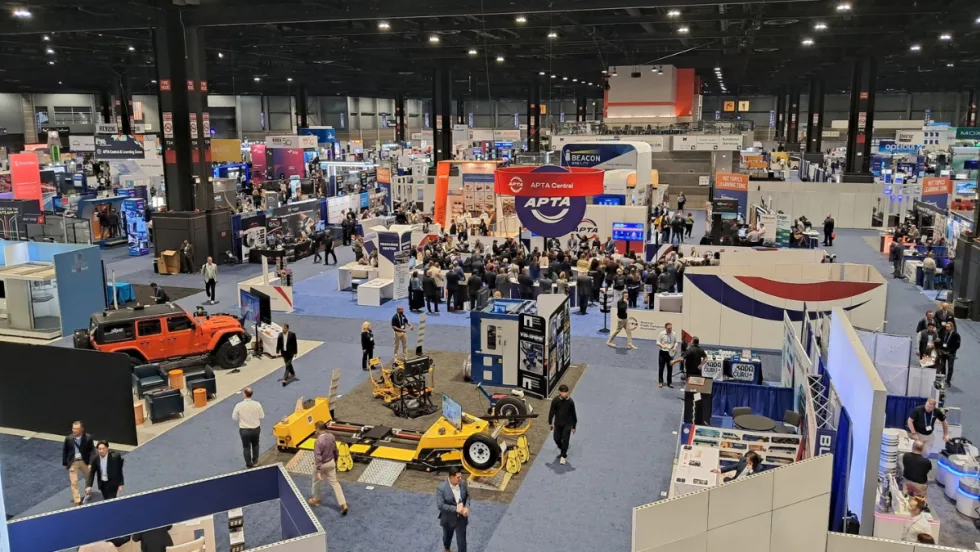
APTA 2026 TRANSform & EXPO Kicks Off in Chicago
After 45 years, APTA returns to Chicago with a focus on next-generation fleets, AI, connected transit networks, and the funding strategies shaping public transportation’s future.
Read More →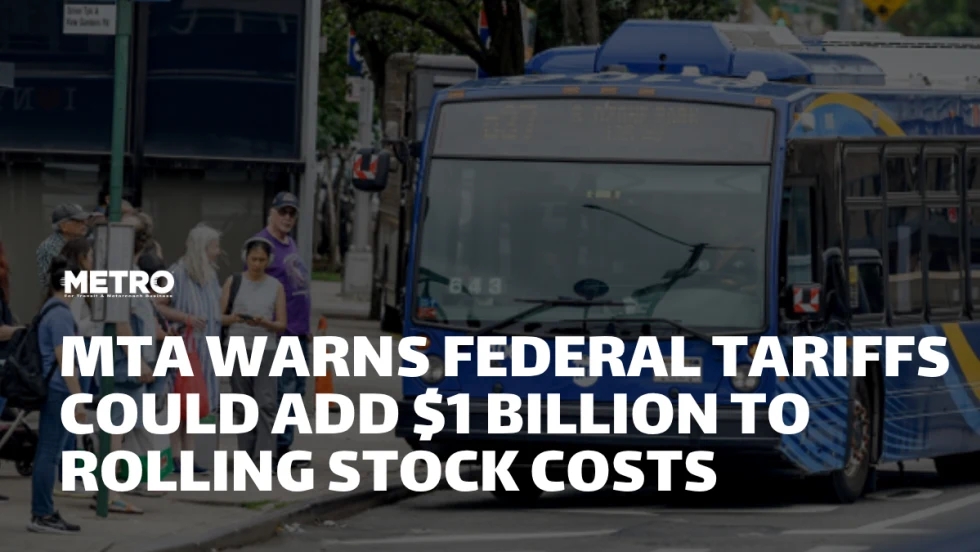
New York MTA Warns Federal Tariffs Could Add $1 Billion to Rolling Stock Costs
The agency said tariffs on specialized imported components could reduce the purchasing power of its $23 billion investment in new subway cars, railcars, and buses.
Read More →
From the Show Floor: What’s Happening at APTA TRANSform & EXPO 2026
Follow the latest product launches, partnerships, technology updates, and transit industry announcements coming out of APTA TRANSform & EXPO in Chicago.
Read More →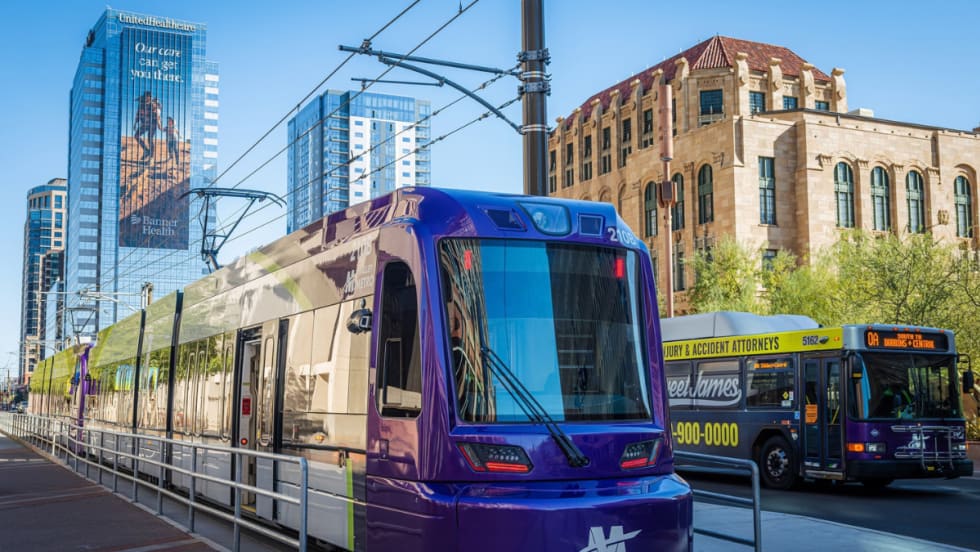
How Valley Metro Is Balancing Transit Growth With the Rider Experience
The APTA award-winning agency is pairing rapid system expansion with investments in workforce, safety, technology, and the fundamentals of transit service.
Read More →
Bus Tech Talk: Keeping Transit Technicians Ahead of the Technology Curve
In this episode of Bus Tech Talk, Complete Coach Works’ Business Development Manager Mark Hollenbeck and METRO’s Executive Editor Alex Roman sit down with Obed Mejia, Senior Technical Trainer for Bus Maintenance, at LA Metro to discuss how rapidly evolving bus technology is changing the maintenance shop — and the skills technicians need to keep pace.
Read More →
Michael Schneider Joins Paslay Group to Expand Transportation Practice
The longtime transportation executive will help Paslay Group grow its advisory and program management work across transit, highway, and other infrastructure sectors.
Read More →
People Movement: Connectpoint Expands Leadership Team, Stadler Names New Group CEO, and More
In this edition, we also spotlight recent personnel moves at Burns, UZURV, and more, highlighting the people taking on new roles across the transportation industry.
Read More →
More Than a Summer Job: Building the Next Generation of Transit Talent
The Delaware River Port Authority and PATCO have transformed their internship program into a hands-on professional development experience that introduces students to the breadth of transportation careers — and creates a pipeline for future employees.
Read More →
LA Metro Board Awards 220 Battery-Electric Bus Contract to ENC
The contract, which is the largest base award of battery-electric buses by a U.S. transit agency, will be built in Southern California, sustaining good jobs as LA prepares to welcome the world in 2028
Read More →
What’s Behind San Diego MTS’s Award-Winning Transit Strategy
Named one of APTA’s 2026 Outstanding Public Transportation Systems with 50 million or more annual passenger trips, California’s San Diego Metropolitan Transit System points to gains in ridership, safety, technology, and reliability as foundations of its success.
Read More →