



Commuter Rail ‘Fever’ Hits U.S. Transit Agencies
More than a dozen proposed commuter rail projects are awaiting federal funding as agencies identify corridors that could help to relieve traffic congestion and reduce pollution with a relatively small capital investment.
When transportation planners talk about commuter rail, they talk about creating options. That is, would a suburbanite prefer a 30-mile crawl down an increasingly congested highway corridor or a short drive to a nearby commuter rail station and a relaxing train ride into downtown? That’s a pretty simple choice for most people. But the development of a commuter rail program can take several years and sometimes decades to accomplish. Political support is essential on a local, regional and federal level. Right-of-way agreements with existing railroad lines are generally required. And funding priorities can change as projects get closer to the finish line. Currently, fewer than two dozen agencies operate commuter rail systems in the United States, many of them in existence for less than a decade. However, growing interest in commuter rail has produced a bumper crop of new proposals in various phases of development. In fact, proposed commuter rail systems outnumber existing systems, with numerous agencies competing fiercely for federal funding so they too can join the party. Enthusiasm is high because existing systems have received high marks. Success begets success “New commuter rail programs have been doing really, really well,” says Alan Wulkan, senior vice president for Parsons Brinckerhoff in New York. “In terms of percentage of growth, commuter rail is the fastest growing transit mode in the country. There are some real success stories here.” Commuter rail has helped to change the demographics of public transit. “It’s attracting a different constituency,” says Wulkan. “In some cases, commuter rail lines are serving relatively affluent, white suburban areas that haven’t had a long history of public transportation support.” This “business-class service” could help to align conservative support for public transportation, but only as an indirect benefit of the service itself. Successes in major cities such as Baltimore, Los Angeles, Dallas-Fort Worth, Seattle and Miami have sparked commuter rail proposals in Minneapolis, Atlanta, Portland, Nashville and several other areas. Not all of the proposed commuter rail systems will survive the punishing battle for funding. Here’s a look at some of the projects in the pipeline as well as a relatively new service that shows strong promise. Wishing on a Northstar In Minnesota, commuter rail advocates believes this will be the year that their efforts to develop an 82-mile line between St. Cloud and Minneapolis will be rewarded. The project, coordinated by the Minnesota Department of Transportation and the Northstar Corridor Development Authority (NCDA), has attained “recommended” status for $147 million in New Starts funding from the Federal Transit Administration (FTA), but local and state elected officials still have to approve an equal amount of funding before the federal funds will be released. Therein lies the problem. The Republican leadership in the state House opposes the commuter rail project, according to Tim Yantos, project director for the NCDA. “They seem to be against any kind of transportation improvement,” he says. Although Minnesota Gov. Jesse Ventura supports the project, authorization of the funding is still up in the air. To get the ball rolling, the state needs to authorize $120 million to the project, while local governments are required to produce $27 million. Yantos says the majority of the local funding is already committed, leaving only the state money in question. “This is the year we need the $120 million or we will fall out of place,” Yantos adds. “If we fail, it would take years for us to get back to where we are today.” Adding to the frustration, Yantos says, is the fact that the project is widely supported, even by people who don’t live along the proposed corridor. “Statewide polls show a 70% approval rating for commuter rail, simply because people say it makes sense,” he says. “The infrastructure already exists. We could be operating as early as late 2005.” According to the NCDA, the rail corridor would have an estimated 9,600 boardings per day at an annual operating cost of $10.1 million. Right-of-way agreements have been forged with Burlington Northern Santa Fe. All that remains is the go-ahead from the state legislature, which has Yantos shaking his head. “It’s done in other parts of the country, why can’t it be done here?” he says. A hit in Nashville? Commuter rail advocates in Nashville, Tenn., are asking themselves the same question. Faced with explosive growth in Nashville’s outlying suburbs, local officials are concerned about increasing congestion along highway corridors as well as eroding air quality. Six years ago, the Nashville Metropolitan Transit Authority and the Regional Transportation Authority (RTA) began investigating commuter rail in the Nashville region. Six possible corridors were studied, the most promising a 32-mile line between Nashville and Lebanon called the East Corridor. In 1999 the FTA approved the project for preliminary engineering. According to Eric Beyer, executive director of the RTA, a transportation body comprising nine county agencies, approval for final design is expected in another nine months to a year. Another 12 months after that, construction is expected to begin. The total cost of the project is estimated at $33 million, with $23 million from Section 5309 New Starts funding. Because the proposed New Starts share is less than $25 million, the project is exempt from New Starts criteria. Expectations are high With funding clicking into place, regional transportation planners are looking ahead at the project’s prospects for success. “The thing that has been encouraging is that other systems have exceeded ridership estimates,” Beyer says. “That demonstrates that this is the mode people are waiting to switch to. I think everyone’s intrigued.” Operation is expected to begin in 2006. Annual operating cost is projected at $2 million, with a conservative forecast of 1,200 weekday boardings. “It’s not the most dense corridor that we want to build,” Beyer says, adding that the goal is to eventually develop five commuter rail corridors and 145 miles of track. Beyer says local funding is being finalized. Local share for rail improvement is $5.7 million. For station design and construction, it’s $1.7 million. One of the key supporters of the initiative has been the Nashville Chamber of Commerce. Members have traveled to Washington state to get a first-hand look at the Sounder commuter rail service between Seattle and Tacoma and to Dallas-Fort Worth to scrutinize the Trinity Railway Express. The concerns of the business group are plain: Unless traffic and air quality problems are confronted and mitigated, the city, its commerce and its reputation as a destination spot are at risk. “Transportation is very much an issue here,” Beyer says. “Nashville is the 11th-most congested city in the United States, and we have some of the longest commute times in the country.” In addition, growth in the suburbs is adding to the congestion, which the RTA was chartered to mitigate. To that end, the RTA has helped to develop voluntary van pools and carpooling efforts. The Eastern Corridor is a huge step beyond van and carpools. “This has transformed the face of the RTA,” Beyer says. He hopes the project will focus attention on the critical need for mass transportation planning. “It really takes a vision of what the community should look at not only today, but in the future.” Trinity’s third piece While many commuter rail projects are slowly moving down the pipeline, the future is now for the Trinity Railway Express in Texas. The commuter rail service began in 1996 as a 10-mile line with three stations between Dallas and Irving. In 2000, it was expanded to six stations, including three in adjacent Tarrant County. And last December, the final link was put in place as two stations in downtown Fort Worth opened, completing the 35-mile line from Dallas to Fort Worth. The service is jointly owned and operated by Dallas Area Rapid Transit (DART) and the Fort Worth Transportation Authority (The T). The project had its beginnings approximately two decades ago, when the Rock Island Railroad began bankruptcy proceedings and the right-of-way become available. The cities of Dallas and Fort Worth took the initiative to purchase the corridors and transferred those rights to their respective transit authorities. Twenty years later, the strategy is paying off. Current ridership is estimated at 9,000 per day, with a forecast of 11,000 boardings per day by 2010. Connections to light rail and bus lines are available at Dallas’ Union Station and Fort Worth’s recently opened Intermodal Transportation Center. The line services the Dallas/Fort Worth International Airport, with free shuttle buses ferrying rail commuters between the CentrePort/DFW Airport Station and the airport, a distance of about four miles. In addition, the partnership created by the commuter rail program between DART and The T has been good for both agencies and their respective constituents. “It has brought the regions together, literally,” says Doug Allen, DART’s executive vice president for commuter rail. Funding strategy Funding for the project has been tough, but obviously not impossible to obtain. DART and The T have leaned on elected officials like Sen. Kay Bailey Hutchison and U.S. Rep. Kay Granger (former mayor of Fort Worth) to fight their battles in Washington, d.c. Allen says commuter rail funding was deliberately not requested from the New Starts program because DART wanted to preserve that source for light rail funding. “We don’t want to have to ask our federal representatives to be dipping into too many pots of money,” he says. But the commuter rail investment has been a good one. “I think it’s exceeded expectations,” adds Allen. “Our ridership figures are pretty healthy for a 35-mile commuter rail line. It’s generated a lot of excitement and demonstrated that commuter rail is a viable option.” And it may not be the last commuter rail project to be developed in the region. “DART owns 200 miles of other rail corridors and we’ve looked at plans for expansion,” Allen says. “There is probably more commuter rail in our future.”
More Rail
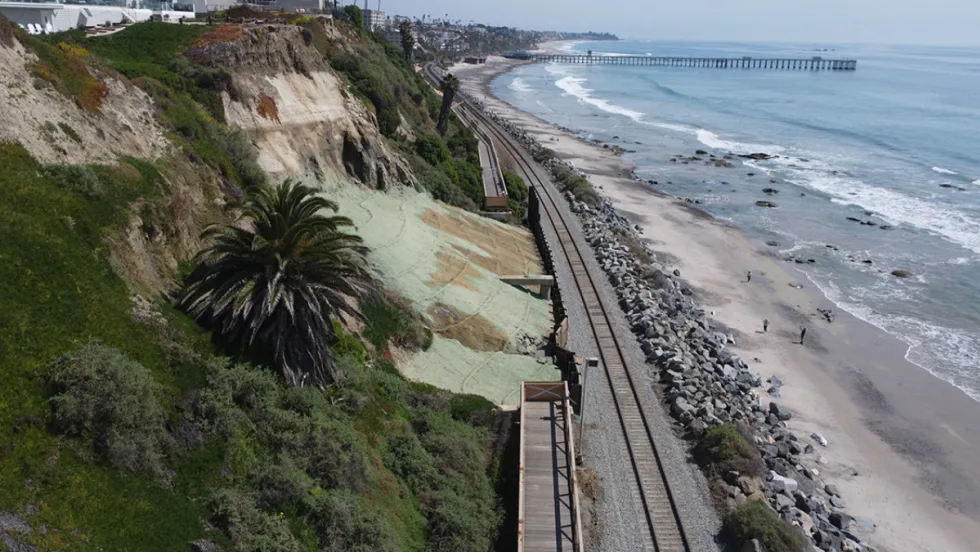
OCTA Declares Emergency to Protect Rail Corridor From Coastal Erosion
The California agency is accelerating shoreline protection and plans to place approximately 690,000 cubic yards of sand along the San Clemente coast to protect a key passenger and freight rail link.
Read More →
More Than a Summer Job: Building the Next Generation of Transit Talent
The Delaware River Port Authority and PATCO have transformed their internship program into a hands-on professional development experience that introduces students to the breadth of transportation careers — and creates a pipeline for future employees.
Read More →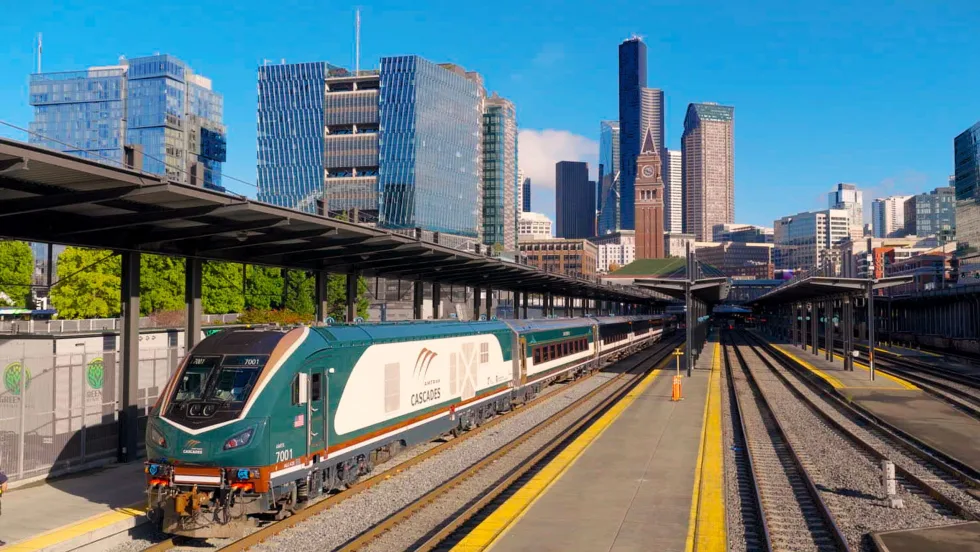
Airo Trains Make Their Amtrak Cascades Debut in the Pacific Northwest
Effective immediately, two cutting-edge Airo trainsets will join the Amtrak Cascades route, operating four daily trips between Vancouver, B.C., Seattle, Portland, and Eugene, Oregon, marking the first introduction of Airo trains into passenger service anywhere in the country.
Read More →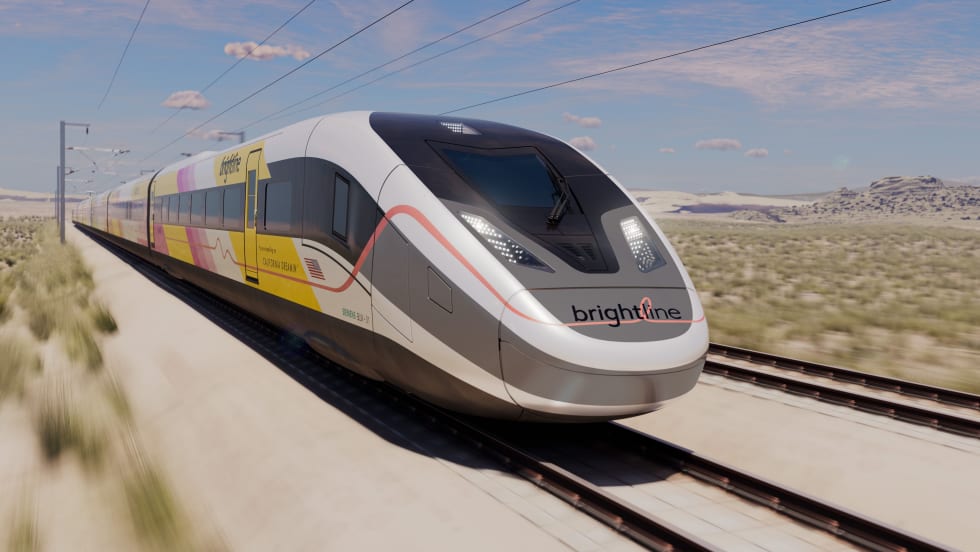
Florida's Brightline Announces Financial Restructuring
Brightline Florida says train operations will continue as normal as certain parent entities enter Chapter 11 and financial stakeholders provide $490 million in new long-term capital.
Read More →
ENC Lands MATA Contract and More in Biz Briefs
In this edition of Biz Briefs, we spotlight the latest developments shaping the future of mobility.
Read More →
Strada360’s Steve Lassey on Turning Transit Data Into Better Decisions
From breaking down data silos to preparing for AI, Strada360 CEO Steve Lassey discusses how transit agencies can use technology to improve operations, customer information, and long-term decision-making.
Read More →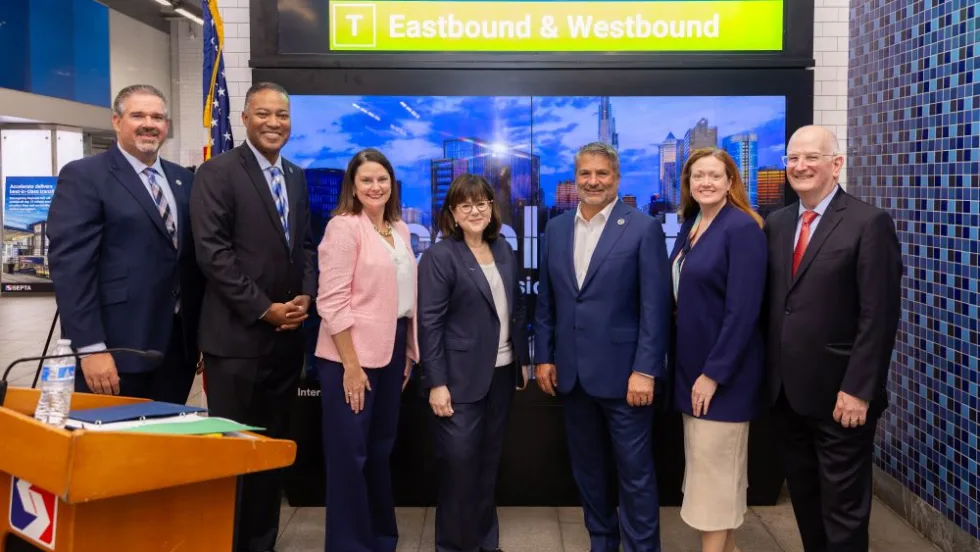
SEPTA Details Accelerate Vision for Transit System
The plan outlines investments in trolley modernization, new Metro and Regional Rail vehicles, accessible stations, and more frequent bus and rail service.
Read More →
FTA Ends Direct Oversight of MBTA Safety Actions
The federal agency closed its remaining special directive to the Massachusetts Department of Public Utilities following a safety review that began in 2022.
Read More →
Amtrak, CN Reach Agreements to Strengthen Passenger Rail Service, Safety
The agreement resolves a more than decade-long proceeding before the Surface Transportation Board concerning the terms and conditions for Amtrak services, such as the City of New Orleans, Illini/Saluki, and Wolverine.
Read More →
New York MTA Advances Final Contract for Second Avenue Subway Expansion
Contract Four is the largest in the Second Avenue Subway Phase 2 project and includes construction of station infrastructure, tracks, and signals for the subway expansion, MTA officials said. Work on Contract Four will begin in 2027.
Read More →