



Consultant Q&A: Project Delivery, Tech, and More with STV's Díaz González
With over 25 years of experience in the architecture, engineering, and construction industry, Marcos Díaz González brings deep expertise in operations, program execution, business development, and a broad spectrum of project delivery methods.

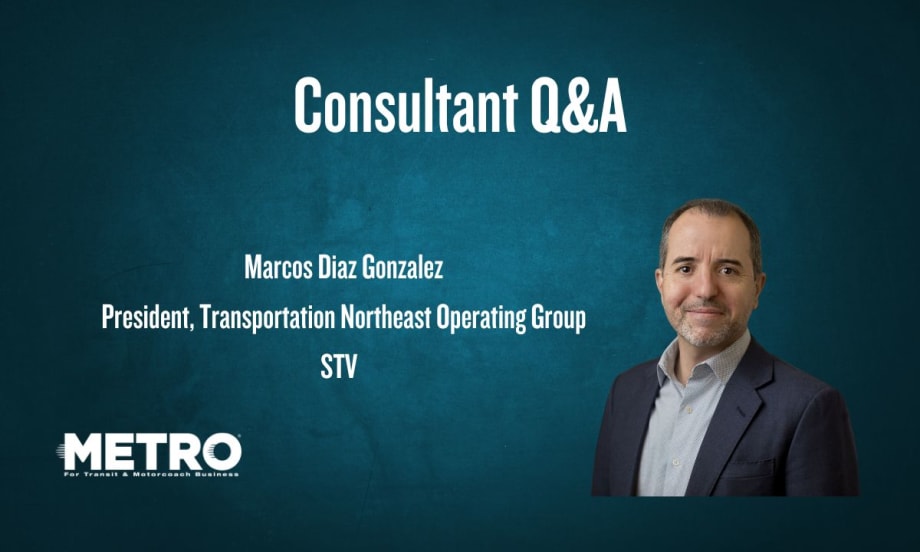
Marcos Díaz González leads a diverse portfolio of projects spanning environmental, civil, transit, and rail infrastructure across the Northeast U.S. for STV.
Photo: METRO Magazine
- Marcos Díaz González has over 25 years of experience in the architecture, engineering, and construction industry.
- He possesses extensive knowledge in operations, program execution, and business development.
- His expertise spans a wide range of project delivery methods.
*Summarized by AI
As president of STV’s Transportation Northeast operating group, Marcos Díaz González leads a diverse portfolio of projects spanning environmental, civil, transit, and rail infrastructure across the Northeast U.S.
Under his leadership, the group delivers planning, design, engineering, and project management services critical to the region’s evolving mobility needs.
With over 25 years of experience in the architecture, engineering, and construction industry, Díaz González brings deep expertise in operations, program execution, business development, and a broad spectrum of project delivery methods.
In this year’s Consultant Roundtable, Díaz González joined METRO to share insights on the evolving role of project management, the integration of technology in infrastructure delivery, and the importance of building consensus among diverse stakeholders — all key to driving successful, sustainable transportation solutions.
Stakeholder Engagement and Project Design
How do you balance stakeholder expectations, regulatory requirements, and technical feasibility?
Balancing these priorities begins with a governance framework that establishes decision-making authority and accountability, supported by a culture of transparency and shared expectations.
Early engagement with community stakeholders is key. Precise and predictable communication channels are used to define goals, risks, and expectations while providing updates on actionable progress.
One of the biggest challenges in project development is the gap in understanding between stakeholders and technical or regulatory constraints. Successful teams foster a culture of optimism and curiosity, going beyond the minimum code requirements to find innovative solutions.
STV’s work on Second Avenue Subway Phase 2 in New York City exemplifies this approach. Building on lessons from Phase 1, STV is coordinating efforts between the MTA, East Harlem community stakeholders, utility companies, and regulatory agencies to ensure alignment between technical feasibility and community expectations.
What are the most effective strategies for gaining public and political support for transit projects?
Gaining public and political buy-in begins with early coalition-building, starting with engaged stakeholders and expanding outreach to broader community groups. Meaningful engagement means not only gathering feedback but also demonstrating how it influences project decisions.
For example, during the development of Elmont Station for the LIRR, STV worked closely with local officials, community groups, and Belmont Park developers to communicate the station’s benefits and secure strong community support.
Political support also hinges on realistic budget planning and phased implementation strategies that address economic and logistical risks. For the North Station Draw One Bridge Replacement, STV provided a comprehensive benefit-cost analysis that helped the MBTA secure a $472 million Multimodal Project Discretionary Grants Mega grant from the U.S. Department of Transportation — the largest federal grant in MBTA’s history.
Furthermore, interactive visualization tools play a crucial role in public outreach. By showing how construction impacts a neighborhood and illustrating the finished project’s benefits, agencies can build trust and alleviate concerns.
How has technology influenced transit project design?
Technology is transforming transit project design in two key ways.
First, digital tools such as digital twins, complex data models, and artificial intelligence allow engineers, builders, and operators to simulate component integration, construction logistics, and operational scenarios before final implementation.
Second, advanced data analytics are being leveraged for ridership prediction and system optimization, ensuring that infrastructure investments align with long-term mobility trends.
For example, STV applied virtual reality technology on the MBTA Green Line Extension (GLX) using Unreal Engine, creating an interactive VR experience that allowed stakeholders to explore design choices in ways traditional 2D plans could not.
STV has also deployed AI-driven solutions for the Chicago Transit Authority, using machine learning models to analyze operational data and improve service reliability. These innovations demonstrate how digital tools are enhancing design and optimizing long-term system performance.
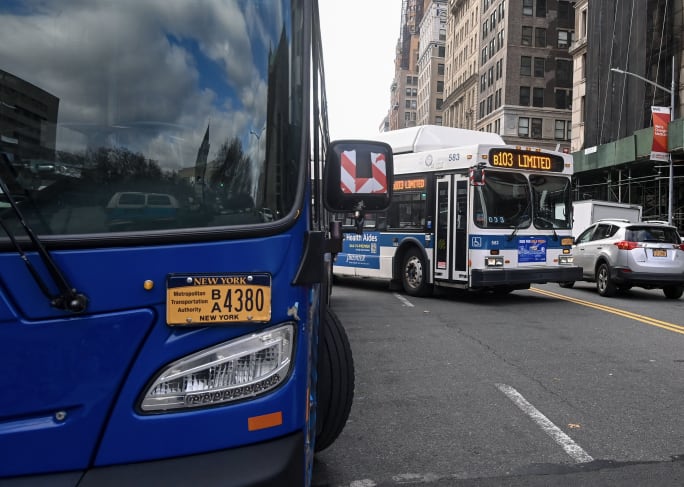
Reducing emissions requires a data-driven, comprehensive approach, addressing both operational emissions and the embodied carbon of infrastructure.
Photo: Marc A. Hermann
Improving Reliability, Sustainability
How can transit systems improve reliability and reduce delays?
Transit reliability begins with strategic planning and design, focusing on three core areas:
Leveraging technology from the start. By integrating Internet of Things (IoT) sensors throughout infrastructure assets, agencies can create live predictive models that identify potential failures before they happen.
Building system redundancy. Engaging operators and stakeholders early ensures that transit infrastructure avoids single points of failure. This could mean strategically placing critical systems or designing contingency scenarios that allow for flexible service adjustments.
Comprehensive training and contingency planning. A robust recovery plan is only as effective as its weakest link. Regular training and emergency scenario testing help operators, security personnel, and maintenance teams respond effectively.
By integrating these strategies, transit agencies can create a more resilient, reliable system that minimizes delays and enhances rider confidence.
What are the most effective ways transit agencies can reduce their carbon footprint?
Reducing emissions requires a data-driven, comprehensive approach, addressing both operational emissions and the embodied carbon of infrastructure. Transitioning to zero-emission fleets is a key strategy, coupled with detailed planning to evaluate alternative energy sources, navigate the supply chain and operational constraints, and prepare for maintenance facility upgrades.
Additionally, material selection plays a key role in reducing the embodied carbon footprint. The significant energy demands of cement and steel production provide an opportunity for innovation; agencies that prioritize and drive the adoption of low-carbon alternatives can lead industry progress.
Sustainability frameworks also provide pathways to holistically evaluate design and construction efforts, encompassing both operational and embodied carbon. STV’s design for the Mother Clara Hale Bus Depot in Harlem showcases the benefits of green building elements, including a green roof, solar panels, rainwater harvesting, and clean-fuel bus infrastructure, earning LEED Gold certification.
Finally, transit system reliability directly correlates with reduced emissions. Projects like the Glassboro-Camden Line in New Jersey demonstrate how well-designed public transit corridors can reduce single-occupancy vehicle use, making cities more sustainable while improving mobility.
The Customer Experience and Boosting Ridership
How do you define success when it comes to improving the customer experience and increasing ridership?
Success in customer experience and ridership growth is measured through a mix of quantitative metrics — such as ridership growth, on-time performance, and service density — and qualitative factors, including passenger comfort, ease of navigation, and overall perception of safety.
STV has directly contributed to these improvements through station design and accessibility upgrades. Our work with Amtrak station renovations has enhanced wayfinding, improved accessibility for passengers with disabilities, and streamlined passenger flow, leading to measurable improvements in customer satisfaction.
Additionally, the seamless integration of transit with other mobility options — including bike-share systems, micromobility, and pedestrian infrastructure — plays a crucial role in shaping the rider experience. What passengers see and feel upon entering the system is just as important as their journey itself.
By taking a holistic approach to customer experience, transit agencies can ensure their systems remain attractive, efficient, and responsive to the evolving needs of riders.
Quick Answers
Marcos Díaz González has over 25 years of experience in the architecture, engineering, and construction industry, with deep expertise in operations, program execution, business development, and a wide range of project delivery methods.
*Summarized by AI
More Management

METRO Opens Submissions for 2026 Motorcoach Awards
Nominations are now being accepted for METRO Magazine’s Operator of the Year and Innovative Operator of the Year awards.
Read More →
New York MTA Advances Final Contract for Second Avenue Subway Expansion
Contract Four is the largest in the Second Avenue Subway Phase 2 project and includes construction of station infrastructure, tracks, and signals for the subway expansion, MTA officials said. Work on Contract Four will begin in 2027.
Read More →
Transit Agencies Highlight Safety Gains at National Summit
Leaders from 15 major transit systems shared crime-reduction results and safety initiatives while discussing the role of continued federal support.
Read More →

NITA Names New Leadership, Expands Reduced-Fare Program at First Board Meeting
The new regional transit authority appointed its first board chair and interim executive director while extending reduced fares across CTA, Metra, and Pace for eligible riders.
Read More →
Beyond the Checklist: A Structured Approach to Transit Maintenance
Reliability-Centered Maintenance helps transit agencies move beyond routine checklists to focus limited resources on the assets and failures that have the greatest impact on safety, reliability, and service.
Read More →
APTA 2026 Nominating Committee Selects Leadership Slate, Names Chair and Vice Chair Nominees
Leadership changes will help shape the association’s priorities and its representation of the transportation industry during the 2026–2027 term.
Read More →
DART Launches Major Security, Fare Enforcement Initiative
The 90-day demonstration will deploy coordinated security teams at five light rail stations while testing controlled access and gathering data to guide future investments.
Read More →
Advancing Fare Collection Through Technology and Innovation
Learn about delivering 1300 gates at 91 stations while managing fare evasion. Explore the large scale deployment, solution customization and real-world results that affect the region. Prepare for deployment in your region now.
Read More →
Game Day in Motion: Moving Millions During the 2026 World Cup
Between packed transit stations and team motorcoaches, see how agencies and operators across North America tackled the transportation demands of the 2026 FIFA World Cup.
Read More →
Surface Transportation Extension Averts Shutdown, Leaves Transit Funding Gap
The stopgap keeps federal transportation programs moving, but missing advance funding could complicate the transit and rail projects agencies are planning next.
Read More →