Chicago Regional Transit Ridership Hits Post-Pandemic High
The region’s fixed-route system finished out the year with a total of 361 million rides. Adding 35 million rides over 2023 represents an increase that is equal to the annual transit ridership of Phoenix.
Overall CTA ridership for 2024 reached 309.2 million, a CTA systemwide increase of 11%. CTA consistently added service throughout 2024, bringing both bus and rail service back to pre-pandemic frequencies.
Photo: CTA
3 min to read
Ridership across the Chicago region’s transit system continued to increase throughout 2024, according to the latest data from CTA, Metra, and Pace.
The region’s fixed-route system finished out the year with a total of 361 million rides. Adding 35 million rides over 2023 represents an increase that is equal to the annual transit ridership of Phoenix. This momentum is at risk if the region’s transit cannot find a sustainable funding solution to the impending fiscal cliff.
Ad Loading...
Region Ridership Up
Transit riders took more rides on all days of the week in 2024 compared to 2023 with Mondays having the largest percentage increase and Tuesdays and Wednesdays seeing the most overall rides.
Daily ridership exceeded one million on 229 days last year, an increase from just 178 days that saw that threshold reached in 2023. RTA’s recently approved 2025 regional transit budget ensures service can meet the growing demand this year.
CTA Ridership
In 2024, CTA rail provided 127.5 million rides, an increase over 2023 of 9%. CTA buses provided 181.7 million rides, a year-over-year increase of 12% and the highest recovery rate of all modes at 77% of pre-pandemic levels.
Overall CTA ridership for 2024 reached 309.2 million, a CTA systemwide increase of 11%. CTA consistently added service throughout 2024, bringing both bus and rail service back to pre-pandemic frequencies.
The agency also opened its first new train station since 2012, the Damen Green Line station near the United Center in the Near West Side neighborhood.
Ad Loading...
During the Democratic National Convention (DNC), the CTA saw heavy service utilization on the Green Line near the United Center and surrounding bus routes. And throughout 2024, CTA continued working closely with the Chicago Department of Transportation (CDOT) to implement the Better Streets for Buses Plan. This plan was released at the end of 2023 and was Chicago’s first citywide framework for bus priority infrastructure, including bus-only lanes and traffic signal adjustments to enhanced bus stop areas.
Five corridors have been selected for developing concepts for robust, corridor-scale bus priority. Outreach to communities and stakeholders along these corridors is anticipated in 2025.
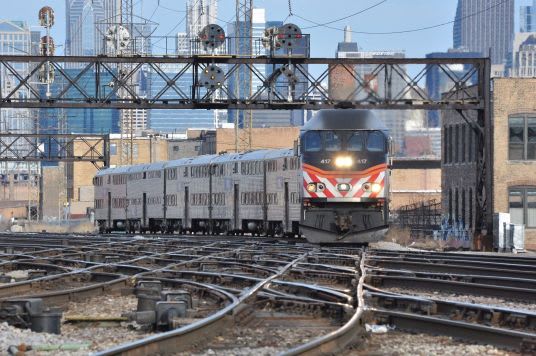
Metra saw a year-over-year ridership increase of 9%, providing nearly 35 million rides as it launched a simplified fare structure and continued to work toward a regional rail vision.
Photo: Metra
Metra’s Growth
Metra saw a year-over-year ridership increase of 9%, providing nearly 35 million rides as it launched a simplified fare structure and continued to work toward a regional rail vision. This vision calls for providing more consistent, predictable service outside of peak work commute times.
In 2024, Metra completed multiple station renovations, opened a brand-new Peterson/Ridge station in Chicago’s Edgewater neighborhood, and added service to lines including UP-North and BNSF.
Metra also launched the Access Pilot Program in partnership with the RTA and Cook County, extending reduced fares to riders experiencing low incomes; offered shuttle trains from O’Hare to downtown Chicago during the DNC; and began allowing bicycles on all trains. Notably, weekend ridership on the UP-North and UP-Northwest lines has exceeded pre-pandemic levels, showing that the needs of riders are changing and people are using transit for more than the traditional work commute.
Ad Loading...
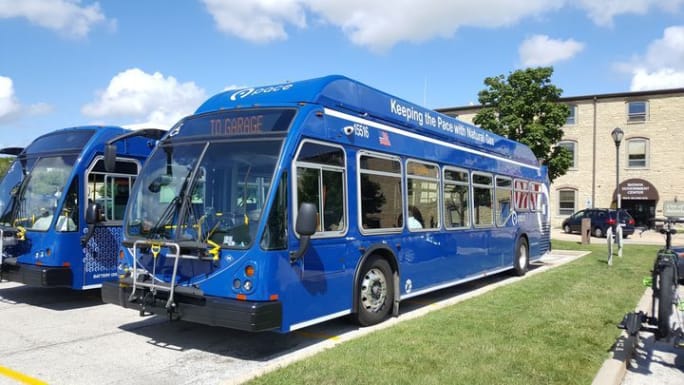
Pace continues to see strong demand for its bus rapid transit Pulse lines.
Photo: Pace
Ridership at Pace
In 2024, Pace buses saw the largest ridership increase of 13%, providing 16.9 million rides.
Pace continues to see strong demand for its bus rapid transit Pulse lines. Pace’s Pulse Dempster Line, which launched in 2023, and the traditional Pace Bus Route 250 both operate along the Dempster Street corridor in the northwest suburbs.
Last year, ridership along the corridor actually exceeded 2019’s pre-pandemic ridership. The agency is also undergoing a network revitalization plan called ReVision with the goal of increasing service where it is needed most.
“For the third year in a row, we have seen double-digit ridership increases across the regional transit system,” said RTA Executive Director Leanne Redden. “This is the result of innovative service improvements by CTA, Metra, and Pace that adapt to the changing needs of riders. These improvements can continue and, in fact, accelerate with adequate sustainable transit funding.”
Bus Business Consultants founder Brian Dickson shares lessons on leadership, organizational health, and creating options for long-term success in a changing transportation industry.
The proposed agreement calls for a 50% increase in bus service in Everett, a new microtransit zone, continued paratransit service, and the transfer of Everett Transit operations to Community Transit.
From breaking down data silos to preparing for AI, Strada360 CEO Steve Lassey discusses how transit agencies can use technology to improve operations, customer information, and long-term decision-making.
In this edition, we also spotlight recent personnel moves at STV, the Eno Center for Transportation, and more, highlighting the people taking on new roles across the transportation industry.
The plan outlines investments in trolley modernization, new Metro and Regional Rail vehicles, accessible stations, and more frequent bus and rail service.
The federal agency closed its remaining special directive to the Massachusetts Department of Public Utilities following a safety review that began in 2022.
The “Buses Mean Business” report examines the transit bus manufacturing industry’s economic footprint, supply chain, and rising demand for vehicle replacements.
Hosted by the COTA from September 10 to 13, the Summit carried the theme “Celebrating 10 Years of Excellence, Leadership, and Impact,” with every part of the program honoring the people, agencies, and partners who built LIT over its first decade.
In this edition, we also cover recent appointments and announcements at the Wabtec, SilverRide, HNTB, and more, showcasing the individuals helping to shape the future of transportation.