



DaimlerChrysler’s New Strategy Brings Setra, Orion and Thomas-Dennis Under One Roof
Andreas Strecker, a key player in Daimler’s EvoBus operation, has taken charge of DaimlerChrysler Commercial Buses North America, the company’s newly organized commercial bus division. He explains the strategy behind the consolidation.

In January, DaimlerChrysler announced a reorganization of its North American bus business, bringing commercial buses manufactured by Orion Bus Industries and Thomas-Dennis and Setra of North America motorcoaches together into a single division called DaimlerChrysler Commercial Buses North America. With this reorganization, DaimlerChrysler (DC) expects to develop new buses for the North American market while enhancing its ability to deliver products and service to what it hopes will be a growing customer base. Andreas (Andy) Strecker, 40, a top strategist for DC’s worldwide bus and coach business, was appointed president of the new division. Strecker will report to Wolfgang Diez, head of worldwide commercial bus activities for DC. Members of Strecker’s management team include Patrick Scully, president and CEO of Setra of North America; Rick Solon, CEO of Orion Bus Industries; and Tony Domabyl, CEO of Thomas-Dennis Co. Strecker, who holds a doctorate in business administration from the University of Stuttgart, started working for Mercedes-Benz in 1989. He played a key role in the company’s merger of Mercedes-Benz and Setra bus activities into EvoBus in 1995 and has held various senior positions within the DC commercial bus division. At press time, Strecker was in the process of relocating from Germany to Greensboro, N.C., the new division’s headquarters. From his office in Stuttgart, he spoke with METRO Editor Steve Hirano. What was the driving force behind the reorganization of the North American bus business? We thought it would be better to have everything together under one roof. This allows us to offer a full range of products from one source and to leverage the combined bus and coach know-how and resources we have in the DC family. Where does this new division fit within DaimlerChrysler’s corporate ladder? That is, how is it aligned with EvoBus? I will report directly to Mr. Diez, who is responsible for the worldwide bus business of DC. Because I come from EvoBus, we will be working very closely with my former colleagues. Examples are the introduction of European-based products like the Setra 400 into the U.S. and the use of the rich city bus known in Germany for Orion transit buses. Your goal is to increase unit sales for the division from last year’s total of 800 to 1,800 in 2003. That’s a 125% increase. How do you plan to accomplish this? We will have brand new products in all market segments and increase our service network. We are convinced that we will gain the confidence of new customers, as DC stands for quality, credibility and also financial soundness. How will the reorganization affect the key players, starting with Setra? Setra of North America is not only a DaimlerChrysler company, but is now part of one of the largest commercial bus organizations in the United States. From the product side, we can fully leverage the latest European coach technology. The Daimler-Chrysler joint venture with Polomex in Mexico also opens new opportunities to provide more products to the market. Can you tell us about your plans for Polomex? About a year and a half ago, we decided that it would be appropriate to deliver a complete product to the market. Until then, Mercedes-Benz only delivered chassis to the market and the customer bought the body separately. In order to create a one-stop shopping experience for our customers, we decided to set up a joint venture with Marcopolo in Mexico. Now we build a complete bus under one roof at our plant in Monterrey, Mexico. We plan to take advantage of the Mexican plant to also bring a product to the United States. A date has not been set, but the product will complement the Setra 400 [which is built in Germany]. Any other anticipated effects on Setra? On the service side, Setra is in a position to expand its network by using selected outlets from DC affiliates such as Detroit Diesel Corp. and Thomas Built Buses. In addition, Setra CoachWorld in Orlando, Florida, can broaden its revenue base by providing service also for Orion shuttle and transit buses. So nearly everything has changed quite dramatically in favor of Setra. How about for Orion? Things have also improved significantly for Orion, as we now have full access to the latest technology of Mercedes-Benz city buses. In addition, our sales force is now also able to provide cutaway products to allow transit bus customers a one-stop shopping experience, which is unique in the industry. Can you explain why the Thomas CL and SLF series buses will now be sold as Orion buses? Both of those Thomas products complement very nicely the Orion program of heavy-duty buses. In order to provide transit bus customers with a full-line program from one source, we decided to sell the CL and SLF under the Orion brand via the Orion direct sales organization. In addition, we will sell both products through selected Thomas Bus dealers. 2001 was a tough year for motorcoach operators and coach builders. What’s your outlook for 2002 from a manufacturer’s standpoint? This will be an interesting year for all of us. After years of strong increases in sales of new coaches, the demand has softened. There are many late-model coaches available that need to be sold. I see at least the first half of 2002 as a correction period. We will look very closely to whom we sell buses — sometimes it can be wiser not to do every deal. On the other hand I am 100% convinced that the bus and coach business has a good future. Many operators follow new marketing approaches to broaden the customer base — be it in public transit, charter or linehaul service. Orders for new motorcoaches have slackened considerably in the past year. Is there anything that manufacturers can do to encourage motorcoach operators to replace their older equipment or to add new buses to their fleets? The sales reps have to study or develop the business plans with the operators to recommend an appropriate purchasing decision. It is very important to offer the right product for the right purpose. This can also be a mid-size bus or a used coach. We are very interested in ensuring that our customers can stay in business and that they are able to pay their rates in time. How is Setra differentiating its products for 2003 from the products of other coach manufacturers? The Setra 400 is an integrated product. We mainly use components from Daimler-Chrysler. For example, we use the Detroit Diesel engine and Mercedes-Benz rear axle, and we manufacture our own seats. The electronic system is also an in-house development. The base of the U.S. product — the TC 400 — has already a proven record in Europe and was awarded “Coach of the Year.” Our plant in Ulm, Germany, which produces more than 3,000 coaches per year, is a showcase in coach production. The Setra 400 really combines European design at the latest level of modern coach building with familiar U.S. drivetrain components. Everybody who sees the coach and takes a ride will feel the difference immediately. How does the European motorcoach market differ from North America? That is, how do their equipment needs compare to ours? The customer structure is quite comparable. We have many smaller family-owned businesses and some bigger groups. As in the United States, operators demand vehicles of various sizes for different purposes. We have many customers who use our complete product range, starting from the Sprinter minibus up to the Setra double-decker coach. The coach market in Europe accounts for approximately 10,000 units per year, giving the manufacturers and suppliers a wider base to invest in technology and product variety. Has the European motorcoach industry been affected by the events of Sept.11? After years of steady market growth, the industry saw a slight decrease in demand even before the tragic events in New York. The fourth quarter was negatively influenced by a reduction of incoming tourism from the U.S. and Japan. We use flexible time accounts in our German factories, which means that we are temporarily able to work on a four-day week without wage cuts or layoffs. In times of higher demand, people work longer without overtime payments. This system allows us to keep our qualified work force on board. Fortunately, we see clear signs of recovery in the market. Security has become a major transportation issue in the United States? Are there security enhancements that can be built into a motorcoach? To travel by coach is the safest means of transportation. Many statistics in Europe and in the U.S. can prove that fact. Technology and electronics advance year by year to improve safety even further. Daimler-Chrysler is well known for its capabilities to provide top class safety features. Regarding onboard safety, I am absolutely confident that the standard is already very high. Operators take their share if they service their products on a regular basis and train their drivers properly. What’s the biggest challenge facing this new division in the next few years? Our biggest challenge is at the same time our biggest opportunity. Customers expect us to provide excellent service. Here we will draw upon our partnerships in the DaimlerChrysler family in the U.S. We have newly established service points in New York with Atlantic Detroit Diesel and in Los Angeles with L.A. Freightliner and are in further discussions with partners in other regions. The increasing population of our commercial bus program also gives us the opportunity to consider more company-owned service centers — comparable to Setra CoachWorld in Orlando — when required. The second major — but certainly also delightful task — is to introduce a variety of new products for all market segments, starting with the new Orion VII transit bus, the gas-version of the SLF shuttle bus, the Setra 400 coach and others. Do you think it will be a difficult transition for you, relocating to the United States? No, not at all. I’ve been to the United States probably 20 times for business or personal reasons and spent eight months in Toronto while working for Mercedes-Benz. I’m looking forward to it.
More Management

Bus Tech Talk: Keeping Transit Technicians Ahead of the Technology Curve
In this episode of Bus Tech Talk, Complete Coach Works’ Business Development Manager Mark Hollenbeck and METRO’s Executive Editor Alex Roman sit down with Obed Mejia, Senior Technical Trainer for Bus Maintenance, at LA Metro to discuss how rapidly evolving bus technology is changing the maintenance shop — and the skills technicians need to keep pace.
Read More →
Michael Schneider Joins Paslay Group to Expand Transportation Practice
The longtime transportation executive will help Paslay Group grow its advisory and program management work across transit, highway, and other infrastructure sectors.
Read More →
People Movement: Connectpoint Expands Leadership Team, Stadler Names New Group CEO, and More
In this edition, we also spotlight recent personnel moves at Burns, UZURV, and more, highlighting the people taking on new roles across the transportation industry.
Read More →
More Than a Summer Job: Building the Next Generation of Transit Talent
The Delaware River Port Authority and PATCO have transformed their internship program into a hands-on professional development experience that introduces students to the breadth of transportation careers — and creates a pipeline for future employees.
Read More →
LA Metro Board Awards 220 Battery-Electric Bus Contract to ENC
The contract, which is the largest base award of battery-electric buses by a U.S. transit agency, will be built in Southern California, sustaining good jobs as LA prepares to welcome the world in 2028
Read More →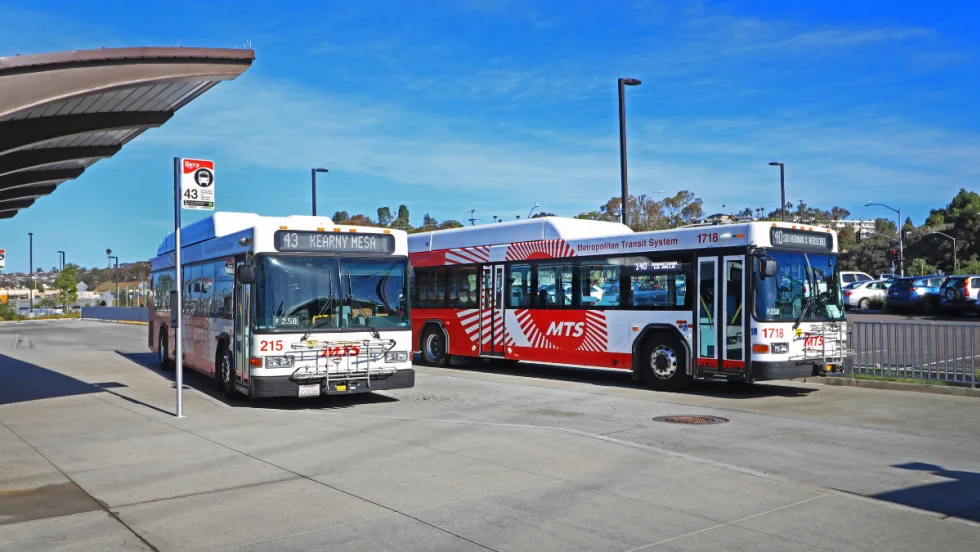
What’s Behind San Diego MTS’s Award-Winning Transit Strategy
Named one of APTA’s 2026 Outstanding Public Transportation Systems with 50 million or more annual passenger trips, California’s San Diego Metropolitan Transit System points to gains in ridership, safety, technology, and reliability as foundations of its success.
Read More →
Public Transit Conference Returning to GFX in 2027, Call for Papers Now Open
The Call for Papers is now open, allowing transit agency professionals and industry experts to help shape the PTC educational program by submitting session ideas for consideration.
Read More →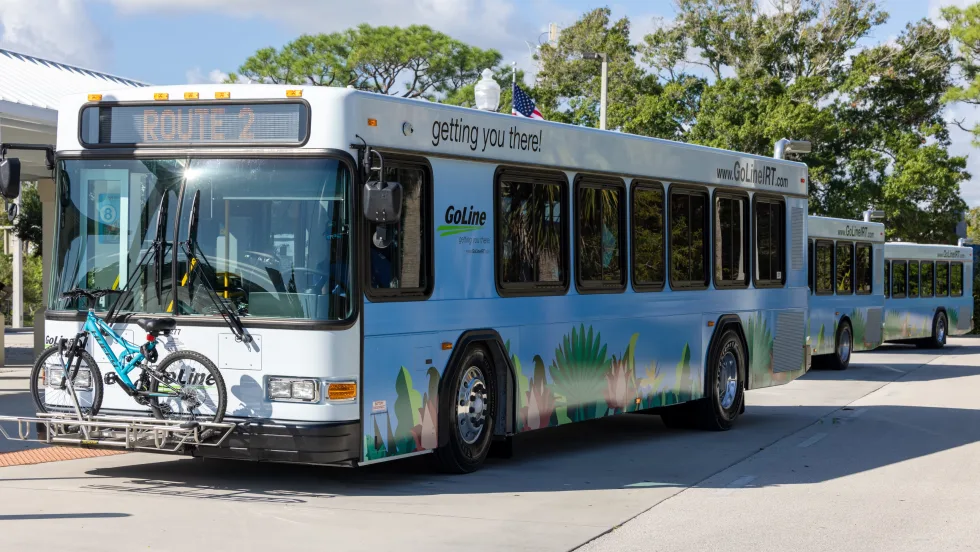
Indian River Transit’s Community-Focused Approach Earns National Recognition
Named APTA’s 2026 Outstanding Public Transportation System in its size category, Florida’s Indian River County transit system continues to grow ridership through fare-free service and a focus on evolving community needs.
Read More →
ENC Lands MATA Contract and More in Biz Briefs
In this edition of Biz Briefs, we spotlight the latest developments shaping the future of mobility.
Read More →From Surviving to Thriving: Building Stronger Transportation Organizations
Bus Business Consultants founder Brian Dickson shares lessons on leadership, organizational health, and creating options for long-term success in a changing transportation industry.
Read More →