



Debate over intercity rail leaves policy at a crossroads
Some critics of the proposed California high-speed rail system have used the state’s Legislative Analyst’s Office report, which recommended that the program not be funded, as its rally cry.
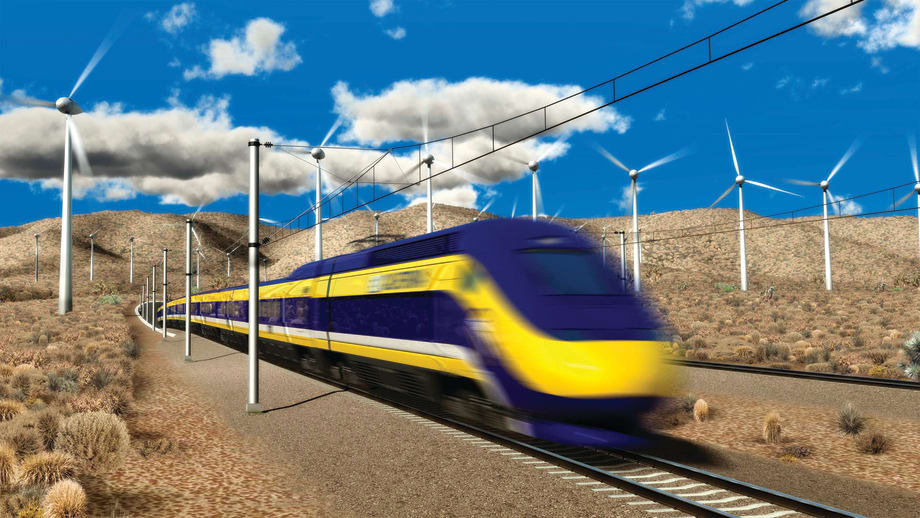

Both the critics of intercity passenger and freight rail policies that have emerged in recent years, as well as supporters of these programs, are partly right and partly wrong. How these conflicts will be resolved — and whether both sides own up to their shortcomings — will determine the future of these programs.
The controversy surrounding the future of the California High-Speed Rail Program is perhaps the most famous case in point. Among the critics, the California state legislature’s equivalent to the federal Congressional Budget Office, the Legislative Analyst’s Office (LAO), recommended that the program not be funded, despite the revised business that lowered the estimated costs from $98 billion to $68.4 billion. The LAO and other critics also cite the uncertainty of future funding. On this score the critics are right — to a point.
Critics ignore U.S. history
The more extreme of the opponents use the LAO’s and others’ calculations to decry investment in intercity rail, in general, arguing that it is wasteful and an inefficient use of taxpayer funds. Nevermind the data showing the jobs created, or that Amtrak’s ridership is at its highest in decades, not just in the Northeast Corridor but also in California and the Pacific Northwest as well. Nor do their arguments recognize that both freight and passenger intercity rail services began with some early public sector commitments, ranging from direct subsidies to free land to loan guarantees. Nor do the critics acknowledge that these systems are facing severe roadblocks that will constrain U.S. competitiveness if delays go unaddressed. By contrast, even conservative governments throughout the world are ramping up their rail infrastructure spending.
Supporters also point out that the nation would have to make less effective and even more expensive investments in airports and highways to cope with the expected increase in intercity travel demand, especially within the “super regions” that dominate economic growth now and in the future.
This is not only true of California, but also in the Northeast Corridor, as well as major corridors in Florida and the Midwest. The final refuge of conservatives is to argue that, if there is a need, it should be borne by the private sector. They point to the recent announcements by private consortia of plans to build lines in Florida and between California and Nevada with private money — again overlooking the assumptions regarding expected public sector contributions on both lines.
Lack of consensus
Regardless of the long-standing support by some on both sides of the political spectrum, current and future intercity rail funding has been plagued with a chronic lack of sufficient consensus on either the nature or even need of a program. The current difference between House and Senate transportation bills are a case in point. Until those differences get hammered out, not just this year, but also long-term, it will be more of the same.
Cliff Henke, a contributing editor to METRO, is senior analyst at PB. His views herein are solely his own.
More Rail
OKC Streetcar Makes Zero-Fare Service Permanent
Ridership increased an average of 71% compared with the same period a year earlier during the fare-free pilot.
Read More →
DART Customer Satisfaction Reaches Six-Year High
Overall satisfaction rose to 74.9%, while the agency’s Net Promoter Score reached a record 33.7.
Read More →
How DART's GoPass Is Redefining Regional Mobility
Serving 14 transit agencies, GoPass simplifies multimodal travel by allowing riders to plan, pay for, and manage an entire trip through one app.
Read More →
Amtrak Board Advances Plan to Restructure Organization, Seeks Public Input
The proposal, developed by Amtrak management and approved by the board for further consideration, is intended to modernize the organization's structure while improving accountability, operational efficiency, and customer service.
Read More →
Biz Briefs: STV teams with Amtrak, Motorcoach Operators Boost Fleet and Land Contracts, and More
From manufacturers and suppliers to transit agencies and motorcoach operators, these updates offer a snapshot of the projects, partnerships and business moves driving the industry forward.
Read More →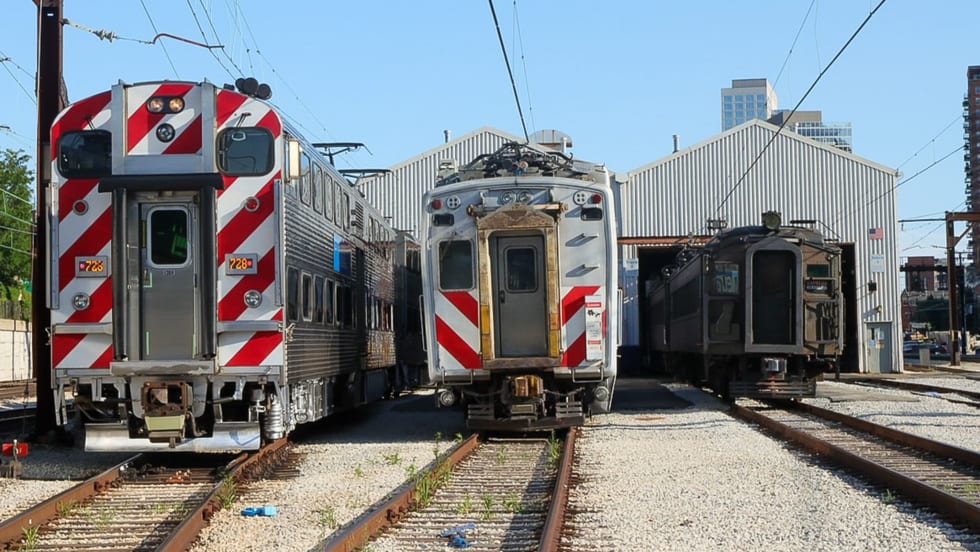
Metra Celebrates 100 Years of Electric Rail, Looks to the Future
The event was also a celebration of recent reforms to public transportation in the Chicago area, changes that could be as transformative in the future as the major civic achievement a century ago, said officials.
Read More →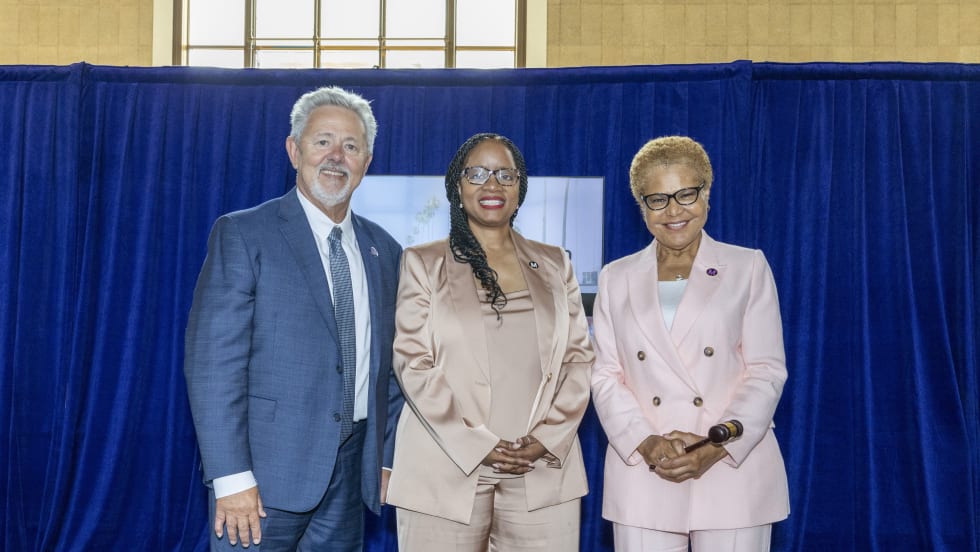
LA Metro Marks Banner Year, Sets Ambitious Goals for New Fiscal Year
Incoming LA Metro Board Chair and Los Angeles Mayor Karen Bass joined outgoing Board Chair Fernando Dutra and LA Metro CEO Stephanie Wiggins to review accomplishments from fiscal year 2026, which included the opening of new rail extensions, advancement of major transit projects, expanded safety programs, and new rider amenities.
Read More →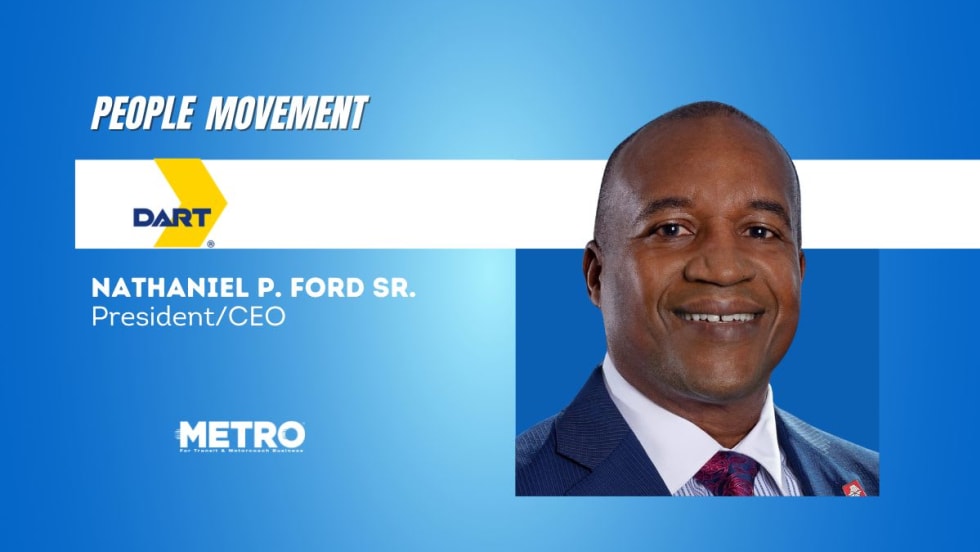
DART Taps Nathaniel P. Ford Sr. as Next President/CEO
Since 2012, Ford has served as the CEO of the Jacksonville Transportation Authority
Read More →
California High-Speed Rail Authority Signs MOU to Advance High Desert Corridor
The agreement deepens collaboration between the California High-Speed Rail Authority and the High Desert Corridor Joint Powers Agency, supporting design integration, cost savings, and faster delivery of a key Southern California rail link.
Read More →
Building the Next Generation of Transit Technology
In this edition of METROspectives, Luminator CEO Magnus Friberg discusses the company's transformation, the growing role of AI and software, and what's next for transit technology.
Read More →