Propane by the Numbers
95 propane autogas paratransit shuttles.
100% propane autogas paratransit fleet (by 2020)
2.9 million miles traveled each year
Three on-site fueling stations


 MENU
MENU SEARCH
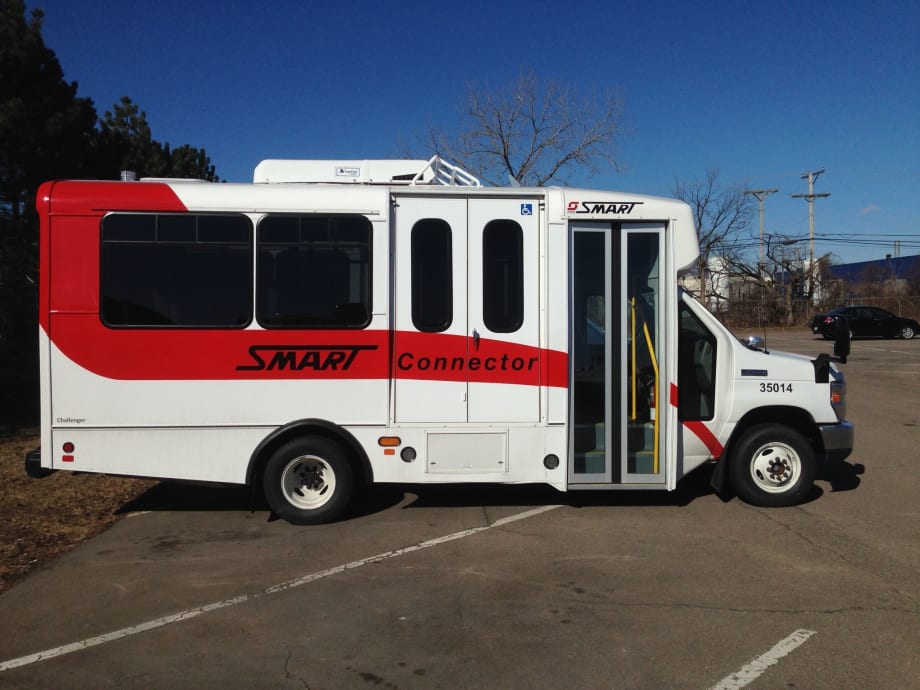
With a goal to reduce emissions, administrators tapped into available funding to replace aging diesel paratransit vehicles.
ROUSH CleanTech
ROUSH CleanTech
The Suburban Mobility Authority for Regional Transportation (SMART) is the Metro Detroit area’s regional transit agency. It serves Macomb, Oakland, and Wayne counties with nine million rides annually. The agency started researching ways to cut costs and shrink its carbon footprint. SMART administrators investigated propane autogas vehicles after learning about their use with a neighboring agency in Flint, Mich.
“Not only were we interested in the cost savings of the fuel and lower maintenance costs, we wanted to help make an impact on the environment with clean-burning propane autogas,” said Keith Taylor, SMART director of maintenance.
In 2015, the agency began integrating Ford E-450 propane autogas vehicles in its 120-bus paratransit fleet. It currently has 95 propane autogas shuttles. SMART is not alone in its move to the alternative fuel — currently, almost 2,000 shuttle buses equipped with ROUSH CleanTech propane fuel systems operate in the transit industry. And across the nation, hundreds of thousands of delivery trucks, school buses, taxis, and other commercial fleets operate on propane autogas. The choice has paid off for SMART in myriad ways.
An Environmental Edge
SMART’s propane autogas fleet travels 2.9 million miles annually. By switching to propane autogas, the agency estimates it replaces 750,000 gallons of gasoline and diesel each year. In addition to being plentiful and domestically sourced, propane autogas operates cleanly: Compared to diesel vehicles, propane autogas shuttle buses emit fewer smog-producing hydrocarbons and particulate emissions. Propane autogas is naturally lower in nitrogen oxides (NOx) than diesel and gasoline. NOx emissions are federally regulated due to their negative impact on human health and the environment.
Local communities served by SMART enjoy cleaner air and a healthier environment thanks to the agency’s emissions-reducing paratransit shuttles. The successful results have led the agency to purchase additional buses. By 2020, all 120 buses in the paratransit fleet will be fueled by propane autogas.
Saving on Maintenance and Fuel
SMART maintenance technicians, who received training through the propane fuel system manufacturer, have noticed positive changes.
“Our technicians report decreased repair time and overall cleanliness of repairs as benefits,” said Taylor. “Compared with our diesel and gasoline vehicles, there has been a notable decrease in exhaust repairs and fewer reported breakdowns.”
Less downtime translates to cost savings. The agency is saving by using fewer quarts of oil to operate the propane autogas shuttles and purchasing less expensive filter packages. Propane fuel systems, unlike “clean diesel” systems, do not require complicated components and specialty fluids. This simpler system contributes to lowered costs. And because propane autogas is part of a close-looped system, the fuel is never exposed to air and won’t spill, resulting in less mess and exhaust odors in the maintenance bay.
The agency also notes significant savings at the pump. Through a state contract, SMART has a locked-in rate of 89 cents per gallon for propane autogas. The current price of gasoline in the area is $2.39 per gallon. Diesel costs $2.75 per gallon. Historically, propane autogas costs about 50% less than diesel and up to 40% less than gasoline.
Following Federal Transit Administration guidelines, the agency will operate each of its new propane autogas shuttles for seven years or 200,000 miles.
Drivers on Board
SMART’s drivers point to several benefits of the propane autogas buses, including the quiet operation of the engine and the absence of diesel exhaust odor. They also appreciate the buses’ quick acceleration.
In Michigan’s harsh winter climate, drivers and technicians report no cold-weather start issues with the propane autogas buses. To maximize fuel efficiency, the drivers have been trained to cut idling time, since there is no need to warm-up the alternatively fueled buses. Eliminating the use of plug-in engine block warmers has also reduced SMART’s electricity costs.
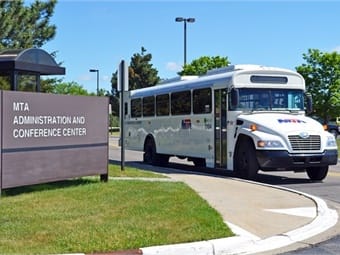
SMART began testing propane autogas after learning about their use with a neighboring agency in Flint, Mich.
Flint MTA
Fueling Up
There are thousands of public propane stations across the nation, but after assessing the fleet’s services and size, agency officials chose to install on-site fueling stations. SMART, like many other transit agencies, took advantage of the low cost of building the fueling station infrastructure for propane. Propane autogas fueling infrastructure costs less than any other transportation energy source, including gasoline, diesel, electric, and natural gas. An independent contractor built the agency’s three terminals, each with its own propane tanks to service the fleet. Two 1,990-gallon tanks are located at each station. The refill time with propane autogas is comparable to gasoline and diesel fueling — about 10 gallons per minute.
Funding and the Future
SMART pursued grant funding for the purchase of the propane autogas paratransit shuttles. Because the ROUSH CleanTech Ford E-450 cutaway chassis is the only shuttle vehicle that has completed the FTA’s New Model Bus Testing Program (“Altoona Testing”), transit fleet operators can access federal funds that cover 85% of the entire alternative-fuel vehicle cost with a 15% local match.
As SMART looks to an all-propane autogas fleet in the very near future, the agency’s efforts have already been noticed. SMART received the Autogas Fleet Award from the Propane Education & Research Council at BusCon.
Ryan Zic is VP of sales, school bus and transit, for ROUSH CleanTech

The agency is seeking manufacturers for 650 new CNG buses to replace aging vehicles, improve reliability, and advance its broader fleet modernization strategy.
Read More →
John Hroncich discusses BAE Systems’ modular and scalable approach, lessons learned from decades of real-world operations, and how agencies can identify electrification strategies that fit their fleets.
Read More →
LA Metro’s Obed Mejia discusses technician training, evolving maintenance technology, fleet replacement, and strategies for getting the most out of today’s transit fleets.
Read More →
In METRO's latest installment, we take a look at recent news from Siemens, Prevost, Dodge, and more partnerships making headlines across the transportation sector.
Read More →
In this edition, we also cover recent appointments and announcements at Pace, CamTran, MCI, and more, showcasing the individuals helping to shape the future of transportation.
Read More →
Transit leaders and policymakers examine how standardized bus designs, streamlined procurement, and predictable funding could help agencies stretch budgets and deliver better service.
Read More →
As chair of APTA’s Business Members Board of Governors, Ray Melleady explains how more than 850 business members are partnering with transit agencies to advance funding, innovation, and industry-wide collaboration.
Read More →
Bus Business Consultants founder Brian Dickson shares lessons on leadership, organizational health, and creating options for long-term success in a changing transportation industry.
Read More →
The key to maintenance optimization isn’t doing less work—it’s doing the right work at the right time on the right assets.
Read More →
The award-winning partnership combines AI-powered detection with human oversight to improve bus reliability, accessibility, and enforcement efficiency.
Read More →