



Fed Leaders Highlight Growth, U.S. Manufacturing at ENC
The visit is part of the SF Fed's ongoing engagement with major employers and industries across Southern California and, more broadly, the western U.S. to better understand regional economic conditions and business outlooks.

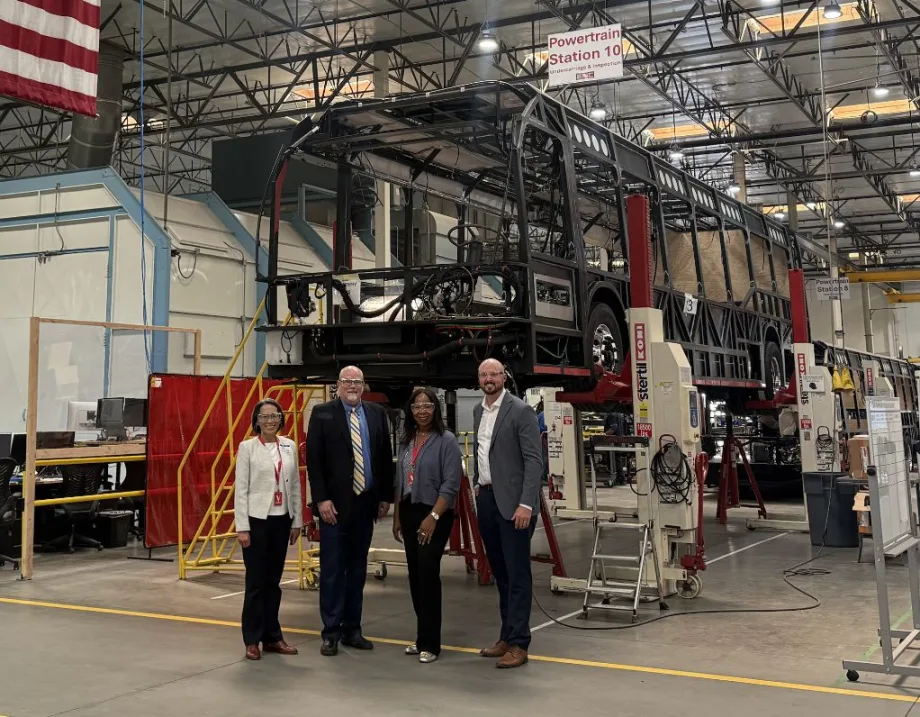
Visitors from the SF Fed toured ENC’s production floor, observing the end-to-end bus manufacturing process, from welding and painting to final assembly and testing.
ENC
- Fed leaders are focusing on growth and U.S. manufacturing during their engagement in Southern California.
- The SF Fed is actively engaging with major employers and industries to gauge economic conditions.
- Their initiative extends across the broader western U.S. region to understand business outlooks.
*Summarized by AI
Transit Bus Manufacturer ENC welcomed the Federal Reserve Bank of San Francisco (SF Fed) for a tour of the Company's 227,000-square-foot manufacturing facility in Jurupa Valley, California.
The visit is part of the SF Fed's ongoing engagement with major employers and industries across Southern California and, more broadly, the western U.S. to better understand regional economic conditions and business outlooks.
A Look at American Manufacturing
Hosted by company executives, the tour provided a firsthand look at how federal transit investments translate into skilled jobs, domestic manufacturing capacity, and economic activity in the Inland Empire.
Visitors from the SF Fed toured ENC’s production floor, observing the end-to-end bus manufacturing process, from welding and painting to final assembly and testing.
According to the American Public Transportation Association (APTA), 77% of federal public transportation investment flows directly to American businesses, supporting manufacturers, small suppliers, and job creation in communities across the country. Federal transit funding reaches more than 3,000 suppliers in 50 states and Washington, D.C.
ENC officials said, with suppliers in more than 30 U.S. states, the company is a direct example of how those investments strengthen domestic supply chains and create family-wage jobs.
Since assuming ownership of ENC in 2024, Rivaz has invested more than $50 million in facility upgrades, workforce development and upskilling, and planned expansions. The company currently employs approximately 230 people at its Jurupa Valley facility, with a pathway to approximately 500 jobs at full production capacity.
"Our investments in expanded capacity and workforce training are about more than building buses – they are about building long-term economic strength in this region," said John Obert, VP of transit sales at ENC. "The SF Fed's visit reflects the growing recognition that American transit manufacturing is essential infrastructure, and ENC is proud to be leading that effort from right here in the Inland Empire."
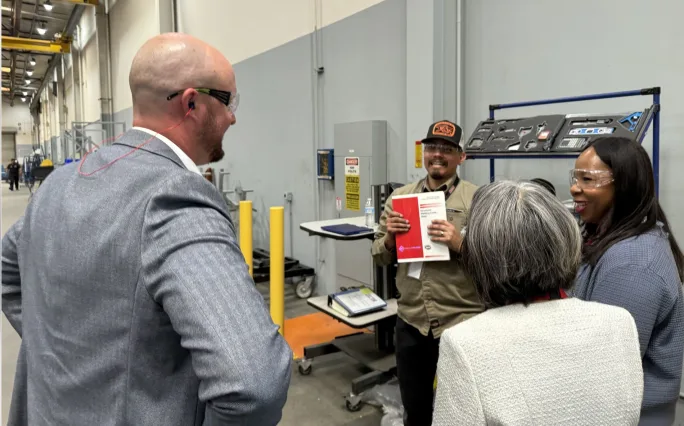
Visitors from the SF Fed toured ENC’s production floor, observing the end-to-end bus manufacturing process, from welding and painting to final assembly and testing.
ENC
ENC’s Facility
ENC's Jurupa Valley campus spans 17 acres and operates as an ISO 9001-certified manufacturing facility. Every vehicle produced is designed to meet federal Buy America requirements, ensuring that transit agency investments support California workers and California manufacturing, said officials.
All models are Altoona-tested and FTA-approved.
Quick Answers
The purpose of the SF Fed's visit is to engage with major employers and industries to better understand regional economic conditions and business outlooks.
*Summarized by AI
More Bus

New York MTA Plans Largest Bus Fleet Upgrade in More Than a Decade
The agency is seeking manufacturers for 650 new CNG buses to replace aging vehicles, improve reliability, and advance its broader fleet modernization strategy.
Read More →
Building a Flexible Path to Transit Electrification
John Hroncich discusses BAE Systems’ modular and scalable approach, lessons learned from decades of real-world operations, and how agencies can identify electrification strategies that fit their fleets.
Read More →
Bus Tech Talk: Keeping Transit Technicians Ahead of the Technology Curve
LA Metro’s Obed Mejia discusses technician training, evolving maintenance technology, fleet replacement, and strategies for getting the most out of today’s transit fleets.
Read More →
Biz Briefs: RIPTA Unveils New Frontrunners, Clevland RTA Adds New Siemens, and More
In METRO's latest installment, we take a look at recent news from Siemens, Prevost, Dodge, and more partnerships making headlines across the transportation sector.
Read More →
People Movement: Holly Arnold Joins Transdev and More
In this edition, we also cover recent appointments and announcements at Pace, CamTran, MCI, and more, showcasing the individuals helping to shape the future of transportation.
Read More →
The High Cost of Transit Buses: Industry Leaders Look to Procurement Reform
Transit leaders and policymakers examine how standardized bus designs, streamlined procurement, and predictable funding could help agencies stretch budgets and deliver better service.
Read More →
The Business Voice Behind Public Transportation
As chair of APTA’s Business Members Board of Governors, Ray Melleady explains how more than 850 business members are partnering with transit agencies to advance funding, innovation, and industry-wide collaboration.
Read More →
From Surviving to Thriving: Building Stronger Transportation Organizations
Bus Business Consultants founder Brian Dickson shares lessons on leadership, organizational health, and creating options for long-term success in a changing transportation industry.
Read More →
Finding the ‘Happy Medium’: Optimizing Maintenance Without Sacrificing Reliability
The key to maintenance optimization isn’t doing less work—it’s doing the right work at the right time on the right assets.
Read More →
LA Metro, City of West Hollywood, and Partners Advance Smarter Bus Lane Enforcement
The award-winning partnership combines AI-powered detection with human oversight to improve bus reliability, accessibility, and enforcement efficiency.
Read More →