



Denver RTD breaks ground on Aurora segment of East Colfax BRT
The beginning of the final BRT segment advances construction across all five segments, reflecting steady progress toward shorter travel times, improved accessibility, and a more dependable connection to jobs, businesses, and community destinations.

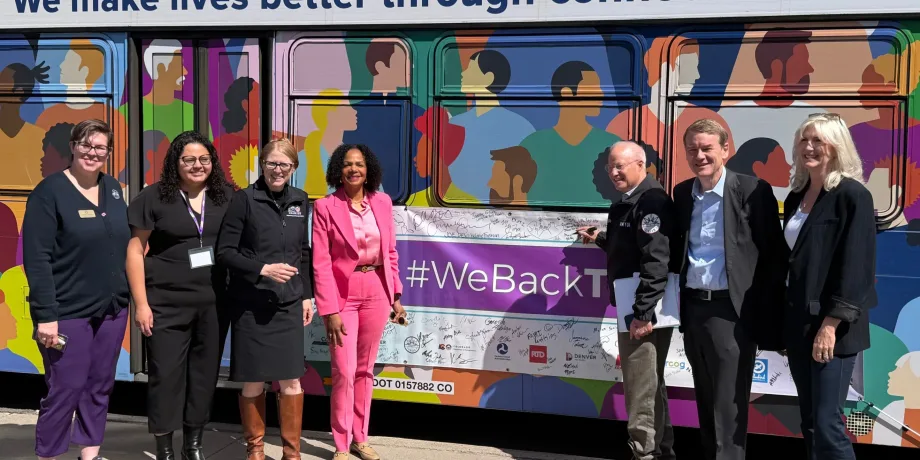
Hosted on the lawn of the Martin Luther King Jr. Library, the ceremony marked the start of construction on Aurora from Yosemite Street to Interstate 225, where work will continue in the coming months.
Denver RTD
- Denver RTD has commenced construction on the Aurora segment of the East Colfax BRT project.
- The project encompasses five segments, with the Aurora section marking the start of the final segment's work.
- The BRT development aims to provide faster travel times, enhance accessibility, and offer a more reliable connection to local employment and community sites.
*Summarized by AI
A significant push to improve speed and reliability along one of the region’s busiest transit corridors began, as Denver RTD and its partners broke ground on the Aurora segment of the East Colfax Bus Rapid Transit (BRT) line. The milestone signals the start of full corridor construction, now underway simultaneously from Denver to Aurora.
The beginning of the final BRT segment advances construction across all five segments, reflecting steady progress toward shorter travel times, improved accessibility, and a more dependable connection to jobs, businesses, and community destinations.
East Colfax BRT Launch
Hosted on the lawn of the Martin Luther King Jr. Library, the ceremony marked the start of construction on Aurora from Yosemite Street to Interstate 225, where work will continue in the coming months.
RTD customers can expect to see enhanced stations and boarding platforms at key locations. Once complete, BRT is expected to reduce travel times by up to 30 minutes end-to-end while improving safety and reliability along East Colfax Avenue.
RTD GM/CEO Debra A. Johnson emphasized the project's broader impact, noting its significance beyond mobility and highlighting its role in supporting economic activity and community connections.
“This project is about more than helping people to move to and fro. It is about strengthening the connections that underpin our economy and the communities that we serve,” said Johnson.
Aurora Mayor Mike Coffman called the project a major milestone for East Colfax and the region. “Our region needs BRT service to meet transportation demands better,“ said Coffman. “With BRT, this corridor will make travel between downtown Denver, I-225, and Aurora better for the long term.”
Ramping Up Construction
Lane closures, including upcoming work at Colfax and Havana, will support the installation of new infrastructure.
Crews will maintain at least one lane of traffic in each direction and ensure access to businesses and sidewalks throughout the project. Existing bus routes will continue throughout construction, with temporary stops in place as needed. The project team will continue to communicate detours, traffic shifts, and schedule updates to keep customers informed.
According to RTD, BRT construction progress across all segments includes:
- Segments 1 and 2 from Broadway to Colorado Boulevard in Denver are on track to be completed in fall 2026. Crews have completed improvements at eastbound stations, including utilities, new signals, and landscaping, and continue work on westbound stations. Final paving, striping, and finishing work are expected in spring 2026.
- Segments 3 and 4 between Colorado Boulevard and Yosemite Street are progressing toward completion in fall 2027. Construction is underway on both eastbound and westbound stations, with traffic currently flowing in outer lanes. Work will shift to center lanes as crews complete drainage, utilities, signals, and streetscape improvements through 2027. Final paving and station finishes will be completed in 2027.
- Segment 5, extending from Yosemite Street to Interstate 225 in Aurora, will be constructed in a single phase, with completion anticipated in fall 2027. Work will move block by block, with each section taking approximately three to six months. Traffic will remain open in the center lanes throughout construction, and access to businesses will be maintained.
Operational Testing Prepares for Service
Behind the scenes, teams are continuing operational testing to ensure the system is ready for safe and reliable service.
As recently as March, testing by RTD and project partners focused on how buses interact with new infrastructure, including center-running lanes and level boarding platforms.
Operators maneuvered 60-foot articulated buses within inches of raised platforms to validate alignment, safety procedures, and boarding conditions. This testing supports a key system feature, level boarding, which allows customers to step or roll directly onto buses, reducing dwell times and improving accessibility for those using wheelchairs, strollers, or bicycles.
Construction on the East Colfax BRT began in 2024 following more than a decade of community planning and input, with full service expected to begin in 2028. In the coming months, customers can expect additional station installations, continued arch lifts, and periodic traffic shifts.
Quick Answers
The Aurora segment marks the beginning of the final construction phase for the East Colfax BRT, indicating significant progress towards reducing travel times and enhancing connectivity in the area.
*Summarized by AI
More Bus

More Than a Summer Job: Building the Next Generation of Transit Talent
The Delaware River Port Authority and PATCO have transformed their internship program into a hands-on professional development experience that introduces students to the breadth of transportation careers — and creates a pipeline for future employees.
Read More →
LA Metro Board Awards 220 Battery-Electric Bus Contract to ENC
The contract, which is the largest base award of battery-electric buses by a U.S. transit agency, will be built in Southern California, sustaining good jobs as LA prepares to welcome the world in 2028
Read More →
Public Transit Conference Returning to GFX in 2027, Call for Papers Now Open
The Call for Papers is now open, allowing transit agency professionals and industry experts to help shape the PTC educational program by submitting session ideas for consideration.
Read More →
Indian River Transit’s Community-Focused Approach Earns National Recognition
Named APTA’s 2026 Outstanding Public Transportation System in its size category, Florida’s Indian River County transit system continues to grow ridership through fare-free service and a focus on evolving community needs.
Read More →
ENC Lands MATA Contract and More in Biz Briefs
In this edition of Biz Briefs, we spotlight the latest developments shaping the future of mobility.
Read More →
From Surviving to Thriving: Building Stronger Transportation Organizations
Bus Business Consultants founder Brian Dickson shares lessons on leadership, organizational health, and creating options for long-term success in a changing transportation industry.
Read More →
Everett Transit, Community Transit Outline Consolidation Agreement
The proposed agreement calls for a 50% increase in bus service in Everett, a new microtransit zone, continued paratransit service, and the transfer of Everett Transit operations to Community Transit.
Read More →
SEPTA Details Accelerate Vision for Transit System
The plan outlines investments in trolley modernization, new Metro and Regional Rail vehicles, accessible stations, and more frequent bus and rail service.
Read More →
Report: Transit Bus Manufacturing Supports 34,100 Jobs, $5.1B in GDP
The “Buses Mean Business” report examines the transit bus manufacturing industry’s economic footprint, supply chain, and rising demand for vehicle replacements.
Read More →
Biz Briefs: New Flyer Delivers in Columbus, Houston, Beep and Freebee Merge, and More
In this edition of Biz Briefs, we spotlight the latest developments shaping the future of mobility.
Read More →