




Miss This? Seattle's King County Metro Introduces New Battery-Electric Buses
Seattle Speeds up Service on Denny Way
A new bus lane project aims to improve reliability on one of King County Metro’s busiest and most congestion-prone corridors.
April 24, 2026
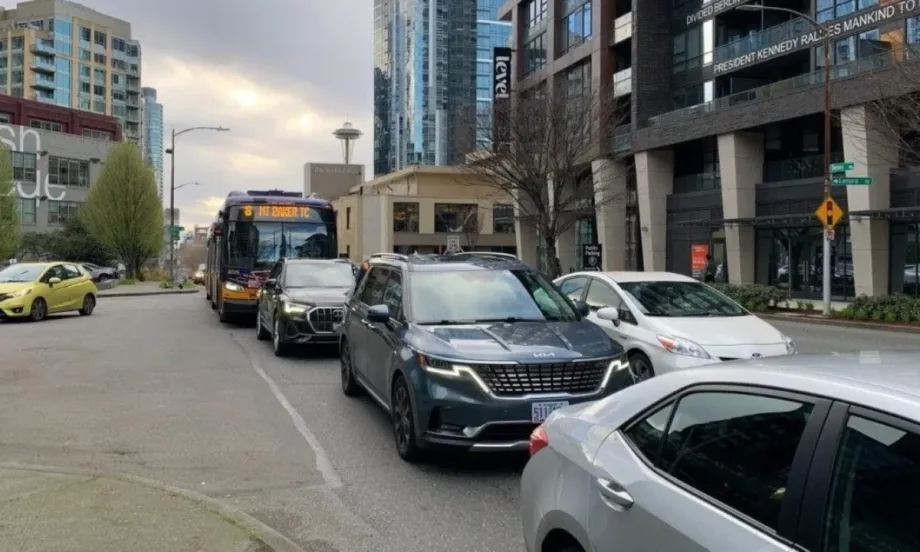
A Route 8 bus travels on Denny Way in congested traffic.
Credit:
Seattle Department of Transportation
3 min to read
On one of Seattle’s most frustrating bus routes, help is finally on the way.
The City of Seattle is rolling out a new extension of the eastbound red bus lane along one mile of Denny Way to help buses move faster through one of the city’s busiest and most congested corridors. Seattle Mayor Katie B. Wilson recently announced the launch of the Denny Way Bus Reliability Project to improve public transit through the corridor.
“I’ve been one of the Route 8’s 8,000 daily riders, and I know how frustrating it can be when buses are stuck in traffic. You’re stuck wondering if you’re ever going to get to your destination,” Wilson said. “That’s why I’m so excited to be rolling out nine blocks of red carpet for transit riders on Denny Way.”
The project advances priorities outlined in Mayor Wilson’s first executive order, issued in January shortly after taking office. The Seattle Department of Transportation (SDOT) developed the design and will deliver new eastbound business access and transit (BAT) lanes in two phases this year. These lanes give buses priority while allowing access for turns and deliveries.
Tackling Congestion on a Vital Transit Corridor
Denny Way is a key east–west connection linking Downtown, South Lake Union, and Capitol Hill. Today, it serves a variety of users, including buses, freight, and regional trips, within limited street space.
According to a release, Route 8 carries approximately 7,000 riders each day and is one of King County Metro’s top ten routes by ridership. However, it has long struggled with reliability, particularly along Denny Way, where buses are delayed by heavy congestion, especially eastbound in the afternoon.
“We need transit to be more attractive to meet our climate and mobility goals,” said Nick Sattele and Jason Li, co-leads of Fix The L8. “We need alternatives to driving as the other Washington drives up gas prices and inflation. Finally, we have a mayor willing to cut the red tape and give Seattleites the freedom of mobility they deserve.”
The Denny Way Bus Reliability Project will be delivered in two phases, with near-term improvements beginning in spring and additional upgrades planned for later this year.
Phase 1 is planned for May 2026 and includes three blocks of eastbound bus lanes from Queen Anne Avenue North to Second Avenue at the west end of the street, serving seven routes carrying nearly 26,000 riders daily. This phase also extends an existing southbound bus-only lane on Queen Anne Avenue to Denny Way and adds a bus queue jump at Second Avenue to help bus riders move ahead of traffic at the intersection.
Phase 2 is planned for August 2026 and includes additional improvements planned east of Fifth Avenue, including an extension of the eastbound bus lane and intersection changes to better support transit operations along the corridor.
Once these changes are in place, SDOT will monitor how the corridor is performing and make adjustments as needed. The project is supported by the voter-approved Seattle Transportation Levy.
More Bus

More Than a Summer Job: Building the Next Generation of Transit Talent
The Delaware River Port Authority and PATCO have transformed their internship program into a hands-on professional development experience that introduces students to the breadth of transportation careers — and creates a pipeline for future employees.
Read More →
LA Metro Board Awards 220 Battery-Electric Bus Contract to ENC
The contract, which is the largest base award of battery-electric buses by a U.S. transit agency, will be built in Southern California, sustaining good jobs as LA prepares to welcome the world in 2028
Read More →
Public Transit Conference Returning to GFX in 2027, Call for Papers Now Open
The Call for Papers is now open, allowing transit agency professionals and industry experts to help shape the PTC educational program by submitting session ideas for consideration.
Read More →
Indian River Transit’s Community-Focused Approach Earns National Recognition
Named APTA’s 2026 Outstanding Public Transportation System in its size category, Florida’s Indian River County transit system continues to grow ridership through fare-free service and a focus on evolving community needs.
Read More →
ENC Lands MATA Contract and More in Biz Briefs
In this edition of Biz Briefs, we spotlight the latest developments shaping the future of mobility.
Read More →
From Surviving to Thriving: Building Stronger Transportation Organizations
Bus Business Consultants founder Brian Dickson shares lessons on leadership, organizational health, and creating options for long-term success in a changing transportation industry.
Read More →
Everett Transit, Community Transit Outline Consolidation Agreement
The proposed agreement calls for a 50% increase in bus service in Everett, a new microtransit zone, continued paratransit service, and the transfer of Everett Transit operations to Community Transit.
Read More →
SEPTA Details Accelerate Vision for Transit System
The plan outlines investments in trolley modernization, new Metro and Regional Rail vehicles, accessible stations, and more frequent bus and rail service.
Read More →
Report: Transit Bus Manufacturing Supports 34,100 Jobs, $5.1B in GDP
The “Buses Mean Business” report examines the transit bus manufacturing industry’s economic footprint, supply chain, and rising demand for vehicle replacements.
Read More →
Biz Briefs: New Flyer Delivers in Columbus, Houston, Beep and Freebee Merge, and More
In this edition of Biz Briefs, we spotlight the latest developments shaping the future of mobility.
Read More →