



Disaster Site Tours Are Considered a Gray Area
In the wake of Hurricane Katrina, Gray Line has set up coach tours of devastated areas of New Orleans, with sensitivity and a call to action. Other operators have mixed feelings about such tours.
Afew days after Hurricane Katrina ravaged New Orleans, Gray Line franchise vice president and general manager Greg Hoffman’s wife suggested a Katrina tour. “Initially,” says Hoffman, “I thought, ‘No way.’ I didn’t feel comfortable about the idea until hearing so many reports of our representatives failing to convince other legislators that New Orleans needed money until they saw the damage themselves. That was the turning point for me.” Since Jan. 4, Gray Line has been taking buses — up to eight a day — to see the storm-ravaged neighborhoods of Lakeview, Gentilly and Coconut Beach; the prison from which some 6,500 inmates were evacuated; and the infamous Superdome, where more than 25,000 people took shelter for nearly a week. No stops are made during the three-hour tour, save for a refreshment break. “Hundreds of private vehicles enter these neighborhoods each week, pulling up in driveways and taking pictures on people’s lawns,” Hoffman says. “We don’t allow that.” Even before a city ban, Hoffman had decided not to include the highly publicized 9th Ward on the Gray Line tour. “If you watch CNN,” says Jim Fewell, director of sales, “only the 9th Ward was destroyed. Everything else is fine. Our story is about the whole city.”
Like a jazz funeral
Fewell likened the Katrina tour to a jazz funeral: “It’s somber going out to the cemetery and joyful leaving. We show the damage, but we end with signs of hope and a call to action” — a petition to President Bush and Congress to rebuild the city. Also, $3 of the $35 ticket is donated to local charities. As Gray Line Marketing Director Julee Pearce put it, “We want to show people what happened, so, hopefully, this can be prevented in the future. This is really more of a campaign than a tour.” Granted, a natural disaster that resulted in hundreds of deaths is not directly comparable to a wild fire that destroyed remote forest lands, a terrorist bombing, a presidential assassination or an earthquake, but Metro Magazine interviewed operators in areas directly affected by such tragedies to gain a nationwide perspective on the Katrina tours. Only one owner opted out of the discussion. Mickey Steele of Act II Transportation in Coal Valley, Ill., avoided the controversy completely with, “No comment.” Catherine Wilhelm, tour coordinator for the Mesa, Ariz.-based All Aboard America, says that she has seen no interest whatsoever in post-Katrina tours from her customer base. In recent summers, however, nearby Tonto National Forest has had its share of naturally occurring and arsonist-set fires, which have decimated tens of thousands of acres. “If we were based in New Orleans,” Wilhelm says, touring the damage would be “a tough call. I wouldn’t want to exploit people’s misery, but if reconstruction were taking place, then maybe.”
Ground Zero is popular
“Katrina is not really on my radar screen,” says Donald Dunham, manager of Boston-based A Yankee Line. “But if you’re asking me if I have an opinion about touring disaster sites, well, we’ve taken an awful lot of people to Ground Zero in New York.” Gary McMullin, sales agent for Buses by Bill in Dallas, says, “If something like Katrina happened here, I don’t know if we would consider running a charter. We had a tragedy in Dallas in 1963. Lots of people want to go to the Kennedy memorial now, but at the time, no, I don’t think we would have promoted something like that. “Lots of things are marketable, but if I were in Las Vegas, say, I wouldn’t run charters to brothels. But then I’ve never been in the position to make that decision.” Victoria Cole, co-owner of American Stage Tours in the San Francisco bay area, says that although some coach operators took tourists to gawk at the devastation of the 7.1-magnitude 1989 earthquake that sandwiched the double-decker Bay Bridge and killed 11 people, her company continued with its normal city tours, but avoided the downtown and marina. “We didn’t want to hamper rescue and recovery efforts,” she says. “Besides, it had never been legal to tour the marina because of weight restrictions, though some operators did it anyway.” Cole and her business partner, Ronald Gonsalves, cancelled a New Orleans tour they had planned for December 2006. “We had just started planning it when Katrina hit,” Cole says. “Since we’re working with people whose lives have been devastated, we decided to hold off until they’re back on their feet. We want to help the city rebuild its tourism industry, but they’re really not ready yet. Once the city’s cleaned up, our guide will point out where the damage occurred, but to go this soon with people still homeless, no. “But if someone else is doing it, that’s their business. Would I, as a customer, jump on their coach? No. I love New Orleans. I’d like to see what Katrina did, but not now.”
Memorial is tasteful destination
Following the 1995 bombing of the Alfred P. Murrah Federal Building, “a huge area was cordoned off,” says Jeff Polzien, owner of Oklahoma City’s Red Carpet Charters, “so there were no decisions to make about touring the site.” Even after the investigation ended, “we didn’t get any calls from companies who wanted to rent our vehicles to see the site. And I’m not aware of anyone who included the site on their tours,” Polzien says. Only after a memorial and museum were opened in 1999 did Polzien and others feel it was appropriate to bring tourists to the place where 168 had died on an October morning almost a dozen years ago. “Katrina, however, is a tough call,” Polzien says. “I see the ethical dilemma of profiting off hardship on the one hand, and on the other hand, bringing tourism to a city that really needs tourism.” Robert O’Brien, owner of Oklahoma City-headquartered Time Lines, says, “One was a natural disaster of epic proportions, the other a terrorist bombing that now has a tasteful memorial. Oklahoma City was a very confined area, nothing to the scale of what happened in New Orleans. But both caused a tremendous amount of human suffering.”
Heidi Nye is a freelance writer in Long Beach, Calif.
More Management

ENC Lands MATA Contract and More in Biz Briefs
In this edition of Biz Briefs, we spotlight the latest developments shaping the future of mobility.
Read More →
From Surviving to Thriving: Building Stronger Transportation Organizations
Bus Business Consultants founder Brian Dickson shares lessons on leadership, organizational health, and creating options for long-term success in a changing transportation industry.
Read More →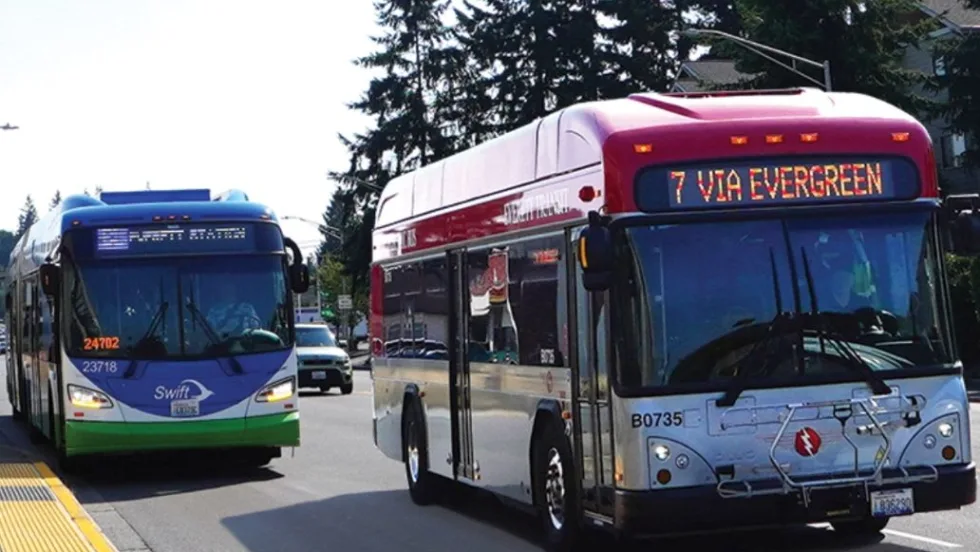
Everett Transit, Community Transit Outline Consolidation Agreement
The proposed agreement calls for a 50% increase in bus service in Everett, a new microtransit zone, continued paratransit service, and the transfer of Everett Transit operations to Community Transit.
Read More →

Strada360’s Steve Lassey on Turning Transit Data Into Better Decisions
From breaking down data silos to preparing for AI, Strada360 CEO Steve Lassey discusses how transit agencies can use technology to improve operations, customer information, and long-term decision-making.
Read More →
People Movement: Phil Washington Joins HNTB, Denver RTD Launches CEO Search, and More
In this edition, we also spotlight recent personnel moves at STV, the Eno Center for Transportation, and more, highlighting the people taking on new roles across the transportation industry.
Read More →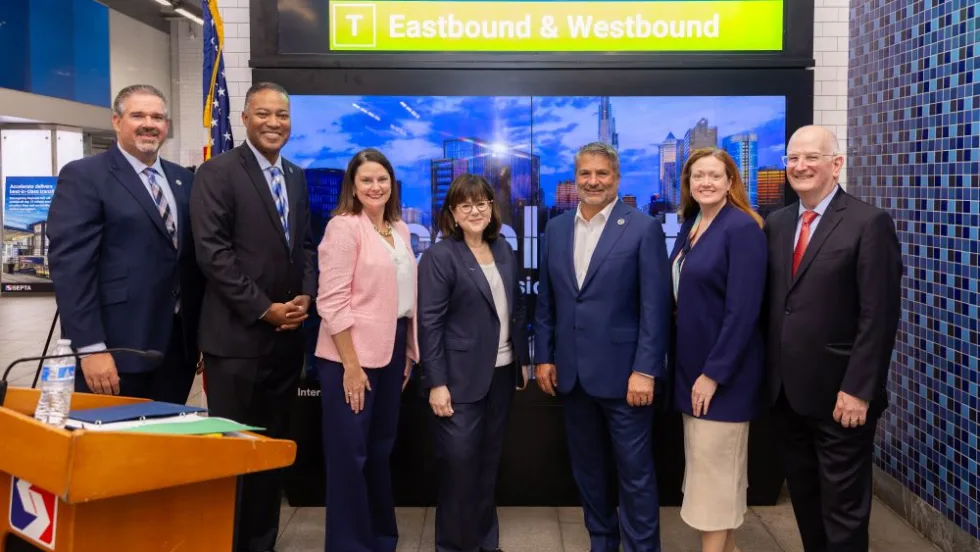
SEPTA Details Accelerate Vision for Transit System
The plan outlines investments in trolley modernization, new Metro and Regional Rail vehicles, accessible stations, and more frequent bus and rail service.
Read More →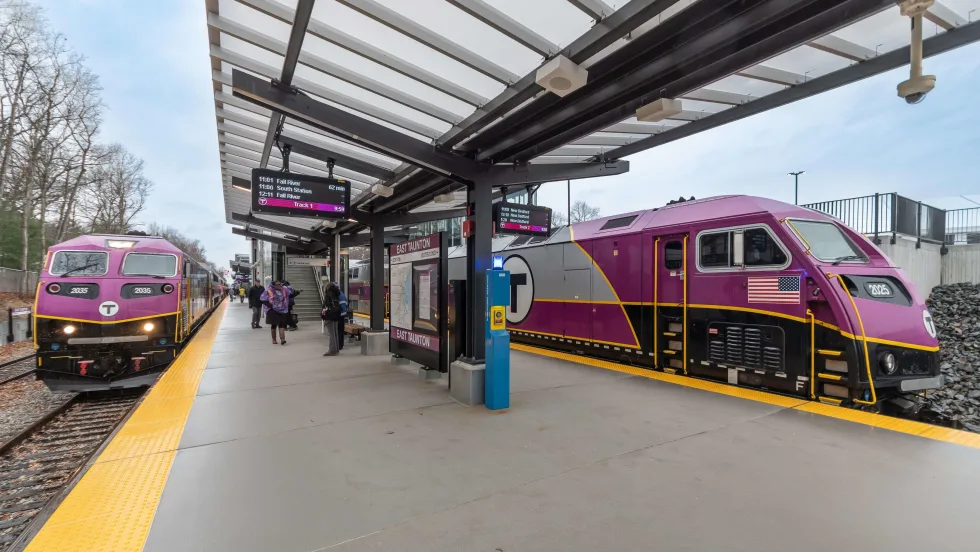
FTA Ends Direct Oversight of MBTA Safety Actions
The federal agency closed its remaining special directive to the Massachusetts Department of Public Utilities following a safety review that began in 2022.
Read More →
Report: Transit Bus Manufacturing Supports 34,100 Jobs, $5.1B in GDP
The “Buses Mean Business” report examines the transit bus manufacturing industry’s economic footprint, supply chain, and rising demand for vehicle replacements.
Read More →
LIT Marks 10-Year Milestone at Annual Summit
Hosted by the COTA from September 10 to 13, the Summit carried the theme “Celebrating 10 Years of Excellence, Leadership, and Impact,” with every part of the program honoring the people, agencies, and partners who built LIT over its first decade.
Read More →
People Movement: Dan Dipert Coaches Adds Third-Generation Leader, Keolis Names New Valley Metro VP/GM, and More
In this edition, we also cover recent appointments and announcements at the Wabtec, SilverRide, HNTB, and more, showcasing the individuals helping to shape the future of transportation.
Read More →