



Flooring features that allow for easy traveling on public transit
In such a demanding environment, material choice for flooring plays an essential role in the overall longevity and durability of transportation.
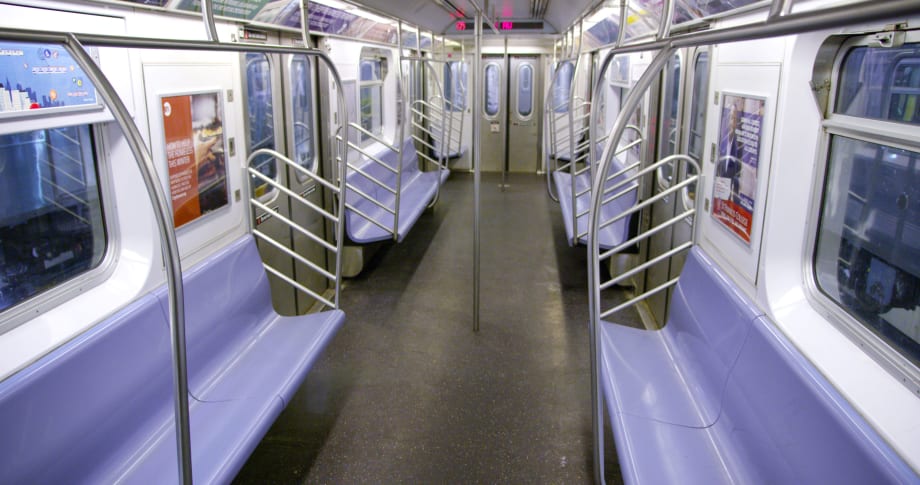
The New York City subway system, which welcomes approximately six million riders per day, is outfitted with rubber flooring, meeting the standards developed by the Federal Railroad Administration for fire and slip resistance.
Interface
The New York City subway system, which welcomes approximately six million riders per day, is outfitted with rubber flooring, meeting the standards developed by the Federal Railroad Administration for fire and slip resistance.
When designing spaces, companies and organizations share the ultimate goal to create a safe and effective environment for users, and the design of public transit is no different. But, with a total of 57 billion passenger miles traveled in a single year, public transportation is unique in terms of foot traffic it has to withstand.
Beyond efficient and safe transport for large crowds of individuals, this current era of accessible mass transit provides sustainability benefits. In fact, the use of public transportation results in 73% less carbon dioxide emissions, 4.1 billion gallons of gas saved, and 403,000 jobs for public transportation agencies.
To support the millions of commuters across the country, specifiers, consultants, and architects in the transit industry are tasked with bringing comfort, safety, sustainability, and high-impact design to public transportation. In such a demanding environment, material choice for flooring plays an essential role in the overall longevity and durability of transportation, including ships and offshore, rail, and buses.
Importance of Maintenance and Durability
Public transportation provides an efficient means for people to traverse within their community while easing traffic congestion and reducing air pollution; however, it is only effective if outfitted with the right interior products. As recently as 2015, the U.S. DOT estimated 40% of buses and 23% of rail transit assets were in marginal or poor condition with a backlog of $90 billion in deferred maintenance and replacement. Materials, such as premium rubber flooring, can withstand heavy foot traffic for several decades, minimizing the funds and repair-frequency needed to maintain a safe environment for the transportation methods a city provides.
In addition to extensive wear-resistance, rubber flooring requires less maintenance, allowing these public spaces to have higher perceived cleanliness and less downtime due to servicing. The dirt-repellent characteristics of extremely dense and non-porous flooring require little more than water and a mop to clean. Additionally, the flooring product does not require coating, resulting in significantly reduced care and maintenance costs. With minimal long-term maintenance and installation in a few simple steps, premium rubber flooring provides a streamlined system from start to finish.
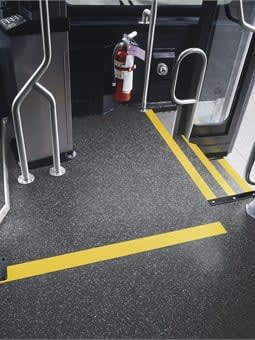
In addition to extensive wear-resistance, rubber flooring requires less maintenance, allowing these public spaces to have higher perceived cleanliness and less downtime due to servicing.
Long-Term Protection
Metro areas should capitalize on the accessibility and popularity of mass transit to reap the many benefits made available with community transportation, including safety. Researchers reported that with residents who average more than 40 bus or train trips a year, fatality rates could decrease by half compared to those who average less than 20 trips. While mitigating these accidents caused by traffic crashes, it is imperative to create a safe environment within public transportation as well.
For example, in the case of fires in trains, ships, or buses, the spread of flames, in addition to the buildup of smoke and gas, poses a great danger to passengers. Unlike many floor covering coatings that burn easily and contain substances that release hazardous gases if burned, uncoated, premium rubber flooring is highly flame-retardant according to EN 13 501. Furthermore, it is classified as fire-toxicologically safe. By choosing this flooring, passengers are better protected from smoke and toxicity because it does not contain any PVC, plasticizers (phthalates), and halogens (e.g. chlorine).
In addition to the risks of toxic off-gassing, mud, rain, and snow carried into buses, subways, or trains also present a threat to riders. The slip-resistant properties of rubber often exceed recommendations for slip resistance, providing extra traction that makes for a reliable and safe surface. Further, if a fall does occur, the floor’s resilience cushions impact and reduces the chance of serious injury.
Designed with the Passenger in Mind
For mass transit to benefit the community, residents must want to take advantage of this city amenity, and one aspect specifiers can capitalize on is overall rider comfort. Flooring that provides ergonomic properties and a high level of underfoot comfort eases the physical stress associated with long commutes and can ultimately prevent musculoskeletal disorders and absences from work due to injury. Disorders of the musculoskeletal system account for one-third of all occupational illnesses and work-related injuries. The considerable costs resulting from worker’s comp claims and missed time can be counteracted by the selection of the right ergonomic floor covering.
Beyond comfort and safety considerations, designers should take into account guidance and wayfinding techniques to provide passengers with increased ease of use. Even in public transportation, flooring has an impact on the overall design due to the fact that is the largest surface within the space. With certain flooring types, inlays allow for patterns, brand-specific elements, and wayfinding. By utilizing these techniques, such as wheelchair and safety symbols, directional flooring helps passengers navigate safely to their desired destination.
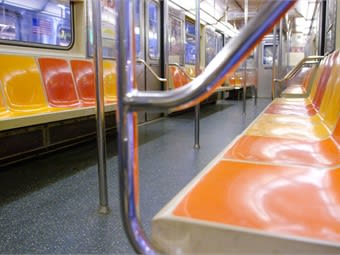
The New York City subway is also fire retardant and protected against poisonous gases if a fire does occur.
Put to the Test
The New York City subway system, which welcomes approximately six million riders per day, is outfitted with rubber flooring, meeting the standards developed by the Federal Railroad Administration for fire and slip resistance. Due to the flooring’s dense and closed surface, slips, trips, and falls are minimized. Moreover, the flooring is stain-resistant without the use of chemicals or coatings. The subway is also fire retardant and protected against poisonous gases if a fire does occur. The New York City Transit Authority began specifying premium rubber flooring in its railcars in the early 1990s with the expectation that, even in one of the world’s busiest public transit systems, it would not need to be replaced for decades to come. This demonstrates the importance of careful consideration of flooring to provide mass transit users with a system that supports, rather than hinders, ease of transportation.
When flooring is viewed as a primary design tactic in mass transit, the safety, comfort, usability, and ease of maintenance are heightened for both passengers and managers of transportation.
More Security and Safety

Transit Agencies Highlight Safety Gains at National Summit
Leaders from 15 major transit systems shared crime-reduction results and safety initiatives while discussing the role of continued federal support.
Read More →
DART Launches Major Security, Fare Enforcement Initiative
The 90-day demonstration will deploy coordinated security teams at five light rail stations while testing controlled access and gathering data to guide future investments.
Read More →
RTD Launches NextRide App to Consolidate Trip Planning, Fares, Security Reporting
The app expands on RTD’s existing NextRide web application and allows customers to view real-time vehicle locations and service alerts, purchase and store digital fares, and access customer support.
Read More →

TAPTCO Updates OSHA Compliance Training for Transit Maintenance Operations
The revamped program addresses 26 OSHA standards for maintenance facilities, with TAPTCO pointing to training, documentation, and everyday shop hazards as continuing challenges for transit operations.
Read More →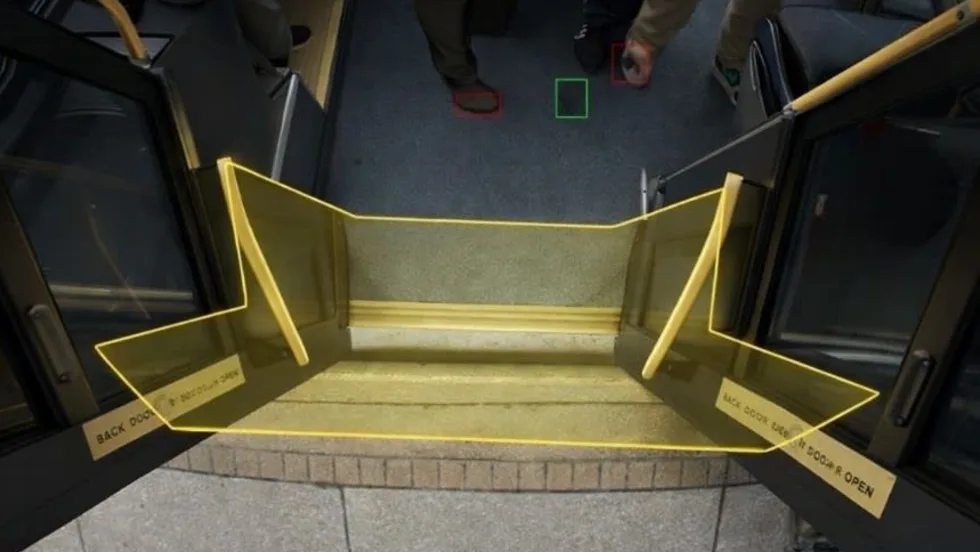
How VaporVision Adds Value to Transit Door Systems
Wabtec engineers explain how the system improves doorway detection, strengthens diagnostics and gives transit agencies and OEMs greater operating flexibility.
Read More →
FRA Announces $5.3B in Rail Investments, Including $2B for Amtrak
Funding will support grade-crossing improvements, infrastructure upgrades, and new Amtrak equipment in 23 states.
Read More →
Chicago, Maryland Expand Non-Law-Enforcement Safety, Rider Support
The CTA and MTA are launching new programs aimed at de-escalation, crisis response, rider assistance, and greater transparency.
Read More →
LA Metro, City of West Hollywood, and Partners Advance Smarter Bus Lane Enforcement
The award-winning partnership combines AI-powered detection with human oversight to improve bus reliability, accessibility, and enforcement efficiency.
Read More →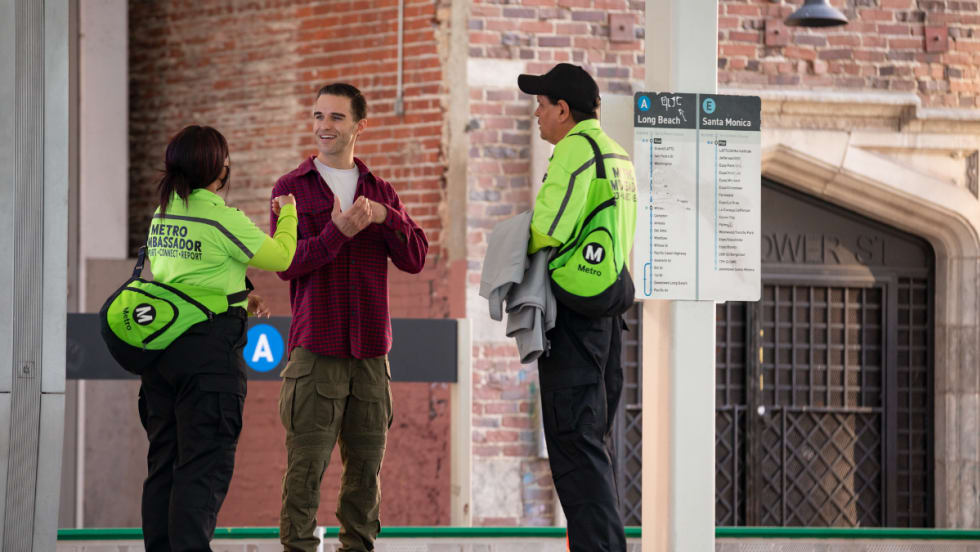
LA Metro Reports 57% Decline in Homelessness on Transit System Since 2024
The agency's latest homelessness count offers new data on how care-based services and cross-sector partnerships can complement traditional transit security strategies.
Read More →
FTA Launches 'Transit Moves America' Dashboard to Highlight Agency Safety and Performance
The online dashboard transforms National Transit Database information into a public-facing resource that allows users to compare transit agencies on key operational and safety metrics.
Read More →