



GPS Keeps Transit Agencies on Track
The Global Positioning System helps transit agencies better plan routes and offer better service to riders. The latest in technology does that and more.
Attempting to figure out the location and direction of vehicles has never been an exact science. That is, until the Global Positioning System (GPS) and the technology associated with it began to gain prominence in the transit industry. From government needs to consumer applications, GPS technology offers a host of options for any sized group, and transit agencies are no exception. With the implementation of computer-aided dispatch and automated vehicle location (CAD/AVL) powered by information received via GPS, agencies have improved their levels of service, as well as efficiency and security for passengers and employees. Capitalizing on the benefits of GPS and AVL, agencies can more effectively plan routes, schedule drivers and provide accurate travel data to passengers. By placing a GPS tracking device on the roofs of vehicles, a transit agency can obtain accurate (within 10 meters) fleet location information. With that information, provided in real-time, dispatchers can determine if a vehicle is operating on or behind schedule and plan accordingly. These reports are able to show the actual running time of any bus on any route at any time. According to Mike Giugno, director of transportation at the Milwaukee County Transit System, after installing AVL into its fleet in January 1995, off-schedule buses were reduced by 40%. The system allows transit agencies to study which buses are chronically off schedule and determine where along the route the problem lies. “If a customer today is riding a bus and the bus is always late, [transit agencies] can analyze the data they’re picking up now and see which buses are not staying on schedule,” says Dan Kelleher, director of sales at LuminatorUSA. “They can decide how they want to address that and determine what the problem is and correct it.” Tom Gardner, manager of operations/technical communications at the Denver RTD, says AVL is beneficial to drivers for that reason. “I think one of the big reasons drivers really like it is because it gives them an idea of how well they’re maintaining their schedules.“ The RTD uses real-time information to provide passengers up-to-the-minute information over the phone. With the Talk-n-Ride service, customers can access real-time bus and light rail schedules, including current arrival times and arrival times for the next three buses or trains scheduled for any given stop. The system uses voice-recognition technology. The agency also provides real-time information on its Website, www.rtd-denver.com. Transit agencies can make the vehicle information available to riders in a variety of ways — Websites, information hotlines, hand-held PDAs, transit stop signs and even kiosks set up in traffic-heavy areas. “Riders waiting at a bus stop can pull up their route and look at their stop, maybe even two or three bus stops prior to theirs, and see if their bus is running late or on time,” says Gardner. Franny Yuhas, national sales manager at Orbital Transportation Management Systems (TMS) division, says relaying information to passengers improves customer reactions to transit, overall. “It makes the riding patrons more comfortable by adding a new level of schedule reliability,” she explains. “If they know when the next bus is going to be there, they’re more willing to wait for it.” Driver benefits The benefits of implementing an AVL system are further reaching than passengers. GPS offers an obvious advantage: guided, point-by-point directions for drivers. For paratransit operators and new hires, having the onboard navigation system is beneficial, especially when driving in unfamiliar areas. “This system helps the driver get the pick-up location and get to the destination, and it allows the company to automatically send instructions and special conditions,“ says James Murphy, director of sales for Thales Navigation Professional Group, describing the company’s 750NADs system. AVL systems also increase the perception of security for the driver by offering a variety of monitoring and safety features, including a silent alarm on vehicles. “If something happens on a bus and [drivers] do not feel it is safe to pick up a handset, they can press a silent alarm,” says Gardner. “The driver can turn on the covert microphone, and we can hear what’s going on.” The dispatcher and street supervisors can determine the location of the vehicle within seconds, and notify emergency-reponse personnel. AVL gives agencies accurate reports of vehicle histories and lets them play back vehicle activities. Gardner says using this tool has given his agency a better handle on two priority items: customer complaints and legal issues. “We get people who say, ‘my car was sitting on the side of the road and your bus hit it at 11:00 a.m.,’” he says. “We do a playback and find we didn’t even have a bus in that area.” Milwaukee’s Giugno says that the playback has become a powerful tool in his daily operation. “We review all running time complaints,” he says. “We reviewed about 600 calls last year to determine whether or not they were valid. So it’s been a benefit to the drivers, also.” The latest technology As agencies discover the many benefits of employing an AVL system, manufacturers continue to develop even more sophisticated products and services. “What’s becoming more and more important now is integrating the different technologies: AVL, passenger counters, automated next-stop announcements, integration with fareboxes, video cameras and so on,” says Yuhas. Integration can minimize duplicate sensors, processors or technologies on a single vehicle. Orbital TMS offers a complete package that includes AVL and a host of other services to streamline communication among the driver, dispatcher and passengers. The Orbital TMS Fleet Management System features mobile communications, GPS-based AVL, CAD and two-way messaging. “Most of our systems also use a private radio network as the communications medium. We use the GPS as the basis for the vehicle location,” Yuhas says. With the basic technology in place, Orbital TMS can offer transit agencies a variety of other applications. SmartCount keeps track of the number of people entering and exiting a vehicle. “These are integrated with an AVL system, so not only do we know how many passengers are getting on and off, but we know where they’re getting on and off, which is important,” she says. In addition, SmartStop provides next-stop annunciation and at the same time displays the information on internal and external destination signs. “We’ve automated this process, and it’s tied into the AVL system that tells when the vehicle is coming to that stop, and it makes that announcement,” she says. LuminatorUSA also has enhanced offerings for AVL systems. It allows agencies to choose already developed software, or take the collected information and analyze it themselves. “The biggest part about it is having the right tools in place for the transit operator to make a decision without having to spend a tremendous amount of time analyzing the data,” says Kelleher. “So you want to create reporting that has tolerance, really.” Kelleher stresses that LuminatorUSA’s system is an open architecture, allowing agencies to build their AVL technology as needs arise. “What we’ve learned is that if you’re not setting up your system with an open architecture, then three to five years from now that system will require ongoing capital expenditures to keep up with technology,” he says. “If you develop it with an open architecture, then your upgrades are mainly in software. My experience has been that people want to have the capability to upgrade.” Through its strategic alliance with NextBus, LuminatorUSA is looking to provide information at the transit stop to tell passengers when a vehicle is going to arrive. Digital Recorders’ AVL system, On Time Vehicle Information Access (OTvia), is being expanded to increase the amount of information gathered from the vehicle. “We’re looking at adding to our automatic vehicle monitoring system,” says Tanya L. Johnson, vice president and general manager of Digital Recorders. “It can include passenger counting, engine diagnostic information and even discrete inputs from the multiplex system — like when the brakes are used, turn signals used and when the doors open.” Both manufacturers and agencies are looking at developing and implementing technology to improve the service available to passengers. Most agencies are seeking a streamlined process — one that will improve both driver and customer satisfaction. A centralized log-in station for drivers eliminates the need to check-in at multiple locations and into multiple machines. Coupling AVL with smart fareboxes increases the amount of information agencies can gather and use to improve service, and increases the quality of information available to customers. “One of the feelings I have with the industry right now is that you’re going to see more of a shift in information being available to the general public,” says Kelleher. “Obviously some of the events of the past six months have created a new environment for agencies that will require new solutions. The challenge is always, how do you get passengers on board? How do you enhance their ride? One of the ways to do that is with information.”
More Management

Bus Tech Talk: Keeping Transit Technicians Ahead of the Technology Curve
In this episode of Bus Tech Talk, Complete Coach Works’ Business Development Manager Mark Hollenbeck and METRO’s Executive Editor Alex Roman sit down with Obed Mejia, Senior Technical Trainer for Bus Maintenance, at LA Metro to discuss how rapidly evolving bus technology is changing the maintenance shop — and the skills technicians need to keep pace.
Read More →
Michael Schneider Joins Paslay Group to Expand Transportation Practice
The longtime transportation executive will help Paslay Group grow its advisory and program management work across transit, highway, and other infrastructure sectors.
Read More →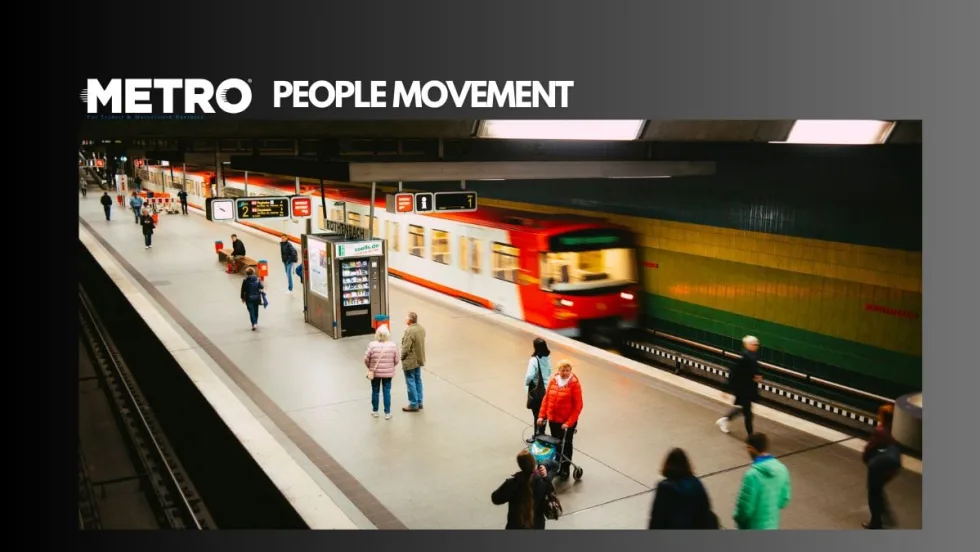
People Movement: Connectpoint Expands Leadership Team, Stadler Names New Group CEO, and More
In this edition, we also spotlight recent personnel moves at Burns, UZURV, and more, highlighting the people taking on new roles across the transportation industry.
Read More →
More Than a Summer Job: Building the Next Generation of Transit Talent
The Delaware River Port Authority and PATCO have transformed their internship program into a hands-on professional development experience that introduces students to the breadth of transportation careers — and creates a pipeline for future employees.
Read More →
LA Metro Board Awards 220 Battery-Electric Bus Contract to ENC
The contract, which is the largest base award of battery-electric buses by a U.S. transit agency, will be built in Southern California, sustaining good jobs as LA prepares to welcome the world in 2028
Read More →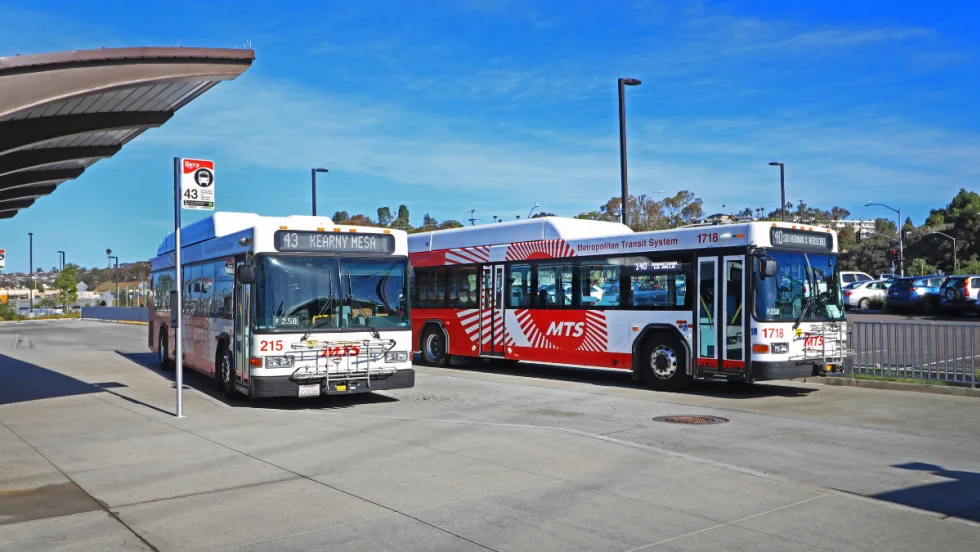
What’s Behind San Diego MTS’s Award-Winning Transit Strategy
Named one of APTA’s 2026 Outstanding Public Transportation Systems with 50 million or more annual passenger trips, California’s San Diego Metropolitan Transit System points to gains in ridership, safety, technology, and reliability as foundations of its success.
Read More →
Public Transit Conference Returning to GFX in 2027, Call for Papers Now Open
The Call for Papers is now open, allowing transit agency professionals and industry experts to help shape the PTC educational program by submitting session ideas for consideration.
Read More →
Indian River Transit’s Community-Focused Approach Earns National Recognition
Named APTA’s 2026 Outstanding Public Transportation System in its size category, Florida’s Indian River County transit system continues to grow ridership through fare-free service and a focus on evolving community needs.
Read More →
ENC Lands MATA Contract and More in Biz Briefs
In this edition of Biz Briefs, we spotlight the latest developments shaping the future of mobility.
Read More →From Surviving to Thriving: Building Stronger Transportation Organizations
Bus Business Consultants founder Brian Dickson shares lessons on leadership, organizational health, and creating options for long-term success in a changing transportation industry.
Read More →