



Hampton Jitney Microgrid Offers a Roadmap for Fleet Electrification
Sprocket Power’s on-site energy system is designed to manage charging costs, reduce pressure on the electric grid, and prepare the Long Island transportation provider for expanded electric fleet operations.
November 4, 2026


Hampton Jitney's planned expansion will add a high-powered charging hub that could also serve other regional commercial fleets, offering a potential model for transportation providers looking to manage the costs and infrastructure challenges of electrification.
Credit:
Hampton Jitney
5 min to read
- Sprocket Power developed an on-site energy system for Hampton Jitney to manage electric vehicle charging costs effectively.
- The energy system aims to alleviate pressure on the existing electric grid, thereby supporting a more sustainable infrastructure.
- This initiative is part of a strategic plan to expand Hampton Jitney's electric fleet operations on Long Island.
*Summarized by AI
Hampton Jitney is taking steps to prepare for the next phase of fleet electrification with a managed microgrid at its Calverton, New York, facility. Developed in partnership with Sprocket Power, the project combines on-site solar generation, battery energy storage, and intelligent energy management software to help the regional transportation provider manage electricity costs while preparing for additional electric vehicle charging capacity.
The installation addresses a growing challenge for commercial fleet operators: electrifying vehicles can create significant new electricity demand, utility expenses, and infrastructure requirements. By generating and storing energy on-site, Hampton Jitney can better manage when it draws power from the grid and how it uses that electricity.
For Sprocket Power CEO/Co-Founder Maria Fields, the project also shows how sophisticated energy infrastructure can be accessible to regional businesses that may lack the resources or in-house expertise of larger corporations.
“Regional transportation providers are often blocked from achieving the economic and resilience benefits of microgrids due to engineering and capital complexity,” Fields said in the company's announcement. “Sprocket Power was founded to close this gap by designing, building, and operating these systems.”
Managing Energy Costs as Fleets Electrify

Developed in partnership with Sprocket Power, Hampton Jitney's microgrid is designed to reduce peak electricity demand and prepare the transportation provider for an additional one megawatt of electric vehicle charging capacity.
Credit:
Sprocket Power
The Lynch family, which owns Hampton Jitney, launched the project to prepare for future electric-vehicle charging needs and create a more predictable operating-cost structure. The company expects to need about one megawatt of charging capacity in the next phase of its electrification plans.
According to Fields, additional electricity demand from high-powered vehicle charging can significantly increase utility bills, particularly through demand charges — fees based on the highest level of electricity consumption during a billing period.
The microgrid coordinates solar generation, battery storage, vehicle charging, and facility electricity use through a central control system. The system can store electricity when solar production is available or power is less expensive, then discharge the battery during periods of high demand.
The approach can reduce the amount of electricity Hampton Jitney needs to draw from the grid at peak times, helping manage costs without requiring additional grid infrastructure for every increase in charging demand.
“The bigger long-term thing to think about is just how the economics will look over a long-term horizon, because that's really what you're stuck with,” Fields said. “And there's a lot that can be done.”
The system is still being commissioned, but Sprocket Power forecasts that operating costs could decrease by as much as 80% once the planned second phase, including the expanded charging hub, is operational.
The projected savings will come primarily from reducing demand charges associated with high-power charging. The company also says the project is intended to help stabilize long-term energy expenses as Hampton Jitney adds electric vehicles.
For Fields, the key is to treat electrification as a long-term infrastructure and financial planning exercise rather than focusing only on the initial cost of vehicles or available incentives.
“Getting good advice is a key part of it,” she said, explaining that fleet operators need to evaluate their power requirements, utility relationships, technology options, and long-term operating economics before committing to an infrastructure plan.
She added that Hampton Jitney's decision to phase the project illustrates the importance of planning for future demand instead of treating electrification as a single installation.
A Model for Regional Fleet Operators
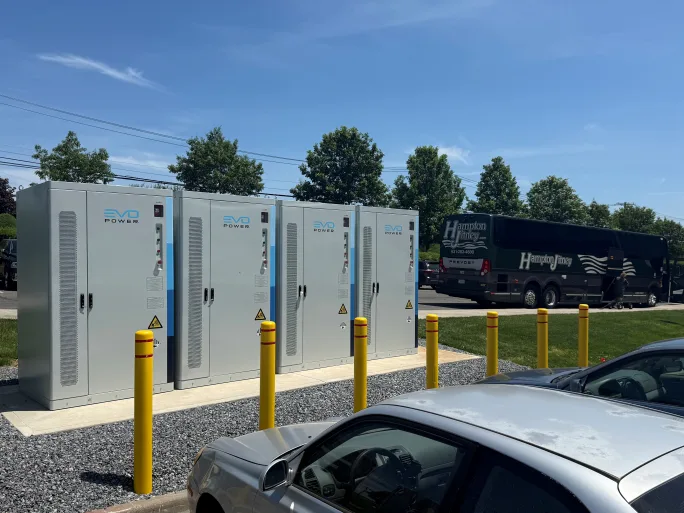
Hampton Jitney's new microgrid at its Calverton, N.Y., facility combines solar power, battery storage, and energy management technology to support future fleet electrification and help control electricity costs.
Credit:
Sprocket Power
The Calverton facility is also being positioned for a broader role in regional transportation electrification. The planned second phase would add one MW of dedicated direct-current fast-charging capacity, allowing the site to serve other commercial fleets as they transition to electric vehicles.
Potential users include school systems, commercial transportation providers, and other regional operators that might otherwise face substantial costs and lengthy processes to install their own charging infrastructure.
Fields said the technology can be adapted to different types and sizes of businesses, provided the systems are properly engineered, installed, and integrated with the electric grid.
“We've done projects in auto dealerships, and it's basically the same concept, many of the same technologies, just a little bit sized down or up, depending on what the capacity needs are,” she said.
Adaptability matters for mid-sized operators, which may not have the internal energy-management teams or purchasing power of larger organizations.
“One of the interesting things about this is that it just is taking that same approach and bringing it to a regional business like this,” Fields said. “It's just access to the right expertise and resources to get there.”
Beyond the benefits to Hampton Jitney, the microgrid is designed to provide flexibility to the local electric grid. By storing renewable energy, managing electricity demand and potentially exporting power or participating in grid-service programs, the installation can help utilities address localized capacity constraints.
Fields said customer-sited energy resources offer an alternative to relying solely on traditional grid expansion to meet growing electricity demand.
“I think of them as part of the energy infrastructure in a way, but it's new to think about it that way,” she said. “Hampton Jitney will benefit, but the grid will benefit, the utility will benefit.”
The project is expected to reduce greenhouse gas emissions by an estimated 590 metric tons annually, according to Sprocket Power, by reducing diesel consumption and reliance on high-emission power generation during peak periods.
As Hampton Jitney prepares for additional charging capacity, Fields said the project underscores the importance of evaluating both the technology and the economics early in the planning process. Utility capacity, permitting, interconnection, and the timing of future investments can all affect how quickly a fleet can expand its electric operations.
For other transportation providers considering electrification, the Calverton project shows how integrating energy generation, storage, and charging management can address those challenges while preparing for future growth.
Quick Answers
The purpose of Sprocket Power's on-site energy system is to manage charging costs, reduce pressure on the electric grid, and prepare Hampton Jitney for expanded electric fleet operations.
*Summarized by AI
Subscribe to Our Newsletter
More Technology

ETA CEO John Maglio on Transit Technology, Innovation, and Building Agency Trust
ETA founder and CEO John Maglio explores the evolution of transit technology, the importance of reliable systems, and how stronger partnerships can help agencies improve operations and the passenger experience.
Read More →
Lextran, Via Team for On Demand, HDR to Work on Twin Cities BRT, and More
In METRO's latest installment, we also take a look at recent news from Keolis, Complete Coach Works, Anchor Transportation, and more partnerships making headlines across the transportation sector.
Read More →
Caltrain’s Electrification Drives a New Era of Ridership Growth
The railroad’s shift to electric service has brought more frequent trains, stronger customer satisfaction, and increased ridership, earning it APTA’s Outstanding Public Transportation System award.
Read More →
Video Surveillance in Public Transit: What Riders Really Think
As video surveillance gains public acceptance, new research from Axis Communications reveals what transit riders expect from agencies when it comes to safety, privacy, and AI.
Read More →
New York MTA Launches Historic $1.9B Signal, Track Modernization Project
Funded in part by congestion pricing revenue, the project will replace nearly century-old signals along the A and C lines in Brooklyn and Queens.
Read More →
Biz Briefs: New Electric Offering from Alexander Dennis/Volvo, Transdev in Boston, and More
In METRO's latest installment, we also take a look at recent news from STV, WSP, Prevost, and more partnerships making headlines across the transportation sector.
Read More →
Roman Cornell on ABC Companies’ Evolution and the Future of Passenger Transportation
The company’s CEO discusses carrying forward a third-generation family legacy, ABC’s continued evolution in passenger transportation, support for increasingly complex fleets, and how technology and continued investment could help operators improve uptime.
Read More →
ETA CEO John Maglio on Transit Technology, Innovation, and Building Agency Trust
ETA founder and CEO John Maglio explores the evolution of transit technology, the importance of reliable systems, and how stronger partnerships can help agencies improve operations and the passenger experience.
Read More →
Frontrunner Bus Group Introduces XF Low-Floor Bus with Enhanced Accessibility
The new mid-sized bus features a full flat-floor design, eight-inch curbside step-in height, and zero-entry rear ramp to improve passenger access and operational flexibility.
Read More →
Building a Flexible Path to Transit Electrification with BAE's John Hroncich
John Hroncich discusses BAE Systems’ modular and scalable approach, lessons learned from decades of real-world operations, and how agencies can identify electrification strategies that fit their fleets.
Read More →