



How to Buy or Lease Coaches in a Tough Financing Market
With the motorcoach industry still mired in the post-September 11 downturn, financing institutions have tightened their lending practices. How operators can replenish their fleets in hard times. Part 1 of 2.
The economic downturn has changed the way people do business, especially in the motorcoach industry. Operators are rethinking their coach-buying plans while financial institutions are tightening the reins on lending. Financial companies are going over operators’ financial statements and cash flows with a fine-tooth comb, scrutinizing financial histories more closely than ever. Here’s a look at how frugal credit-lending practices have changed the motorcoach-buying landscape. During the economic boom of the ’90s, an onslaught of new financing sources entered the market, extending credit to operators new to the business. “In essence, I think that these financial sources bought market share by lowering their credit standards, allowing start-ups to get in the business,” says Dave Johnson, regional sales manager for GE Capital. Those financing sources that extended credit to non-credit-worthy people are now defunct, according to Johnson. “The finance sources that are left are all conservative, and quite frankly they have to be because the repossession rate is astronomical and the loss rate is just too high,” he says. Johnson concludes that the addition of new operators who made it into the motorcoach business during the years of “loose credit” led to suppressed daily pricing, which began straining an already tenuous industry. In the past, motorcoach operators started out by purchasing used vehicles until they established themselves in the industry. As more financing companies popped up to dole out cash, so did new operations with brand new vehicles. “When I first got into the business in 1985, it was nine years before I ever thought of buying a new bus,” says Jeff Polzien, owner and president of Red Carpet Charters in Oklahoma City, Okla. “In the ’90s you could almost start out with a new bus, and you didn’t have to pay your dues.” Equipment build-up Another reason financing companies are pulling back from the troubled motorcoach industry is the flood of new equipment in the market and the number of repossessions that followed. “There was so much new equipment placed in this market and a lot of finance companies that were willing to offer longer terms for that equipment,” says Peter King, vice president of specialty market groups with TCF Leasing. The longer terms resulted in customers paying a larger proportion of interest, slowing the depreciation of the asset. “When it came time to trade in, they owed more on the equipment than it was worth,” says King. This depreciation of assets prevents operators from building up equity with assets. An example of built equity shows that if an operator has an asset worth $100,000, with only $50,000 owed on it, they are able to apply another $50,000 of that equity toward the purchase of another piece of equipment. If equity is not built up, the customer is in a bind by still owing money on equipment already sold. With new bus sales slumping, the number of used vehicles in the market is growing substantially. Adding to the mounting number of used coaches on the market are the numerous repossessions in the hands of the financiers. “A lot of companies have gotten a lot of equipment back, and their primary concern is getting their portfolio back in shape by selling off this equipment,” says King. “There are a lot of good deals out there in the used market — no question.” Conservative financing In the wake of the prosperity and liberal lending practices of the previous decade, financial institutions that are still standing have responded to the resulting economic dilemmas by tightening their purse strings. What can motorcoach operators expect to see in this frugal lending environment and how can they improve their chances of obtaining financing? Shortened terms. Financing companies like TCF Leasing, which offers both financing and leasing options to the motorcoach industry, are shortening the length of their lending terms regarding straight loans. “There was a 120-month amortization period on equipment a couple of years ago, but that has been cut back,” says TCF’s King. “I think it’s advantageous for customers to pay back their [loans] as quickly as they can.” Financial statements. In addition to shorter terms, financing companies are requiring personal financial statements from operators to aid in determining credit-worthiness. Operators should provide a complete and up-to-date financial package including the last three financial statements, company tax returns, interim statements, personal financial statements and tax returns of the principals. A basic cash flow analysis will be calculated based on the financials. “Cash flow is very important to us,” says King. A company must generate enough cash to service the debt it will acquire with the new equipment. “We also are looking for companies that have been in business for five years or so because you want somebody with a proven track record,” King says. Business plan. Creating a business plan is key for any operator hoping to obtain financing. A business plan provides the finance company with strategies for use of the units and for growth. “It is essential to list the contracts that you have, and how you go about generating your business,” King says. Having diverse revenue sources is also key. Operators with a variety of revenue sources are not concentrating solely on one contract for a disproportionate amount of revenue. Timely payments. Paying your bills on time may seem like a small detail, but it goes a long way with finance companies. “In this environment it’s important to do everything you can to make timely payment of your obligations because financial institutions are putting a lot of emphasis on the pay history of their customers,” says King. Timely payments to vendors other than equipment providers will also be checked. Charles Beckwith, co-owner of Turner Coaches in Terre Haute, Ind., bolsters his payment track record by making timely payments to his fuel provider. “One of the big things we purchase is fuel, which adds up to a lot of money,” says Beckwith. “[Financial institutions] check to see if you are current with other people you are buying from too.” Feeling the financing pinch Lee Hilliard, president of Royal Tours in Randleman, N.C., confirms that he has seen changes in financing criteria along with a drying up of available financing sources. “[Finance companies] are looking a lot closer at cash flows, and they are looking for a profitable company,” says Hilliard. Because of the stricter financing criteria, motorcoach operations such as Neal’s Motorcoach in East Point, Ga., have had to rethink their buying prospects. “We are finding that most [finance companies] are wanting 10% to 20% down, which is unrealistic,” says President Sammy Neal. “The big problem is that since September 11, hardly any bus company has had good financials in the last year.” While buying new coaches can be a daunting prospect, buying used can be a lot easier. Todd Holland, owner and president of Ramblin Express in Colorado Springs, Colo., found that to be true. “We were able to buy three 2000-model vehicles that were taken back as repossessions at just under $900,000,” says Holland. “We got that deal done very easily.” Although his purchase experience went smoothly in an otherwise economically challenged market, it wasn’t until a month-and-a-half later that Holland felt the financial pinch. When he tried to obtain a $50,000 line of credit for his drivers from the very same financial institution, he was denied. “They said I didn’t qualify. It just made absolutely no sense,” Holland says. Financing made easy A majority of the motorcoach industry‘s capital is tied up in equipment, with buses costing $375,000 on average per vehicle. The sales tax alone (based on an 8% rate) would cost $30,000, which must be paid up front in a loan. Operators need to consider their finances carefully before buying a new vehicle. One way to do that is by consulting an accountant about financing options. Accountants also assist their clients by shopping around for the best financing rates. Accountant Jan Hayden of Hayden & Co. in Terre Haute, Ind., says she has been involved in soliciting for the best prices and rates available for her clients. Accountants such as Hayden are also involved in crunching numbers in the form of a cost analysis to determine which lending option is more advantageous, buying or leasing. Shopping for the best rates is nothing new to Red Carpet’s Polzien. “I always shop [for financing]. I never assume that one place is going to do better than the other,” he says. In addition to financing companies, operators turn to captive finance companies (the lending arm of motorcoach manufacturers), as well as their local banks. “Captive companies may be more willing to provide financing that a traditional financing source might not be able to do because they have a vested interest in seeing that the equipment gets sold,” says King. It is also always a good idea to have a good relationship with a bank. “[Banks] may have a credit line established for a customer, which should be conserved for other needs down the road,” King says. Take advantage of equipment financing if it can be found elsewhere, leaving the bank credit line in place and not tied up in equipment. New vs. used It’s a buyers market, especially if you are in the market for used motorcoaches. Mike McCauley, director of operations for New Orleans Tours, actually likes to buy both new and used vehicles. “It depends on the utilization of the vehicle,” he says. “We like to keep a fleet of over-the-road vehicles newer because our customers expect a nice, newer coach.” McCauley buys used 47-passenger vehicles for city and airport shuttle work. He also prefers to lease new vehicles to keep the fleet updated while buying used vehicles, as they will stay with the fleet for an extended period. Some well-established operators who are able to obtain financing for new vehicles are now taking a second look at used vehicles. “I never thought I’d go back to buying used equipment, but I got a steal on them,” says Polzien. “I was able to buy four used coaches for what I would have spent on one-and-a-half new ones.” The value of used units has dropped considerably compared to a few years ago. “Lending sources are motivated to get their collateral back on the street earning income, so there is a lot more flexibility,” says GE’s Johnson. “Lending sources may extend credit to people that they may not have for a non-repossessed unit.”
More Management

Transit Expands Agency Partnerships, Reaching 200 Official App Partners
COO Jake Sion discusses Transit’s growth, the success of its Transit Royale program, and how technology is helping agencies improve the rider experience.
Read More →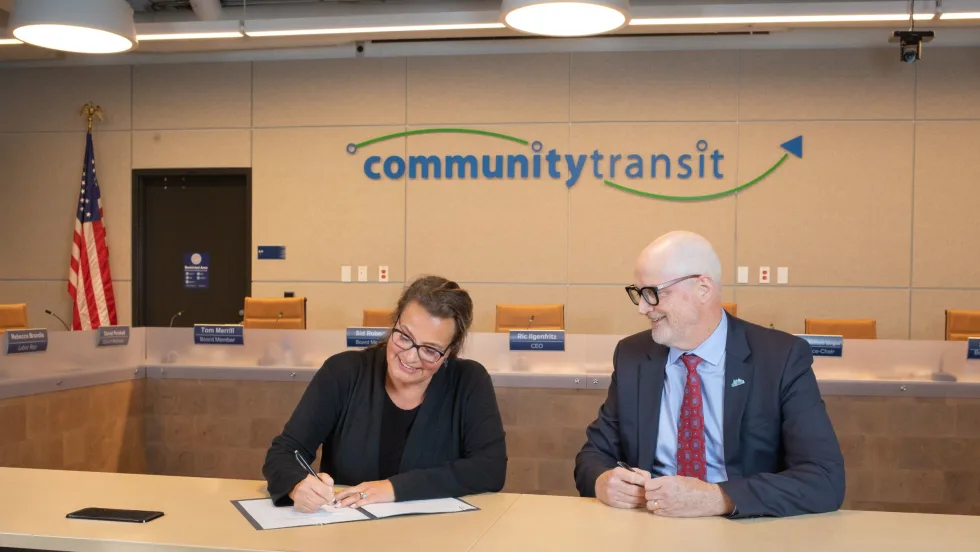
Everett Transit, Community Transit Approve Consolidation of Services
The agreement will bring Everett Transit into Community Transit’s network in April 2027, with plans to increase bus service by 50% by 2031 and expand regional connections.
Read More →
NITA Proposes $5B Operating Budget, $9.7B Capital Program for 2027
The proposed budget includes funding for expanded transit service, safety initiatives, fleet upgrades, and infrastructure improvements across CTA, Metra, and Pace.
Read More →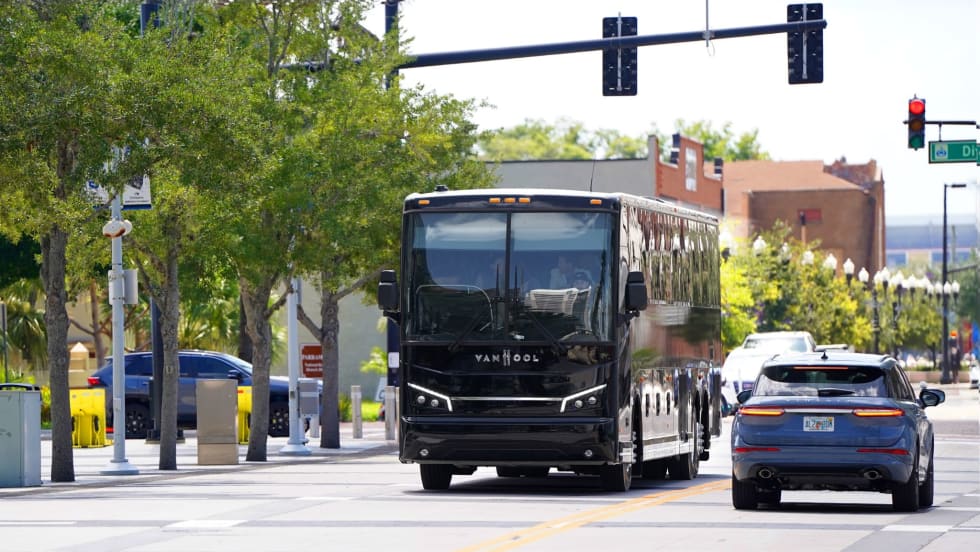
Financing, Fleet Replacement Requires a More Strategic Approach
Executives from ABC Companies and MCI discuss how rising costs, changing market conditions, and post-pandemic challenges are prompting motorcoach operators to rethink financing strategies, fleet replacement cycles, and long-term planning.
Read More →
Bringing Austin’s First Light Rail System to Life
Austin Transit Partnership CEO Greg Canally discusses the city's nearly 10-mile light rail project, its collaborative approach to project delivery, the importance of community engagement, and the milestones ahead as construction approaches in 2027.
Read More →
ETA CEO John Maglio on Transit Technology, Innovation, and Building Agency Trust
ETA founder and CEO John Maglio explores the evolution of transit technology, the importance of reliable systems, and how stronger partnerships can help agencies improve operations and the passenger experience.
Read More →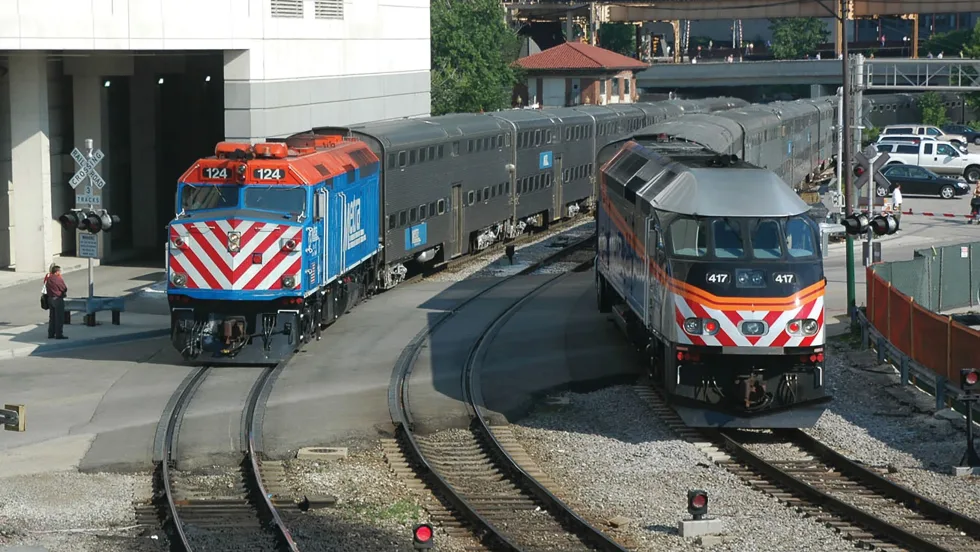
Metra Draft Plan Outlines Costs, Service Improvements for Regional Rail
The Systemwide Network Plan identifies infrastructure needs and potential investments to expand all-day, bidirectional rail service across the Chicago region.
Read More →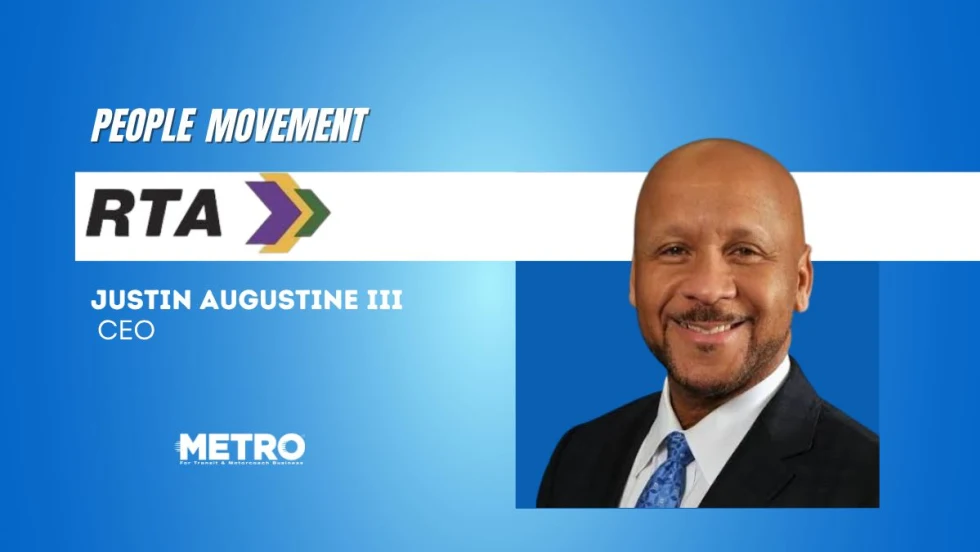
New Orleans RTA Names Augustine III as New CEO
In this edition, we also spotlight recent personnel moves at HDR, PATH, STV, and more, highlighting the people taking on new roles across the transportation industry.
Read More →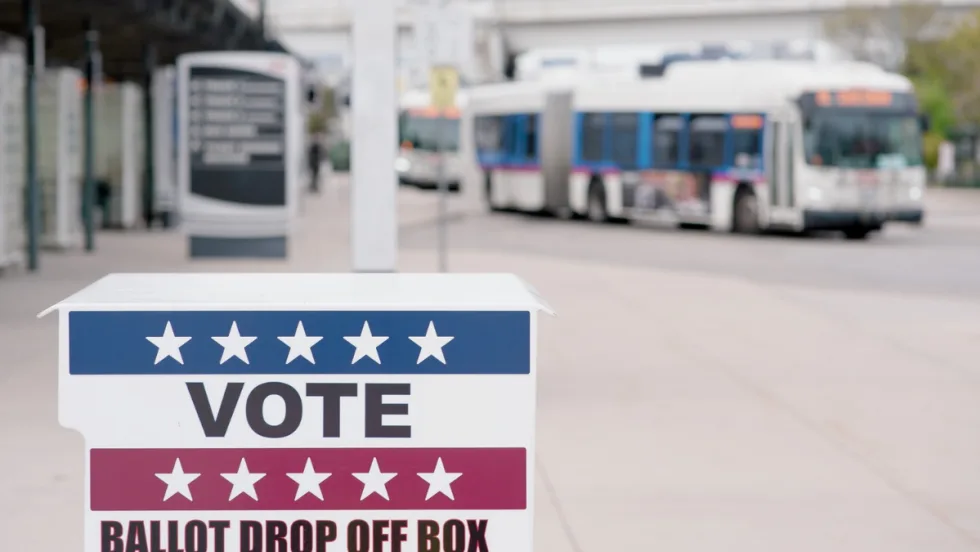
How Transit Agencies Are Using Free Rides to Improve Voting Access
Transit agencies are using fare-free service, trip-planning tools, and targeted rides to improve voting access. See what other agencies can learn from these efforts.
Read More →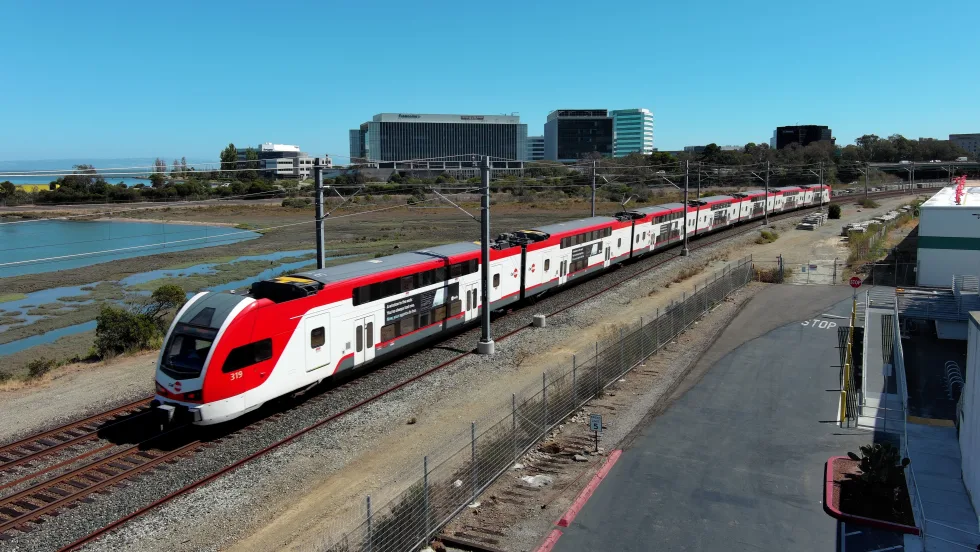
Caltrain’s Electrification Drives a New Era of Ridership Growth
The railroad’s shift to electric service has brought more frequent trains, stronger customer satisfaction, and increased ridership, earning it APTA’s Outstanding Public Transportation System award.
Read More →