



How to Run a More Cost-Efficient Motorcoach Business
See how some operators are offering driver incentives, negotiating fuel contracts and reducing inventory to keep costs down and stay ahead of rising fuel and insurance rates.
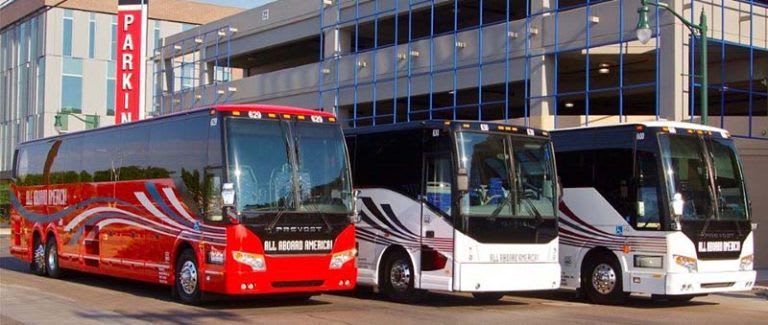
Improving productivity was a priority for Jack Wigley, president of tour and charter service All Aboard America in Mesa, Ariz., when he realized that the average number of mechanics per vehicle in his shop was high and that overall maintenance expenses were high.
All Aboard America
High insurance rates coupled with skyrocketing fuel costs have added to the numerous challenges already faced by the motorcoach industry. Keeping a trained eye on costs and finding ways to get the most for your money — such as negotiating fuel contracts at a set price or tracking overtime hours — are some of the ways operators are increasing productivity and running more cost-efficient businesses during these tenuous economic times.
However, these means to a more cost-efficient business must be incorporated into a longer-term business strategy, says Bill Chapman, managing principal of the Legasus Group in Overland Park, Kan. “Our experience has shown that companies that commit to a strategic planning process consistently outperform those that do not,“ he says.
Chapman recommends companies develop performance benchmarks for evaluating the business. He also suggests that operations look at financial planning, both long term and annually. Because the motorcoach business is very capital-intensive, operators need to operate as lean as possible to generate the profit needed to reinvest in the company, he says.
To generate this much-needed profit, motorcoach companies should charge prices based on expenses plus profit, says Smedley Lynn, president of S & L Enterprises, a Maryland-based corporation that operates Atlantic Coast Trailways. “Profit is not a dirty word, but I find that too many businesses forget this and work for the cash flow required to pay current bills.” Lynn says he makes every attempt to run the business with profit as a goal and to keep costs that can be controlled, such as labor, within certain guidelines.
Pay drivers a flat rate
One of the ways Priority Tours of Mitchellville, Md., is controlling labor costs is by paying drivers a flat rate rather than an hourly rate for particular trips.
“Despite the increases in insurance and fuel costs, you can’t pass those costs on to the consumer,” says Charlie Neal, COO and co-owner of Priority.
The company has targeted specific trips such as four-hour day trips to New York City for flat payments to drivers. Neal says this program was presented to the drivers as a way to continue to preserve present business amid increases in costs. The flat rate, which the company began implementing in October 2003, has been beneficial, Neal says. “It has helped increase our revenues by about 10%.”
In addition, the company, which operates charter and tour services, is doing a better job identifying trips that are not cost effective. Priority has cut back tremendously on a common practice of giving price breaks to certain volume or repeat customers, limiting this to slower periods.
“Some trips are not always profitable, but it’s just not cost effective to take those if you just want to have your buses on the road,” Neal says.
Stabilize fuel costs
Reducing idling time to conserve fuel is another way Neal is keeping costs down. “We talk to our drivers and let them know that everything has a domino effect. If part of our cost is fuel and you are burning fuel unnecessarily, that’s money,” Neal says.
Meanwhile, Atlantic Coast Trailways includes a fuel surcharge provision on charter trips to recoup costs. “Fuel costs have become unpredictable so we have included the surcharge provision [to compensate],” Lynn says.
Stabilizing fuel costs by contracting to buy large quantities in a given period is a practice Jot Bennett, president of Capitol Trailways in Harrisburg, Pa., uses to contain costs. Last year, Bennett entered into a shared contract with a local trucking company to purchase fuel at the going market rate for 21,000 gallons. “We shared the cost of the contract, so we both saved on the cost of 21,000 gallons a month when fuel prices skyrocketed during the war,” Bennett says.
Sharing a contract with a trucking company is one option. Another, says Bennett, is to partner with a smaller transit authority that would not be able to afford the contract otherwise. He also suggests that only companies that can store large amounts of fuel, such as in 10,000-gallon underground storage tanks, take on such a contract. “We buy fuel contracts because we have the ability. In order to get into that game you have to be talking 42,000 gallons a month,” he says.
Offer driver incentives
Another high-cost item that Bennett looks to control is insurance. Three years ago, Bennett began offering incentives to his drivers, paying a penny per mile to drivers that drove accident free until the end of each month.
“[The driver] can lose that whole month on the last mile of the last day if he gets into an accident, but he gets to start again the next month.”
His company has dramatically lowered its loss ratio since implementing the incentive program.
“I’ve paid out $35,000 a year in incentives, but I’d rather pay that to my drivers than to some insurance company or to a loss.”
Bennett says using driver incentives is a broad-based savings program that can reduce costs in many areas, including equipment repairs, downtime for repair and the potential for lawsuits. It also helps maintain a high level of driver loyalty.
Reduce holding inventory
Tracking inventory and keeping only necessary parts on hand is a way to keep overhead down in the shop.
Gladys Gillis, chief executive of Starline Transportation in Seattle, says her operation does an annual inventory to find out which items are carried locally. “If I’ve got an item that’s going to take me an hour or two to get, I don’t really need to hold that on my shelf, and I certainly don’t need three or four of them,” she says.
Gillis also keeps a list of the available vendors in the area for particular parts and for the best prices. She then builds a relationship with that vendor. “I also set up a relationship with a second and third vendor for the same part, so if we can’t get the part from the first vendor, the information is readily available for who to go to next.”
Track, reduce overtime
Besides tracking inventory, Gillis also began looking into her company’s overtime costs as a way to be more cost efficient. Overtime at Starline Transportation, which offers charter, paratransit and shuttle services, was running as high as 35% per pay period before it began being tracked, Gillis says. “We are loading the number of overtime hours for each particular profit center [into a database] and looking at how many hours get worked.” This is taken a step further by measuring which particular drivers are getting the overtime.
Gillis says it is also important to look into scheduling trends to see if there is any favoritism involved.
“Sometimes people doing the scheduling begin to schedule drivers who are either their favorites, or just easy to schedule,” she says. Paying attention to how overtime is distributed and making sure everyone is “getting a fair shake” will help reduce attrition as well. “You’re not going to have people walking out if they are sick and tired of favoritism.” The connection between scheduling favoritism and attrition is important as well. “Attrition is expensive because of the hiring process and the amount of training you have to provide.”
Since Gillis began tracking overtime, adjusting scheduling and, at times, hiring more part-time workers, the company has been able to reduce costs in this area. “I’ve eradicated overtime in my shuttle profit center, and I’ve brought it down to about 6% or 7% in my paratransit profit center,” she says. “I have managers who are now responsible for the [overtime] in each profit center and are being held accountable for it.”
Boost shop productivity
Increasing productivity is key to reducing costs, especially in the high expense area of maintenance. “The actual cost of having a technician is five to seven times what they are being paid per hour,” says Duane Spader, founder of Spader Business Management, a Sioux Falls, S.D.-based management consulting and training company. “If you are paying your [maintenance person] $15 per hour, your actual cost of keeping them around is $75 to $105 an hour,” Spader says. With proper organizational structure in the service and maintenance departments, productivity can be increased by 50%, he says. “Two technicians can do the work of three.”
Improving productivity was a priority for Jack Wigley, president of tour and charter service All Aboard America in Mesa, Ariz., when he realized that the average number of mechanics per vehicle in his shop was high and that overall maintenance expenses were high. This led him to revamp the whole department.
“We are trying to keep the more knowledgeable mechanics scheduled in advance, and using their knowledge doing repairs rather than paperwork and scheduling,” Wigley says. He has also found that having higher paid, more knowledgeable maintenance people on staff is cheaper than having less qualified, lower paid staff.
Because manufacturers are minimizing the general upkeep on buses with multiplexing, LED lights, extended fluid change cycles and computer-controlled components, it’s necessary for maintenance staff to be trained in more technical areas, Wigley says. “[Maintenance workers] need to be able to twist a wrench, view diagnostic tools, analyze faults and failures, and be motivated to be more productive with their time.”
More Management

LA Metro Board Awards 220 Battery-Electric Bus Contract to ENC
The contract, which is the largest base award of battery-electric buses by a U.S. transit agency, will be built in Southern California, sustaining good jobs as LA prepares to welcome the world in 2028
Read More →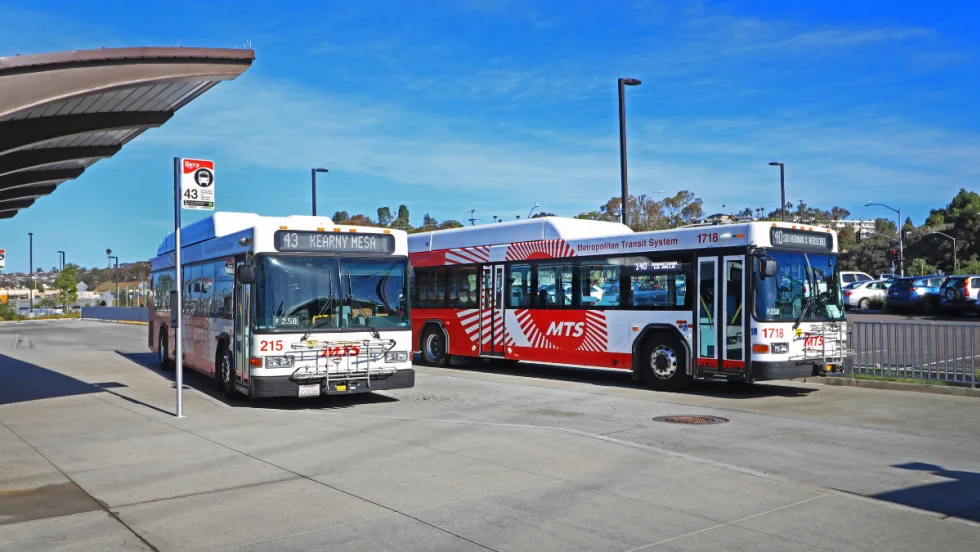
What’s Behind San Diego MTS’s Award-Winning Transit Strategy
Named one of APTA’s 2026 Outstanding Public Transportation Systems with 50 million or more annual passenger trips, California’s San Diego Metropolitan Transit System points to gains in ridership, safety, technology, and reliability as foundations of its success.
Read More →
Public Transit Conference Returning to GFX in 2027, Call for Papers Now Open
The Call for Papers is now open, allowing transit agency professionals and industry experts to help shape the PTC educational program by submitting session ideas for consideration.
Read More →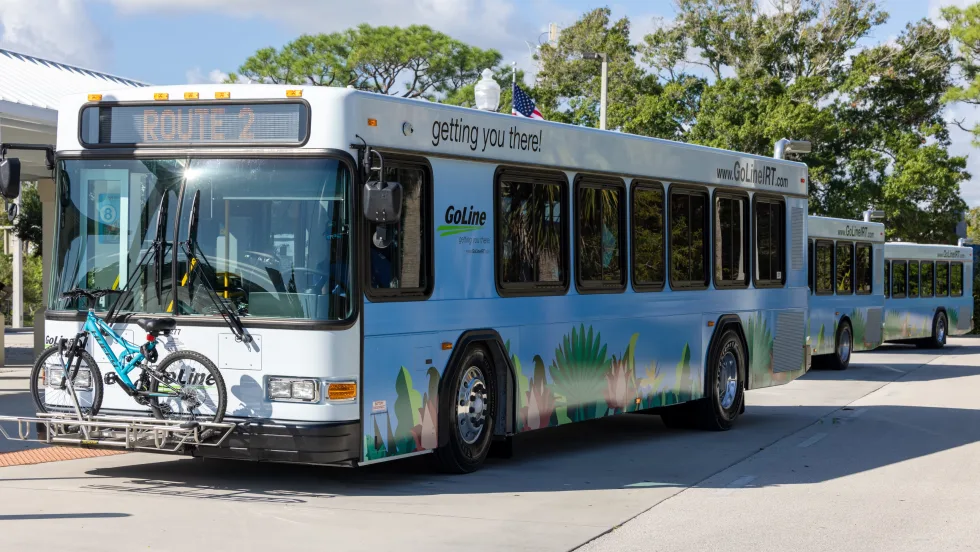
Indian River Transit’s Community-Focused Approach Earns National Recognition
Named APTA’s 2026 Outstanding Public Transportation System in its size category, Florida’s Indian River County transit system continues to grow ridership through fare-free service and a focus on evolving community needs.
Read More →
ENC Lands MATA Contract and More in Biz Briefs
In this edition of Biz Briefs, we spotlight the latest developments shaping the future of mobility.
Read More →
From Surviving to Thriving: Building Stronger Transportation Organizations
Bus Business Consultants founder Brian Dickson shares lessons on leadership, organizational health, and creating options for long-term success in a changing transportation industry.
Read More →
Everett Transit, Community Transit Outline Consolidation Agreement
The proposed agreement calls for a 50% increase in bus service in Everett, a new microtransit zone, continued paratransit service, and the transfer of Everett Transit operations to Community Transit.
Read More →
Strada360’s Steve Lassey on Turning Transit Data Into Better Decisions
From breaking down data silos to preparing for AI, Strada360 CEO Steve Lassey discusses how transit agencies can use technology to improve operations, customer information, and long-term decision-making.
Read More →
People Movement: Phil Washington Joins HNTB, Denver RTD Launches CEO Search, and More
In this edition, we also spotlight recent personnel moves at STV, the Eno Center for Transportation, and more, highlighting the people taking on new roles across the transportation industry.
Read More →
SEPTA Details Accelerate Vision for Transit System
The plan outlines investments in trolley modernization, new Metro and Regional Rail vehicles, accessible stations, and more frequent bus and rail service.
Read More →