



Why Halogen Could be the Light at the End of the Tunnel for Public Rail Transit
Operators of metro light rails and larger commuter rail lines can prepare for the Great Return by keeping locomotive fleets in peak condition, starting with exterior and multi-use lighting.
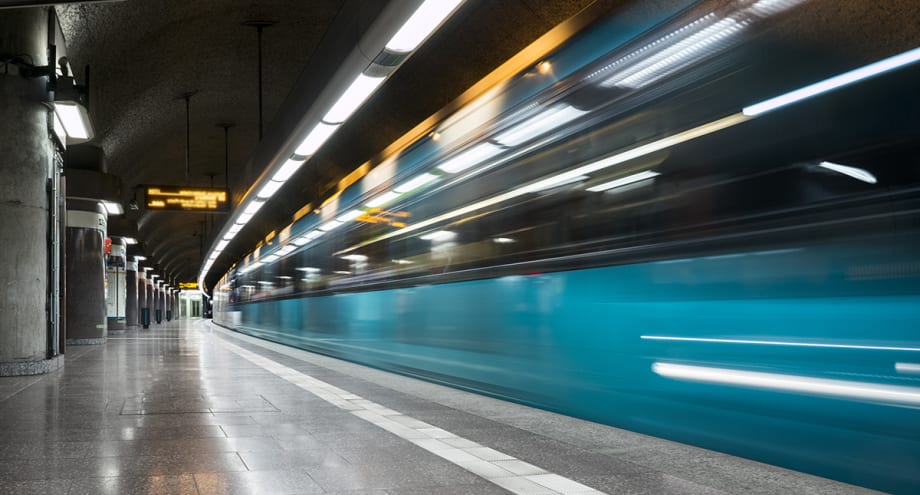
The recently passed federal infrastructure legislation earmarked $39 billion for public transportation, making this the perfect time to invest in maintaining or upgrading locomotive lighting.
Getty Images/ollo
When President Biden urged Americans to return to the office in his State of the Union address, he echoed a sentiment held by many companies, who see the move as a way to revitalize deserted downtowns, promote innovation and collaboration, and support local businesses. The return of commuter culture could also revive public rail transit, which has seen ridership decline by more than half in the last two years.
It's no secret that COVID-19 has disrupted supply chains, and commuter rail lines are no exception. Supply chain disruptions have left many rail operators empty-handed when it comes to replacing parts, because so many parts are manufactured in different countries. If operators do manage to get the parts they need, they face long delivery times, making a return to standard operations even more challenging. With commuters returning to the office, the pressure is on to find a ready supply of high quality, durable lighting at an affordable price point. Operators of metro light rails and larger commuter rail lines can prepare for the Great Return by keeping locomotive fleets in peak condition, starting with exterior and multi-use lighting.
What to look for in a lighting solution
The recently passed federal infrastructure legislation earmarked $39 billion for public transportation, making this the perfect time to invest in maintaining or upgrading locomotive lighting. When selecting a lighting solution, it is important to choose products that can withstand the environmental conditions where your rail line operates and that provides a good candela output throughout the life of the lamp. Because exterior lighting on railcars is not always regulated by the FRA (depending on the type of locomotive), candela output can vary, but operators should look for exterior lighting that produces at least 15,000 to 30,000 candle power.
Depending on specific needs, additional factors like the type of lens may come into play. For example, to distribute light over a wide area, you’ll want a light with a prismatic lens. On the other hand, if you need to shine a spotlight down a track, you may opt for a clear lens instead. Another variable to consider is the lamp’s electromagnetic interference (EMI) rating. Class I cars have multi-use lamps, such as A19s, that are placed near radio antennae, so selecting a lamp that does not interfere with radio frequencies will be critical. If you operate in a region with heavy precipitation, selecting a lighting solution with good weatherproofing should be a priority.
In addition to quality, finding a supply that is readily available and cost-effective is important. To cut down on lead times for delivery, order enough supply to keep a few extra sets on hand when you replace your headlamps or other lighting. When comparing price, balance the replacement costs of your lamps against performance and return on investment. While incandescent lamps are always the lowest cost alternative, they must be replaced far more frequently than LED lights, leading to increased downtime for changeouts.
Halogen – great performance at an affordable price
If the high upfront cost of installing LED lights does not fit with the budget, you may want to consider halogen. While halogen lamps are not as long-lived as LED lamps, they do offer about 3,000 hours of light, compared to 800 for incandescent lamps, meaning they can be replaced about 3.75 times less often. When you consider, on average, a lamp takes 20 minutes to swap out, the reduced number of changeouts adds up to a lot of saved time, which reduces scheduling delays due to maintenance. In addition, halogen lights are durable enough to withstand sub-zero temperatures and the vibrations of a fast-moving commuter train. They’re also less expensive than LED lights, which can run $100 to $300 for moderately priced options and up to $1,000 for a premium lamp.
Even if you opt for LED lighting in the long run, using halogen as an interim solution allows you to replace lighting in sections so that you can allocate funding for replacements as your budget allows. If you do go with halogen lighting, look for a manufacturer that has been around for a long time and understands the requirements of rail transit as well as other transportation industries.
As people return to the office, your ability to provide a safe, comfortable trip in well-lit railcars could be the deciding factor that entices commuters back to public transit — not to mention providing a much-needed boost to business.
John Fogel, Halogen Product Manager at Amglo, has worked with the company for more than 15 years in product development.
More Technology

From Hardware to Digital Partner: Luminator Charts Its Next Chapter
CEO Magnus Friberg discusses Luminator’s shift toward becoming a digital partner, the growing importance of software and interoperability, and how AI can help agencies improve operations and passenger experience.
Read More →
Beyond the Checklist: A Structured Approach to Transit Maintenance
Reliability-Centered Maintenance helps transit agencies move beyond routine checklists to focus limited resources on the assets and failures that have the greatest impact on safety, reliability, and service.
Read More →
NJ TRANSIT Advances Bus Technology Upgrades Across Statewide Fleet
More than 1,500 buses now feature upgraded technology designed to improve arrival predictions and provide free Wi-Fi, with deployment expected to reach nearly 2,000 buses by the end of 2026.
Read More →

Building a Flexible Path to Transit Electrification
John Hroncich discusses BAE Systems’ modular and scalable approach, lessons learned from decades of real-world operations, and how agencies can identify electrification strategies that fit their fleets.
Read More →
Biz Briefs: Alstom Lands Canadian Contract, LYT to Supply California TSP, and More
In METRO's latest installment, we take a look at recent news from Complete Coach Works, Beep, FlixBus, and more partnerships making headlines across the transportation sector.
Read More →
From Legacy Silos to Conversational Intelligence
What if transit leaders could ask any operational question and get a trusted answer in seconds? Conversational AI is transforming how agencies use their data.
Read More →
USDOT Announces Rail Vehicle Replacement Grants, Chattanooga AV Shuttle Funding
More than $191 million in federal funding will help three transit agencies replace aging rail vehicles and support a new autonomous shuttle service in Chattanooga.
Read More →
Bus Tech Talk: Keeping Transit Technicians Ahead of the Technology Curve
LA Metro’s Obed Mejia discusses technician training, evolving maintenance technology, fleet replacement, and strategies for getting the most out of today’s transit fleets.
Read More →
Biz Briefs: RIPTA Unveils New Frontrunners, Clevland RTA Adds New Siemens, and More
In METRO's latest installment, we take a look at recent news from Siemens, Prevost, Dodge, and more partnerships making headlines across the transportation sector.
Read More →
Why Simulating Pedestrian Movement Has Become Essential for Modern Rail Stations
Pedestrian microsimulation is helping rail planners identify bottlenecks, test station designs, and prepare complex transit hubs for growing passenger volumes.
Read More →