



Implementing BRT: Making the Busway Work for You
Flexible in the extreme, BRT can be implemented in stages and allowed to develop its ridership over time -- either as an end unto itself or as a prelude to a rail system. That underlying reality is one of BRT's most appealing virtues: even in the most difficult of financial times, small and large metropolitan regions alike still need public transportation.

[IMAGE]MET4aecombrt.jpg[/IMAGE]Victor Hugo said, “There is one thing stronger than all the armies in the world, and that is an idea whose time has come.” Bus rapid transit (BRT) is an idea whose time has come.
Most people love rail. But for many communities, rail is not the appropriate technology solution for a particular transit challenge. Implementing commuter, heavy or light rail requires a serious, long-term financial and community commitment to a large, all-encompassing endeavor — a commitment that not every community can afford or should make. You can’t build a single mile of rail to “see how it goes.” But, BRT is different.
Flexible in the extreme, BRT can be implemented in stages and allowed to develop its ridership over time — either as an end unto itself or as a prelude to a rail system. That underlying reality is one of BRT’s most appealing virtues: even in the most difficult of financial times, small and large metropolitan regions alike still need public transportation. BRT provides an extremely flexible, appealing and affordable way for cities to get it started. For example, in Curitiba, Brazil, which boasts the mother of all BRT systems worldwide, light rail transit is being considered as the natural next step of that transit system’s development.
However, confusion exists as to exactly what BRT is. It involves more than just a few tweaks or enhancements to a standard bus system. Although agencies constantly implement new methods to make their bus systems better, they usually only improve their own system of local services. From signalization to pavement markings to dedicated rush-hour bus lanes, such actions are worthwhile, time-tested service-improvement techniques. But they are not BRT.
Combining the permanence and urban identity of rail transit with the flexibility of buses, a BRT system operates on exclusive transitways, HOV lanes, expressways and, at times, ordinary streets; heavily exploits intelligent transportation systems (ITS) technology; takes advantage of traffic signal priorities; uses rapid, convenient and innovative fare collection systems; and integrates with land-use policy to create an effective public transportation system — just like rail does. BRT systems also usually boast an integrated “branding” signature — deploying distinctive buses and attractive stations and stops to differentiate the service from local and express buses.
BRT does require a capital commitment, but it typically is on a much smaller scale than rail requires. And, for many places in the U.S., that is critical. Of some 371 Metropolitan Statistical Areas (MSAs) defined by the U.S. Office of Management and Budget, only about 35 MSAs have populations greater than 1.5 million people — a population threshold that is typically sufficient to support surface rail. But even in some of those larger metropolitan regions, rail may be prohibitively expensive, especially considering all the hoops and hurdles that must be passed through and jumped over to qualify for diminishing federal assistance. For example, the new BRT system being constructed in Cleveland (a metropolitan area of 1.7 million people) cost approximately one fourth of the more than $1 billion that would have been required for the desired surface/subway light rail system originally planned for Euclid Avenue. Because of its flexibility and lower cost, BRT presents an excellent option for metropolitan areas nationwide.
Consider Jacksonville, Fla., where the Jacksonville Transportation Authority (JTA) is evolving its BRT system. The JTA plans on starting with an integrated core BRT circulation system within downtown Jacksonville, and then expanding out along specific high-density corridors as demand grows and funding becomes available. Analogously, BRT also benefits the largest metropolitan areas as well, as is being demonstrated through BRT projects in both New York and Los Angeles. But for smaller areas, it is often the only viable public transportation option.
Given its considerable advantages, though, BRT is still a complex venture to implement. So, it is essential to follow certain best practices to ensure optimal execution. For transit agency executives, the first step in considering a BRT implementation is to really know what BRT is.
It Sells Itself
Without question, transit executives considering BRT should start by examining a good example of an operating BRT system. As mentioned previously, many executives view BRT as a glorified bus system. But, those who actually visit a working system generally walk away impressed; BRT is much more than they had imagined. Understanding exactly what BRT is and what it can do is paramount to starting the process. This is exactly how Cleveland convinced its civic leaders. The Greater Cleveland Regional Transit Authority (RTA) organized a field trip to Curitiba, Brazil, and examined the system by riding it. RTA now hopes others will visit Cleveland to experience the new Euclid Avenue BRT after the ribbon-cutting ceremony in late October.
[PAGEBREAK]
What You Get Out of It . . .
Shoehorning any kind of transit system into an established urban setting imposes change and causes disruption, upsetting the status quo. Managing that process well requires comprehensive planning, cool heads and patience. Though there are frequently political pressures to rush into implementation, resist that urge. With all of the issues inherent in creating a public transit system, there are considerable benefits to thorough planning. And with BRT, as is frequently touted with rail, one of the best potential benefits is transit-oriented development.
One major way in which BRT emulates rail is by facilitating private sector investment and economic development. Designed and implemented correctly, BRT can effectively and affordably drive private sector investment and TOD, much like rail does. The Silver Line along Boston’s Washington Street corridor is one excellent example. By maximizing public access to public transit, BRT can create the density necessary to support substantial residential and commercial development. Euclid Avenue in Cleveland is being transformed by Cleveland’s investment in BRT. A recent article in the Plain Dealer noted the influx of $4.1 billion in new private sector investment along the Euclid Avenue corridor.
Take Me to the Fare
Another element that must be examined closely is innovative financing. During the planning stage, transit executives should make themselves fully aware of all available combinations of funding options. This sounds obvious, but it’s a step that is often ignored.
By and large, transit executives have been groomed to view procurement in very traditional ways. Here's some advice:
Change that. Obtain first-rate financial counsel on funding alternatives tied to alternative delivery and implementation strategies. From public-private partnerships to integrated managed-lane financing and congestion pricing, there are many new financial strategies here and on the horizon. Acquire expert funding advice during planning, and take advantage of these strategies. And, don’t overlook other pots of money available from the highway department.
In any BRT implementation, hundreds of questions need to be answered. But start by imagining what questions the public will ask. It is mission-critical to incorporate excellent communication and public outreach into your process.
Communicate. Tell the public what BRT is, what it will mean and how it will benefit them. Communicate effectively to the public and other stakeholders to ensure that they are comfortable with what is happening in their city.
Going Back to Your Routes
When BRT is being considered, the first question that arises is usually about bus routes. How do you choose BRT bus routes? The short answer is, we use a formal valuation process to select optimal BRT routes. In truth, though, the process often follows common sense. A successful BRT system isn’t chosen out of thin air. In fact, we cannot recall one successful BRT route that wasn’t a successful bus route first. So what’s the issue?
While politics are involved in most urban development programs, don’t let it drive the decision-making process and influence route choice. Good bus routes make for great BRT systems and successful projects. Successful projects beget more projects and, before you know it, you have a complete system of integrated routes.
Beware of Vendors Bearing Gifts
Here’s a phone call to dread: A mayor or high-ranking city official calls a transit general manager considering BRT and explains that he or she just met with a company that demonstrated some “really nifty technology.” And, that firm is “prepared to really help us out by leveraging their technology to get funding and facilitate implementation!” Mayors actually make such calls. We would not necessarily suggest that you hang up
the phone immediately and blame your cell-phone carrier for dropping the call, but we certainly can understand the impulse. Tying your BRT implementation or system to a single technology or technology vendor needs to be viewed warily. Don’t let technology, particularly proprietary technology, drive your thinking; it is only a tool and should be treated as such.
Finally, it is very important to remember that BRT and rail are not mutually exclusive. If done right, BRT is just another instrument in the fight for the transit rider’s heart. Simply put, they are both viable public transportation options to improve mobility. Each has its virtues and its place in the transportation tool kit, and much can be gained from lessons learned and best practices developed with both modes. What separates BRT, perceptively, is that it is a relatively newer concept—especially when it is integrated with the power of ITS. Again, as Victor Hugo said, “There is one thing stronger than all the armies in the world, and that is an idea whose time has come.” For many communities, BRT is a mobility solution whose time may have come.
Robert Lepore and Timothy Martin are senior vice presidents with AECOM Transportation.
More Bus
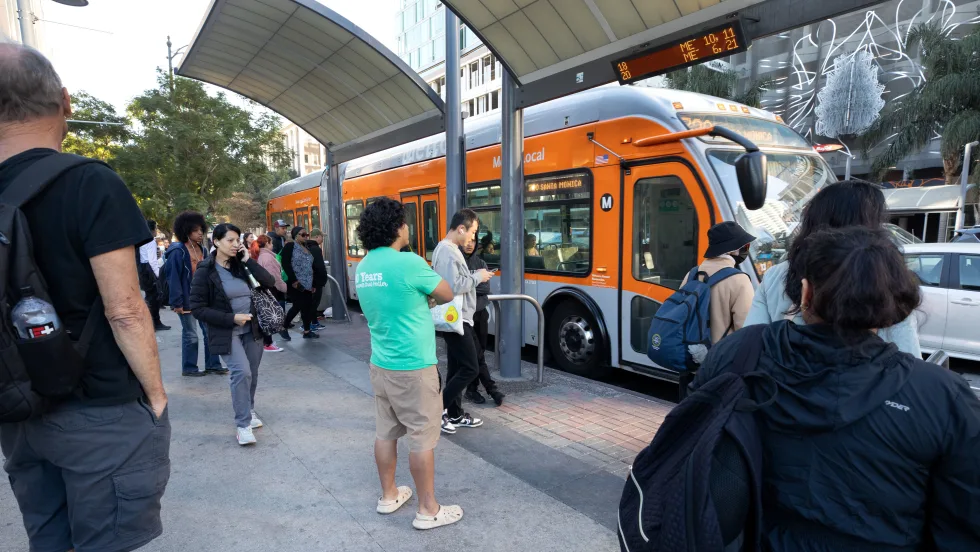
LA Metro September Ridership Climbs 3.9%, Led by Rail Growth
The agency recorded more than 27.2 million boardings, with rail ridership increasing 12.4% year over year and the D Line posting the largest gains.
Read More →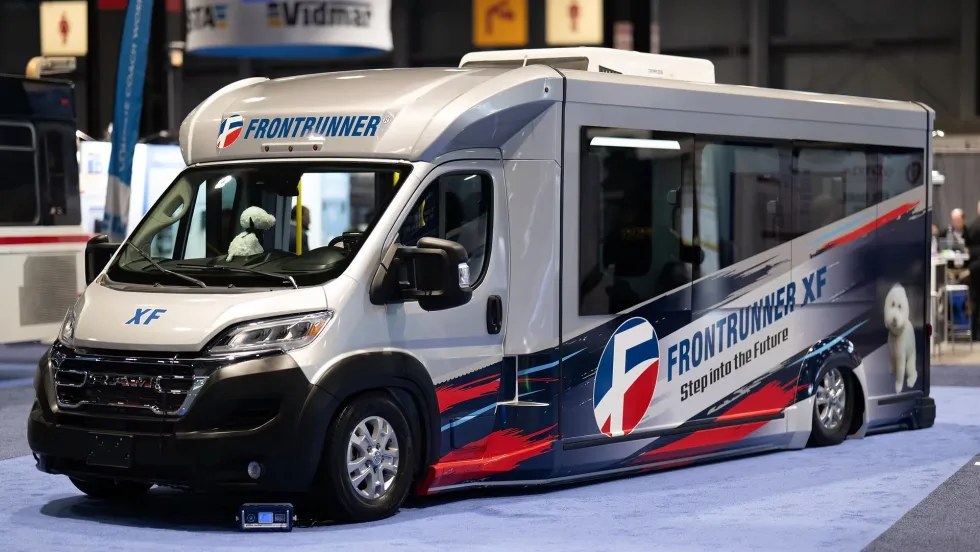
Frontrunner Bus Group Introduces XF Low-Floor Bus with Enhanced Accessibility
The new mid-sized bus features a full flat-floor design, eight-inch curbside step-in height, and zero-entry rear ramp to improve passenger access and operational flexibility.
Read More →
Scenes from APTA TRANSform & EXPO 2026
Transit leaders, manufacturers, and industry professionals gathered in Chicago to explore new technologies, share ideas, and discuss the future of public transportation.
Read More →
More Than a Summer Job: Building the Next Generation of Transit Talent
The Delaware River Port Authority and PATCO have transformed their internship program into a hands-on professional development experience that introduces students to the breadth of transportation careers — and creates a pipeline for future employees.
Read More →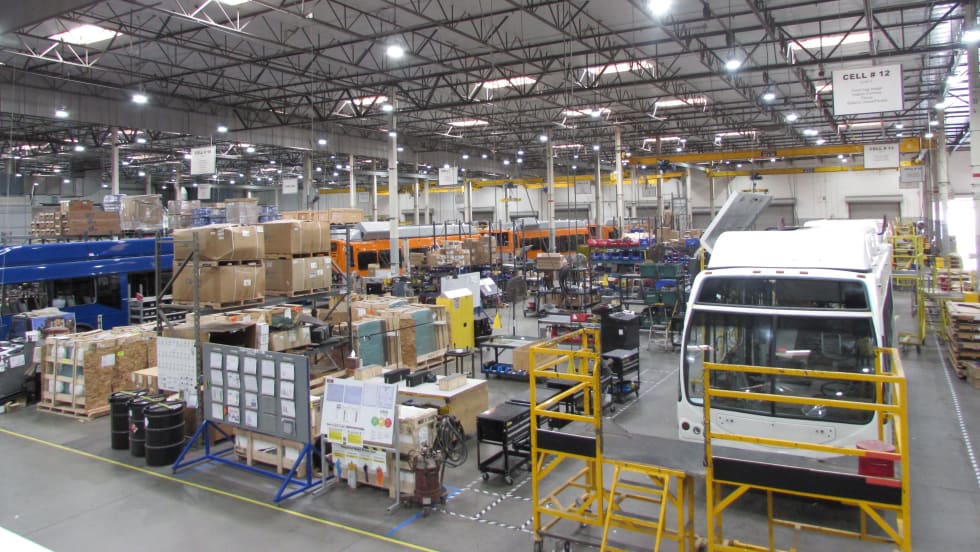
LA Metro Board Awards 220 Battery-Electric Bus Contract to ENC
The contract, which is the largest base award of battery-electric buses by a U.S. transit agency, will be built in Southern California, sustaining good jobs as LA prepares to welcome the world in 2028
Read More →
Public Transit Conference Returning to GFX in 2027, Call for Papers Now Open
The Call for Papers is now open, allowing transit agency professionals and industry experts to help shape the PTC educational program by submitting session ideas for consideration.
Read More →
Indian River Transit’s Community-Focused Approach Earns National Recognition
Named APTA’s 2026 Outstanding Public Transportation System in its size category, Florida’s Indian River County transit system continues to grow ridership through fare-free service and a focus on evolving community needs.
Read More →
ENC Lands MATA Contract and More in Biz Briefs
In this edition of Biz Briefs, we spotlight the latest developments shaping the future of mobility.
Read More →
From Surviving to Thriving: Building Stronger Transportation Organizations
Bus Business Consultants founder Brian Dickson shares lessons on leadership, organizational health, and creating options for long-term success in a changing transportation industry.
Read More →
Everett Transit, Community Transit Outline Consolidation Agreement
The proposed agreement calls for a 50% increase in bus service in Everett, a new microtransit zone, continued paratransit service, and the transfer of Everett Transit operations to Community Transit.
Read More →