



L.A. bus company thinks way outside the box
Golden State Transportation is accused of conspiring to transport tens of thousands of illegal immigrants from U.S. towns along the Mexican border to cities in California, Colorado and Washington state.
Tour and charter bus operators have been bombarded with the advice “not to sit around and wait for the phone to ring.” That is, get out there and drum up business. Well, a Los Angeles–based company may have taken that advice a bit too far. Golden State Transportation is accused of conspiring to transport tens of thousands of illegal immigrants from U.S. towns along the Mexican border to cities in California, Colorado and Washington state. According to a 35-page federal indictment, the bus company picked up scores of illegal immigrants each day in Texas and Arizona border towns and traveled routes designed to evade Border Patrol checkpoints. The trips often were made in the middle of the night with pick-up points in secluded areas, federal officials said. Probe lasted two years The investigation, called Operation Great Basin, lasted two years and involved some 300 agents and officers from the Immigration and Naturalization Service (INS), the FBI, the U.S. Marshals as well as local and state law enforcement agencies. The culmination of the investigation — the arrests of 32 bus company employees — was followed by a Dec. 10 press conference presided over by U.S. Attorney General John Ashcroft, who described the operation as the “largest immigrant-smuggling case ever brought against a U.S. commercial carrier.” In his statement Ashcroft linked the smuggling operation to the events of Sept. 11, saying the terrorist attacks “remind Americans in the most painful way of the need to defend our borders while keeping them open to peaceful, freedom-loving people.” If the allegations are true, Golden State Transportation has broken laws and sullied the reputation of the motorcoach industry and should receive appropriate punishment. Although the company apparently fulfilled a desired transportation need, let’s face it, it was thinking too far outside the box. Having said that, I’ve got to admit that I’m confused by Ashcroft’s comments and disconcerted by this expansive use of government resources. The weakest link to Sept. 11 First of all, how exactly did Operation Great Basin remind us of the need to “defend our borders”? For two years law enforcement authorities apparently allowed thousands of illegal immigrants to be transported from U.S. border towns into the nation’s interior. If they wanted to defend the border, wouldn’t it make more sense to return these immigrants to their country of origin before they got on the bus? Secondly, I’d like to know how much was spent on this operation. The 300 agents and officers from local, state and federal law enforcement agencies who helped in the two-year investigation probably logged enough hours to generate sizeable paychecks. Also worth mentioning, the impact of the operation, even if the Golden State Transportation employees are found guilty and removed from the industry, will likely be negligible. The smugglers who allegedly conspired with the bus company are incredibly resourceful and their “contraband” is highly motivated. They’ll find other ways to sneak into Los Angeles, Denver and Yakima, Wash. — the destinations of many of Golden State’s allegedly unlawful passengers — and a hundred other cities if they care to. Ashcroft and the INS are trumpeting this investigation as an example of how federal authorities are responding to the events of Sept. 11. I’d prefer they focus on ways to keep illegal immigrants, from all foreign nations, from crossing the border in the first place and, once discovered, returned to their homeland. Allowing unlawful immigrants to move freely about the country for two years to “build a case” against a single motorcoach operator runs counter to common sense.
More Management

Bus Tech Talk: Keeping Transit Technicians Ahead of the Technology Curve
In this episode of Bus Tech Talk, Complete Coach Works’ Business Development Manager Mark Hollenbeck and METRO’s Executive Editor Alex Roman sit down with Obed Mejia, Senior Technical Trainer for Bus Maintenance, at LA Metro to discuss how rapidly evolving bus technology is changing the maintenance shop — and the skills technicians need to keep pace.
Read More →
Michael Schneider Joins Paslay Group to Expand Transportation Practice
The longtime transportation executive will help Paslay Group grow its advisory and program management work across transit, highway, and other infrastructure sectors.
Read More →
People Movement: Connectpoint Expands Leadership Team, Stadler Names New Group CEO, and More
In this edition, we also spotlight recent personnel moves at Burns, UZURV, and more, highlighting the people taking on new roles across the transportation industry.
Read More →
More Than a Summer Job: Building the Next Generation of Transit Talent
The Delaware River Port Authority and PATCO have transformed their internship program into a hands-on professional development experience that introduces students to the breadth of transportation careers — and creates a pipeline for future employees.
Read More →
LA Metro Board Awards 220 Battery-Electric Bus Contract to ENC
The contract, which is the largest base award of battery-electric buses by a U.S. transit agency, will be built in Southern California, sustaining good jobs as LA prepares to welcome the world in 2028
Read More →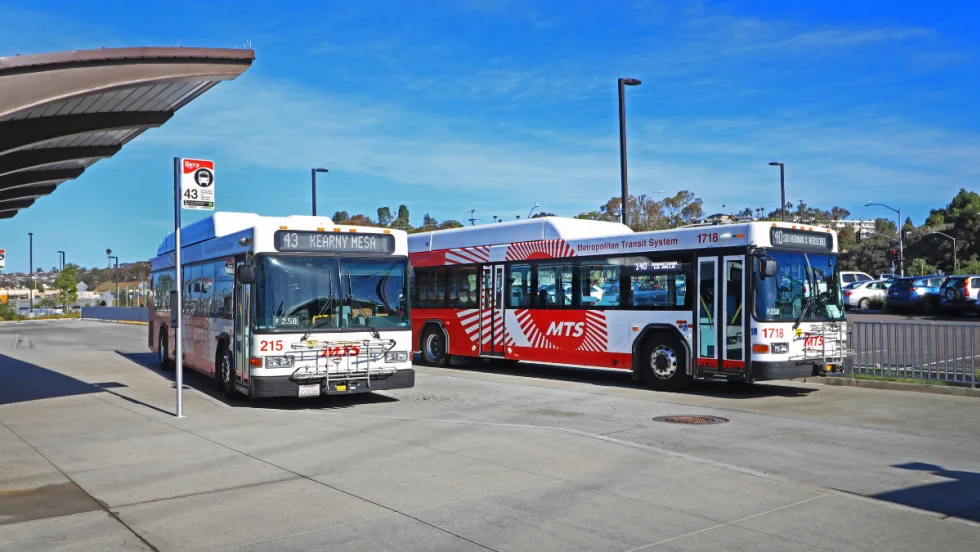
What’s Behind San Diego MTS’s Award-Winning Transit Strategy
Named one of APTA’s 2026 Outstanding Public Transportation Systems with 50 million or more annual passenger trips, California’s San Diego Metropolitan Transit System points to gains in ridership, safety, technology, and reliability as foundations of its success.
Read More →
Public Transit Conference Returning to GFX in 2027, Call for Papers Now Open
The Call for Papers is now open, allowing transit agency professionals and industry experts to help shape the PTC educational program by submitting session ideas for consideration.
Read More →
Indian River Transit’s Community-Focused Approach Earns National Recognition
Named APTA’s 2026 Outstanding Public Transportation System in its size category, Florida’s Indian River County transit system continues to grow ridership through fare-free service and a focus on evolving community needs.
Read More →
ENC Lands MATA Contract and More in Biz Briefs
In this edition of Biz Briefs, we spotlight the latest developments shaping the future of mobility.
Read More →From Surviving to Thriving: Building Stronger Transportation Organizations
Bus Business Consultants founder Brian Dickson shares lessons on leadership, organizational health, and creating options for long-term success in a changing transportation industry.
Read More →