



Level Boarding Still and ADA Access Issue on Rail Systems
Fifteen years into ADA, progress has been made in commuter and light rail systems. While the major issues have been clarified, details are still being worked out on railcar and station access.

In the 15 years since passage of the landmark Americans with Disabilities Act (ADA), transit agencies and rail operators have dealt with the major, threshold disability access issues. Recently, focus has been placed on more specific implementation details, especially in new rail systems, for rail cars, station platforms, ticket machines and communication systems.
“During the first 10 years, the industry did a great job at getting its arms around the general issues and establishing the backbone of system accessibility,” says David Rishel, chair of the American Public Transportation Association’s (APTA) Access Committee and principal of consulting firm Delta Services Group. “Now, we’re looking at the next level of details.”
After passage of the ADA in 1990 and promulgation of rulemaking by the federal government in the years that immediately followed, transit agencies developed what were called key station plans to address the high-level disability access issues for their bus and rail systems. Key station plans were intended to tackle the immediate issues for creating a minimal, short-term level of access. Deadlines for the key station plans were eventually extended as federal administrators realized these implementation strategies were more involved than they originally anticipated.
Federal enforcement issues
The Federal Transit Administration (FTA) appears to be satisfied, overall, with access accommodations that transit systems have implemented. In newer systems, such as the East Corridor commuter rail in Nashville, Tenn., the FTA has worked closely with developers to solve level boarding issues and other access concerns.
According to industry sources, there may be some debate going on in the federal agencies about the government’s strategy for moving disabled transit access forward. While FTA attorneys and administrators generally have been satisfied with a cooperative approach to access implementation with transit agencies, attorneys in the U.S. Justice Department are considering a more aggressive approach that could involve the prospect of litigation. The FTA did not comment for this article.
Whether or not the federal government’s regulatory enforcement strategy will change, a more imminent issue is the stance the FTA will ultimately take on implementation rules for mini-high level platforms. Construction plans were approved under one set of rules starting in the mid-1990s. The concern here among transit systems is that FTA could issue new regulations that could impact not only new systems, but also could involve retrofitting mandates for agencies that acquired previous approval and already built their rail systems. APTA has commissioned a quick study on this issue, which will provide a summary of current regulations; the study is due out at the end of the year, says Rishel.
While subway rail systems aren’t being addressed here, there is a lot of activity nationwide on disability access. The access issues have already been more contentious, sometimes involving private class-action lawsuits. The issue here is installation of elevators for level access, which is costly and complicated for subway systems that were installed many years ago.
Level boarding a top concern
For commuter and light rail systems, level boarding for wheelchair users is a key issue for the FTA in approving new system construction plans. One of the main problems here is that nearly all commuter rail systems share right of way with freight lines.
Freight cars need space between station platforms and railcars to accommodate the back-and-forth sway that normally occurs during transport. This creates obvious problems for passenger rail system designers trying to accommodate wheelchair users — the larger the gap between the car and the platform, the greater the chance that a wheel could get caught in the gap. This is where bridge plates and mini-high platforms enter the picture.
For information systems at train stations, and also for ticket machines, special accommodations are being worked out for sight and hearing-impaired system users. Station announcements must include audio and visual elements to meet the needs of both groups.
Height requirements for ticket machines must also be addressed for wheelchair users, but the machines must also take into account non-wheelchair users who need to be able to reach their tickets with reasonable effort.
Nashville at center of issues
The Regional Transportation Authority (RTA) in Nashville has been at the forefront of ADA access issues with its Music City Star East Corridor 32-mile rail project, says Hanne Flippen, marketing representative. Construction started in November 2004, and the system is due to go online in early 2006.
The FTA became involved with planning for the rail system and worked closely with agency administrators on disabled access issues. Local community leaders for persons with disabilities were also heavily involved in the project planning.
Because of the shared right-of-way with existing freight trains, the RTA could adopt a “pure” level boarding system. A mini-high platform with a bridge plate was finally settled upon as a solution for disabled access.
At each station, a concrete ramp has been built at one end of the station, which provides level access to the railcar. Train conductors will manually lower a bridge plate to close the gap between the car and the station platform.
Railcars are being acquired through Chicago’s Metra system and made ADA compliant. Center poles are being removed near doors so that wheelchairs have easy access. Seats have also been removed so that wheelchairs have easy access and turning radius.
Field trip to St. Louis
Metro Transit in Minneapolis/St. Paul also worked very closely with its local disabled community when it designed its Hiawatha light rail system, according to Mark Fuhrmann, deputy general manager. The Hiawatha Line links downtown Minneapolis to the Mall of America and several critical points in between, such as the city’s airport.
Administrators from the agency, along with members of the Metropolitan Council’s Transit Accessibility Advisory Committee, went on a field trip to ride the St. Louis Metro system during the planning phase of the Hiawatha Line. About a dozen people made the trip to study how St. Louis had addressed its disability access issues.
David Bruflodt was a member of the committee during this time. As a wheelchair user, he had special concerns about how the Hiawatha Line would accommodate persons with disabilities.
“Some wheelchair front tires are skinny and could get caught in the gap between the train and the platform,” he says. “I was concerned about what would happen in this event. Would the engineer be aware of the situation?”
Bruflodt and other members of the committee were happy with the solutions adopted by Metro Transit. “There were some minor implementation issues at first,” he says, “but we’ve found no real problems.”
He was worried that wheelchair tiedowns might be required for the railcars. From his experience as a bus rider, with the constant stop-and-go traffic and rapid braking that can occur, he was concerned that wheelchair-based riders could be tossed around during the ride. Bruflodt was pleased to experience the smooth ride of the railcars and appreciates the freedom of not having to use tiedowns.
Working out realistic compromises
The Utah Transit Authority (UTA) went through the protocol followed by the other agencies when building its 44-mile commuter rail system, which recently started service. Citizen input and FTA scrutiny and construction plan approval were major parts of the process.
Thirty-eight miles of this system is owned outright by the UTA; six miles of track and some stations are owned jointly with freight rail lines. This gave the UTA certain freedom to design its system. However, the joint commuter-freight section of the system is where the ADA compliance challenges came into play, says Steve Meyer, manager of commuter rail engineering and construction. “The FTA wanted every car and every door to be accessible,” he says. “But there are issues since we share part of the track with freight trains.”
While some freight rail systems in the U.S. have gaps as large as 23 inches on each side of the train cars, UTA was able to create a bridge plate to cover a seven-inch gap in what’s called the dynamic envelope. The fact that UTA owns most of the track gave the agency more latitude in its compliance options, Meyer says.
UTA had to build raised platforms in each station to accommodate wheelchair access. One uniform standard that the agency adopted was building the raised platform structure at the south end of every rail station, close to the disabled parking spaces and bus stop entrances.
While some federal regulators who ride the rail system in Washington, D.C., might gain the impression from that system’s level boarding that all rail operators across the country can easily do the same, Meyer advises that it’s important for regulators to take into account the unique operating realities and budget constraints faced by transit agencies. “It’s difficult to come up with industry-wide standards,” Meyers says. “Each system is different.”
Jon LeSage is a freelance writer in Long Beach, Calif.
More Management

Building Stronger Leaders, More Resilient Transit Teams
Dr. Carol Parker Walsh discusses leadership development, employee retention, workplace culture, and preparing transit’s workforce for AI and automation.
Read More →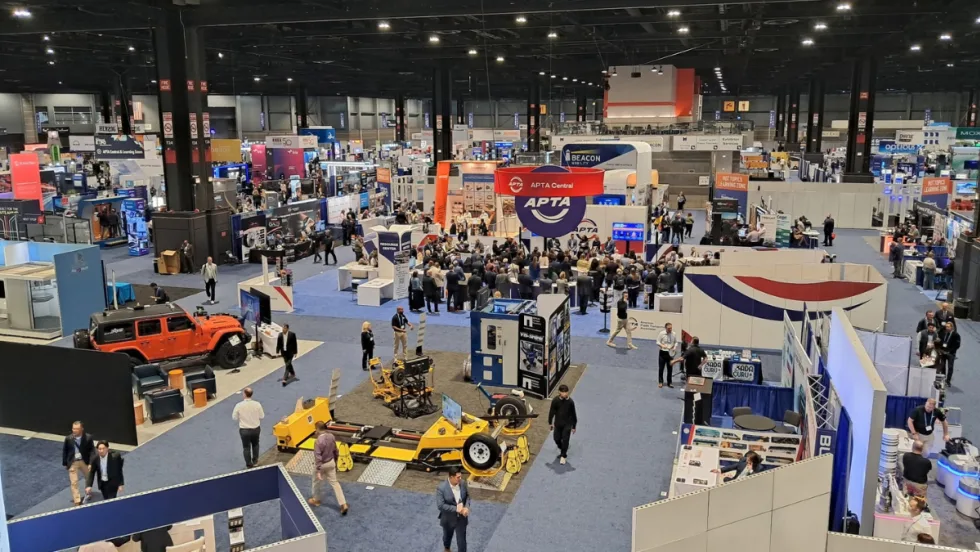
APTA 2026 TRANSform & EXPO Kicks Off in Chicago
After 45 years, APTA returns to Chicago with a focus on next-generation fleets, AI, connected transit networks, and the funding strategies shaping public transportation’s future.
Read More →
New York MTA Warns Federal Tariffs Could Add $1 Billion to Rolling Stock Costs
The agency said tariffs on specialized imported components could reduce the purchasing power of its $23 billion investment in new subway cars, railcars, and buses.
Read More →
From the Show Floor: What’s Happening at APTA TRANSform & EXPO 2026
Follow the latest product launches, partnerships, technology updates, and transit industry announcements coming out of APTA TRANSform & EXPO in Chicago.
Read More →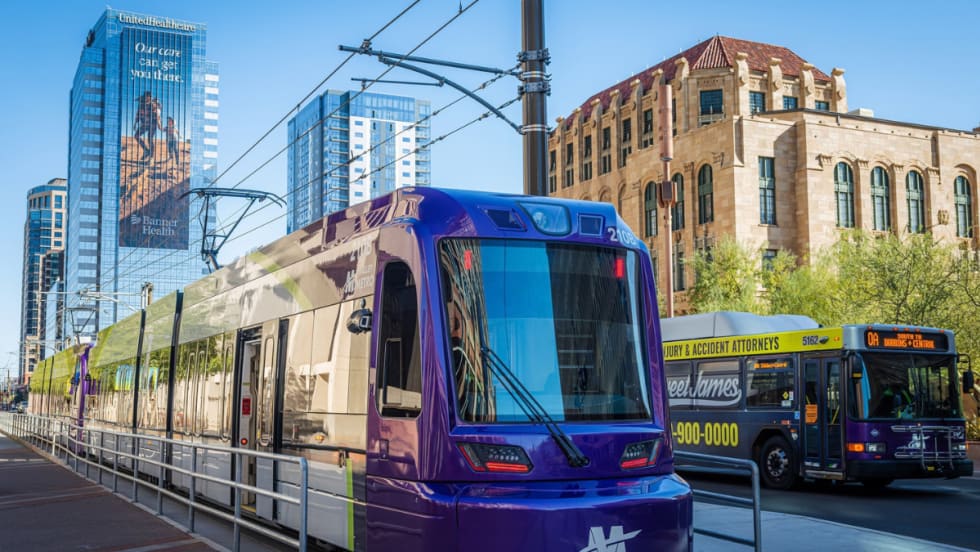
How Valley Metro Is Balancing Transit Growth With the Rider Experience
The APTA award-winning agency is pairing rapid system expansion with investments in workforce, safety, technology, and the fundamentals of transit service.
Read More →
Bus Tech Talk: Keeping Transit Technicians Ahead of the Technology Curve
In this episode of Bus Tech Talk, Complete Coach Works’ Business Development Manager Mark Hollenbeck and METRO’s Executive Editor Alex Roman sit down with Obed Mejia, Senior Technical Trainer for Bus Maintenance, at LA Metro to discuss how rapidly evolving bus technology is changing the maintenance shop — and the skills technicians need to keep pace.
Read More →
Michael Schneider Joins Paslay Group to Expand Transportation Practice
The longtime transportation executive will help Paslay Group grow its advisory and program management work across transit, highway, and other infrastructure sectors.
Read More →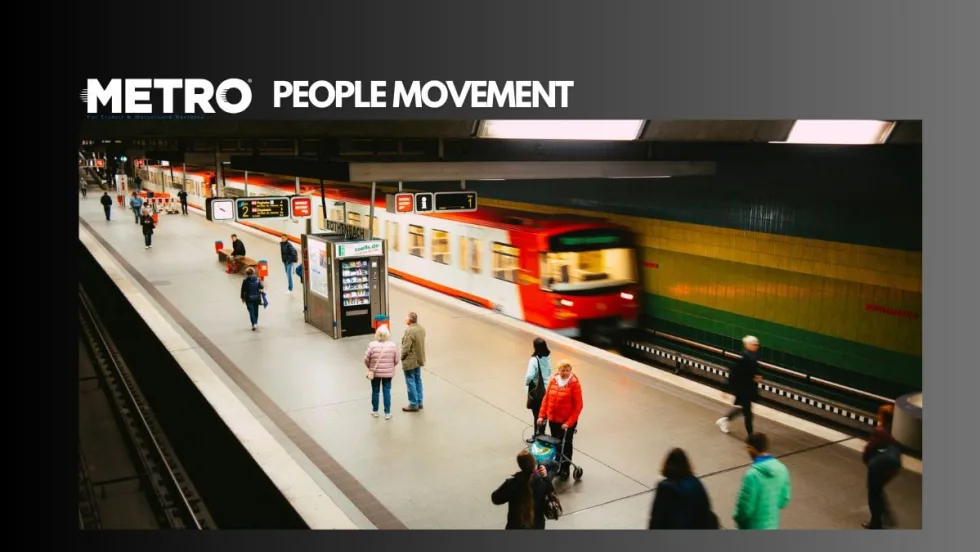
People Movement: Connectpoint Expands Leadership Team, Stadler Names New Group CEO, and More
In this edition, we also spotlight recent personnel moves at Burns, UZURV, and more, highlighting the people taking on new roles across the transportation industry.
Read More →
More Than a Summer Job: Building the Next Generation of Transit Talent
The Delaware River Port Authority and PATCO have transformed their internship program into a hands-on professional development experience that introduces students to the breadth of transportation careers — and creates a pipeline for future employees.
Read More →
LA Metro Board Awards 220 Battery-Electric Bus Contract to ENC
The contract, which is the largest base award of battery-electric buses by a U.S. transit agency, will be built in Southern California, sustaining good jobs as LA prepares to welcome the world in 2028
Read More →