



Light Rail Breathes Life Back Into Suburbs
Transit-oriented developments, specifically those involving light rail, can serve as a catalyst for reviving dead areas in American suburbs. Here's a look at how two have re-created their downtowns and revitalized their communities.

Picture a large, mucky pond littered with rotting timbers. Now think of a worn-out shopping mall with fewer customers than a saloon in a ghost town.
Though highly unlikely candidates, these sites are now thriving downtown villages in two suburbs — Englewood, Colo., and Gresham, Ore., respectively. The accounts of revitalization in these towns are quite similar, most notably in their use of light rail transit as a building block.
"What the light rail does is serve as a catalyst to help bring a bigger vision and other resources to the table that wouldn't be possible otherwise," says G.B. Arrington, a transit-oriented development (TOD) specialist for Parsons Brinckerhoff.
Reviving a dead mall
In the case of Englewood, a suburb of Denver, the Cinderella City mall was far beyond its prime. The mall opened in 1968, and by 1974 it accounted for 52% of the town's sales tax revenue. But with increasing retail competition and obsolescent design, Cinderella City waned into the '90s. By 1994, it claimed only 2.6% of the sales tax revenue.
"We had a dead mall — that's the short answer," says Bob Simpson, community development director for Englewood. Cinderella City was one of about 400 malls that exist in the U.S. in a similar condition, identified as "Greyfield" sites by the Congress for New Urbanism. "Malls are land-use products that go through their life cycles and, as a result, they are probably experiencing the downside of their life cycle and are ripe for redevelopment or renewal," says Simpson.
Denver's Regional Transportation District (RTD) had a planned light rail corridor at the edge of the former Cinderella property, but Simpson says that the community didn't know what light rail meant at the time. A strip mall was suggested to coincide with the transit station, but the plans didn't promise to take advantage of light rail. 'One of the plans showed a big box with its back directly on what was to be a new light rail station, so you'd come off into the loading dock and not really know where you were,' Simpson says.
Simpson investigated more thoroughly into what transit could do for Englewood, and the community discussed its options through a series of objectives. The result was a multiple-use TOD that would include office, residential, retail and civic uses in 800,000 square feet. 'The idea there was that single-use property, such as a retail site, would be less sustainable over time, as was shown with the mall,' says Simpson.
Financing the project was an initial concern, especially with Englewood being a lower- to middle-income community. The first step toward success was to recycle a department store building that was built in the mid '80s as a last-ditch effort to revitalize Cinderella City. "There was enough life-value left in the building that we decided to retain it and turn it into a civic center," says Simpson. "We also used it as kind of a collateral position and took bonds out on the building and used those bonds to help finance adjacent and associated site development." Adding general fund money and land sales to retail and residential developers, Englewood had the $38 million it needed for the development.
Dubbed CityCenter, the new mixed-use downtown center is easily accessible by transit, car, bike or foot. Englewood Station, which cost $5.7 million, carries 3,400 commuters a day to downtown Denver and adjacent suburbs. According to the city's Website, "CityCenter is revitalizing the community spirit as well as the tax base of Englewood and provides a model for healthy urban redevelopment."
A TOD neighborhood
Gresham, a suburb of Portland, Ore., provides another such model. The area surrounding the city hall was occupied by an old veneer plant (which includes the aforementioned pond), a Kmart and a few scattered houses. Long-delayed plans to develop a regional shopping mall on top of an existing light rail line eventually fell through with the passing of a market for malls.
"What the city did was take the long view," says Parson Brinckerhoff's Arrington. "Rather than just saying 'yes' to any kind of a project that came along, they were only going to approve those that met their vision for the future and that were linked into light rail."
Phase one of the approved plan, Gresham Station, joins about 320,000 square feet of retail and office space to the Metropolitan Area Express (MAX) light rail line. The new station will cost an estimated $2.5 million and, along with the existing City Hall station, will connect the development to downtown Portland and nearby suburbs.
Max Talbot, Gresham's community and economic development director, says opposition to the plans came only from those pessimistic about the cost of such a development. But with tax abatements, system development charge reimbursements and help from the city, the goal was within reach. "We built the station, we built Civic Drive and we built the central plaza, which totals about $11 million," Talbot says.
The broader picture is the Gresham Civic Neighborhood, a 130-acre district bisected by the MAX light rail line. The neighborhood is designed to be a transit-oriented community with high densities of residential, commercial and office buildings. As an incentive to the growth, 10-year property tax exemptions are available for qualifying new developments.
Smaller blocks, large landscaped sidewalks and the central location of the light rail station contribute to the pedestrian-friendly environment. "Everything is built around being able to walk and being able to make this like a village, if you will," says Talbot.
Like Denver, Gresham revived a dead area and created an exciting, new downtown of mixed-use centered around transit. Suburbs are prime spots for light rail, especially considering the more efficient commute from the big city and reduction of traffic.
"Transit is kind of like frosting on the cake, and it gives those places a locational advantage and an identity," says Arrington. "But it meant that the transit agencies' role in how they did their facilities, where they put things and how the transit infrastructure was designed all needed to come together in a way that was more development-oriented rather than just traditional transit."
More Rail
The Business Voice Behind Public Transportation
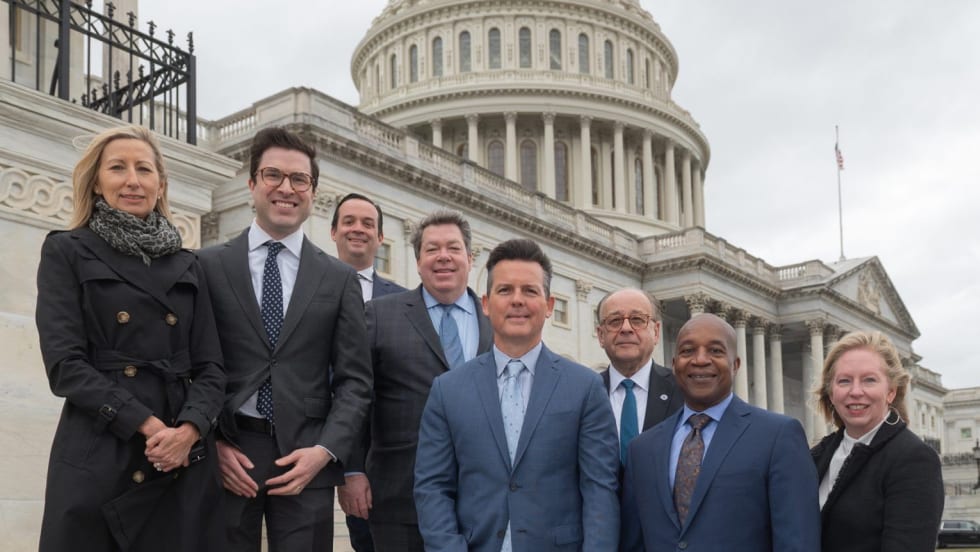
As chair of APTA’s Business Members Board of Governors, Ray Melleady explains how more than 850 business members are partnering with transit agencies to advance funding, innovation, and industry-wide collaboration.
Read More →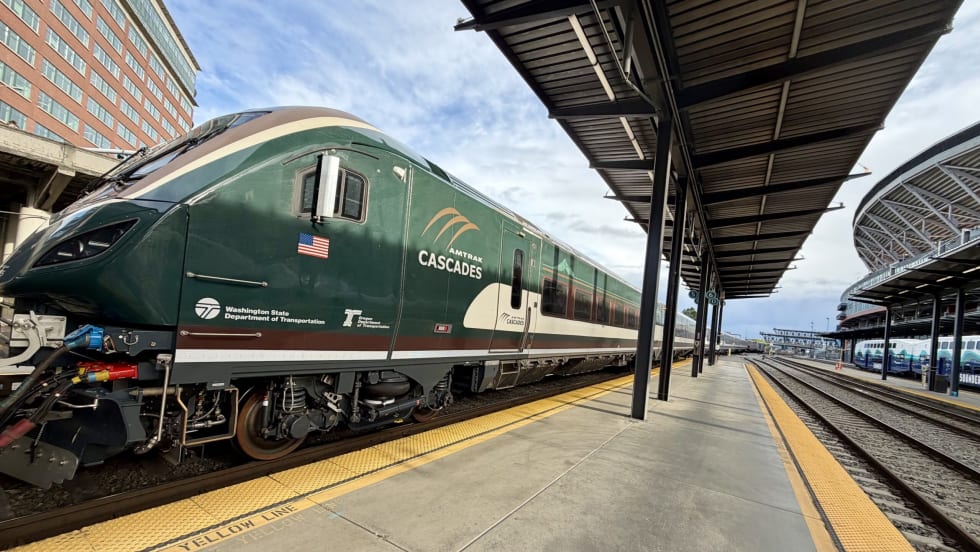
FRA Announces $5.3B in Rail Investments, Including $2B for Amtrak
Funding will support grade-crossing improvements, infrastructure upgrades, and new Amtrak equipment in 23 states.
Read More →
Finding the ‘Happy Medium’: Optimizing Maintenance Without Sacrificing Reliability
The key to maintenance optimization isn’t doing less work—it’s doing the right work at the right time on the right assets.
Read More →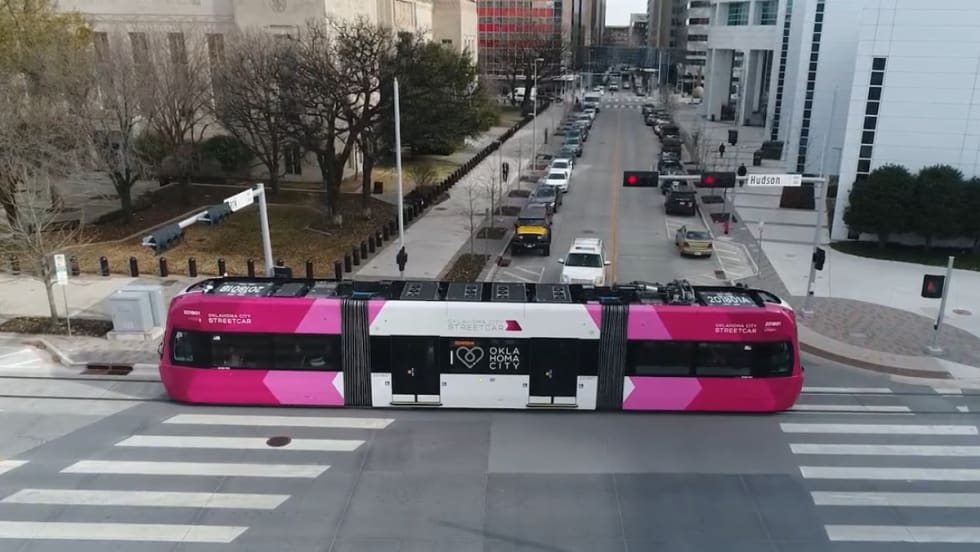
OKC Streetcar Makes Zero-Fare Service Permanent
Ridership increased an average of 71% compared with the same period a year earlier during the fare-free pilot.
Read More →
DART Customer Satisfaction Reaches Six-Year High
Overall satisfaction rose to 74.9%, while the agency’s Net Promoter Score reached a record 33.7.
Read More →
How DART's GoPass Is Redefining Regional Mobility
Serving 14 transit agencies, GoPass simplifies multimodal travel by allowing riders to plan, pay for, and manage an entire trip through one app.
Read More →
Amtrak Board Advances Plan to Restructure Organization, Seeks Public Input
The proposal, developed by Amtrak management and approved by the board for further consideration, is intended to modernize the organization's structure while improving accountability, operational efficiency, and customer service.
Read More →
Biz Briefs: STV teams with Amtrak, Motorcoach Operators Boost Fleet and Land Contracts, and More
From manufacturers and suppliers to transit agencies and motorcoach operators, these updates offer a snapshot of the projects, partnerships and business moves driving the industry forward.
Read More →
Metra Celebrates 100 Years of Electric Rail, Looks to the Future
The event was also a celebration of recent reforms to public transportation in the Chicago area, changes that could be as transformative in the future as the major civic achievement a century ago, said officials.
Read More →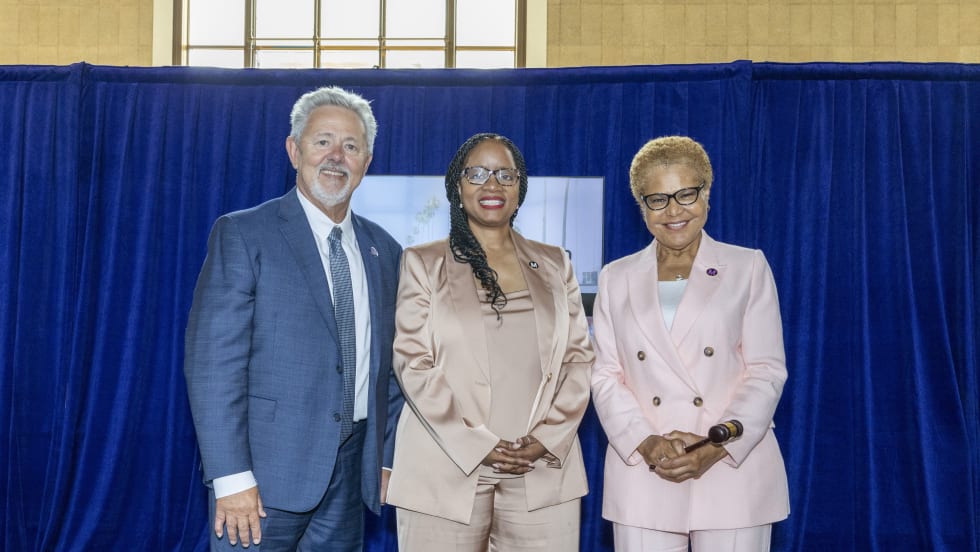
LA Metro Marks Banner Year, Sets Ambitious Goals for New Fiscal Year
Incoming LA Metro Board Chair and Los Angeles Mayor Karen Bass joined outgoing Board Chair Fernando Dutra and LA Metro CEO Stephanie Wiggins to review accomplishments from fiscal year 2026, which included the opening of new rail extensions, advancement of major transit projects, expanded safety programs, and new rider amenities.
Read More →