



Making it a Lil' Easier to Navigate the 'Big Easy'
Post-Katrina's Lower 9th Ward has finally begun to pick up the pieces and found a way to transport its slowly re-growing population using a flexible-route, on-demand neighborhood circulator that combines elements of fixed route, flex route, paratransit and neighborhood circulators.
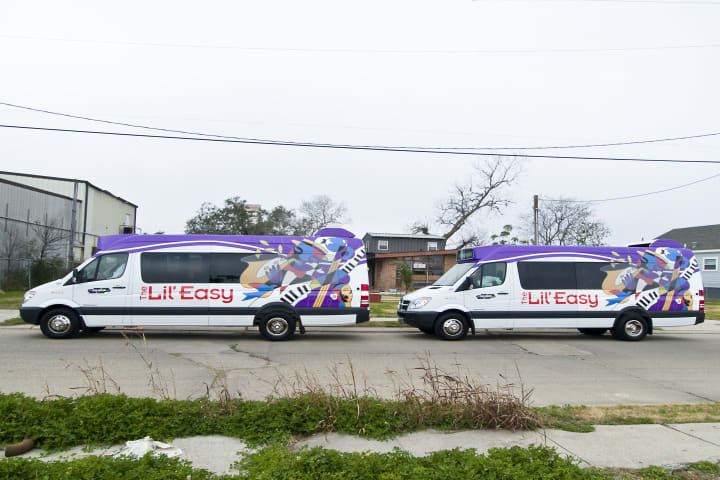
[IMAGE]NORTA.jpg[/IMAGE]New Orleans made world headlines in 2005 when it was devastated by Hurricane Katrina. The storm inflicted unprecedented damage on homes and lives, destroyed infrastructure and impaired the city’s ability to provide services to its residents in a time of need. The hurricane destroyed nearly half of the New Orleans Regional Transit Authority (RTA) fleet and seriously damaged many vehicles.
Hurricane Katrina remains the costliest and deadliest natural disaster in American history. While world attention has faded, recovery efforts continue in New Orleans. And, in January, the city reached a milestone with the launch of The Lil’ Easy, an innovative, cost-effective transit-on-demand service.
Meeting the challenge
To meet its daunting challenges, the RTA’s Board of Commissioners turned to Veolia Transportation, which provided a compelling vision for a well designed and integrated transit network that would catalyze and support renewal, and presented a path to achieve that vision.
In October 2008, the Board of Commissioners initiated a management contract with the company. In the first phase of the contract, Veolia Transportation is providing several senior managers to achieve key performance and operational milestones. The contract will transition into a delegated management model during 2009. Under this model, while continuing to report to the RTA Board of Commissioners, Veolia will perform the functions of the transit agency, including operations, service delivery, customer care, route/system design, technology, marketing, customer information, grants administration, finance, HR, community relations and more. While delegated-management models are widely used in Europe, this will be the first known use of it by a major city in the U.S.
One of the new management team’s first priorities was to realign service and capacity to reflect New Orleans’ post-Katrina population, starting with the Lower 9th Ward.
The Lower 9th Ward
“Of all the communities, Katrina hit the Lower 9th Ward the hardest, so it was fitting that the revitalization efforts start in that area,” says Justin Augustine, GM, New Orleans, for Veolia Transportation and long-time New Orleans resident.
Almost overnight, the population of the Lower 9th Ward declined 85 percent, from more than 18,000 to less than 2,000 residents. While the Lower 9th’s population changed, its need for transit did not. For most residents, buses remained a vital lifeline, enabling them to travel for groceries, appointments, school or work.
But the Lower 9th Ward’s plunging population compounded the RTA’s post-Katrina challenges: how could it maintain its two much-needed fixed-route services in a community that was highly dependent on public transportation but had lost the critical population required to support it?
Clearly, fixed-route transit was not an effective mobility solution for resettled Lower 9th Ward residents. Faced with long walks to the nearest stop, inconvenient transfers and lengthy commute times, many began abandoning transit. Large buses travelling the Lower 9th’s sparsely populated corridors were frequently empty, creating a negative image and financial strain for the transit agency.
When asked, transit users told RTA officials they needed transportation that was fast, frequent and close at hand. In response, Veolia Transportation provided an innovative solution, already in use in Europe, which works for areas that don’t have the population density to support a fixed route service. Originally designed as a “last mile” service to collect passengers along the fringes of conventional transit routes, the EasyBus model has also proven to be an ideal mobility solution for sparsely populated neighborhoods like the Lower 9th. By utilizing this concept, fixed routes in and around the Lower 9th could be rearranged and streamlined, with more transfer opportunities.
A dialogue was established with community leaders and residents to help explain, define, design and even name the new service. It was launched in January 2009 and branded as The Lil’ Easy.
[PAGEBREAK]
Affordable mobility
The new service is a flexible-route, on-demand neighborhood circulator that combines elements of fixed route, flex route, paratransit and neighborhood circulators to create its own unique system. Veolia Transportation calls this “dynamic routing,” because the routes that vehicles follow are different each time depending on how many passengers are waiting at any of the 24 flexible stops in the neighborhood. Passenger loads may vary greatly from one run to the next.
In the Lower 9th Ward, the customized service operates with 14-seat minibuses and circulates through a network of three main fixed-route bus stops and 24 on-demand neighborhood stops located throughout the service area. The three main bus stops, where every minibus stops, are community destinations such as a grocery store and post office, which double as connection points to RTA’s citywide fixed-route system.
The neighborhood stops located throughout the Ward are strategically placed so that no home is more than two to three blocks from the nearest stop. That means fast, affordable public transit is now available to every single resident, not just those who live along major corridors — a huge service improvement for most, according to RTA officials. For further convenience, The Lil’ Easy operates hourly from 5 a.m to 10 p.m. weekdays and 6 a.m. to 10 p.m. weekends and holidays. Passengers can ride for the same fare as any regular RTA bus and use transfers just as before.
The Lil’ Easy is transit on-demand because it visits the three main bus stops on each run, but only goes to neighborhood stops where passengers are waiting or want to go. Residents who need a ride simply call in their travel requirements an hour in advance of their planned departure time. Dispatchers tell them where the closest stop is located and provide them with a 10-minute pickup window. All passenger requests are relayed to the bus fleet, and hourly routes are determined by routing software, based on where service has been requested.
For riders, there are more advantages. The Lil’ Easy operates on the same hourly schedule as fixed-route services. Transfers are now much more convenient: trips that used to take two hours or more with long waits and multiple transfers now take just 15 minutes.
Efficient, cost effective
If the operation of The Lil’ Easy seems like an ideal collaboration of people, ideas and technology, planning the launch of the service was also an ideal collaboration of RTA, Veolia Transportation, community leaders and residents of the Lower 9th Ward. Local input was sought through consultation and community and church group meetings to allow local residents the opportunity to help define the service, the flexible stops as well as the aforementioned naming of the service.
Veolia Transportation’s marketing experts created a visual style for the service that reflects the cultural richness of New Orleans. They also developed a customized promotional campaign to announce and promote the service to neighborhood residents.
[PAGEBREAK]
Fast, fun and well-received
With its splashy logo and jazzy new vehicles, The Lil’ Easy was custom-made for the Big Easy. It radiates fun and flair in a city renowned for music and culture. It also further establishes New Orleans as a model city for mobility solutions, following on the fine tradition of the famous streetcars.
“These are the kinds of things that serve as milestones as we re-establish and reinvent ourselves in better ways,” says Cesar Burgos, chairman of the RTA Board of Commissioners.
Area residents are already giving the new service high marks. “It’s beautiful!” declares first-time rider Onimisha Green. “This [service] is so much quicker and better.” Another first-time passenger said The Lil’ Easy would save her a daily $17 cab ride to work.
From RTA’s perspective, The Lil’ Easy has three key advantages that make it the perfect mobility option for the Lower 9th. First, the new service is efficient because it is operated using 14-seat ADA-compliant Dodge Sprinter shuttle buses supplied by Daimler Buses North America, instead of full-sized vehicles. The Sprinters provide significant fuel savings over regular buses, yet offer a capacity well-matched to the demands of the route. They can navigate through residential neighborhoods safely and are equipped to run on biodiesel.
Secondly, the service saves on fuel and mileage because it is an on-demand service, going only where it is needed. It is designed to comfortably handle rush hour peaks, but then take advantage of savings opportunities during off-peak times by going only to stops where service has been requested.
Another benefit is the transit on-demand service’s expandability. Capacity can be added as ridership grows simply by adding new vehicles to the route — and the shuttles are far less expensive than full-sized buses. More riders are expected as more people return home to the Lower 9th, and The Lil’ Easy is well equipped to handle this growth. Once passenger levels return to threshold levels, it can easily be replaced by regular fixed route service.
Officials describe The Lil’ Easy as a perfect fit for sparsely populated areas. “The Lil’ Easy matches the mobility needs particular to the residents of the Lower 9th Ward,” says Burgos. “The primary goal is to serve the community and help residents rebuild their lives. And of course, we’re trying to create new transit riders.”
The way forward
For RTA, The Lil’ Easy is just the beginning. The service will be expanded to three other areas of the city before year’s end. In May, it will expand to Lakeview, while in the latter part of 2009, plans are under way to provide The Lil’ Easy service in Gentilly and Eastern New Orleans.
In addition, the Sprinter vehicles may be used in place of full size buses on lightly-used late-night routes. “In downtown areas where service industry workers are getting off after dark, we may have only four riders per hour on some buses,” Veolia’s Augustine says. “Carrying only a few people on a big bus not only looks bad from an image standpoint, it’s not cost-efficient.”
The Lil’ Easy started in the Big Easy, but it is not expected to end there. It is a smart option well suited to smaller cities and lightly populated neighborhoods across the nation, she says. And for larger urban centers, it is an innovative last-mile solution that can help existing networks reach more riders.
Dick Alexander is Senior VP for Veolia Transportation.
More Paratransit
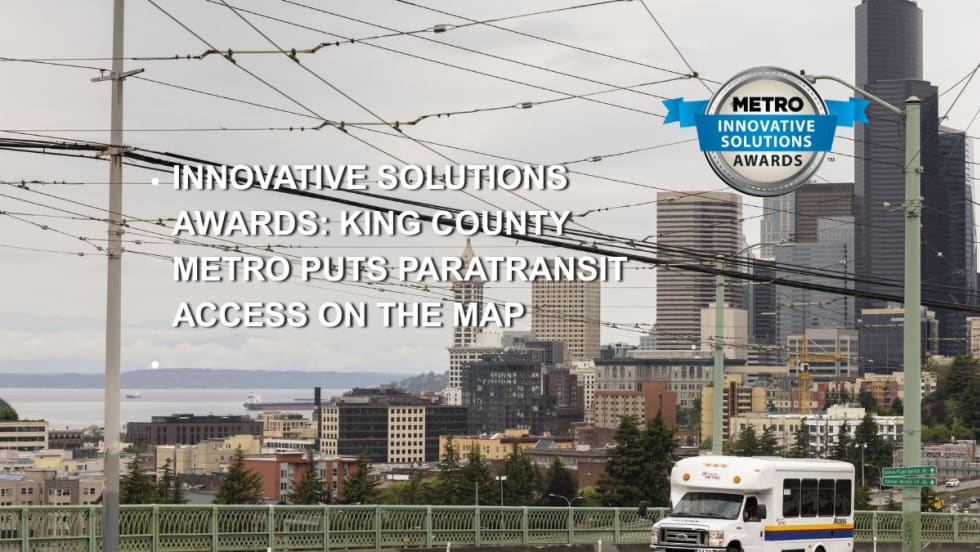
King County Metro Makes ADA Paratransit Easier to Navigate
METRO's Innovative Solutions Award winner replaces complex service-area descriptions with an accessible, interactive map that puts paratransit information directly in customers’ hands.
Read More →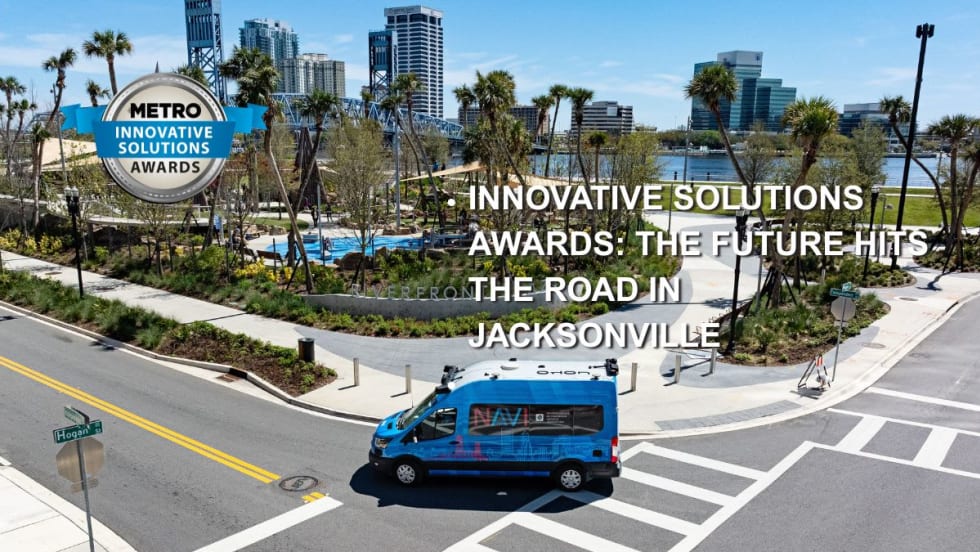
Jacksonville’s NAVI Project Charts a New Course for Autonomous Public Transportation
Through its NAVI program, JTA is showing how autonomous vehicles, intelligent infrastructure, and coordinated operations can work together to deliver everyday public transportation.
Read More →
Driving Smarter Paratransit
John Hanlon shares how AlphaRoute is leveraging AI-powered technology to help paratransit providers optimize operations, support frontline staff, and enhance the rider experience.
Read More →
METRO Magazine Announces 2026 Innovative Solutions Awards Winners
Projects Recognized for Advancing Mobility Through Technology, Accessibility, Workforce Innovation, and Operational Excellence
Read More →
Biz Briefs: STV teams with Amtrak, Motorcoach Operators Boost Fleet and Land Contracts, and More
From manufacturers and suppliers to transit agencies and motorcoach operators, these updates offer a snapshot of the projects, partnerships and business moves driving the industry forward.
Read More →
Biz Briefs: Masabi Teams with St. Louis Metro and More
In METRO's latest installment, we take a look at recent news from Transdev, Hitachi, and more partnerships making headlines across the transportation sector.
Read More →
New York MTA Leverages Zoning Program to Advance Station Accessibility
Accessibility enhancements at Nevins St Station will be financed through a development agreement tied to the MTA's Zoning for Accessibility initiative.
Read More →
Reinventing Fleet Maintenance with Real-time Visibility and AI
Transit leaders need to know what needs fixing, where to look, who is responsible, when work is completed, and what it costs without having to chase information across disconnected systems.
Read More →
SamTrans Sets Priorities for Potential Connect Bay Area Revenue
The board-approved framework allocates future funding to maintaining service, rider improvements, equity initiatives, and infrastructure repairs.
Read More →
Chicago's NITA Act Moves Into Next Phase as Service Improvements Begin
Rider-focused improvements will begin rolling out across the system immediately as CTA, Metra, and Pace increase service this summer in the six-county region.
Read More →