



Michigan agency taps 'clean' fuel for eco-benefits, savings
Charlevoix County Transit is working toward operating 90% of its demand-response bus fleet on propane autogas.
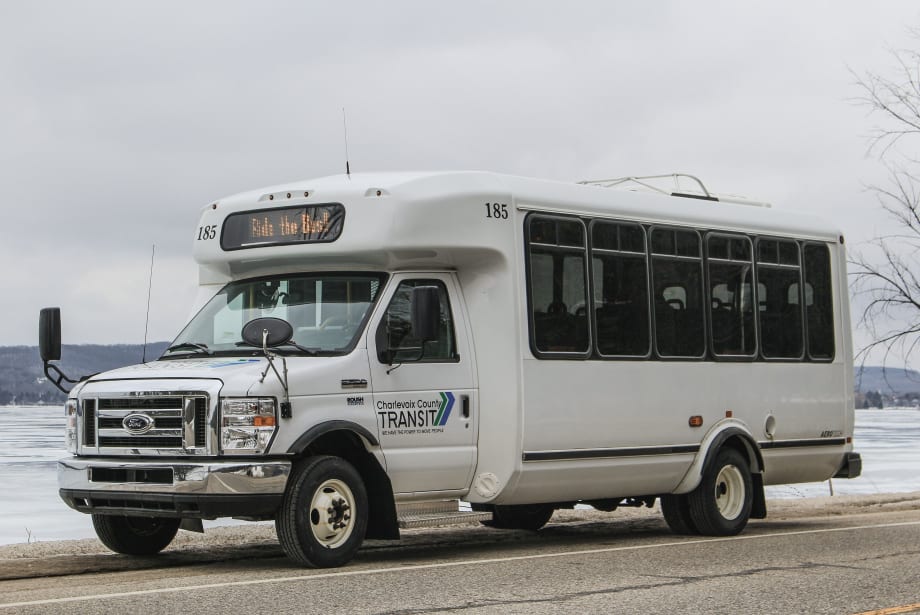
Charlevoix County Transit projects saving $50,000 annually once it converts 90% of its demand-response fleet to propane autogas.
ROUSH CleanTech
Charlevoix County Transit projects saving $50,000 annually once it converts 90% of its demand-response fleet to propane autogas.
ROUSH CleanTech
Michigan’s Charlevoix County Transit didn’t have a county or state mandate to adopt alternative fuels. Instead, the agency, which averages 90,000 passenger trips annually, is transitioning to clean-burning propane autogas buses because it’s a boon to the environment.
“One of the biggest benefits of having alternative-fueled buses is the positive effect on our environment,” says Jill Drury, the transit agency’s director. “Our service area sits along Lake Michigan’s shoreline and has several large lakes in the heart of the county that drives the vacationing appeal of Charlevoix County. We are mindful of the environment and happy that by switching buses from diesel and gas to propane autogas, we are helping the air, land, and waters where we live and vacation.”
Substantial Cost Savings
Charlevoix County Transit’s propane autogas fleet currently consists of 10 shuttle buses. Each bus comes equipped with a Ford engine and ROUSH CleanTech propane fuel system. Compared with the agency’s conventionally fueled buses, its propane buses are much less expensive to operate.
“When we were running just two to four propane autogas buses, we knew that there were savings involved with converting to propane, but the available data was minimal. Now that we’re running 10, the review and tracking of the economic value of running the alternative-fuel vehicles is much more important,” says Drury.
According to Drury, the agency saved over $3,000 per month on fuel costs when its fleet consisted of eight gasoline and eight propane autogas buses. Fiscal Year 2019 will be the agency’s first full year with 10 vehicles fueled by propane, and substantial savings are expected. Charlevoix County Transit is working toward operating 90% of its demand-response bus fleet on propane autogas. When it does, the agency projects that, based on current costs, the agency will save over $50,000 annually due to the lower cost of propane and a fuel tax credit.
“Our propane buses have been funded via grants from the Michigan Department of Transportation and Federal Transit Administration,” says Drury. “We were also fortunate to receive a grant from our propane provider this past summer after purchasing six buses in 2018.”
An additional three propane autogas cutaway buses have been ordered and delivery is expected by early June 2019.
Cleaner Operating
The agency’s vehicles fueled by propane autogas are clean burning. They emit fewer greenhouse gases and total hydrocarbon emissions, and virtually eliminate particulate matter, when compared to diesel vehicles. Compared with gasoline-powered models, vehicles fueled by propane autogas emit up to 25% less greenhouse gases, 20% less nitrogen NOx, and up to 60% less carbon monoxide.
Propane autogas is naturally lower in nitrogen oxides (NOx) than diesel and gasoline. According to the Environmental Protection Agency, exposure to NOx exhaust can trigger health problems, such as asthma, bronchitis, and other respiratory issues.
“Our mechanics report that when doing oil changes, the oil is as clean coming out as it was going in,” says Drury. “We are planning on implementing an oil sampling program that will allow us to extend the useful life of the oil versus strictly doing oil changes at prescribed mileage intervals, which should result in additional savings.”
Affordable Fueling
Propane autogas fueling infrastructure costs less than any other transportation energy source — conventional or alternative. Charlevoix County Transit’s propane provider, AmeriGas, has been instrumental in the area of fueling. The agency negotiated a fuel agreement that included the cost of the infrastructure.
“Our upfront costs were minimal with our station infrastructure,” says Drury. “We are currently upgrading our fueling system to allow for two vehicles to be fueled at the same time, as well as having an automated reporting system that will provide us with additional data.”
As the numbers continue to roll in, Charlevoix County Transit calculates that its move to propane autogas buses is good for the environment and the bottom line. n
Todd Mouw is president of ROUSH CleanTech.
More Bus

New York MTA Plans Largest Bus Fleet Upgrade in More Than a Decade
The agency is seeking manufacturers for 650 new CNG buses to replace aging vehicles, improve reliability, and advance its broader fleet modernization strategy.
Read More →
Building a Flexible Path to Transit Electrification
John Hroncich discusses BAE Systems’ modular and scalable approach, lessons learned from decades of real-world operations, and how agencies can identify electrification strategies that fit their fleets.
Read More →
Bus Tech Talk: Keeping Transit Technicians Ahead of the Technology Curve
LA Metro’s Obed Mejia discusses technician training, evolving maintenance technology, fleet replacement, and strategies for getting the most out of today’s transit fleets.
Read More →
Biz Briefs: RIPTA Unveils New Frontrunners, Clevland RTA Adds New Siemens, and More
In METRO's latest installment, we take a look at recent news from Siemens, Prevost, Dodge, and more partnerships making headlines across the transportation sector.
Read More →
People Movement: Holly Arnold Joins Transdev and More
In this edition, we also cover recent appointments and announcements at Pace, CamTran, MCI, and more, showcasing the individuals helping to shape the future of transportation.
Read More →
The High Cost of Transit Buses: Industry Leaders Look to Procurement Reform
Transit leaders and policymakers examine how standardized bus designs, streamlined procurement, and predictable funding could help agencies stretch budgets and deliver better service.
Read More →
The Business Voice Behind Public Transportation
As chair of APTA’s Business Members Board of Governors, Ray Melleady explains how more than 850 business members are partnering with transit agencies to advance funding, innovation, and industry-wide collaboration.
Read More →
From Surviving to Thriving: Building Stronger Transportation Organizations
Bus Business Consultants founder Brian Dickson shares lessons on leadership, organizational health, and creating options for long-term success in a changing transportation industry.
Read More →
Finding the ‘Happy Medium’: Optimizing Maintenance Without Sacrificing Reliability
The key to maintenance optimization isn’t doing less work—it’s doing the right work at the right time on the right assets.
Read More →
LA Metro, City of West Hollywood, and Partners Advance Smarter Bus Lane Enforcement
The award-winning partnership combines AI-powered detection with human oversight to improve bus reliability, accessibility, and enforcement efficiency.
Read More →