



Nottingham tram off to fast start
Bombardier supplied 15 low-floor trams for service, which started in March, in Nottingham, England, along an 8.7-mile corridor.
New tram services began operating in March along an 8.7-mile corridor in Nottingham, England. In the first month, 500,000 passengers used the system, equating to approximately 57% of the medium-term target of 30,000 a day. The service frequency is six minutes during peak periods. It’s the first wholly new light rail system to open in Britain for four years. The public/private partnership scheme has cost $360 million, of which 90% will be paid through a government grant over 30 years. If the system succeeds, two more lines could begin construction in 2007. These would be partly funded through developer contributions. All-day travel is $3.50. Single-journey fares start at $1.40. The route is on-street for more than 2.5 miles. Nottingham is the largest city in the East Midlands region and has been booming in recent years. The route links the city center with inner areas and suburbs to the northwest. It includes a spur to a park-and-ride site at Junction 26 of the Ml, one of Britain’s busiest motorways. It also has three interchange stations with the national rail network. The system was built on a 42-month turnkey contract by major construction company Carillion and Bombardier. French-owned Transdev and Nottingham City Transport (NCT) have a 27-year operation and maintenance concession. By involving local bus operator NCT, it was possible for the consortium to ensure local routes were modified to integrate with the tram. There are 23 stations, and a 24th will be added if an expansion of the Broadmarsh Shopping Centre goes ahead. The tram enjoys on-street priority. Altogether, five park-and-ride sites with 3,000 spaces have been provided. The target is to remove 2 million car journeys a year. Bombardier supplied 15 low-floor modular trams with a capacity of 200 seated and standing passengers. The vehicles can traverse gradients of 8.5% and curves of 60-foot radius and have a maximum speed capability of 35 mph.
More Management

Public Transit Conference Returning to GFX in 2027, Call for Papers Now Open
The Call for Papers is now open, allowing transit agency professionals and industry experts to help shape the PTC educational program by submitting session ideas for consideration.
Read More →
Indian River Transit’s Community-Focused Approach Earns National Recognition
Named APTA’s 2026 Outstanding Public Transportation System in its size category, Florida’s Indian River County transit system continues to grow ridership through fare-free service and a focus on evolving community needs.
Read More →
ENC Lands MATA Contract and More in Biz Briefs
In this edition of Biz Briefs, we spotlight the latest developments shaping the future of mobility.
Read More →

From Surviving to Thriving: Building Stronger Transportation Organizations
Bus Business Consultants founder Brian Dickson shares lessons on leadership, organizational health, and creating options for long-term success in a changing transportation industry.
Read More →
Everett Transit, Community Transit Outline Consolidation Agreement
The proposed agreement calls for a 50% increase in bus service in Everett, a new microtransit zone, continued paratransit service, and the transfer of Everett Transit operations to Community Transit.
Read More →
Strada360’s Steve Lassey on Turning Transit Data Into Better Decisions
From breaking down data silos to preparing for AI, Strada360 CEO Steve Lassey discusses how transit agencies can use technology to improve operations, customer information, and long-term decision-making.
Read More →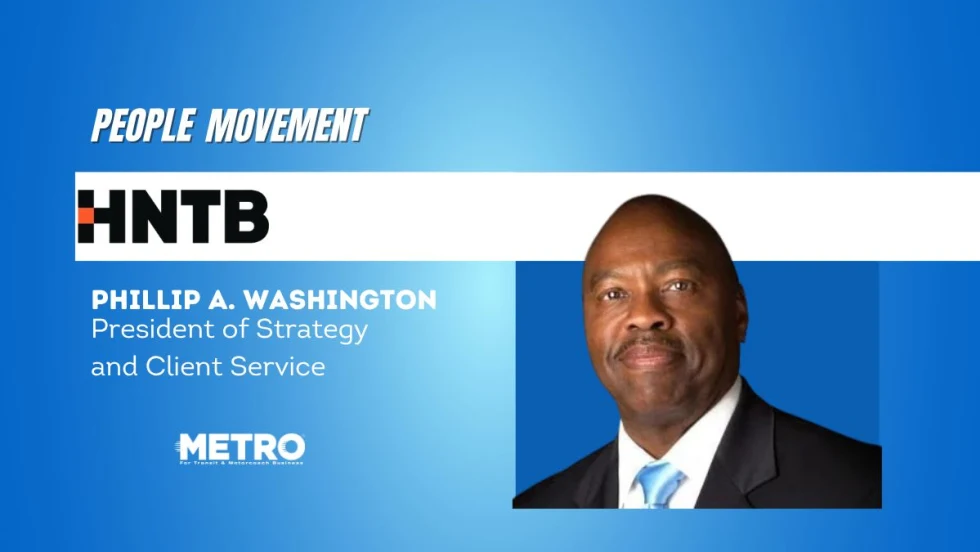
People Movement: Phil Washington Joins HNTB, Denver RTD Launches CEO Search, and More
In this edition, we also spotlight recent personnel moves at STV, the Eno Center for Transportation, and more, highlighting the people taking on new roles across the transportation industry.
Read More →
SEPTA Details Accelerate Vision for Transit System
The plan outlines investments in trolley modernization, new Metro and Regional Rail vehicles, accessible stations, and more frequent bus and rail service.
Read More →
FTA Ends Direct Oversight of MBTA Safety Actions
The federal agency closed its remaining special directive to the Massachusetts Department of Public Utilities following a safety review that began in 2022.
Read More →
Report: Transit Bus Manufacturing Supports 34,100 Jobs, $5.1B in GDP
The “Buses Mean Business” report examines the transit bus manufacturing industry’s economic footprint, supply chain, and rising demand for vehicle replacements.
Read More →