



Outsourcing Inventory Management Yields Savings
Transit agencies see several cost savings in outsourcing parts inventory management, including personnel, storage and procurement costs. Other advantages include dealing with just one parts vendor, reduced inventory, streamlined supply chain and improved availability.
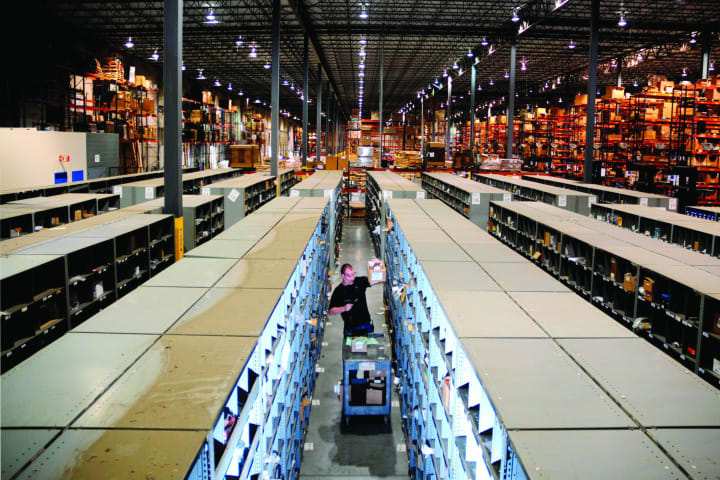
[IMAGE]Parts.jpg[/IMAGE]As economic conditions have put increasing pressure on transit agencies in recent years, some are looking to their parts and inventory systems to be streamlined or even outsourced.
Hans Peper, executive vice president of customer services for New Flyer Industries, says that he has seen changes in buying patterns among the company's customers recently. "We're talking daily spot buys, many more rush orders and a general move to just-in-time deliveries as less inventory is being kept on hand," he says. He sees a greater sense of urgency and openness to transitioning inventory management to outside vendors.
Thus, New Flyer is looking at ways to serve customers' changing inventory needs. "The supply chain needs to be more responsive because the customers can't really rely on their own inventories. We have been preparing ourselves to develop systems to do it just as well or better than the customer used to do it themselves," Peper says.
"The financial crisis has forced people to look at how they spend money and where money is held," says Raymond Melleady, vice president of parts management services at Honey Brook, Pa.-based Neopart, who also has a background in transit operations and maintenance. "I've been in front of the public when bus fares are increased, and you want to ensure that your financial house is in order before looking for additional fare revenue."
After being acquired in 2007 by investors with substantial supply chain outsourcing expertise, Neopart invested heavily in developing its transit parts management services over recent years, gaining much experience from designing a contract with the Southeastern Pennsylvania Transportation Authority (SEPTA), among other agencies.
"Parts management programs can be all-encompassing, where the vendor would handle procurement of materials, storage, information management, warranty, issuance of materials and replenishment," Melleady says. "With this model, the transit property doesn't own any inventory and purchases only what they use, saving substantial holding costs."
Neopart also offers programs where only certain parts are provided — such as low-cost, high-volume parts — or in which storage is not part of the package.
"Inventory is the unwanted asset," Melleady says. "They need it there when they need to fix a bus, but you don't want to hold too much inventory."
Less inventory, lower costs
Buying lower quantities of parts more frequently can help reduce inventory, but doing so may increase administrative, handling and other costs while only capturing part of the savings. According to vendors, a comprehensive approach to outsourced inventory management enables transit agencies to save on the total cost of procurement. "Transit properties hold large inventories because they cannot afford to have buses out of service. Our systems are designed to maximize availability with minimal investment in inventory," Melleady says.
He explains that the full cost of procurement can include personnel needed to develop contracts, legal staff to review contracts and stockroom managers who process orders. "When you look at the overall cost to administer inventory in a transit system, they can be anywhere from 18 to 22 percent [of the cost of materials]," Melleady says.
UniSelect USA provides some parts management for non-revenue vehicles for New Jersey Transit and New York City's Metropolitan Transportation Authority. Rick Talpey, major accounts director for UniSelect, says that compared to other types of fleets, transit agencies' inventories are generally very expensive. "You may have a bus fleet of about 300 buses carrying $1.5 million to $2 million in inventory — that's crazy," he says. In addition, a purchasing department of that size may have up to $400,000 per year in payroll, he says. By shifting those costs to the parts vendor, transit agencies free up capital for other needs.
Greater Cleveland Regional Transit Authority (RTA) has established a contract with NAPA Auto Parts to supply parts for the fleet's support vehicles, including about 250 police cars, paratransit vehicles, snow plow trucks and other vehicles. At press time, the agency was five months into the contract.
"When our mechanics go to the parts counter in the shop, that's when we end up buying the part," Director of Procurement Frank Polivka says. "We got a much more competitive price going through them opening what amounts to an in-house store for us than what we were getting before."
Due to the various savings made possible by this arrangement, Polivka estimates the agency will save around $200,000 in the first year, and that's not counting the money previously lost due to parts obsolescence.
"I've walked through hundreds of parts rooms with bright, shiny brand new parts on the shelf that don't fit one vehicle they own because they've retired that portion of the fleet," Talpey says.
[PAGEBREAK]
Supply chain experts
Parts vendors can also provide buying leverage through their connections with suppliers. "A service provider to the industry with better visibility and multiple customers can spread that risk on surplus inventory," New Flyer's Peper says. "If you have a slow-moving engine door, you keep it in a central warehouse, rather than requiring every client to buy one."
With a central parts distribution center in Louisville, Ky., and other facilities across the U.S., Motor Coach Industries (MCI) can deliver orders to customers quickly. "We can use our knowledge of our coaches and their preventive maintenance schedules to assure a steady inventory of common wear items so that transit agencies won't get caught short," says Jon Yarusso, executive director and general manager, MCI Service Parts. Depending on the relationship, Yarusso says, the company will store safety stock for customers, set up daily deliveries and help plan orders.
Because a parts vendor has access to alternate sources or has better leverage on suppliers, he explains, overall material costs are lower for the end user. Also, he says parts vendors are more experienced with planning inventory and, can reduce out-of-stock situations, therefore improving bus availability.
Transits also benefit from the contracted rates for volume established in the agreement with the parts vendor, Melleady explains. "You have the ability to save on your material costs because you're buying through a single point of entry. Instead of buying a small amount from 10 separate suppliers, you're going to one supplier and you're saying, 'I want your best price.'"
MCI provides parts contracts for its customers that are tailored to the agency's business requirements, according to Yarusso. "We can customize according to agency size, create contracts that encompass every part a coach might need or write narrower contracts for specific types of part," he says.
Much of the mechanics of the agreement are worked out ahead of time in the contract. "Most of these vendor-managed contracts have an on-demand rate written into the contract, and it's high," UniSelect's Talpey says. "The vendor will agree with the customer that 85 to 90 percent of the time, when your tech comes to the window, they will hand him that part and if it is not on hand, he will have it in X amount of hours or one day."
As a result, bus availability is improved and transit operators may be able to decrease the size of the fleet because of the reduced need for spares. "A lot of transit properties can have 2 to 5 percent of their fleet that is idled waiting for a part," Melleady says. "You have this big fleet that orders on volume and ends up losing their savings due to holding costs and obsolescence."
Another contract item that affects bus availability is the agreed-upon hours of operation. When mechanics work 24/7, Talpey says, so should the parts vendor. "The on-demand rate is available whenever the shop is open, including during emergencies," he adds.
The profit percentage (usually between 7 percent and 12 percent, Talpey says) on parts sold is set in its contracts with customers. Other costs, such as administrative expenses, on-site personnel, insurance and other overhead, are also detailed in the contract. "It's basically a free-standing store within the facility, and it runs its own profit-and-loss statement," Talpey explains. "So, we would say to the transit operator, 'here's your bill for the end of the month; we made X percent. We're going to show you every invoice so you can audit that and it's transparent.'"
Benefits for management
In addition to financial transparency, transit managers also have access to data generated by the inventory management program.
"We're able to track the exact usage of our parts through our maintenance program and are able to double-check that with their billing at the end of the month," RTA's Polivka says. "That's the other thing: We only have to deal with one bill now at the end of the month, as opposed to 30 or 40. There's a cost savings there too, in terms of the number of times you have to put in purchase recs and cut purchase orders."
Talpey says UniSelect's software is based on an open platform and can integrate with almost any fleet management system to provide inventory data. "Or if they don't have an up-to-date fleet system, they're still supplied with data," he adds. "We can give them usage by bus number, how many times your tech comes to the window, whatever they want to know."
Under a vendor-managed inventory program, management-level staff at the transit agency are able to avoid time lost dealing with parts room issues that take them away from their other duties, Talpey says. "The fact that they don't have to deal with personnel issues anymore — that's sometimes the reason we would get a phone call," he adds. "And the transaction costs, those hard-to-track dollars, — if they ever did the tracking on that and found out how much it costs to keep paying all these different vendors — that dollar number usually jolts people."
Customizing a vendor-managed inventory program to fit the customer's needs is the key in this industry, New Flyer's Peper says. "There is such a variety in sizes of customers, fleet mixes and different local regulations that there's really not one solution that fits all," he says. "It's going to be a whole range of activities, from people saying, 'just drop it off at my warehouse just in time,' to people saying, 'come take over my whole material organization, including perhaps the purchasing side.'
"We've been investing in systems and people to deal with this function, because it's a complicated function to do it right," he notes. "What we've been trying to do is make sure we have bullet-proof systems, resources and procedures so we can do it with high reliability."
More Bus

New York MTA Plans Largest Bus Fleet Upgrade in More Than a Decade
The agency is seeking manufacturers for 650 new CNG buses to replace aging vehicles, improve reliability, and advance its broader fleet modernization strategy.
Read More →
Building a Flexible Path to Transit Electrification
John Hroncich discusses BAE Systems’ modular and scalable approach, lessons learned from decades of real-world operations, and how agencies can identify electrification strategies that fit their fleets.
Read More →
Bus Tech Talk: Keeping Transit Technicians Ahead of the Technology Curve
LA Metro’s Obed Mejia discusses technician training, evolving maintenance technology, fleet replacement, and strategies for getting the most out of today’s transit fleets.
Read More →
Biz Briefs: RIPTA Unveils New Frontrunners, Clevland RTA Adds New Siemens, and More
In METRO's latest installment, we take a look at recent news from Siemens, Prevost, Dodge, and more partnerships making headlines across the transportation sector.
Read More →
People Movement: Holly Arnold Joins Transdev and More
In this edition, we also cover recent appointments and announcements at Pace, CamTran, MCI, and more, showcasing the individuals helping to shape the future of transportation.
Read More →
The High Cost of Transit Buses: Industry Leaders Look to Procurement Reform
Transit leaders and policymakers examine how standardized bus designs, streamlined procurement, and predictable funding could help agencies stretch budgets and deliver better service.
Read More →
The Business Voice Behind Public Transportation
As chair of APTA’s Business Members Board of Governors, Ray Melleady explains how more than 850 business members are partnering with transit agencies to advance funding, innovation, and industry-wide collaboration.
Read More →
From Surviving to Thriving: Building Stronger Transportation Organizations
Bus Business Consultants founder Brian Dickson shares lessons on leadership, organizational health, and creating options for long-term success in a changing transportation industry.
Read More →
Finding the ‘Happy Medium’: Optimizing Maintenance Without Sacrificing Reliability
The key to maintenance optimization isn’t doing less work—it’s doing the right work at the right time on the right assets.
Read More →
LA Metro, City of West Hollywood, and Partners Advance Smarter Bus Lane Enforcement
The award-winning partnership combines AI-powered detection with human oversight to improve bus reliability, accessibility, and enforcement efficiency.
Read More →