



4ONE: 4ONE’s Aries Stainless Steel Seat is known for its comfort and ultra-thin profile, which allows transit properties to optimize capacity without sacrificing hip-to-knee comfort for passengers. It is typically used in heavy-duty buses for mass and public transit, but can also be used in the rail industry. Because transit managers are challenged with the need to provide improved accommodations for mobility devices, strollers, and shopping carts without impacting vehicle idle time, 4ONE offers a number of innovative options to address these challenges. These include split flip
and slim flip seating that offer improved floor space and people flow without
sacrificing seating capacity. The seat is available with surface options like padded fabric, vinyl, and plastic inserts. www.4one.com
Passenger Seating Options Maximize Safety and Convenience
A ruling by NHTSA now requires three-point seatbelts on certain vehicle classifications, while less traditional transit layouts more easily accommodate passenger’s needs and power outlets allow them to charge their devices while en-route.
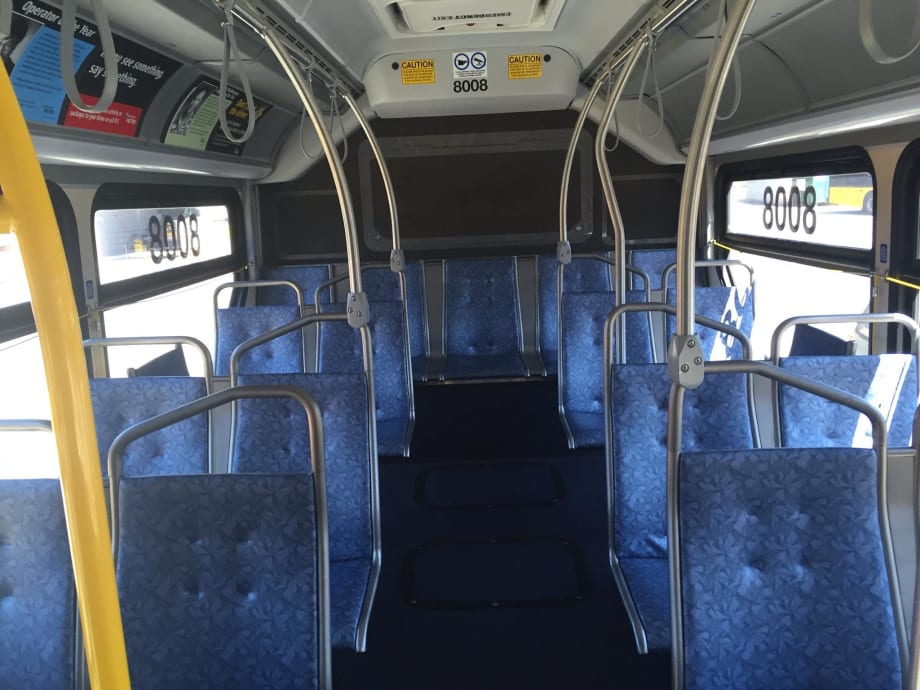
4ONE’s Aries Stainless Steel Seat is typically used in heavy-duty buses and the rail industry.
4ONE’s Aries Stainless Steel Seat is typically used in heavy-duty buses and the rail industry.
As an integral part of the transit experience, it’s important to invest in quality passenger seating to ensure comfort and safety for both those operating vehicles as well as those riding them. A major shift in the passenger seating industry has been the newly enacted regulation that requires three-point seat belts in certain vehicle classifications, which was implemented last November. Other changes include the increased prevalence of onboard charging capabilities for mobile devices and layouts that more easily accommodate persons with disabilities.
NHTSA Ruling
In terms of safety, a ruling by the National Highway Traffic Safety Administration was officially implemented in November 2016. While it was voted on and confirmed three years ago, agencies were given time to comply. The ruling requires an integrated three-point seatbelt for adults and companions in most motorcoaches, also known as over-the- road vehicles. Buses that need to comply with this regulation have a GVWR greater than 26,000 pounds and an elevated passenger deck located above a baggage compartment. Some exceptions include school buses and prison buses.
Additionally, many seat manufacturers are now offering optional integrated child seats (ICS) and child restraint systems (CRS) on all over-the-road buses, according to Freedman Seating’s President Dan Cohen.
“As time passes in the industry, the people who buy and operate buses, as well as the passengers who ride in buses, are starting to want seatbelts more and more,” Cohen says. “There’s no denying that a person belted into a three-point seat is the safest of all passengers. It’s not to say other passengers aren’t safe, but there are ranges, and people tend to want the safest option possible.”
Seating Layout
On the transit side, there are also less traditional seating layouts that more easily accommodate baby carriages, shopping carts, and mobility devices, according to USSC Group’s Managing Director Ray Melleady. He says that today, transit managers are challenged with the need to provide improved accommodations for mobility devices at a minimized time cost.
“There is a lot more emphasis on balancing seating capacity and comfort with device management (securement, maneuverability, etc.) on the lower deck of the vehicle. A well-designed layout will improve traffic flow but minimize the impact to seating capacity,” Melleady says. “That’s important because understanding the appropriate seat layout, seat type, and securement options for the Americans with Disabilities Act can improve the driver and passenger experience and reduce dwell time.”
Specialized layouts include split flip seats, which permit the seat to lift independently and offer the passenger flexibility with their shopping cart or baby carriage. The front curb-level portion of the bus will also often have back-to-back zones to accommodate the Americans with Disabilities Act, which facilitate foot traffic and mobility device securement, Melleady says.
Convenience
On the technology front, passengers are growing more accustomed to what may have previously been considered luxurious; the rising prevalence of in-transit power outlets allow passengers to charge their devices while en-route, a solution to the drained batteries of smart phones and tablets.
“If you’re spending time on a transit bus, a shuttle bus, or an over-the-road bus, it’s nice to be able to spend that 10 minutes or two hours not draining your battery, or even charging it,” Cohen says. “Everybody is always in search of a place to charge their device, and this can even give people a reason to ride the bus.”
USB applications are also offered in lieu of wall outlets, a feature which is also offered by American Seating Company on their Metropolitan seat and barrier products.
“I believe more USB applications on other products are forthcoming, as they’ve been well received and we continue to produce seat sets for those same customers who have ordered these USB outlets,” American Seating’s Director of Marketing Doug G. Oswald says.
Public transit systems are becoming more safe, convenient, and comfortable, making the entire experience more appealing to passengers.
And as a way to improve the experience of those who maintenance these vehicles, Amaya-Astron, Freedman Seating, and 4ONE released an Auto Return Recliner Mechanism, which automatically returns seat backs to their upright positions when no one in seated.
“It takes time to walk through and move those recliner levers and reach across the seats to do the ones against the window,” Cohen says. “If you have 20 buses, it adds up to a nice time savings on a daily basis.”
More Security and Safety

Transit Agencies Highlight Safety Gains at National Summit
Leaders from 15 major transit systems shared crime-reduction results and safety initiatives while discussing the role of continued federal support.
Read More →
DART Launches Major Security, Fare Enforcement Initiative
The 90-day demonstration will deploy coordinated security teams at five light rail stations while testing controlled access and gathering data to guide future investments.
Read More →
RTD Launches NextRide App to Consolidate Trip Planning, Fares, Security Reporting
The app expands on RTD’s existing NextRide web application and allows customers to view real-time vehicle locations and service alerts, purchase and store digital fares, and access customer support.
Read More →
TAPTCO Updates OSHA Compliance Training for Transit Maintenance Operations
The revamped program addresses 26 OSHA standards for maintenance facilities, with TAPTCO pointing to training, documentation, and everyday shop hazards as continuing challenges for transit operations.
Read More →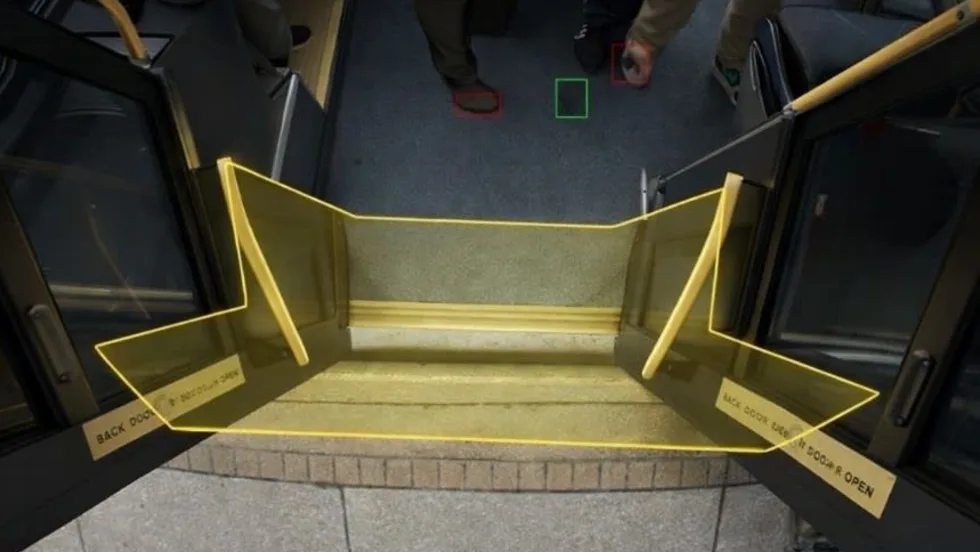
How VaporVision Adds Value to Transit Door Systems
Wabtec engineers explain how the system improves doorway detection, strengthens diagnostics and gives transit agencies and OEMs greater operating flexibility.
Read More →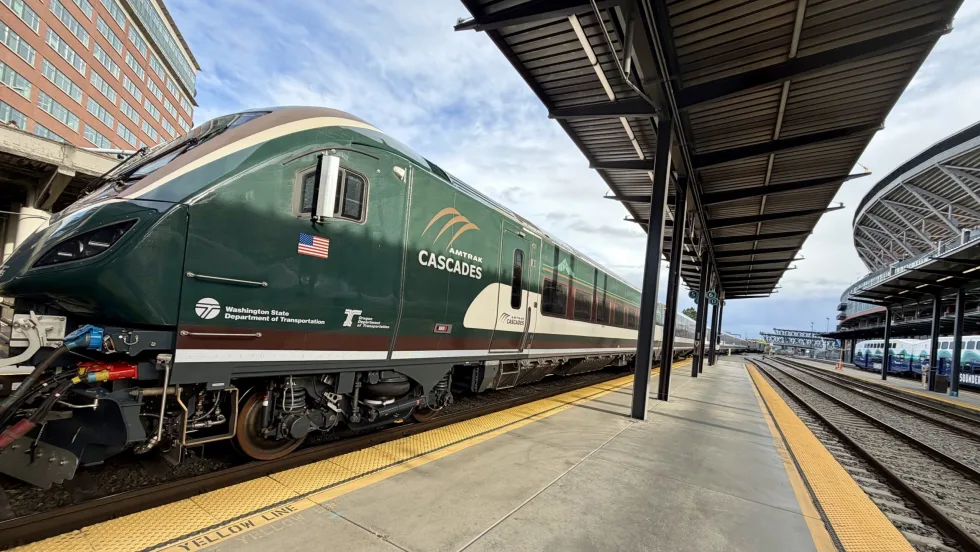
FRA Announces $5.3B in Rail Investments, Including $2B for Amtrak
Funding will support grade-crossing improvements, infrastructure upgrades, and new Amtrak equipment in 23 states.
Read More →
Chicago, Maryland Expand Non-Law-Enforcement Safety, Rider Support
The CTA and MTA are launching new programs aimed at de-escalation, crisis response, rider assistance, and greater transparency.
Read More →
LA Metro, City of West Hollywood, and Partners Advance Smarter Bus Lane Enforcement
The award-winning partnership combines AI-powered detection with human oversight to improve bus reliability, accessibility, and enforcement efficiency.
Read More →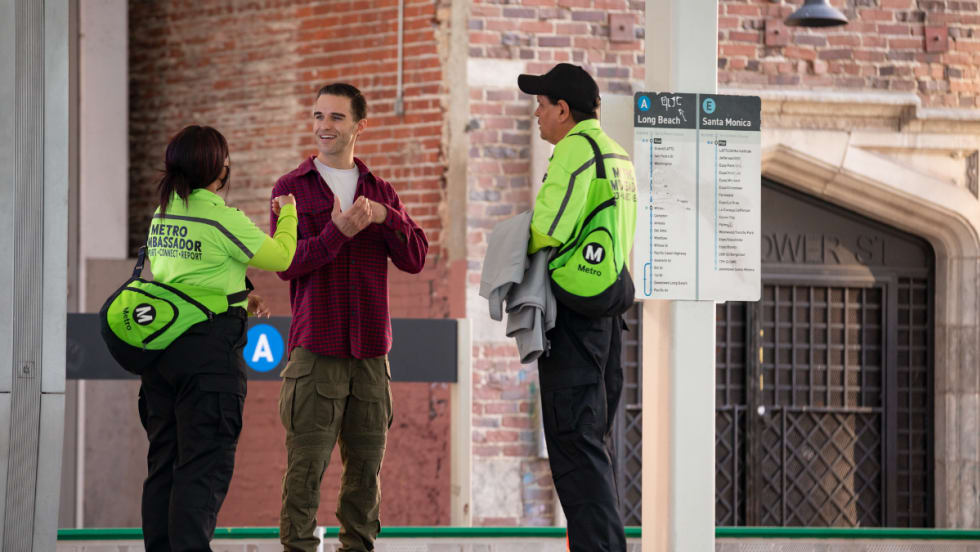
LA Metro Reports 57% Decline in Homelessness on Transit System Since 2024
The agency's latest homelessness count offers new data on how care-based services and cross-sector partnerships can complement traditional transit security strategies.
Read More →
FTA Launches 'Transit Moves America' Dashboard to Highlight Agency Safety and Performance
The online dashboard transforms National Transit Database information into a public-facing resource that allows users to compare transit agencies on key operational and safety metrics.
Read More →