



Pub Perspective: Ways to combat declining nationwide bus ridership
Many operators large and small have been staring at a disturbing trend in recent years — declining patronage. Fortunately, a few cities have bucked the trend, with ideas which will and must be shared as widely and as soon as possible.
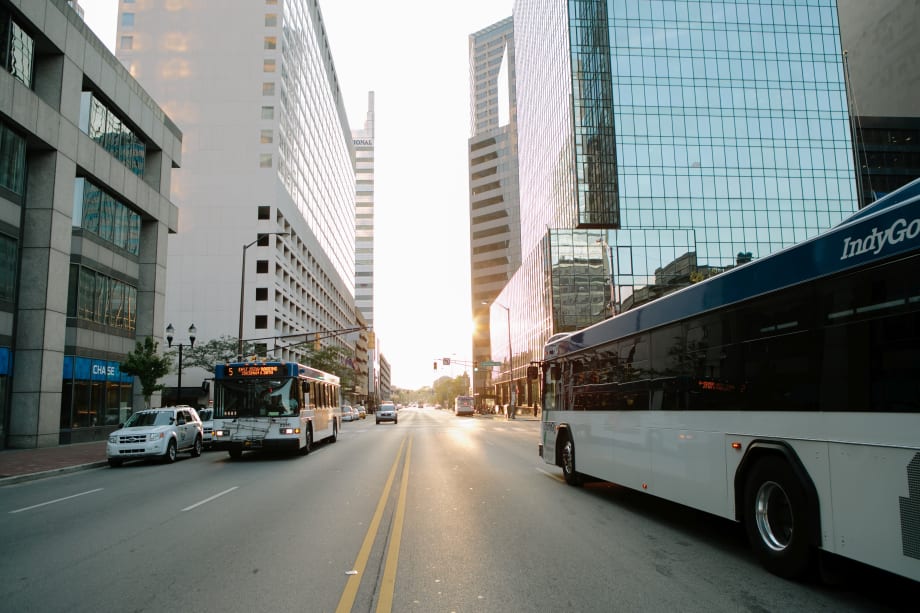
IndyGo
IndyGo
Many operators large and small have been staring at a disturbing trend in recent years — declining patronage. Fortunately, a few cities have bucked the trend, with ideas which will and must be shared as widely and as soon as possible.
Reasons for the drops vary
The causes for these declines vary. In some cities, such as Chicago and Washington, D.C., the causes include underfunding the services, while in other regions, such as Los Angeles, lack of funding is not really an issue. In many places, more commutes by car have had a role, as recent increases in auto usage have reversed a half-decade decline. Chicago, Phoenix, Salt Lake City, and Los Angeles have all seen bus ridership drop but rail patronage continues to climb. New York, however, has seen both services drop.
Changing socioeconomic factors has also played a large role in many cities. These sorts of changes were what was behind bus service restructuring in Seattle and Houston. Put simply, their buses were not serving where people live and work as well as they used to, so both transit agencies restructured their networks to provide more frequent service where their data showed people actually needed it.
Another idea gaining popularity is one borrowed from rapid transit: all-door boarding at stops. Like rail and bus rapid transit, this can be made feasible on traditional bus service as well by using smart cards and lower-cost readers mounted at rear doors. Another idea is giving regular route buses the same sort of signal priority in congested intersections that is given to rapid transit.
Although some may point to competition from ride-haling services like Uber and Lyft as culprits, the data do not really bear that out, at least for most transit trips, which are weekday work-related commutes. Rather, the culprits appear to be growing traffic congestion and declining transit convenience in places people need and want to go.
The need for dealing with an inconvenient trend now
At a time of rapid change in our society and politics, what the industry cannot abide is complacency or fatalism. There are ways to deal with the ridership challenge, and we need to do so, before those who wish to cut our budgets use it as an excuse.
More New Mobility

From Hardware to Digital Partner: Luminator Charts Its Next Chapter
CEO Magnus Friberg discusses Luminator’s shift toward becoming a digital partner, the growing importance of software and interoperability, and how AI can help agencies improve operations and passenger experience.
Read More →
Biz Briefs: Alstom Lands Canadian Contract, LYT to Supply California TSP, and More
In METRO's latest installment, we take a look at recent news from Complete Coach Works, Beep, FlixBus, and more partnerships making headlines across the transportation sector.
Read More →
CharterUP’s Armir Harris on Technology, AI, and the Future of Group Mobility
In a recent episode of METROspectives, CharterUP Founder/CEO Armir Harris discussed the company’s evolution from an online charter bus marketplace into a technology platform supporting public- and private-sector mobility and much more.
Read More →
Jacksonville’s NAVI Project Charts a New Course for Autonomous Public Transportation
Through its NAVI program, JTA is showing how autonomous vehicles, intelligent infrastructure, and coordinated operations can work together to deliver everyday public transportation.
Read More →
Biz Briefs: Luminator Marks Milestone and More
From manufacturers and suppliers to transit agencies and motorcoach operators, these updates offer a snapshot of the projects, partnerships and business moves driving the industry forward.
Read More →
New Tricks for Old Bureaucracies: Joshua Schank on Making Transit Innovation Stick
Former LA Metro Chief Innovation Officer Joshua Schank discusses why good ideas aren't enough, how transit agencies can overcome resistance to change, and why today's challenges demand more innovation.
Read More →
How DART's GoPass Is Redefining Regional Mobility
Serving 14 transit agencies, GoPass simplifies multimodal travel by allowing riders to plan, pay for, and manage an entire trip through one app.
Read More →
Biz Briefs: OCTA Taps Clean Energy for Hydrogen Station, Stadler to Supply Via Rail Vehicles, and More
From manufacturers and suppliers to transit agencies and motorcoach operators, these updates offer a snapshot of the projects, partnerships and business moves driving the industry forward.
Read More →CharterUP Expands Into New Mobility and Autonomous Transportation
Vice President of New Mobility Stephen Joos discusses how CharterUP is leveraging its nationwide transportation network, technology platform, and autonomous vehicle partnerships to expand into workforce mobility, campus shuttles, and transit solutions.
Read More →
METRO Magazine Announces 2026 Innovative Solutions Awards Winners
Projects Recognized for Advancing Mobility Through Technology, Accessibility, Workforce Innovation, and Operational Excellence
Read More →