



Q&A: Shuttle Service Providers Talk Efficiencies, Hurdles
Converting to alternative fuels is one popular savings tactic, while recruiting and retaining great drivers is a shared concern.

As part of its effort to reach out to shuttle service providers, METRO Magazine rounded up three university transit and two airport shuttle operators to find out more about their services, the daily challenges they face and how they are increasing business. Operators say they are converting to alternative fuels to keep costs down. Meanwhile, ever-rising tuition costs are a growing concern.
Our respondents are Tom Duncan, manager, transit services, Oklahoma State University (OSU); Erin Suzanne Stam, director, parking and shuttle services, Northern Arizona University (NAU); Jim Barr, executive director, transportation and parking services, University of Vermont (UVM); Charles Sandin, operations manager, Roadrunner Shuttle and Limousine Service; and Devin Sherrell, director, operations, Shuttle Express.
What measures have you taken to offset rising costs, such as fuel and insurance?
Duncan: OSU Transit Services completed our fixed-route transition to CNG in 2012. Our paratransit services are currently waiting on our last order of CNG buses to arrive, essentially moving our OSU-Stillwater Community Transit routes to 100% alternate fuels.
This year, we are also beginning to convert our shuttle service (Stillwater-Tulsa) to CNG. We anticipate this transition to take one to three years, depending on funding availability. Since our transition to CNG, OSU-Stillwater Community Transit has seen a significant cost savings. Our annual consumption of CNG is in the area of 150,000 gasoline gallon equivalent (GGE), and we anticipate this increasing an additional 50,000 to 75,000 GGE as we complete our transition to alternative fuels. In addition to the cost savings by offsetting the ever-increasing price of diesel, we utilized a third-party gas supplier. This change reduced our average cost of gas from $0.7190 to $0.53516 per GGE, plus the cost of compression.
Stam: We monitor our route to ensure the highest level of efficiency. We’ve also worked to stay ahead of major vehicle issues by investing in preventive maintenance.
Barr: We have reduced, even further, our tendency to idle our shuttles whenever and wherever possible. [We] can’t do much about the costs of fuel nor the insurance, although we operate nine Orion full-size CNG buses and one full-size hybrid-diesel bus. We’ve made an effort to increase our minor revenue income, such as in-bus marketing posters, and have accepted a few more charter requests than normal.
Sandin: We have converted 50% of our fleet to propane and gone to a captive insurance plan because we have an impeccable safety record.
Sherrell: We’ve converted most of our fleet of 80 passenger vans to propane. We’ve also invested in two propane-fueled coaches. Teaching ‘behavior’ driving skills has become an important part of our training program. We now stress the importance of the seemingly small behaviors, such as avoiding quick accelerations and quick stops, strictly obeying the speed limit and dramatically cutting down on idle time.
Have you made any moves to grow
your business?
Duncan: OSU Transit Services has no immediate plans for growth. Our current sustainable funding sources (5311 and student fees) are limited and leave little room for financial stress. We are always looking for additional funding sources that can support fixed-route growth. Possible opportunities are the City of Stillwater and Payne County, via a sales tax allocation, private business and public donations.
Stam: Since we are on a college campus our ‘business’ grows as enrollment grows. We assist in recruitment efforts on campus, including providing charter services for campus visit events.
Barr: Although we haven’t moveforward as rapidly as I’d prefer, I have put forth an initiative to our university administration and finance division to add buses and drivers to my staff to take over shuttle operations for two other organizations adjacent to our campus. It will save the organizations money in the long term and improve our area carbon footprint while adding revenue to my budget. Capital costs are the obstacle to purchasing the additional buses right now. [They are] also a challenge with our human resources in adding staff to our department.
Sandin: We have created public-private partnerships with transit agencies, increasing our business by over 200% in the last three years.
n Sherrell: Investing in over-the-road motorcoaches — we now have four in the fleet — in addition to continuing to market our smaller mini-coaches.
What is your biggest daily challenge in keeping your operation running?
Duncan: With the resurgence in the oil and gas industry, recruiting and retaining trained CDL drivers is by far our biggest challenge. We recruit students by offering to train for the CDL test; however, due to Department of Public Safety rules, we are not allowed to hire drivers under the age of 21 to transport passengers. There is an exemption to allow publicschool bus drivers to be 18. OSU Transit Services is currently drafting a proposal to allow an additional exemption for public transit agencies that receive federal and/or state funding.
Stam: Currently, we are struggling to retain full-time drivers. Since we are on a university campus, most of our positions are nine-month driver positions.
Barr: The constraints overall in trying to keep the rising cost of tuition to a minimum. My department took a greater hit this past go-round than others at our university in that our transportation fees were level funded — same as last year — but our employee wages and benefits as well as the cost of fuel all went up.
Sandin: Finding good people to fuel the growth. We’re looking for people that score touchdowns and not people the sit in the stands and watch the game being played by the team.
Sherrell: The biggest challenge is staffing. We continually work at maintaining our commitment to guest service, with ongoing training to keep the consistent service level our guests expect.
What is the most urgent social, economic or political trend affecting your operation today and why?
Duncan: As with any rural transit provider, we constantly work to disprove the stigmas associated with transit. To [promote] our image, we spend a significant amount of resources on vehicle appearance both inside and out.
We are always watching the political climate, local to national, so we can keep track of any trends that might have an impact on transit in general. We were pleased to see the sixth round of TIGER grants was recently released with a significant dollar amount available for projects.
Stam: Rising cost of education is always a concern.
Barr: The push to divest in fossil fuels. Our campus has its fair share of student and faculty activists who [respect] my service but not the way I operate. We are certainly more accepted than our local transit authority, [because] we use alternative-fueled fleet vehicles, but it is getting increasingly difficult, with higher petroleum-based product taxed fuels, to continue service with less revenue coming in and higher priced fuel expenditures on the other end.
Sandin: We have a lot of companies that try to duplicate our marketing and business plan, but they don’t operate with the same standards as us and give a bad name to our industry.
Are changes brought on by the Affordable Care Act (ACA) impacting your staffing or business?
Stam: Possibly. We have a significant student driver workforce. We have to monitor their hours to ensure they do not exceed the threshold. We’re hoping students working on the campus may eventually be excluded from the ACA.
Barr: Not directly yet, although I have been told the rising costs of health care at our university will affect any subsidies I receive based on upcoming union negotiations and what the university has to pay into employee health benefits. Ours do tie to the regulations and laws put forth in the ACA, and it is costing individuals more for seemingly less so far.
More Bus

Improving Transit Safety and Reliability Through AI
Hayden AI’s Chief Growth Officer, Charley Territo, discusses how AI-powered camera enforcement is helping transit agencies keep bus lanes and stops clear, improve accessibility, and move from pilot programs to full-scale deployments.
Read More →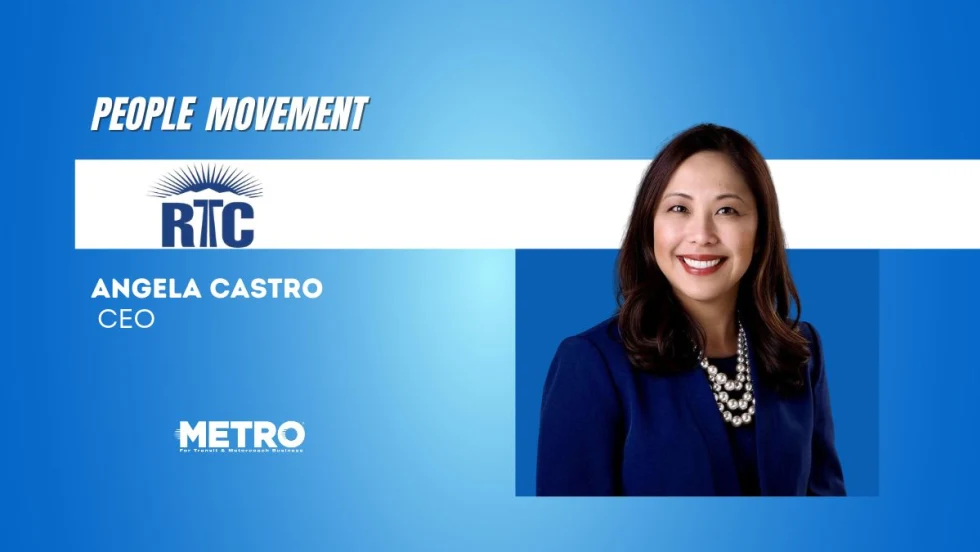
Castro to Lead RTC of Southern Nevada and More in People Movement
In this edition, we also cover recent appointments and announcements at the STV, MCI, and more, showcasing the individuals helping to shape the future of transportation.
Read More →
Study: Denver RTD Generates $2.1 Billion in Annual Economic Activity
An economic impact study finds the agency supports approximately 17,500 jobs, delivers $1.6 billion in annual community and mobility benefits, and generates $2.42 in economic value for every dollar invested.
Read More →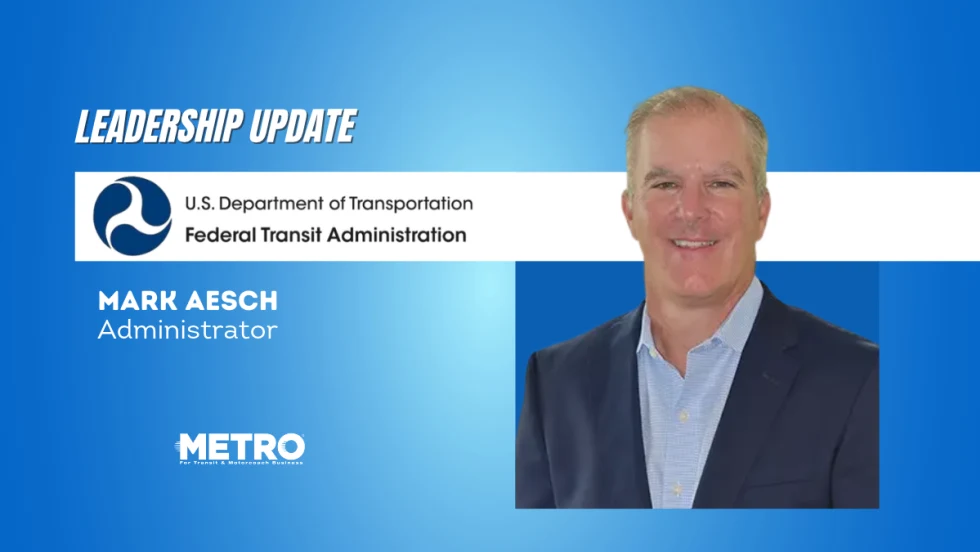
Mark Aesch Nominated to Lead Federal Transit Administration
The former Rochester transit chief and TransPro founder, who has also contributed to METRO Magazine, brings decades of industry experience and a focus on performance, accountability, and financial sustainability to the nomination.
Read More →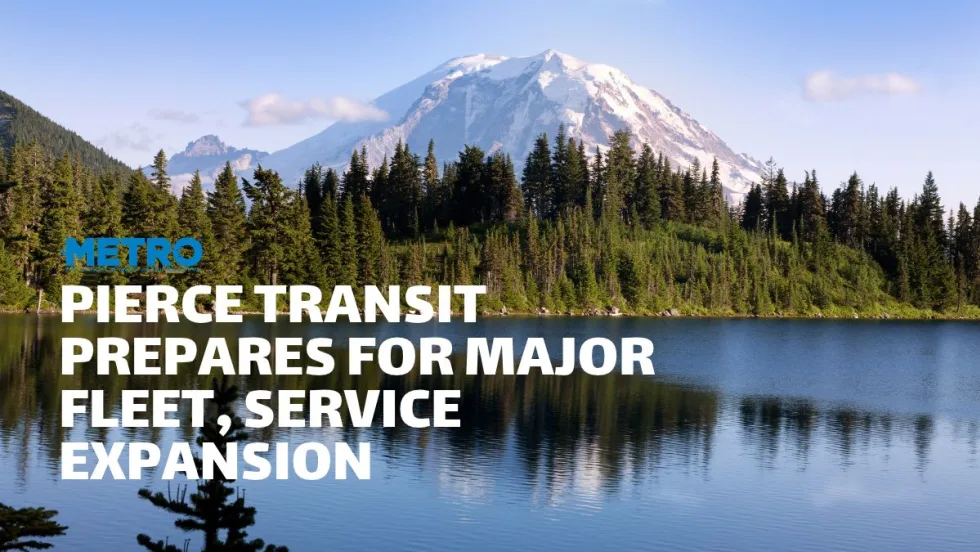
Pierce Transit Moves to Expand Fleet Following Proposition 1 Approval
The agency authorized the purchase or refurbishment of up to 60 buses to support a 47% service expansion, as voters nationwide approved billions in new transit funding.
Read More →
Transit Expands Agency Partnerships, Reaching 200 Official App Partners
COO Jake Sion discusses Transit’s growth, the success of its Transit Royale program, and how technology is helping agencies improve the rider experience.
Read More →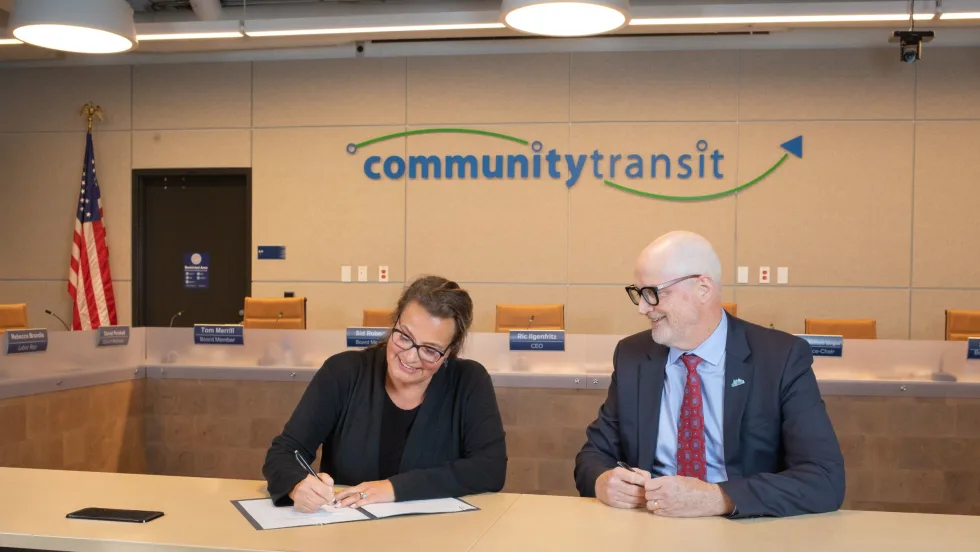
Everett Transit, Community Transit Approve Consolidation of Services
The agreement will bring Everett Transit into Community Transit’s network in April 2027, with plans to increase bus service by 50% by 2031 and expand regional connections.
Read More →
Brian Dickson on Building Stronger, More Resilient Transportation Organizations
Bus Business Consultants Founder Brian Dickson discusses the leadership principles, operational discipline, and strategic planning that separate transportation companies positioned for long-term success from those stuck in survival mode.
Read More →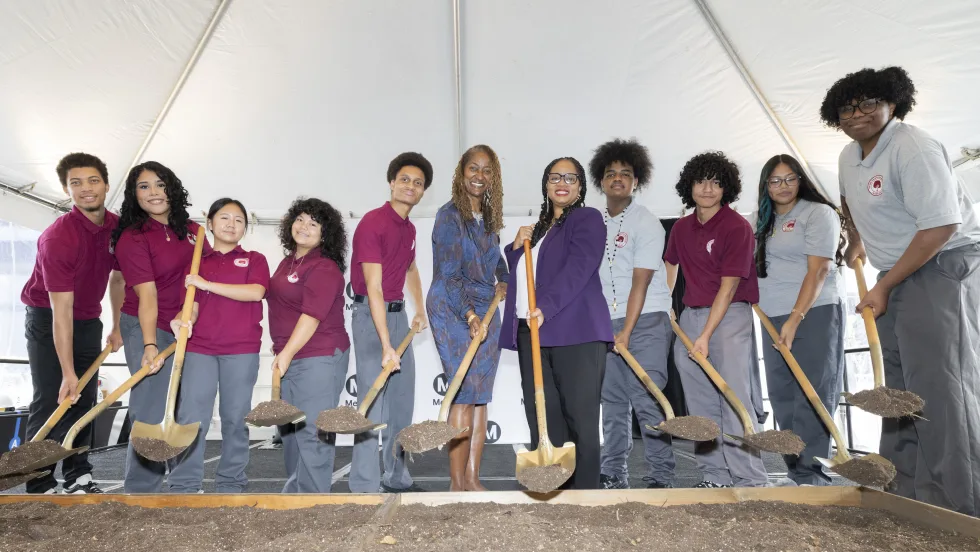
LA Metro Breaks Ground on Vermont BRT Project
The 12.4-mile corridor is projected to serve 66,200 daily riders, reduce travel times by up to 24%, and create the nation's busiest bus rapid transit corridor.
Read More →
Roman Cornell on ABC Companies’ Evolution and the Future of Passenger Transportation
The company’s CEO discusses carrying forward a third-generation family legacy, ABC’s continued evolution in passenger transportation, support for increasingly complex fleets, and how technology and continued investment could help operators improve uptime.
Read More →